
Landscape At Sundown; The Close Of Day — History & Facts
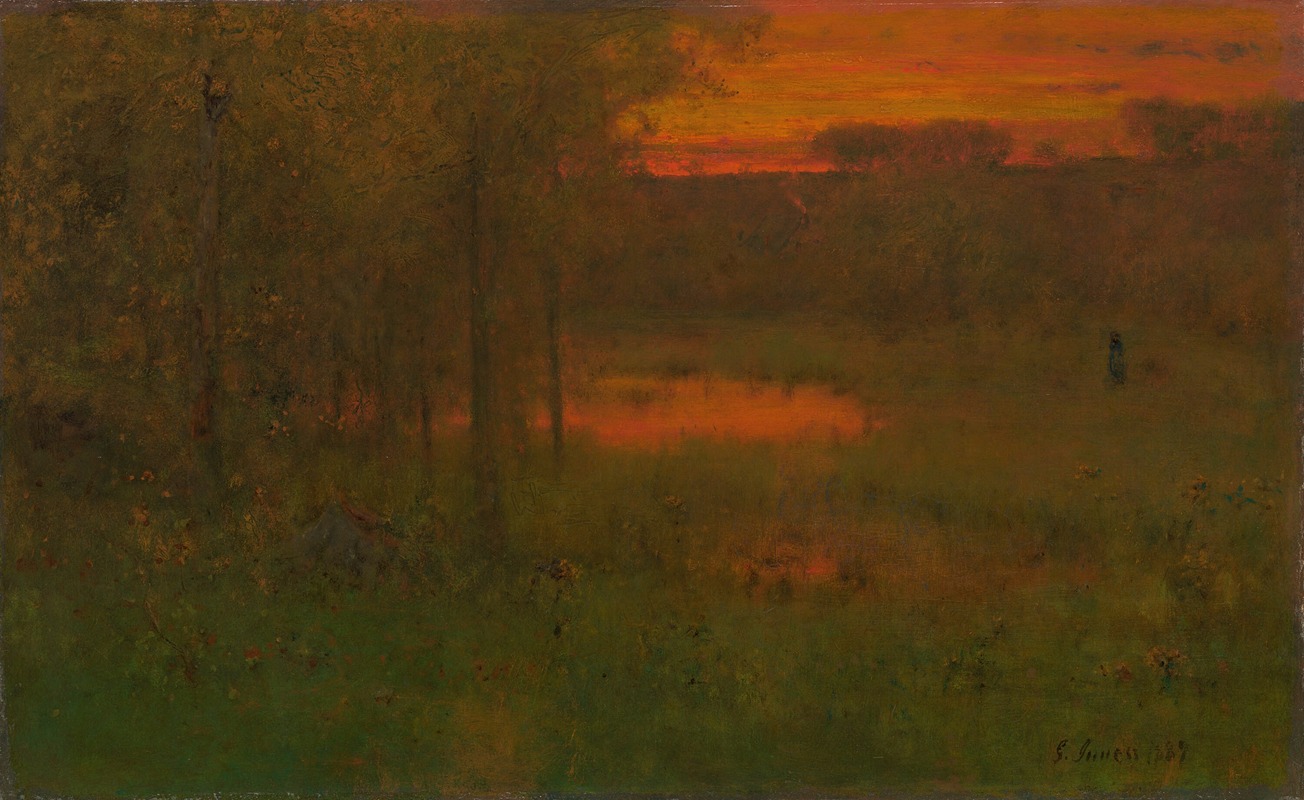
In Landscape At Sundown; The Close Of Day, a quiet memory unfurls, inviting us to pause and reflect on the day's last light. Look to the horizon, where soft hues of orange and violet meld seamlessly into the deepening blue of dusk. The brushstrokes flow together like whispers, capturing the gentle transition from day to night. Notice how the golden rays of the setting sun illuminate the trees, creating intricate silhouettes against the fading sky.
The deliberate layering of colors not only defines the landscape but evokes a profound sense of warmth and nostalgia. Delve deeper into the painting's contrasts; the vibrancy of the illuminated landscape stands in stark relief to the encroaching shadows, symbolizing the delicate balance between light and dark, hope and melancholy. Each tree and blade of grass seems to sway gently, as if caught in a moment of remembrance. This interplay evokes feelings of longing—perhaps for a time lost or for the quiet solace that comes with the day's end. In the late 19th century, when this piece was created, George Inness was deeply immersed in the transcendental movement, exploring the spiritual connections between nature and humanity.
Living in New Jersey, he was influenced by the changing American landscape and the broader trends of Romanticism. This period reflected a shift towards emotional expression in art, making Landscape At Sundown not just a depiction of nature, but a canvas that encapsulates the artist's introspection and the broader emotional zeitgeist of his time.
More Artworks by George Inness
Browse all →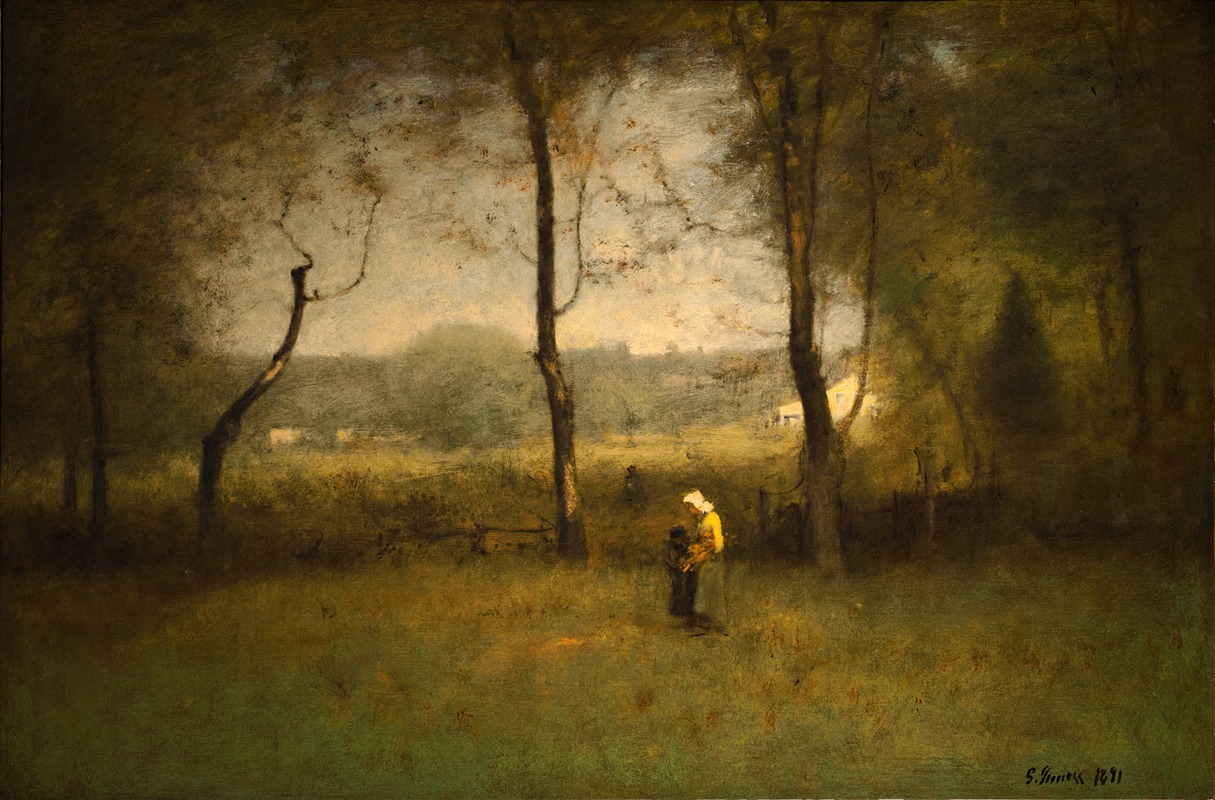
Autumn Woods
George Inness
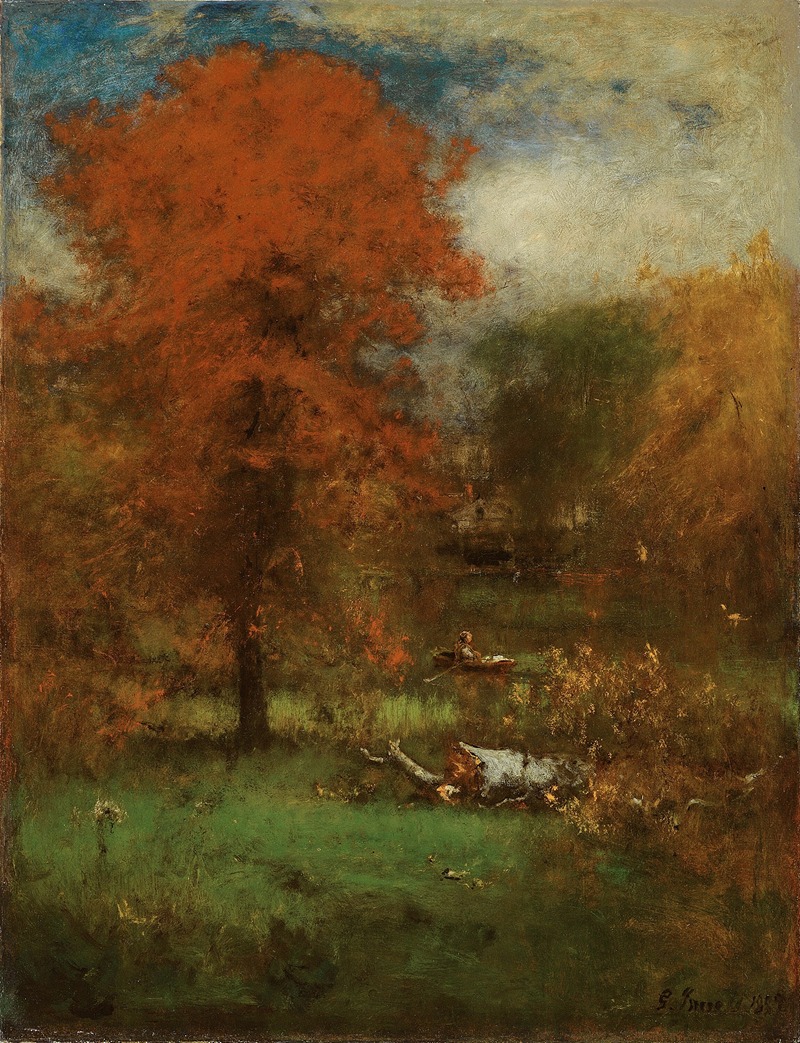
The Mill Pond
George Inness
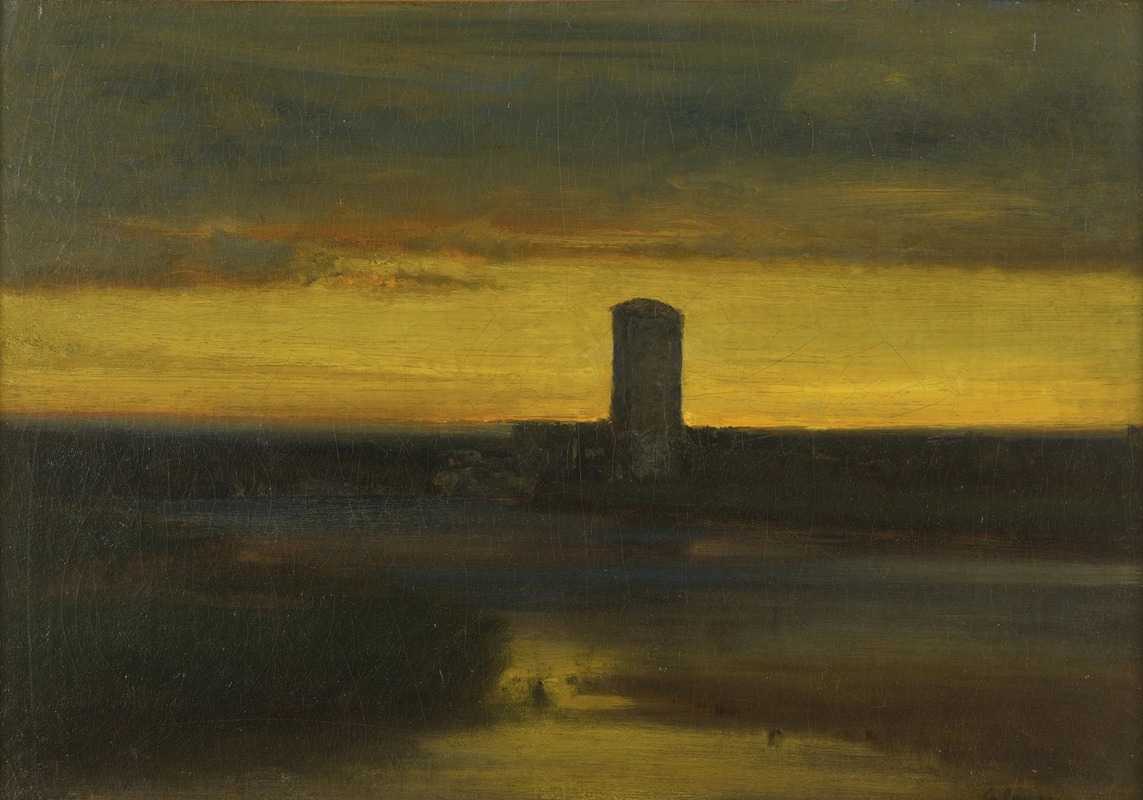
Afterglow
George Inness
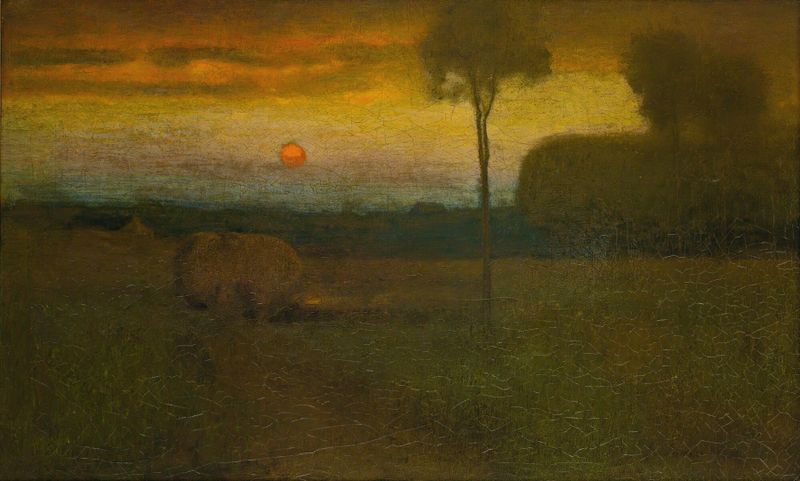
Landscape (Evening Landscape)
George Inness

Montclair
George Inness

View in Berkshire County, Massachusetts, Clearing Off after a September Storm
George Inness

October
George Inness
Landscape, Sunset
George Inness
Afterglow
George Inness
Catskill Mountains
George Inness





