
Landscape, Ile de la Grande-Jatte — History & Facts
When Georges Seurat first exhibited his studies of the Île de la Grande Jatte in 1884, the Parisian art world was abuzz with curiosity and skepticism. This small island in the Seine, just outside the city, would soon become the stage for Seurat’s most ambitious experiment: the development of pointillism. Landscape, Ile de la Grande-Jatte is one of the earliest surviving works in which Seurat began to test his radical new method, dabbing pure color in tiny strokes to see how the eye might blend them.
The painting stands as a quiet prelude to his later, monumental A Sunday on La Grande Jatte, and gives us a glimpse of the artist’s process at a turning point in his career. Here, the viewer finds no bustling crowds or elegant promenaders—just the gentle sweep of the island’s shore, a scattering of trees, and the play of sunlight on grass and water. Seurat has chosen a moment of stillness, inviting the eye to linger on the subtle gradations of green and blue, and the careful arrangement of light and shadow. The almost scientific precision of his brushwork suggests a new way of seeing nature, one that owes less to the fleeting impressions of Impressionism and more to a calculated harmony of color.
Compared to Monet’s fluid handling of the Seine, Seurat’s landscape feels measured, each mark deliberate, as if the artist is mapping out the very structure of vision itself. The exact provenance of Landscape, Ile de la Grande-Jatte is not fully documented, but it is known that Seurat produced a series of studies of the island in 1884, working outdoors to capture the changing light. Unlike his later, more celebrated compositions, this work was not the subject of public controversy or heated debate, but it quietly marked the beginning of Seurat’s mature style. Today, the painting is recognized as an important step in the evolution of Neo-Impressionism, and is held in a private or less prominent collection, away from the crowds that gather before his larger canvases.
For those who seek it out, it offers a rare, intimate look at the origins of a revolutionary approach to color and form.
More Artworks by Georges Seurat
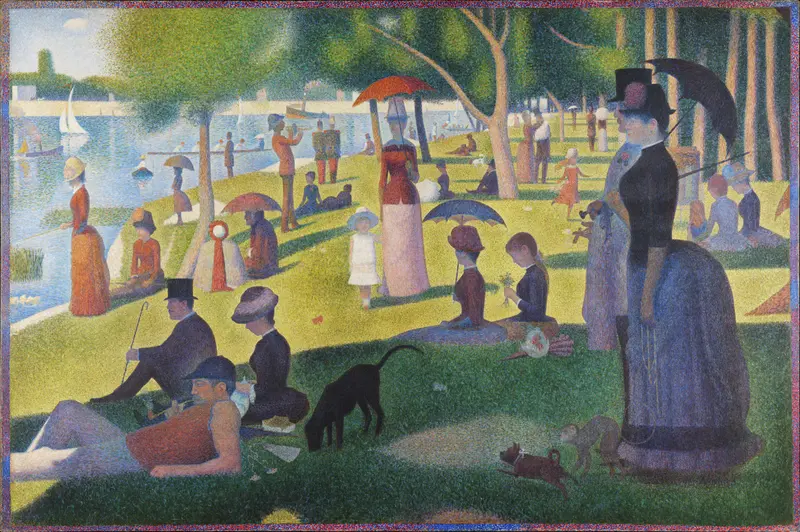
A Sunday Afternoon on the Island of La Grande Jatte
Georges Seurat
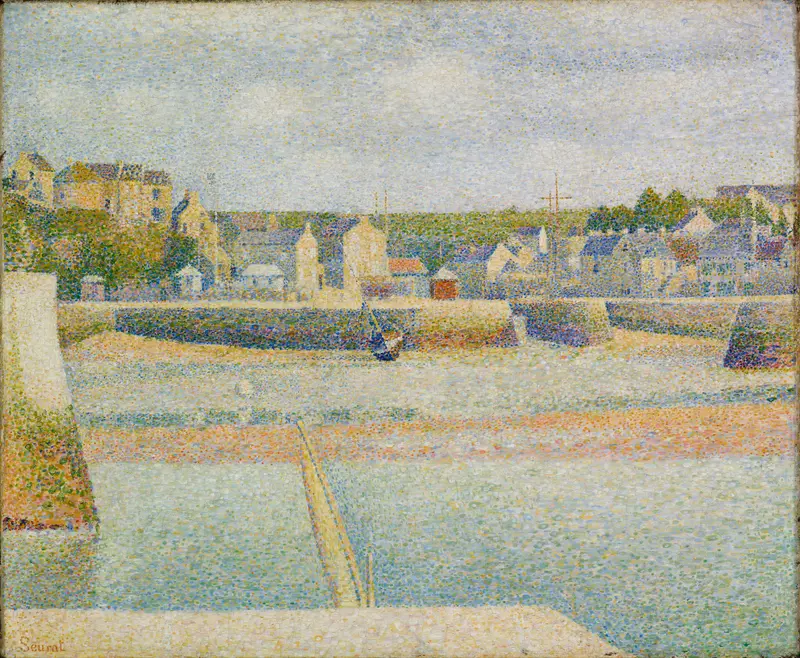
Port-en-Bessin, The Outer Harbor (Low Tide)
Georges Seurat
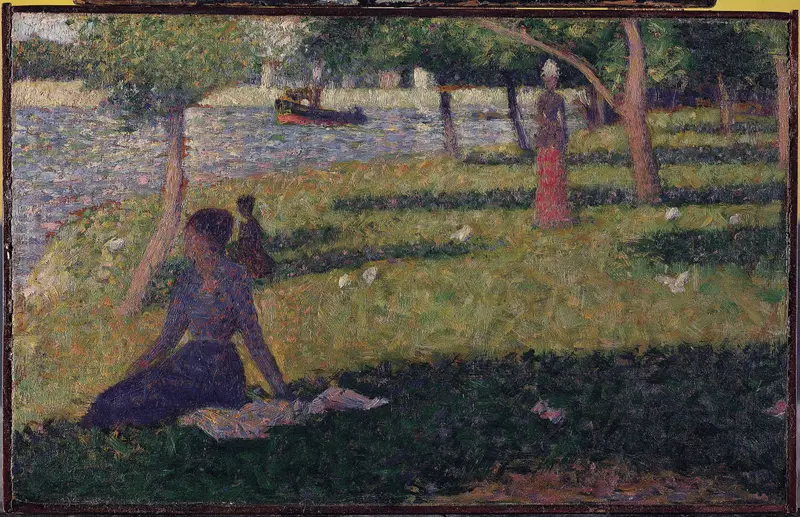
Étude pour ‘La Grande Jatte’ (Study for ‘La Grande Jatte’)
Georges Seurat
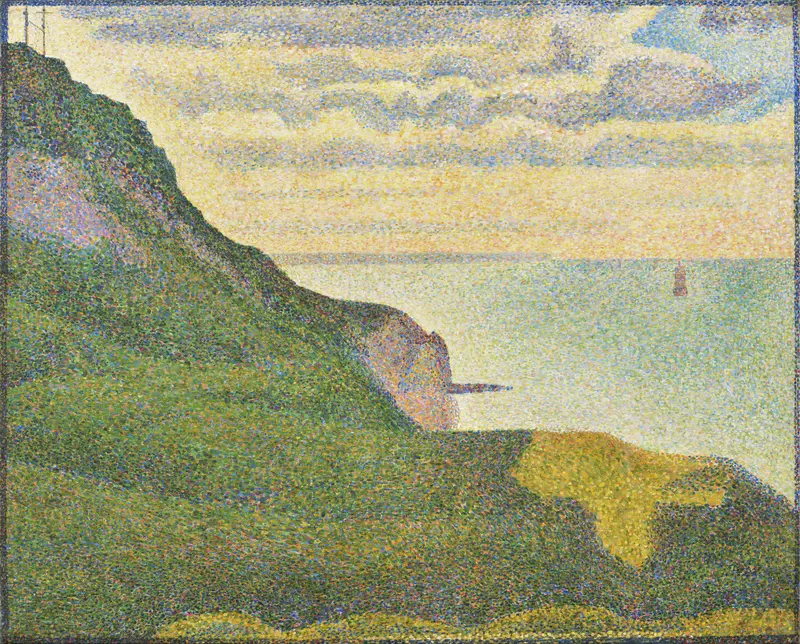
Seascape at Port-en-Bessin,Normandy
Georges Seurat
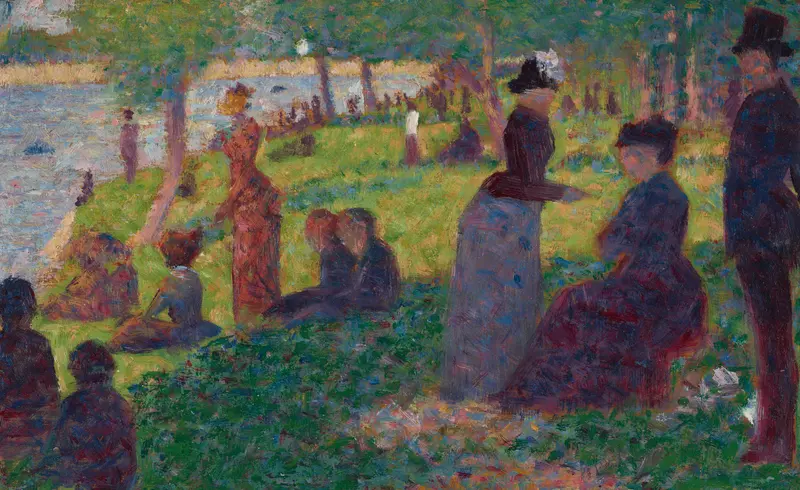
Oil Sketch for "A Sunday on La Grande Jatte — 1884"
Georges Seurat
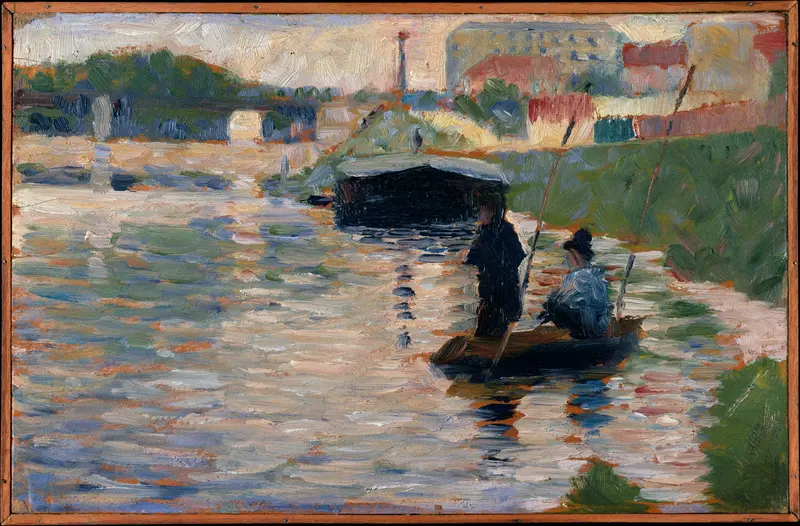
View of the Seine
Georges Seurat
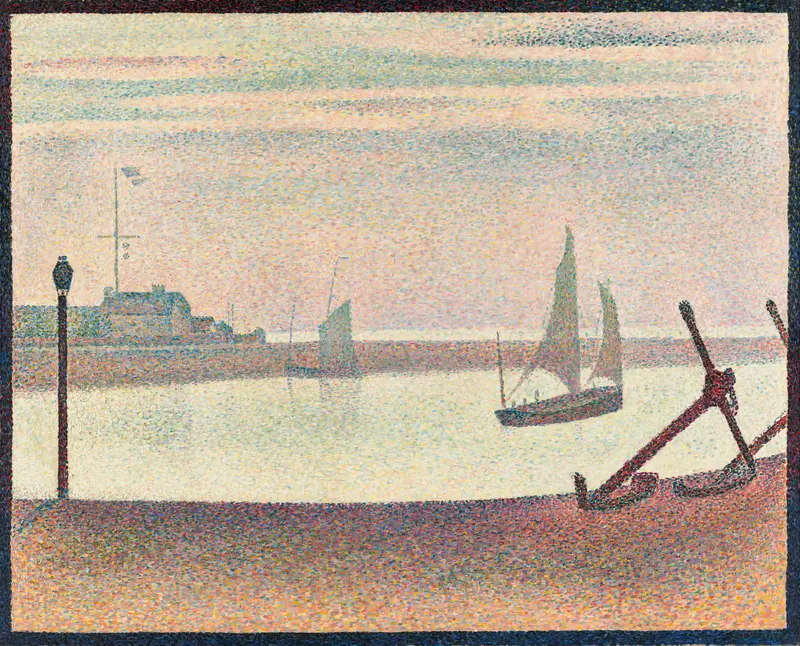
The Channel at Gravelines, Evening
Georges Seurat
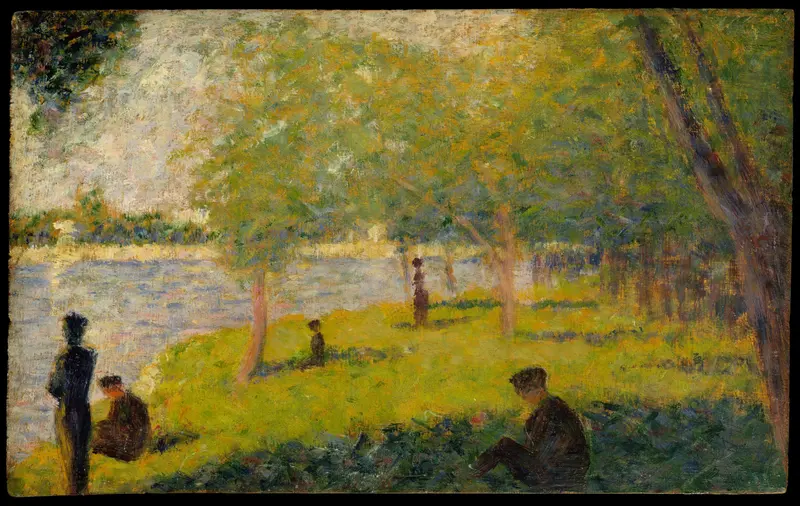
Study for ‘A Sunday on La Grande Jatte’
Georges Seurat
Study for A Sunday on La Grande Jatte
Georges Seurat
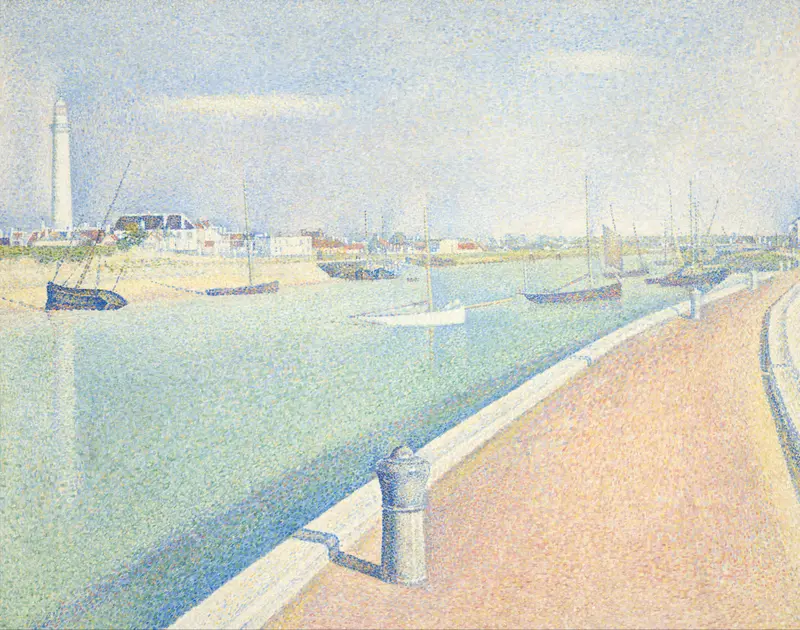
The Channel of Gravelines, Petit Fort Philippe
Georges Seurat
More Landscape Art

The Starry Night
Vincent van Gogh

View of Delft
Johannes Vermeer

Water Lilies
Claude Monet

The Grand Canal, Venice, looking north-west from the Ca' Corner to the Ca' Contarini degli Scrigni, with the campanile of Santa Maria della Carità
Canaletto

Windsor Castle
Canaletto

The Grand Canal looking North-East from the Palazzo Dolfin-Manin to the Rialto Bridge
Canaletto