
Landscape, Nelson — History & Facts
In the embrace of nature, desire finds its voice within the silence of a landscape painted with rich emotion. Focus on the radiant horizon where the warm hues of a setting sun bleed into the cooling blues of twilight. Look closely at the foreground, where lush greenery thrives, each brushstroke revealing Gully’s dedication to capturing the essence of the earth. The composition guides the eye horizontally, inviting the viewer to traverse the tranquil fields that promise both solace and longing.
Notice the delicate interplay of light and shadow, a testament to the artist's deft manipulation of color that evokes a sense of yearning. Hidden in the beauty of this pastoral scene lies a deeper narrative; the tension between the flourishing landscape and the stillness of unfulfilled desire. The vibrant colors suggest a life force, yet the expansive space can evoke feelings of loneliness and longing. The trees, standing stalwart yet vulnerable, symbolize both strength and the fragility inherent in nature—reflecting our own aspirations and the pain of dreams yet to be realized. John Gully created this work in 1871, during a time when the Pre-Raphaelite movement was reshaping British art, emphasizing a return to nature and intricate detail.
Living in England, Gully was inspired by the beauty surrounding him, navigating personal struggles while also witnessing the industrial transformations of his country. This painting encapsulates that duality, a moment where raw beauty and deep desire converge.
More Artworks by John Gully
Browse all →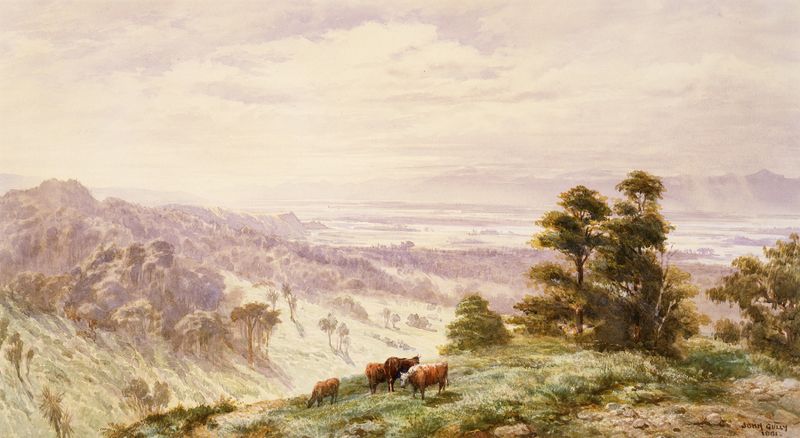
Landscape [Waimea Plains, Nelson]
John Gully
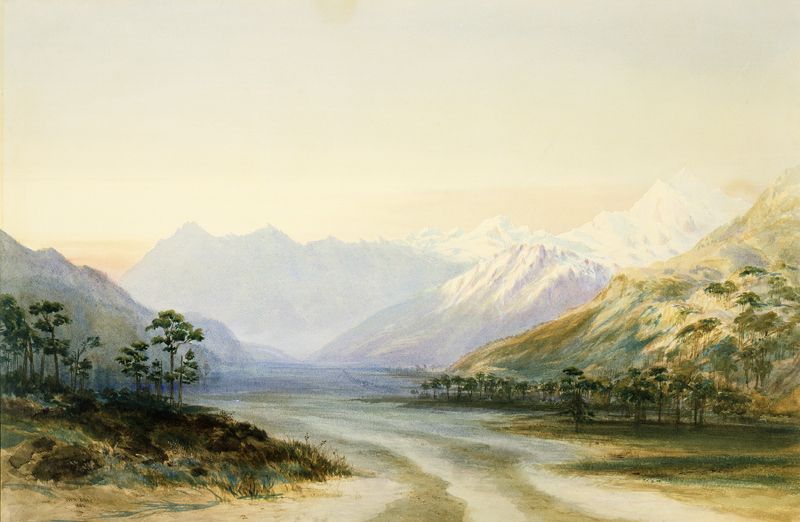
Mount Cook
John Gully
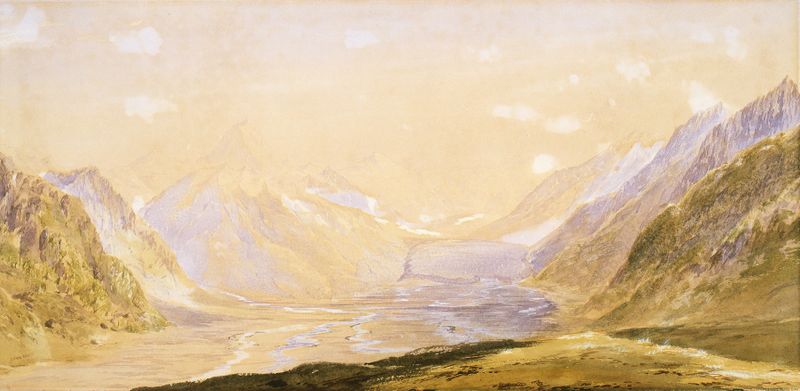
Mount Cook and the Tasman Glacier
John Gully
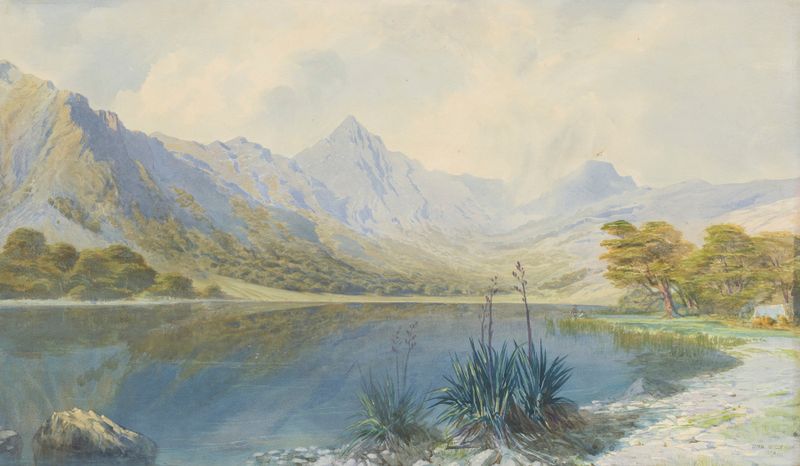
Lake scene (Lake Te Wharau)
John Gully
Mount Cook
John Gully

Tongariro, Ngauruhoe and Ruapehu, Central North Island
John Gully

Lake Wakatipu
John Gully

New Zealand bush scene
John Gully
Upriver scene, Wanganui
John Gully

Paekakariki
John Gully





