
Landscape, Southern Alps — History & Facts
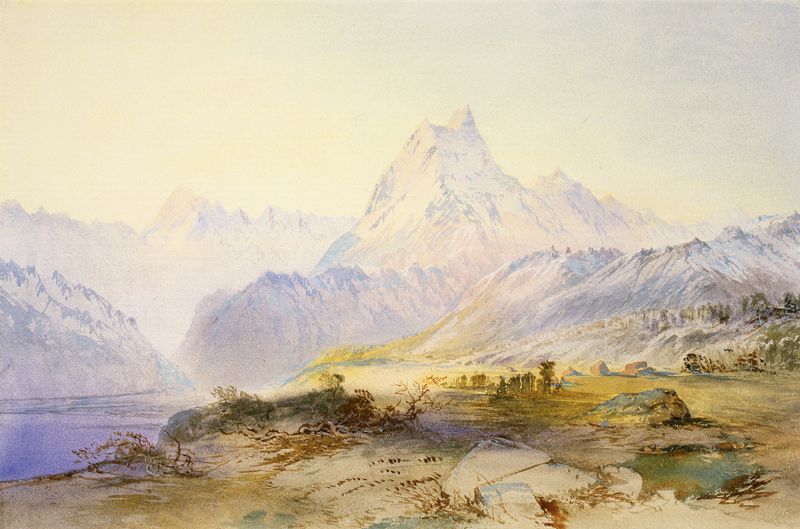
Can beauty exist without sorrow? In the quiet of the Southern Alps, nature’s grandeur plays host to whispers of decay, reminding us that even the most breathtaking landscapes bear traces of time’s relentless passage. Look to the left at the jagged peaks, their grandeur softened by the delicate brushstrokes that evoke a sense of both majesty and melancholy. The muted palette of greens and browns contrasts with the ghostly white of snow-capped summits, as if the mountains themselves are cloaked in a shroud of nostalgia. The foreground bursts with wildflowers, vibrant yet fragile, symbolizing fleeting beauty amidst the encroaching decay of the alpine scene. Beneath the peaceful surface lies a tension between life and dissolution.
The flowers, while alive, hint at decay that is inevitable, their vivid colors juxtaposed against the aging mountains, suggesting that beauty is forever intertwined with loss. This duality invites introspection, urging the viewer to ponder how joy and sorrow coexist, reflecting the artist’s own understanding of nature’s complexities. In 1873, a period marked by a growing appreciation for natural landscapes in art, the artist captured this moment in a time of personal and artistic evolution. Based in England, he was influenced by the Romantic tradition, which sought to convey emotional depth through nature.
This painting came during a time when he sought to express not just the beauty of the scenery, but also a deeper understanding of its transient nature, revealing his introspective quest for meaning amid the splendor of the Southern Alps.
More Artworks by John Gully
Browse all →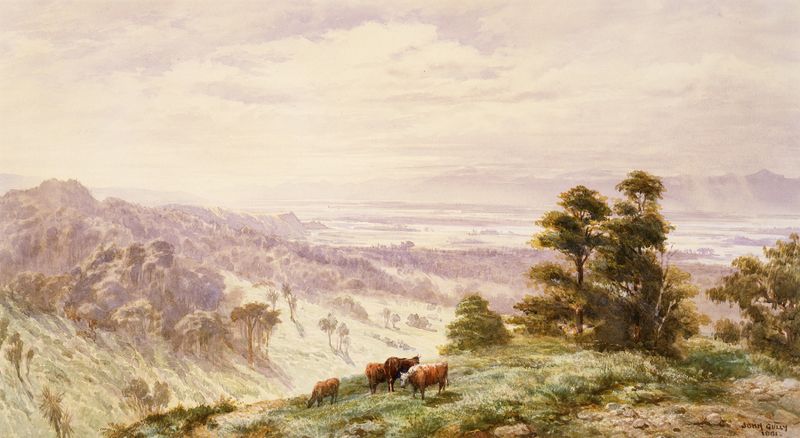
Landscape [Waimea Plains, Nelson]
John Gully
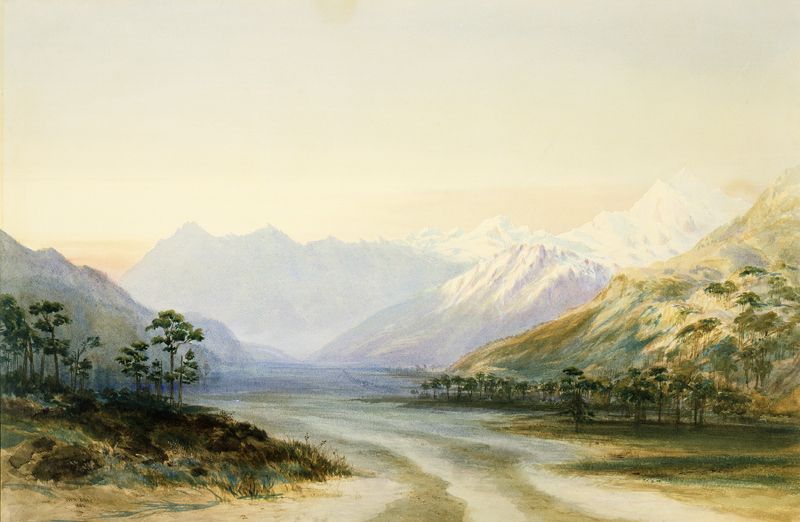
Mount Cook
John Gully
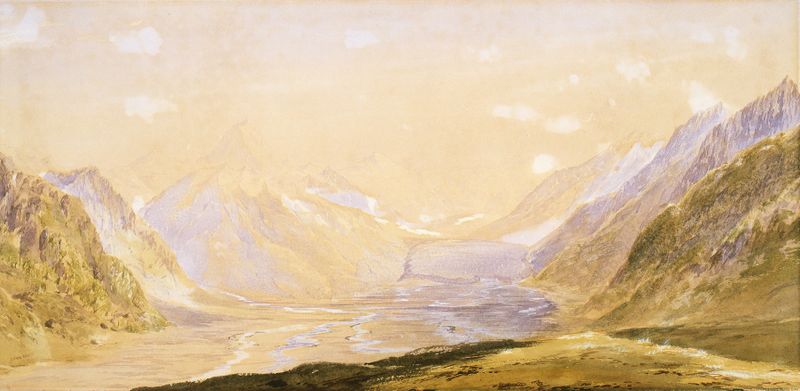
Mount Cook and the Tasman Glacier
John Gully
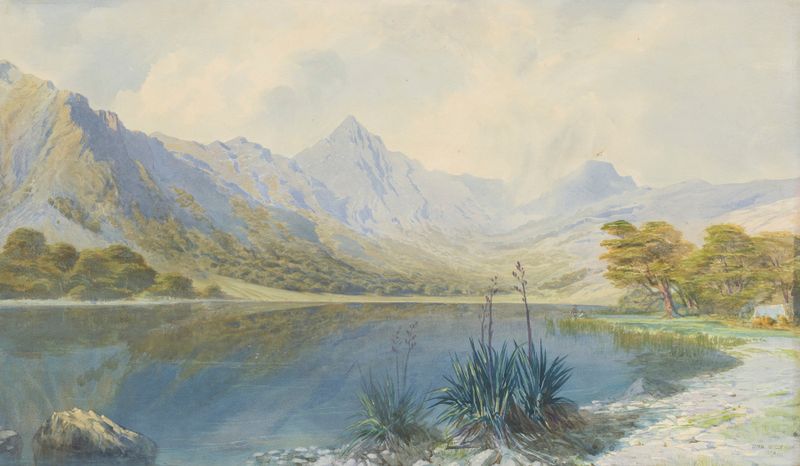
Lake scene (Lake Te Wharau)
John Gully
Mount Cook
John Gully

Tongariro, Ngauruhoe and Ruapehu, Central North Island
John Gully

Lake Wakatipu
John Gully

New Zealand bush scene
John Gully
Upriver scene, Wanganui
John Gully

Paekakariki
John Gully





