
Landscape with a Horseman, Figures, and Cattle — History & Facts
A single tree, tall and arching, commands the scene and draws the eye upward, its branches dividing earth from sky with a delicate tracery. Beneath its shade, a horseman in a red cloak pauses at the water’s edge, his gaze turned toward the cattle resting and drinking nearby. The light is gentle, almost golden, giving the landscape a sense of calm and measured time; the distant city, its towers softened by haze, hints at a world beyond this rural moment.
Every figure is placed with care: the herder with his flock, the two walkers in quiet conversation, the dogs alert at the water’s rim. The low horizon grants the sky a vastness that makes the land feel both intimate and open, a stage for both daily life and distant dreams. Painted around 1655, this work belongs to the world of the Dutch Golden Age, when landscapes like this by Aelbert Cuyp were prized by a new class of collectors eager to see their countryside transformed into scenes of order and prosperity. These paintings were not mere records but celebrations of a land shaped by human hands, where cattle, commerce, and comfort could coexist.
The National Trust’s Waddesdon Manor now houses this canvas, a reminder of how such images traveled far from their origins, carrying with them the ideals and aspirations of their time. Look again at the luminous distance, the careful balance of man, animal, and nature—Cuyp’s vision is one of harmony, but always with a hint of longing for the world just out of reach.
More Artworks by Aelbert Cuyp

The Maas at Dordrecht
Aelbert Cuyp
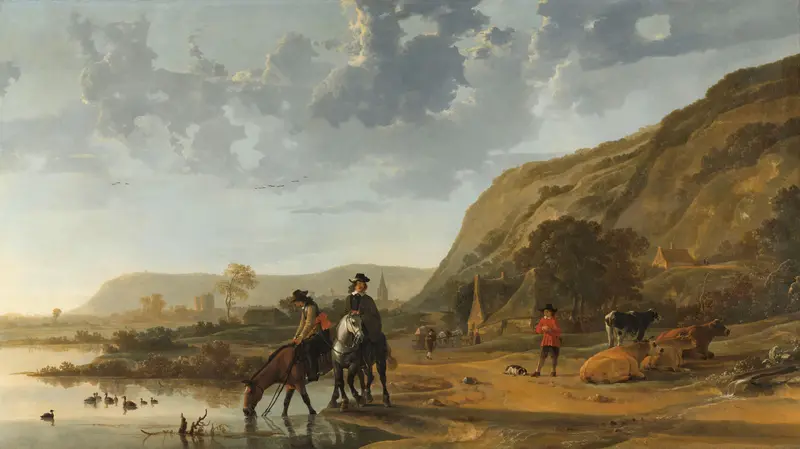
River Landscape with Riders
Aelbert Cuyp

The Maas at Dordrecht
Aelbert Cuyp
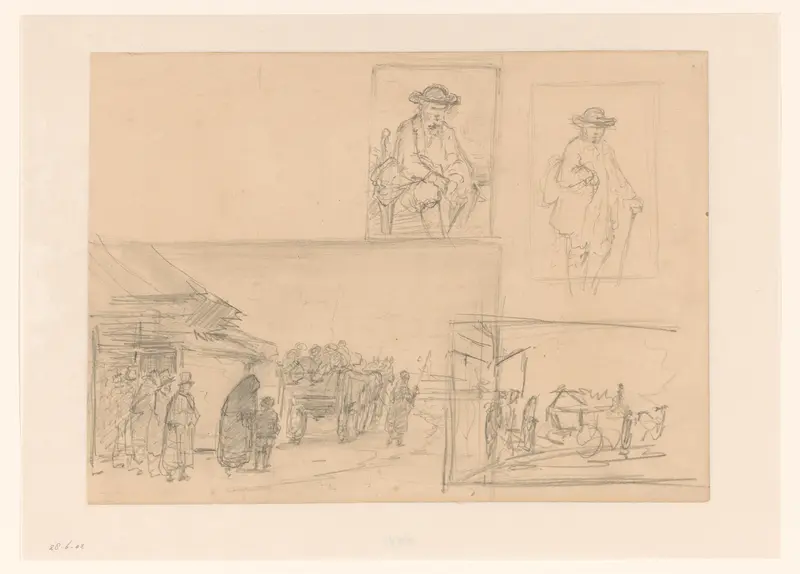
Gezicht op Dordrecht
Aelbert Cuyp
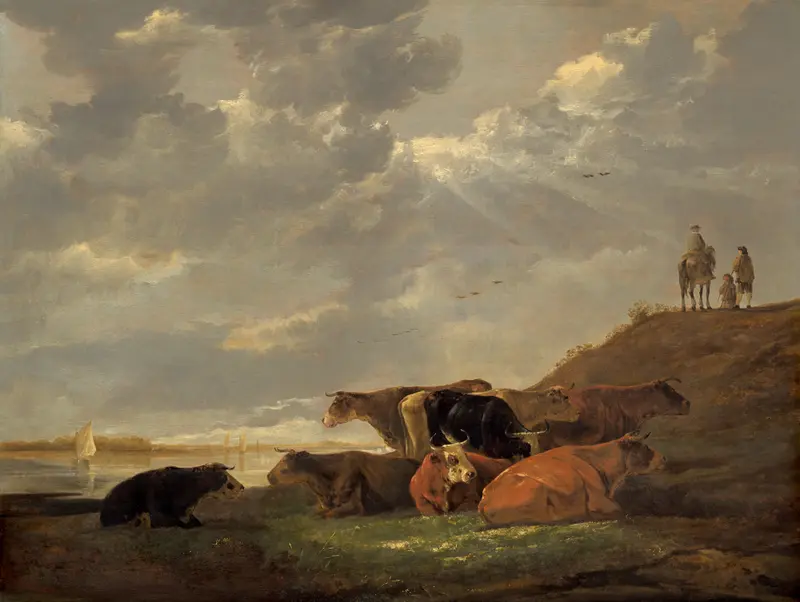
River Landscape with Cows
Aelbert Cuyp
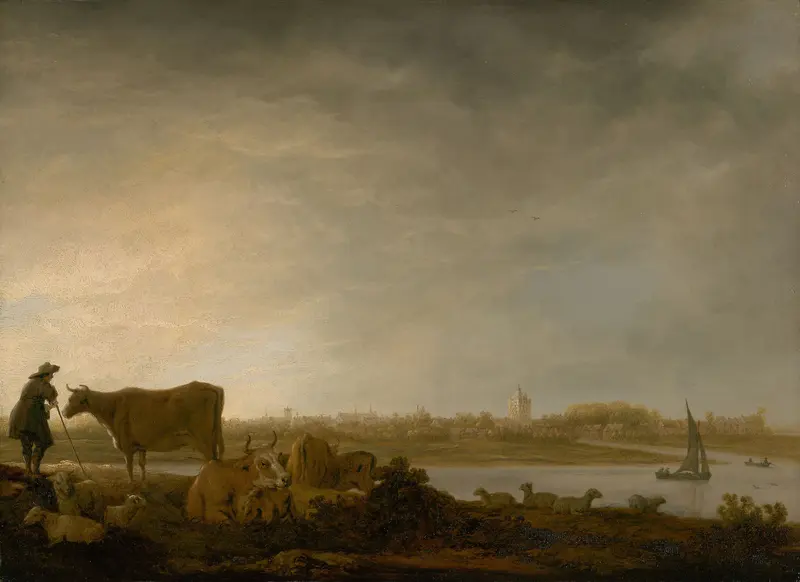
A View of Vianen with a Herdsman and Cattle by a River
Aelbert Cuyp
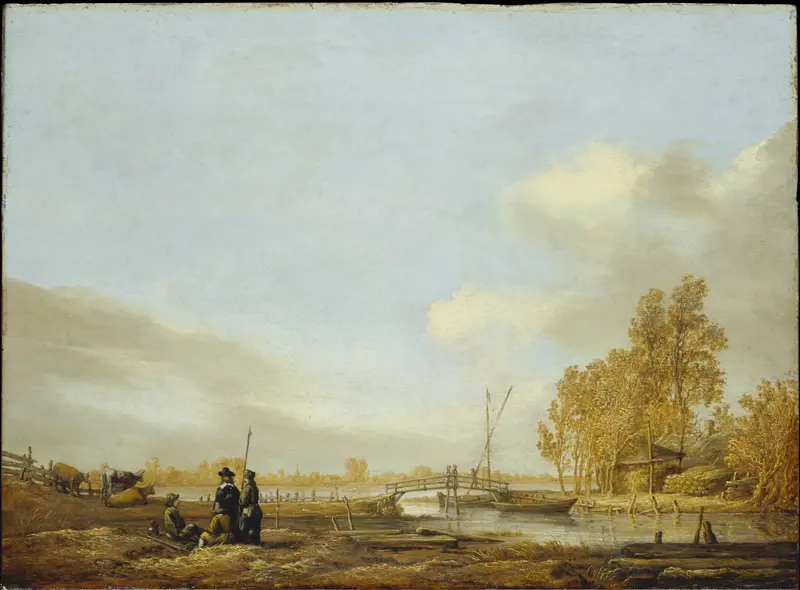
River Landscape with Footbridge
Aelbert Cuyp
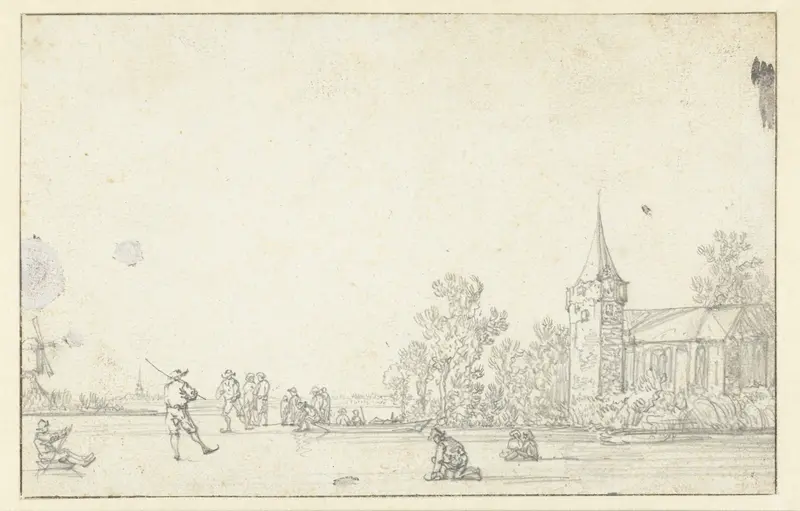
Bevroren rivier met schaatsers bij een kerk
Aelbert Cuyp

Cattle near a River
Aelbert Cuyp
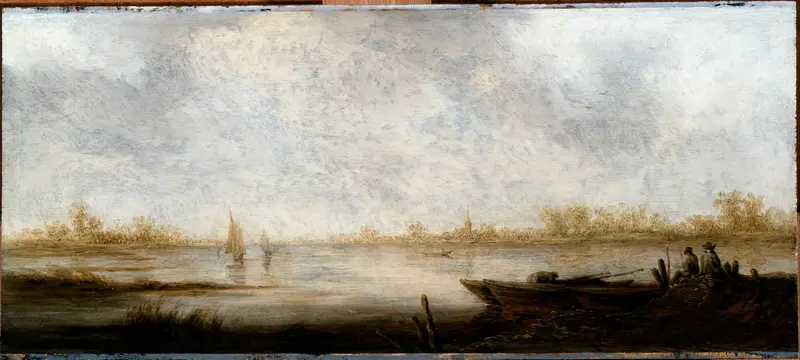
River Landscape
Aelbert Cuyp
More Landscape Art

The Starry Night
Vincent van Gogh

View of Delft
Johannes Vermeer

Water Lilies
Claude Monet

The Grand Canal, Venice, looking north-west from the Ca' Corner to the Ca' Contarini degli Scrigni, with the campanile of Santa Maria della Carità
Canaletto

Windsor Castle
Canaletto

The Grand Canal looking North-East from the Palazzo Dolfin-Manin to the Rialto Bridge
Canaletto