
Landscape with Cattle and Figures — History & Facts
A golden hush settles across the land, drawing your eye first to the luminous sky that stretches above a quiet scene of rural life. The ruin at the left edge of the canvas stands as a silent witness to centuries past, its weathered stones glowing in the late sunlight, while the figures and cattle in the foreground move with the unhurried rhythm of daily work. Light gathers on the backs of the cows and the faces of the herders, picking out gestures—a boy riding bareback, a man in animated conversation—each detail inviting you to imagine the sounds and scents of this moment.
The composition leads your gaze from the shadowed foreground, past the makeshift wooden gate, to the sunlit figures and beyond, into the vastness of the sky where birds drift in formation. The palette, all soft ochres and gentle greens, sets a mood of calm industry, hinting at the painter’s fascination with the quiet drama of ordinary life. Works like Landscape with Cattle and Figures by Aelbert Cuyp belong to a Dutch tradition that celebrated the land and its people during the seventeenth century, when the Republic’s prosperity was built on both trade and agriculture. These pastoral scenes were prized by a new class of urban collectors, who sought reminders of the countryside’s enduring rhythms as cities grew and fortunes changed.
Cuyp’s landscapes, often bathed in golden light, reflect the era’s optimism and the painter’s keen observation of nature and rural labor. Now in the collection of the Detroit Institute of Arts, this painting stands as a testament to a world where the ordinary was worthy of lasting attention—inviting viewers to linger, and to find their own story within its sunlit calm.
More Artworks by Aelbert Cuyp

The Maas at Dordrecht
Aelbert Cuyp
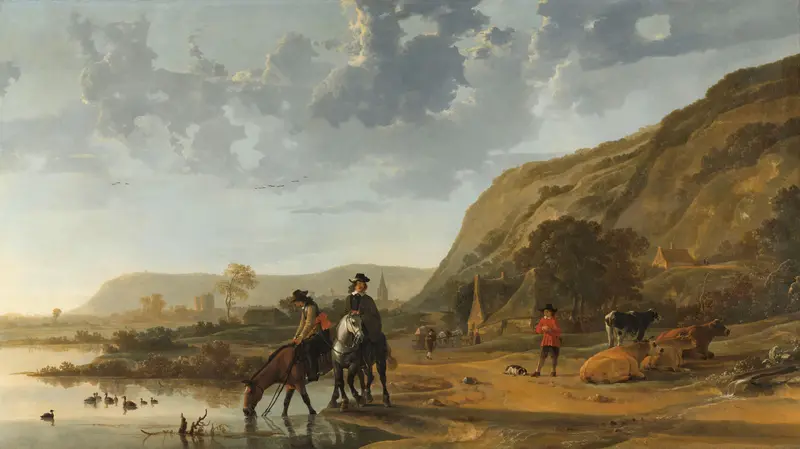
River Landscape with Riders
Aelbert Cuyp

The Maas at Dordrecht
Aelbert Cuyp
Gezicht op Dordrecht
Aelbert Cuyp
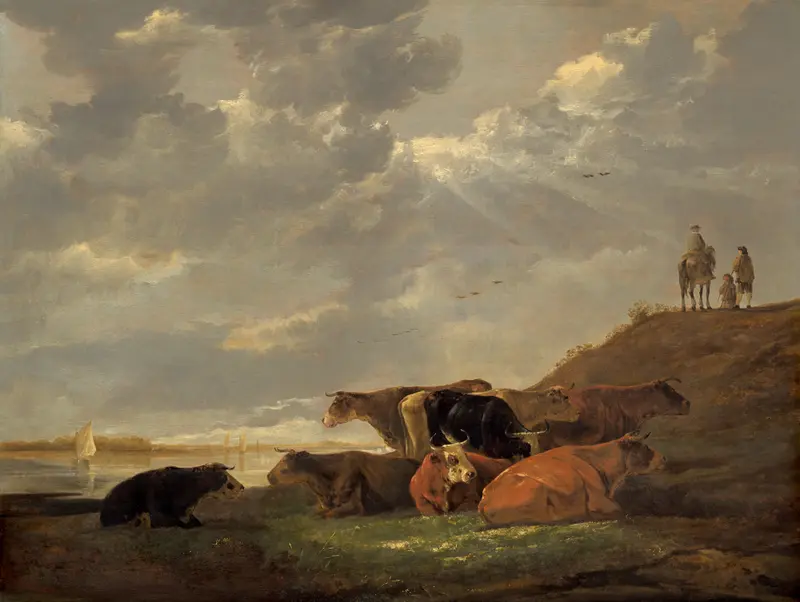
River Landscape with Cows
Aelbert Cuyp
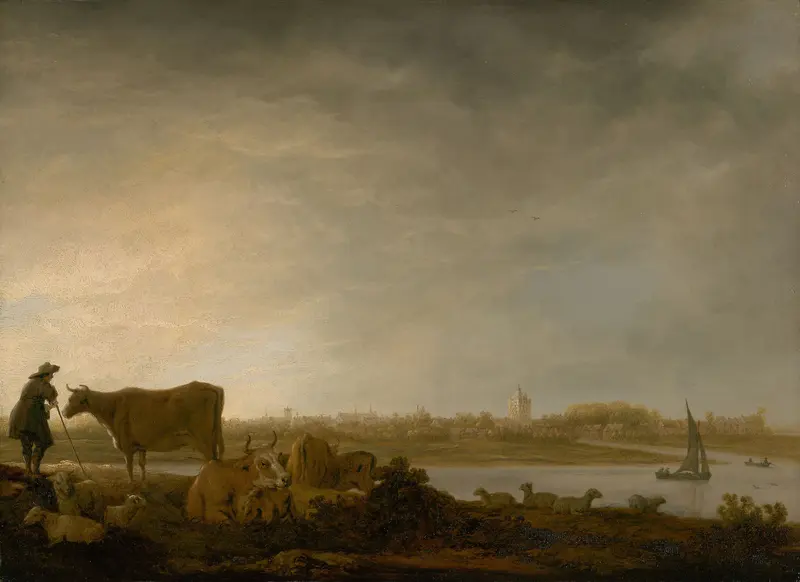
A View of Vianen with a Herdsman and Cattle by a River
Aelbert Cuyp
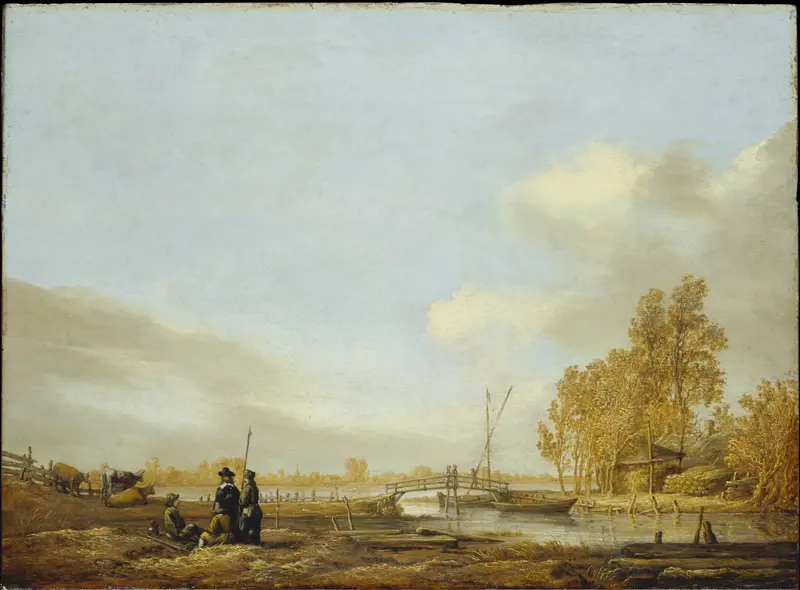
River Landscape with Footbridge
Aelbert Cuyp
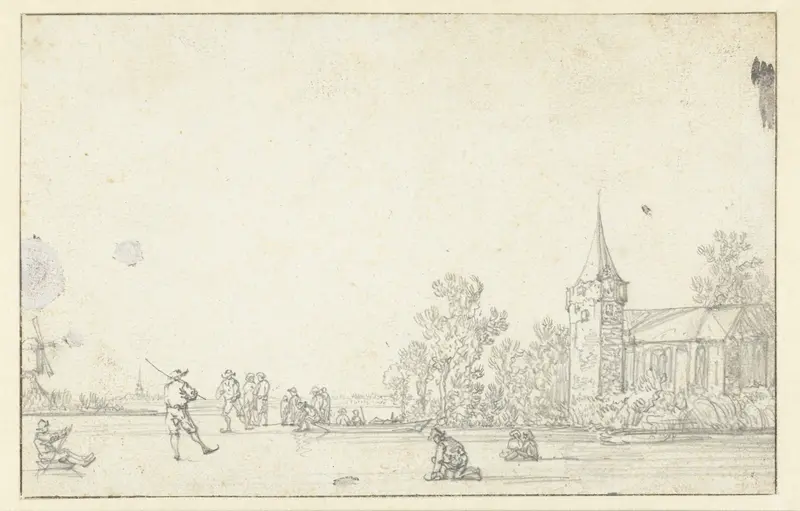
Bevroren rivier met schaatsers bij een kerk
Aelbert Cuyp

Cattle near a River
Aelbert Cuyp
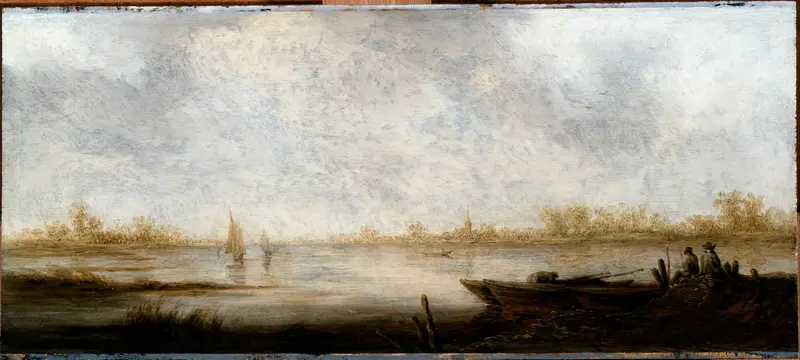
River Landscape
Aelbert Cuyp
More Landscape Art

The Starry Night
Vincent van Gogh

View of Delft
Johannes Vermeer

Water Lilies
Claude Monet

The Grand Canal, Venice, looking north-west from the Ca' Corner to the Ca' Contarini degli Scrigni, with the campanile of Santa Maria della Carità
Canaletto

Windsor Castle
Canaletto

The Grand Canal looking North-East from the Palazzo Dolfin-Manin to the Rialto Bridge
Canaletto