
Landscape with flute-playing herder and cattle — History & Facts
A golden hush settles over this landscape, where the day’s labor pauses and music drifts on the air. The eye is drawn first to the herder, seated in the foreground, his lips pursed to a flute—his gaze meeting ours, inviting us into this moment of rural leisure. The cattle, rendered with a gentle solidity, bask in the warmth beneath a vast, sheltering tree.
The play of light is deliberate: it pours in from the left, gilding the animals’ coats and the herder’s face, while the shadowed foliage above creates a natural canopy. In the distance, tiny figures and more livestock recede into a haze, the low horizon giving the sky and its billowing clouds the stage, as if the whole scene were held in a breath before dusk. Works like this, painted in the mid-17th century Dutch Republic, celebrated the countryside not just as a backdrop but as a world of its own—one where prosperity, peace, and the rhythms of rural life were quietly honored. Artists such as Aelbert Cuyp became known for these sunlit visions, which were prized by wealthy urban patrons longing for a vision of order and plenty.
This painting, now in the Dordrechts Museum and dated between 1635 and 1691, belongs to that tradition: it is both a record of a particular way of seeing and a product of a society in flux, where land, labor, and leisure were being reimagined. The stillness invites the viewer to linger, to listen for the music, and to imagine the slow drift of clouds overhead.
More Artworks by Aelbert Cuyp

The Maas at Dordrecht
Aelbert Cuyp
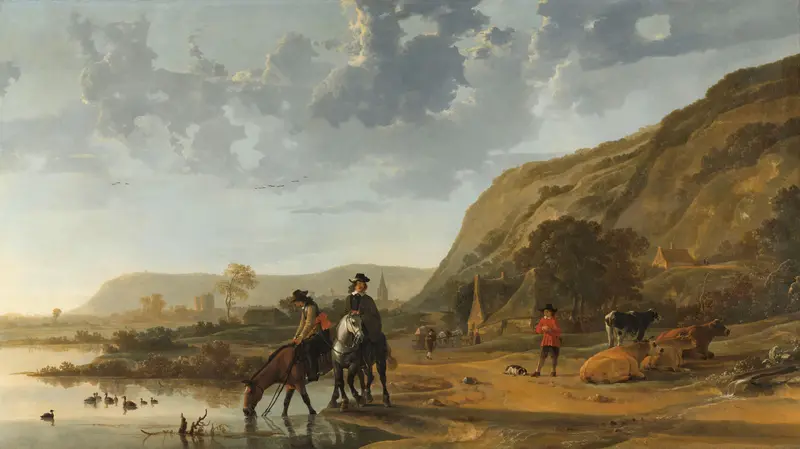
River Landscape with Riders
Aelbert Cuyp

The Maas at Dordrecht
Aelbert Cuyp
Gezicht op Dordrecht
Aelbert Cuyp
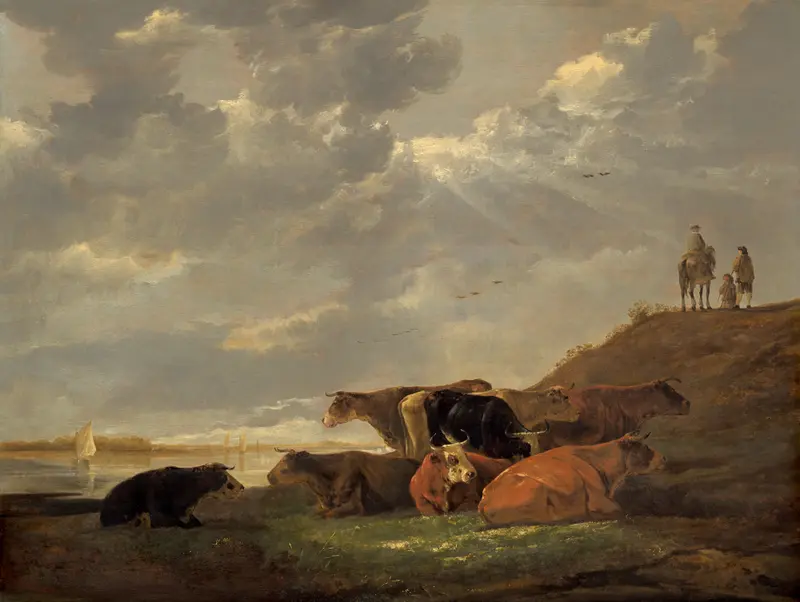
River Landscape with Cows
Aelbert Cuyp
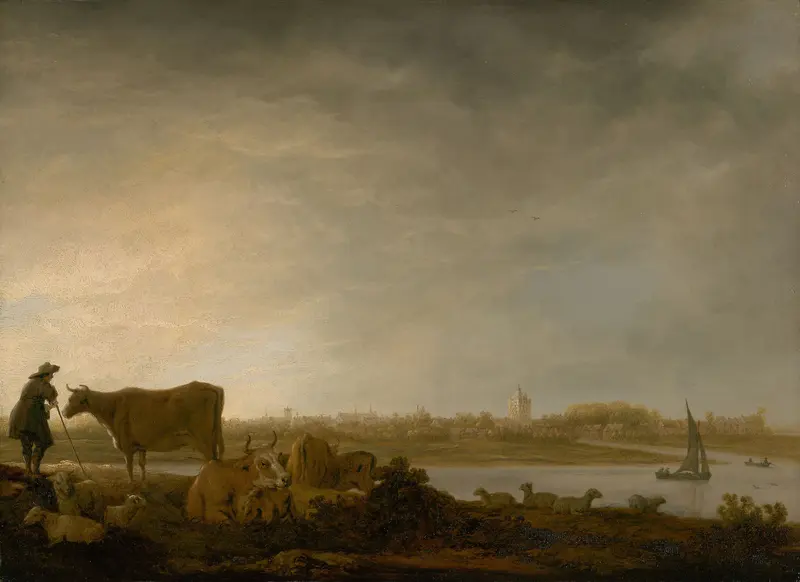
A View of Vianen with a Herdsman and Cattle by a River
Aelbert Cuyp
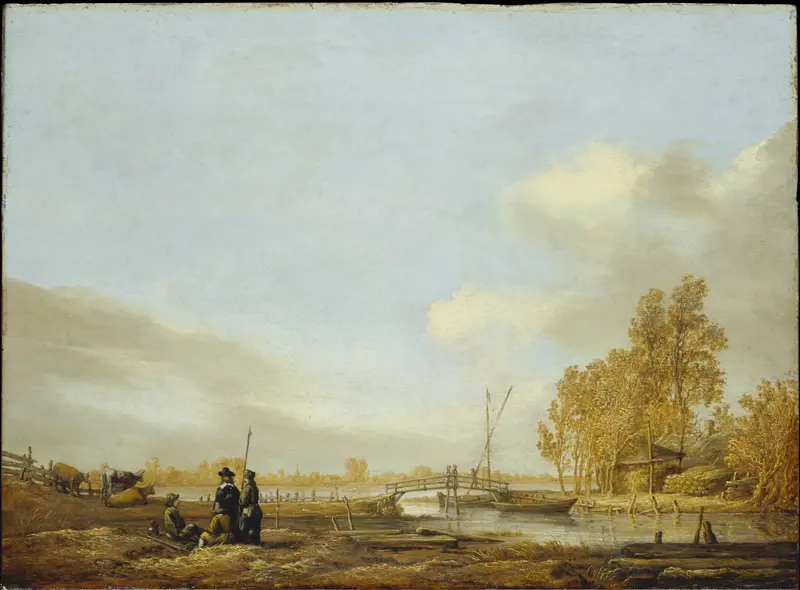
River Landscape with Footbridge
Aelbert Cuyp
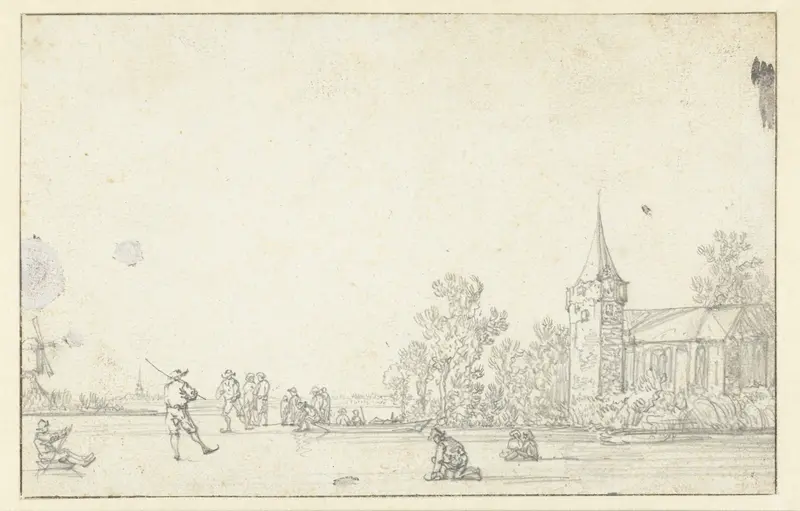
Bevroren rivier met schaatsers bij een kerk
Aelbert Cuyp

Cattle near a River
Aelbert Cuyp
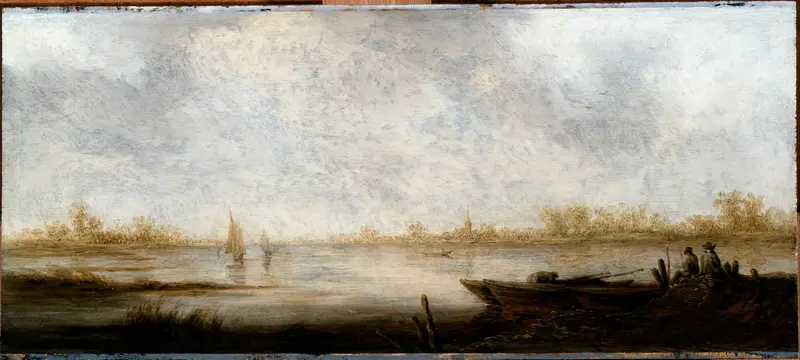
River Landscape
Aelbert Cuyp
More Landscape Art

The Starry Night
Vincent van Gogh

View of Delft
Johannes Vermeer

Water Lilies
Claude Monet

The Grand Canal, Venice, looking north-west from the Ca' Corner to the Ca' Contarini degli Scrigni, with the campanile of Santa Maria della Carità
Canaletto

Windsor Castle
Canaletto

The Grand Canal looking North-East from the Palazzo Dolfin-Manin to the Rialto Bridge
Canaletto