
Landscape with haystacks — History & Facts
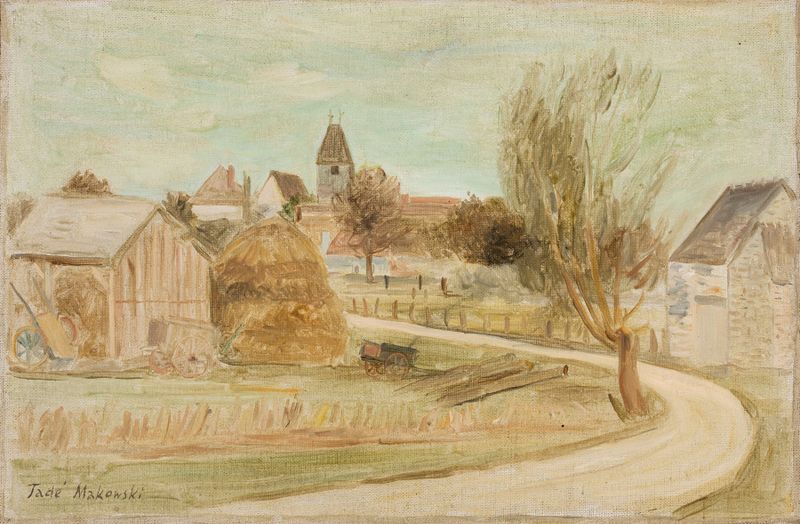
When did color learn to lie? In the rich tapestry of the natural world, hues weave narratives that shimmer with truth and illusion, inviting us to question their very essence. Look to the foreground of Landscape with haystacks, where the golden yellows and deep ochres of the fields meld seamlessly under the sun's benevolent gaze. The haystacks, voluminous and textured, dominate the scene, rendered with thick brushstrokes that evoke a tactile presence. Notice the vibrant blues of the sky above, contrasting against the warm earth tones, creating a harmony that feels both tranquil and dynamic, as if the landscape breathes a sigh of relief in the light. Beneath the surface beauty lies a dialogue between reality and aspiration.
The haystacks, symbols of rural labor, stand not merely as objects of toil but as gateways to a higher understanding of existence, hinting at a transcendence beyond the mundane. The gentle undulations of the land suggest movement, as if the fields themselves yearn for a deeper connection with the sky, reflecting the tension between earthbound existence and the ethereal realm above. In 1906, Tadeusz Makowski painted this work during a time of personal exploration and artistic maturation, influenced by the vibrant post-Impressionist movement and the changing landscape of Polish art. Living in Paris, he sought to capture the essence of rural life, diverging from the confines of conventional representation.
This painting marks a pivotal moment in his journey, where he began to blend realism with a more intuitive, emotive approach, crafting a vision that transcends the ordinary into the realm of the profound.
More Artworks by Tadeusz Makowski
Browse all →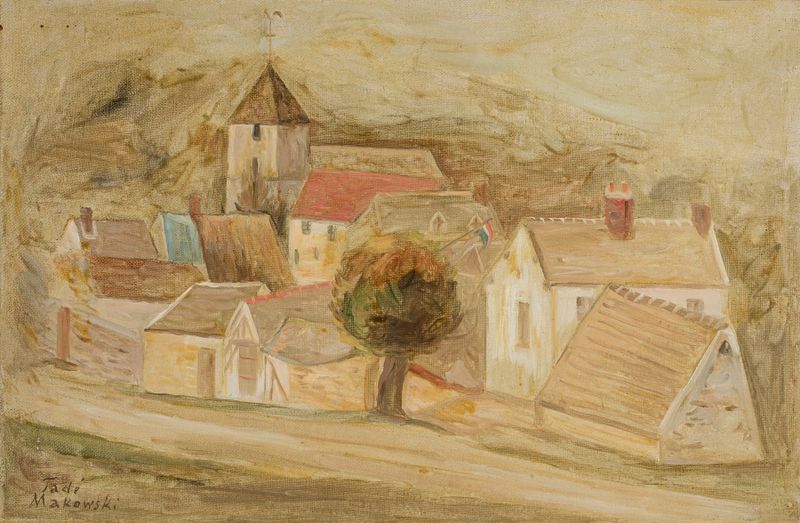
Miasteczko
Tadeusz Makowski

Pejzaż wiosenny
Tadeusz Makowski
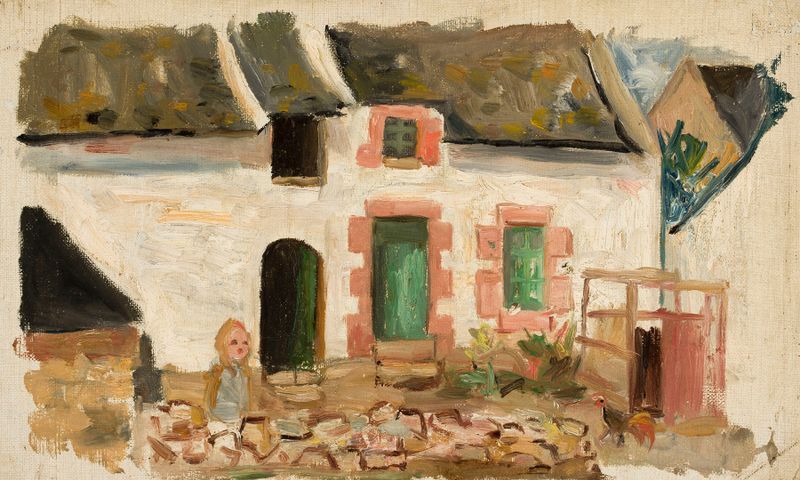
Dziecko przed domem
Tadeusz Makowski
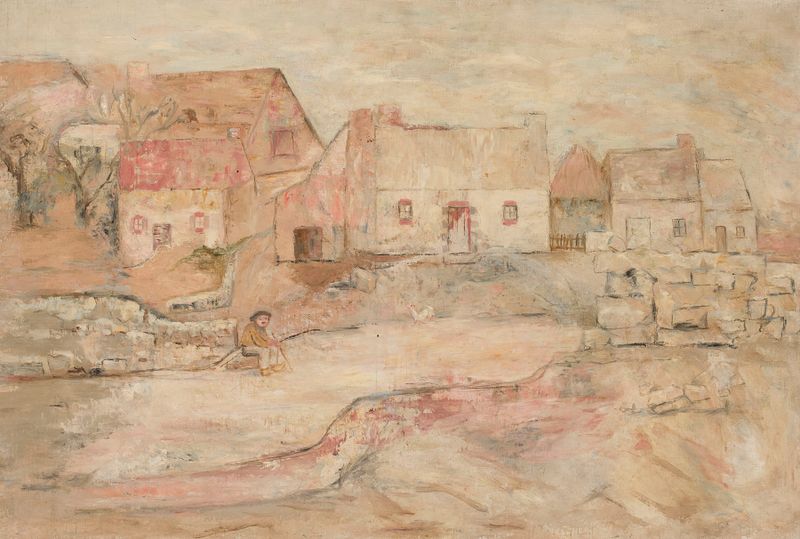
Pejzaż bretoński z siedzącym człowiekiem
Tadeusz Makowski
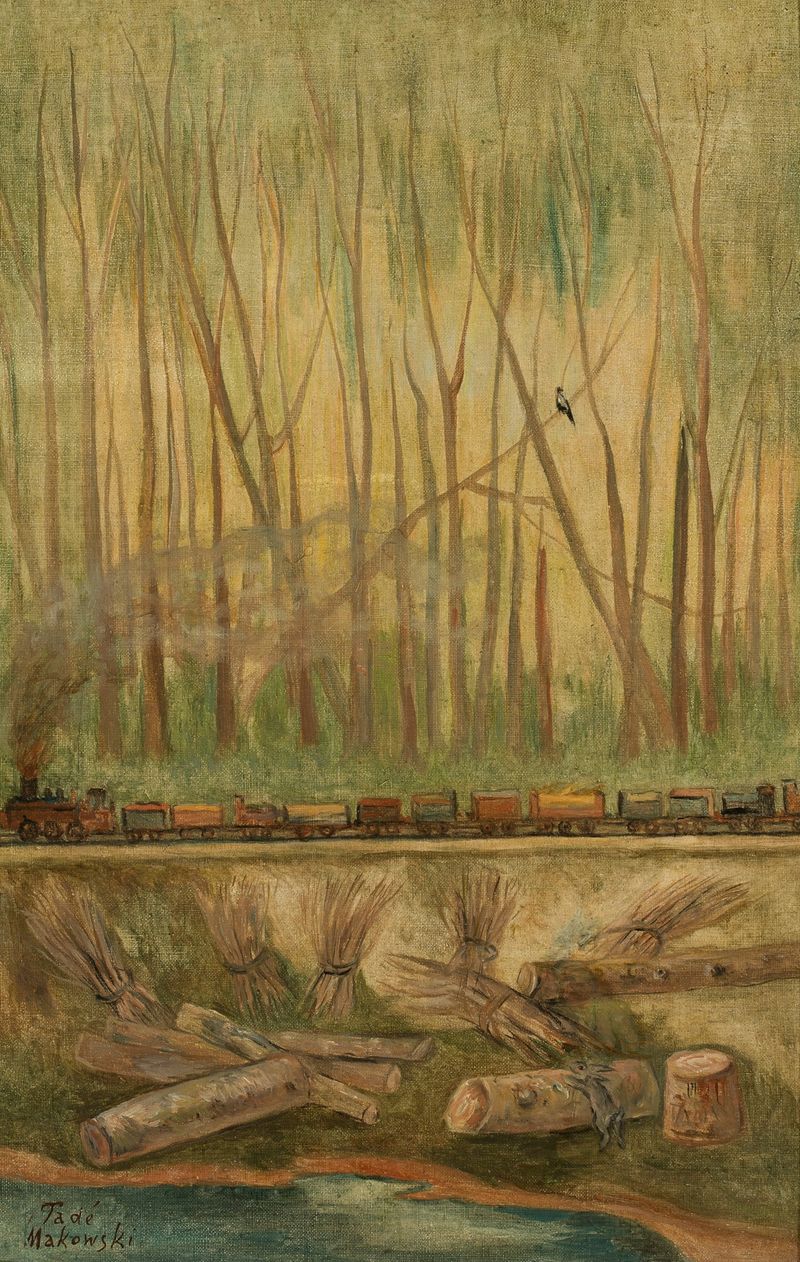
Pociąg
Tadeusz Makowski
Na skraju wsi
Tadeusz Makowski

Pejzaż miejski (Esplanade des Invalides)
Tadeusz Makowski
Latarnia morska w Tréport
Tadeusz Makowski
Landscape of a small town with children in a pram
Tadeusz Makowski
Bridge on the Seine
Tadeusz Makowski





