
Landscape with herdsman and cattle — History & Facts
A hush falls over the landscape as golden light pours across the scene, drawing the viewer’s gaze not to drama or spectacle, but to the gentle rhythm of rural life. The eye is led from the luminous sky—where clouds drift in silent procession—down to a herdsman on horseback, a boy at his side, and cattle ambling along a sunlit path. The figures are small against the vastness of the sky and the towering tree, yet their presence anchors the scene, suggesting a moment of calm purpose.
The light, so characteristic of Aelbert Cuyp, glances off hats and backs, guiding us from the shadowed foreground into the open, airy distance, where a river and distant hills dissolve into haze. Every gesture, from the herdsman’s outstretched arm to the boy’s attentive step, serves to draw us into a world where time seems to slow. Works like this, painted in the Dutch Republic between 1650 and 1660, were shaped by a society newly prosperous and deeply attuned to the land. Landscape painting flourished as a genre, prized by collectors who sought reminders of the countryside’s peace and bounty.
Aelbert Cuyp became known for his ability to capture the changing moods of light and atmosphere, often infusing his scenes with a quiet grandeur that set him apart from his contemporaries. This painting, now in the Rijksmuseum, stands as a testament to a period when artists and patrons alike found meaning in the ordinary—inviting us, centuries later, to linger in the soft glow of a Dutch afternoon.
More Artworks by Aelbert Cuyp

The Maas at Dordrecht
Aelbert Cuyp
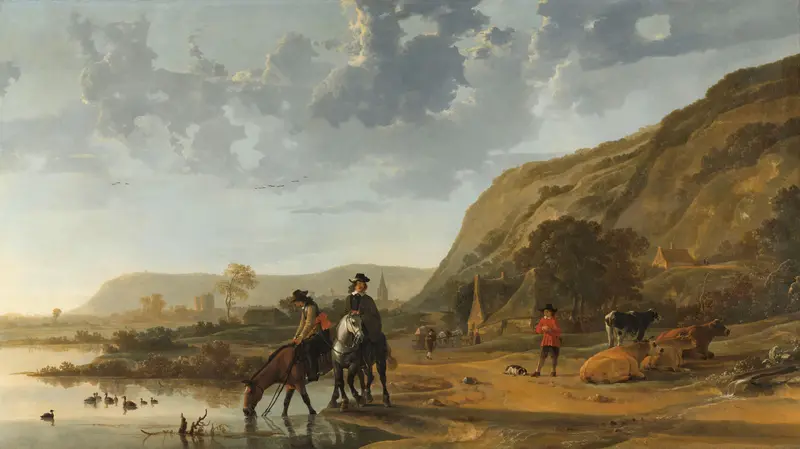
River Landscape with Riders
Aelbert Cuyp

The Maas at Dordrecht
Aelbert Cuyp
Gezicht op Dordrecht
Aelbert Cuyp
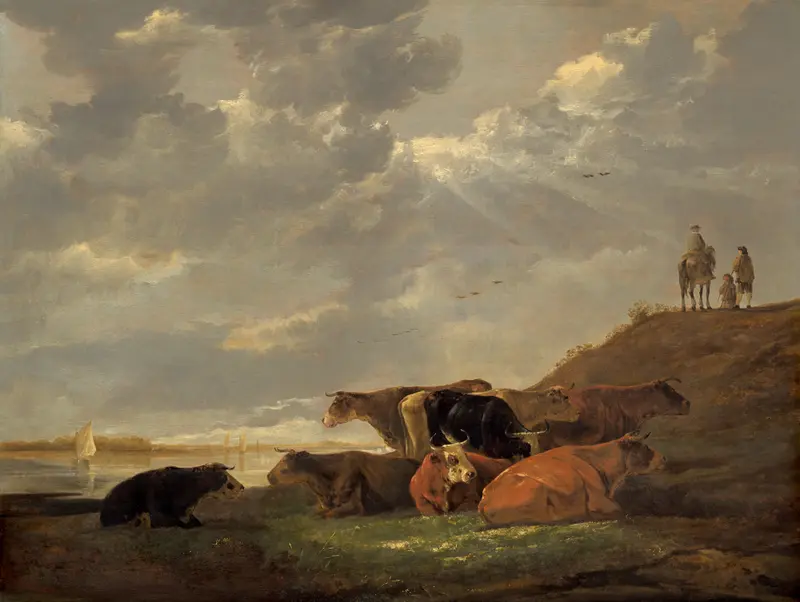
River Landscape with Cows
Aelbert Cuyp
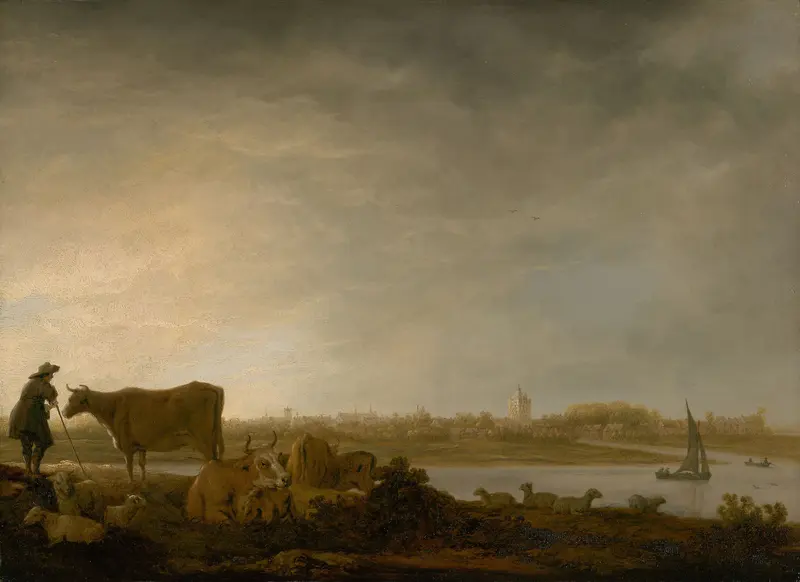
A View of Vianen with a Herdsman and Cattle by a River
Aelbert Cuyp
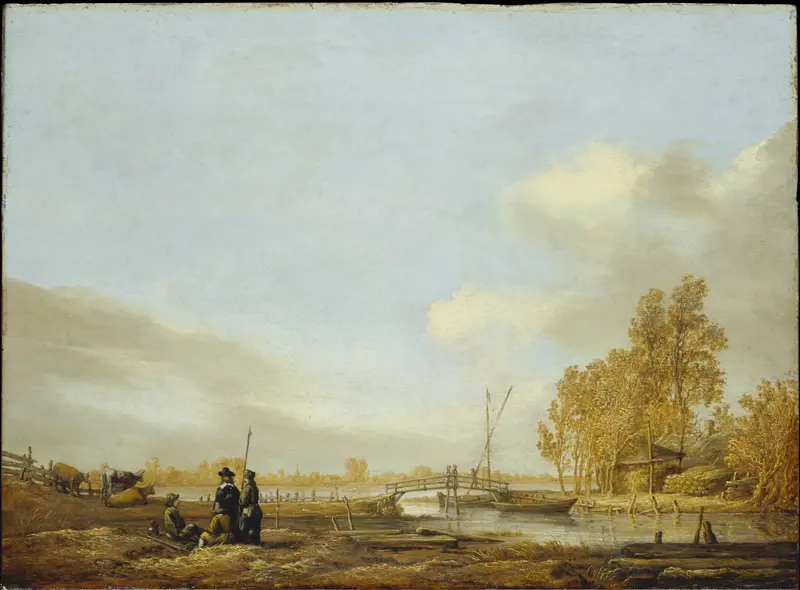
River Landscape with Footbridge
Aelbert Cuyp
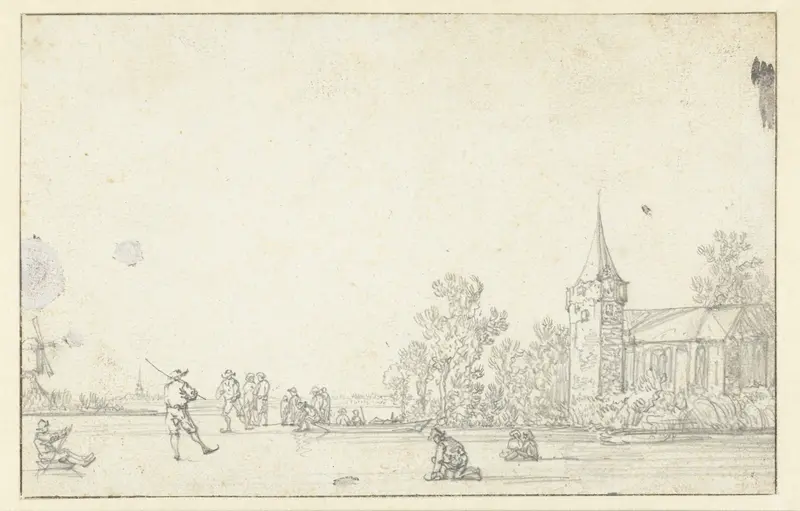
Bevroren rivier met schaatsers bij een kerk
Aelbert Cuyp

Cattle near a River
Aelbert Cuyp
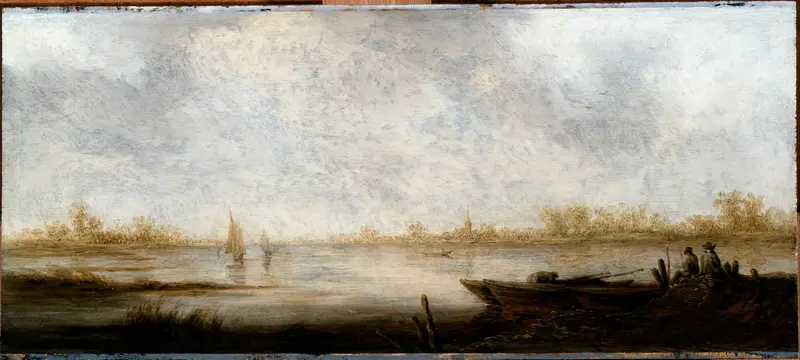
River Landscape
Aelbert Cuyp
More Landscape Art

The Starry Night
Vincent van Gogh

View of Delft
Johannes Vermeer

Water Lilies
Claude Monet

The Grand Canal, Venice, looking north-west from the Ca' Corner to the Ca' Contarini degli Scrigni, with the campanile of Santa Maria della Carità
Canaletto

Windsor Castle
Canaletto

The Grand Canal looking North-East from the Palazzo Dolfin-Manin to the Rialto Bridge
Canaletto