
Landscape With Huntsman — History & Facts
What secret hides in the quiet of the canvas? In Landscape With Huntsman, the stillness of nature envelops a solitary figure, blurring the line between the earthly and the divine. Look to the left at the huntsman, his dark silhouette standing against the verdant backdrop, a symbol of humanity's fleeting presence in the vast expanse of nature. Notice how the brushstrokes blend seamlessly, creating a delicate interplay of light and shadow that conveys an ethereal atmosphere. The palette, a harmonious combination of greens, browns, and soft grays, draws you into a world where tranquility reigns, inviting contemplation of the divine in the everyday. Yet, beneath this serene surface lies a tension between man and nature.
The huntsman, poised and still, suggests both a connection to the wilderness and an impending disruption of its peace. The distant trees, rendered in soft focus, evoke a sense of the infinite, while the darker foreground hints at the lurking dangers of existence, reminding us that the hunt for sustenance can easily turn into a battle against the divine stillness that surrounds us. In 1859, George Inness painted this work during a time of personal and artistic growth, marked by his emerging interest in spiritualism and the natural world. Living in the United States, he was exploring new ideas about the relationship between humanity and the divine through landscape painting, reflecting a broader movement in art that sought to capture the sublime beauty of nature and its deeper meanings.
More Artworks by George Inness
Browse all →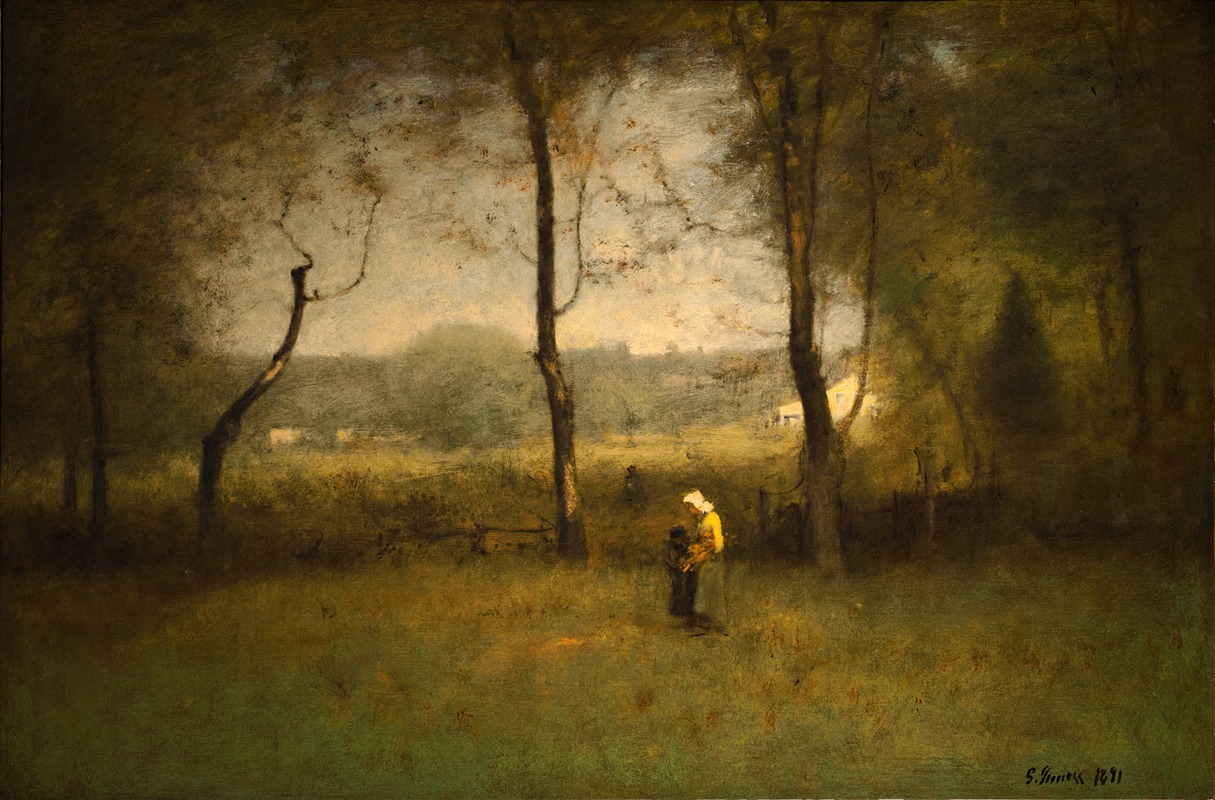
Autumn Woods
George Inness
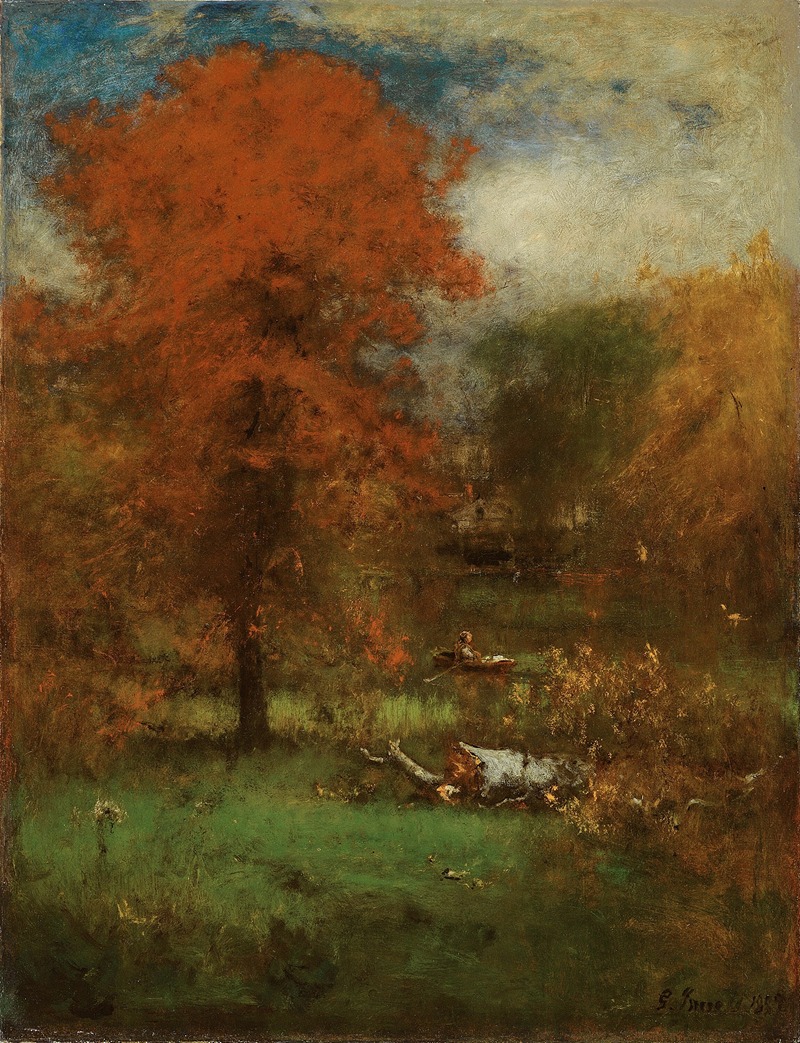
The Mill Pond
George Inness
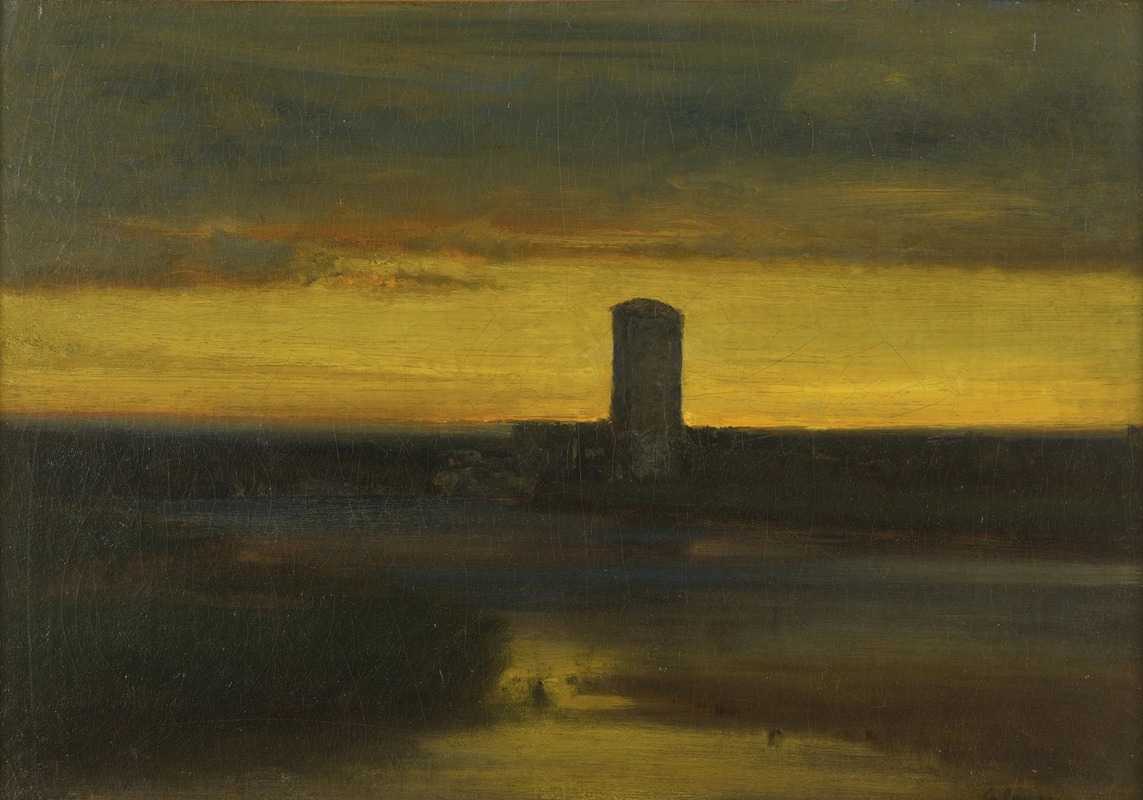
Afterglow
George Inness
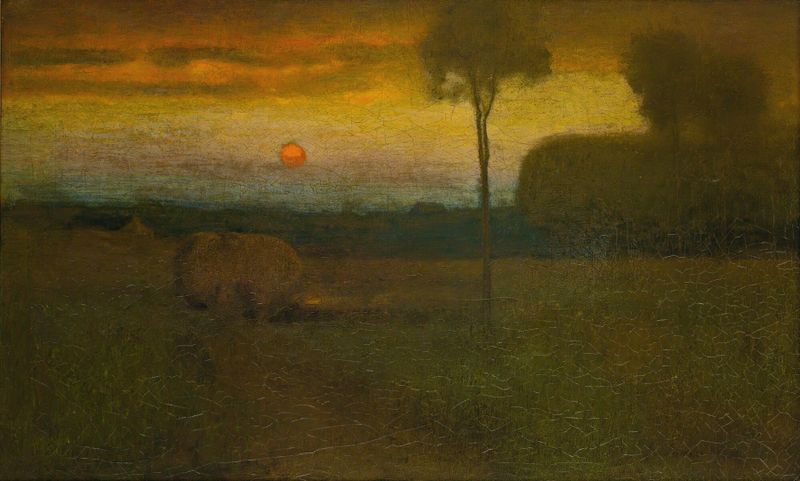
Landscape (Evening Landscape)
George Inness

Montclair
George Inness

View in Berkshire County, Massachusetts, Clearing Off after a September Storm
George Inness

October
George Inness
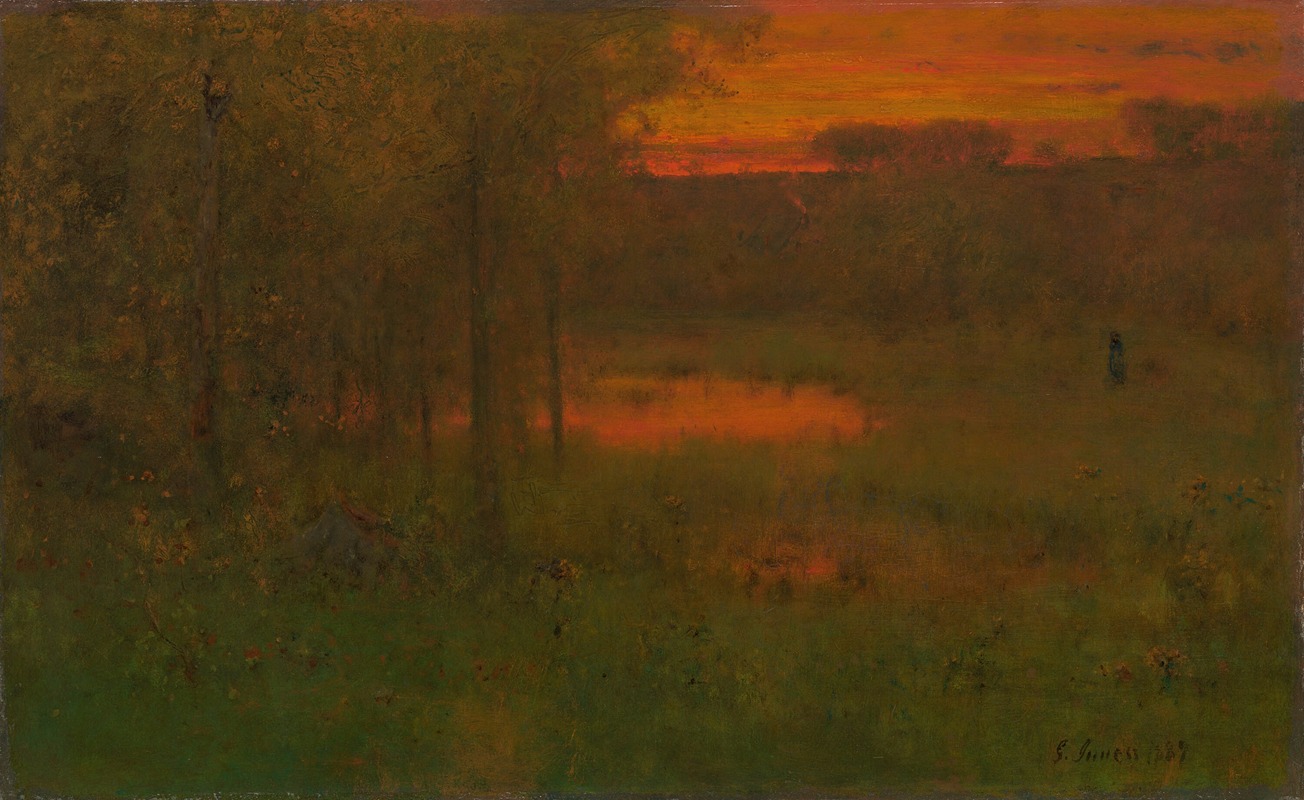
Landscape, Sunset
George Inness
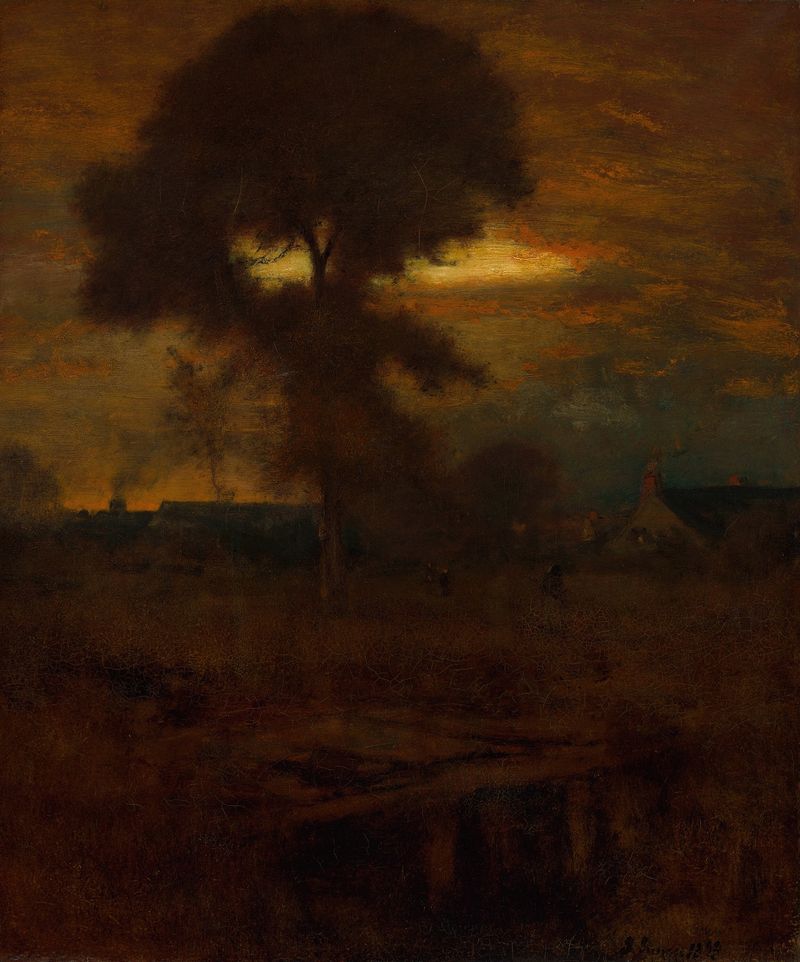
Afterglow
George Inness
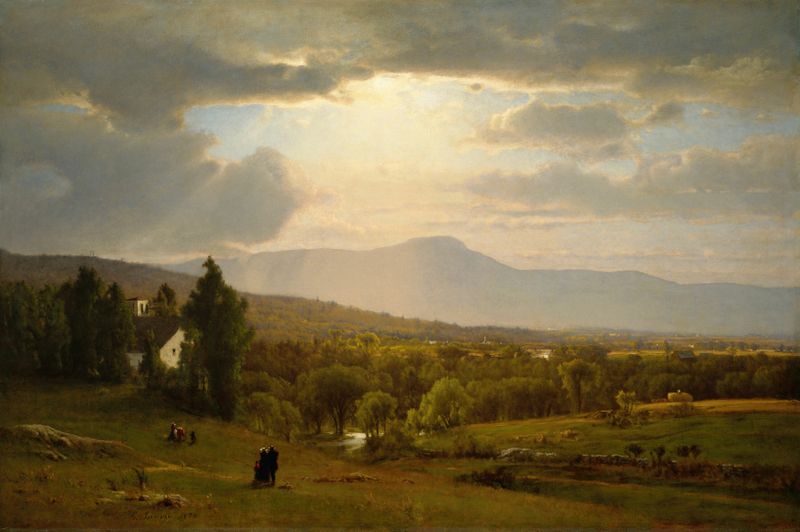
Catskill Mountains
George Inness





