
Landscape with Puvis de Chavannes' Poor Fisherman — History & Facts
When Georges Seurat painted Landscape with Puvis de Chavannes' Poor Fisherman in 1881, he was just twenty-two years old and still searching for his artistic voice. The most intriguing aspect of this work is its open homage to another painter: Puvis de Chavannes. Rather than copying, Seurat reimagines Puvis’ celebrated figure of the impoverished fisherman, a motif that had recently stirred the Parisian art world.
This early canvas stands as a rare document of a young artist in dialogue with his idols, before he would go on to invent Pointillism and change the course of modern art. The scene unfolds on a riverbank, where a solitary fisherman sits hunched over his line, his posture echoing the quiet resignation found in Puvis’ own The Poor Fisherman. Seurat’s version, however, places the figure within a broader landscape, the river shimmering beneath a pale sky, and the distant city barely visible through a haze. The fisherman’s tattered clothes and bowed head speak of hardship, while the gentle diffusion of light softens the bleakness of his situation.
Unlike Puvis’ nearly allegorical treatment, Seurat’s eye lingers on the real textures of earth and water, hinting at the influence of Barbizon painters such as Jean-François Millet, who also dignified the rural poor. Little is known about the early history of this painting, including its medium, which remains undocumented. It likely remained in Seurat’s studio, a personal exercise rather than a commissioned work, until later rediscovery. As an object, it marks a formative moment in Seurat’s career, bridging his academic training and the radical experiments that would soon define Neo-Impressionism.
Today, Landscape with Puvis de Chavannes' Poor Fisherman is valued as a rare glimpse into the apprenticeship of a future innovator, bearing witness to the artistic currents of 1880s Paris.
More Artworks by Georges Seurat
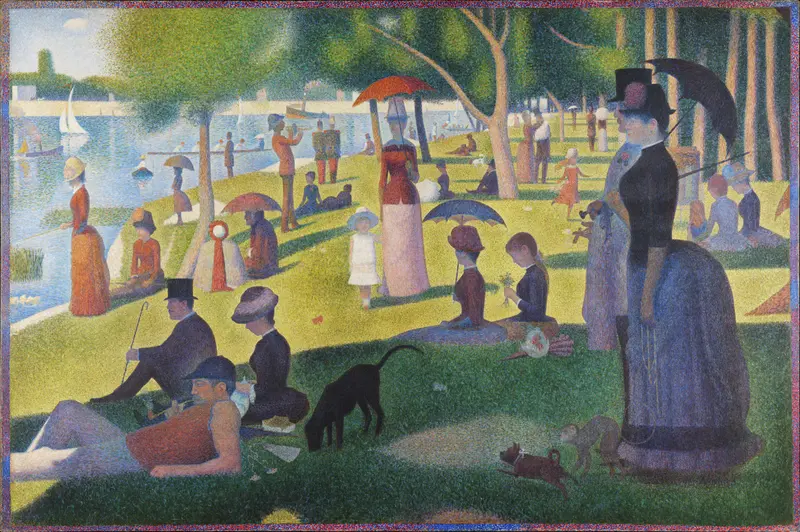
A Sunday Afternoon on the Island of La Grande Jatte
Georges Seurat
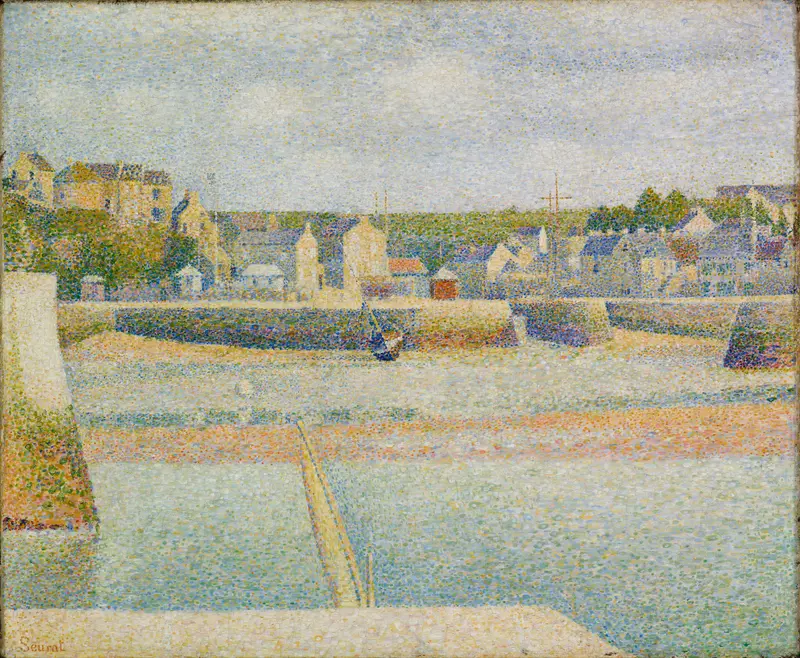
Port-en-Bessin, The Outer Harbor (Low Tide)
Georges Seurat
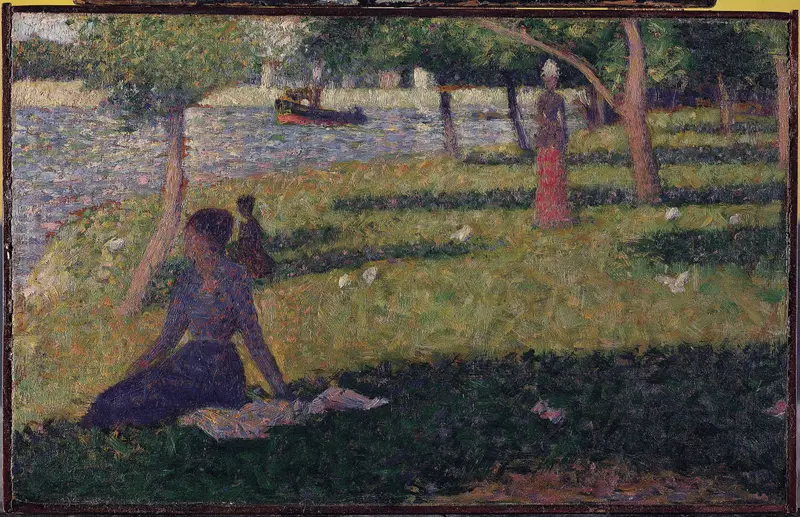
Étude pour ‘La Grande Jatte’ (Study for ‘La Grande Jatte’)
Georges Seurat
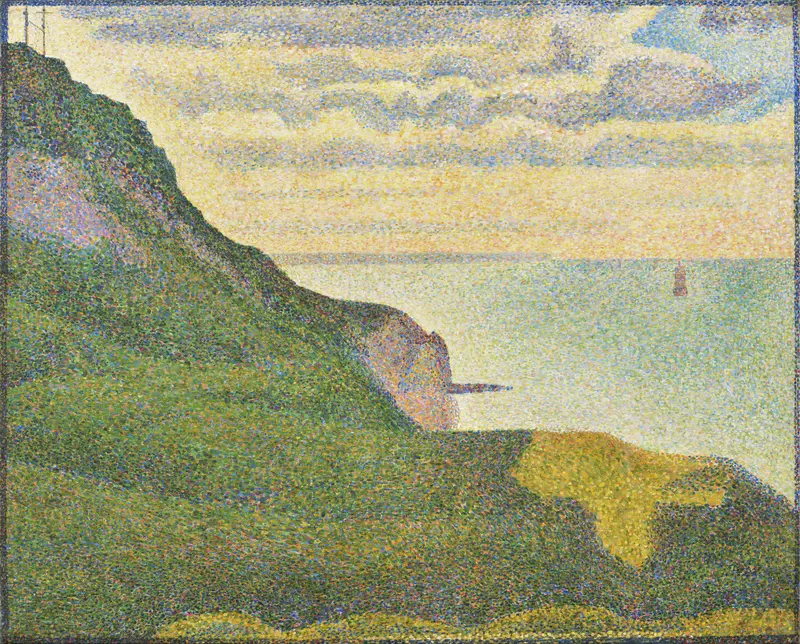
Seascape at Port-en-Bessin,Normandy
Georges Seurat
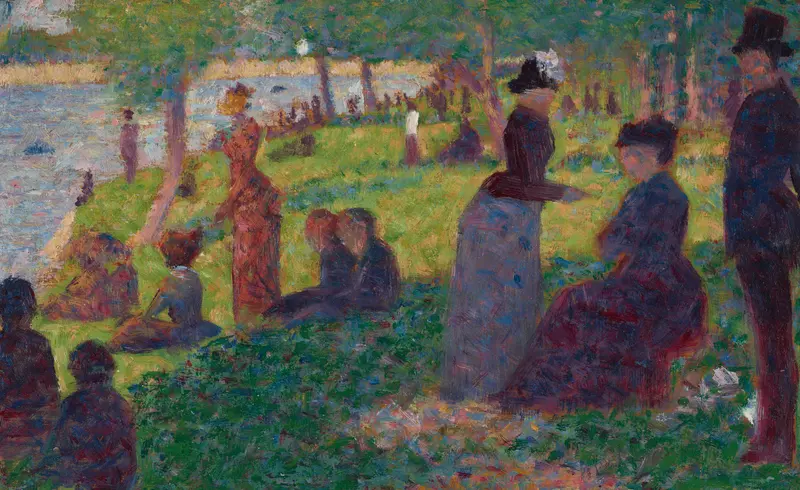
Oil Sketch for "A Sunday on La Grande Jatte — 1884"
Georges Seurat
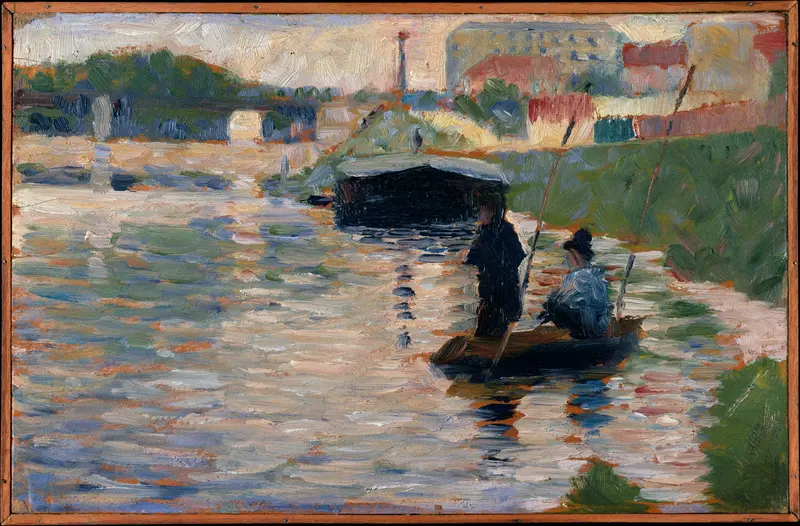
View of the Seine
Georges Seurat
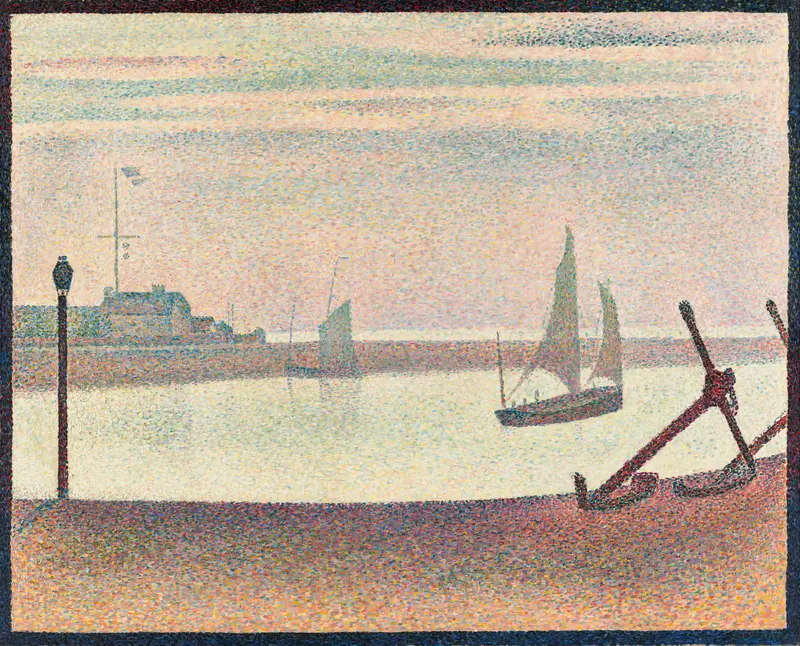
The Channel at Gravelines, Evening
Georges Seurat
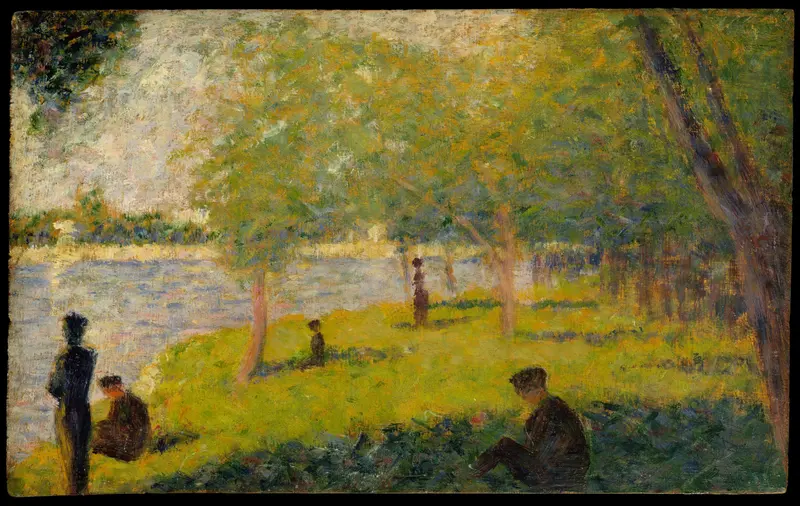
Study for ‘A Sunday on La Grande Jatte’
Georges Seurat
Study for A Sunday on La Grande Jatte
Georges Seurat
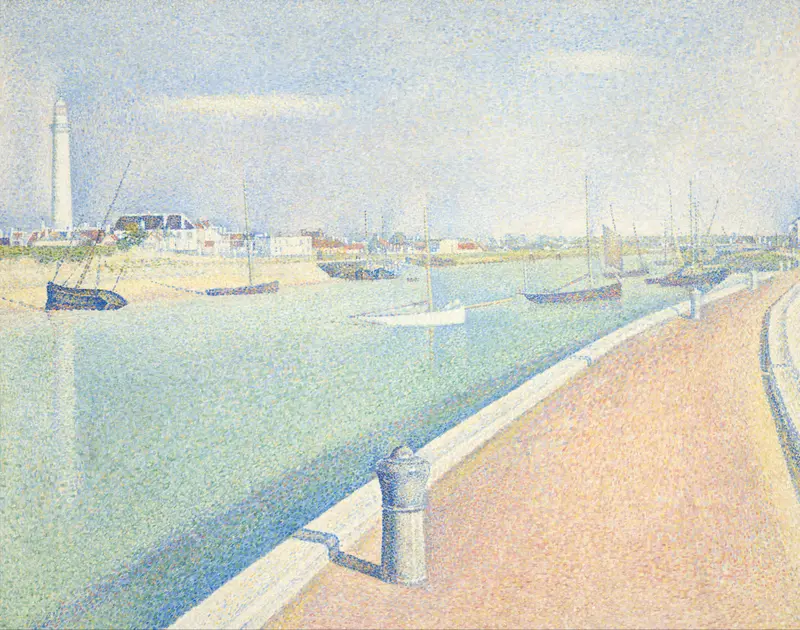
The Channel of Gravelines, Petit Fort Philippe
Georges Seurat
More Landscape Art

The Starry Night
Vincent van Gogh

View of Delft
Johannes Vermeer

Water Lilies
Claude Monet

The Grand Canal, Venice, looking north-west from the Ca' Corner to the Ca' Contarini degli Scrigni, with the campanile of Santa Maria della Carità
Canaletto

Windsor Castle
Canaletto

The Grand Canal looking North-East from the Palazzo Dolfin-Manin to the Rialto Bridge
Canaletto