
Landscape with Shepherds and Shepherdesses — History & Facts
What draws the eye first in Landscape with Shepherds and Shepherdesses is not the figures themselves, but the golden hush that settles over the entire scene. The painter, Aelbert Cuyp, orchestrates the light so that it pools around the shepherds and their flock, bathing them in a warm clarity that feels both everyday and quietly monumental. The gestures of the central figures—one pointing into the distance, another resting with a staff, a woman seated among the animals—invite us to imagine a conversation or a moment of decision, but Cuyp withholds the narrative’s resolution.
Instead, the painting encourages us to linger in the space between action and repose, following the sweep of the landscape as it opens toward a distant castle and a lone figure tending sheep on the horizon. Painted in 1643, this work belongs to the Dutch Golden Age, a period when landscape painting flourished as never before. Scenes like this were prized by prosperous urban patrons who longed for an idealized countryside, even as the Netherlands was shaped by commerce and change. Cuyp’s landscapes, with their glowing light and tranquil order, offered a vision of rural harmony that was both nostalgic and newly fashionable.
While history has kept few traces of this specific painting’s journey, its presence in a modern collection reminds us how these imagined pastures continue to draw the viewer in, promising a moment of stillness within the sweep of time.
More Artworks by Aelbert Cuyp

The Maas at Dordrecht
Aelbert Cuyp
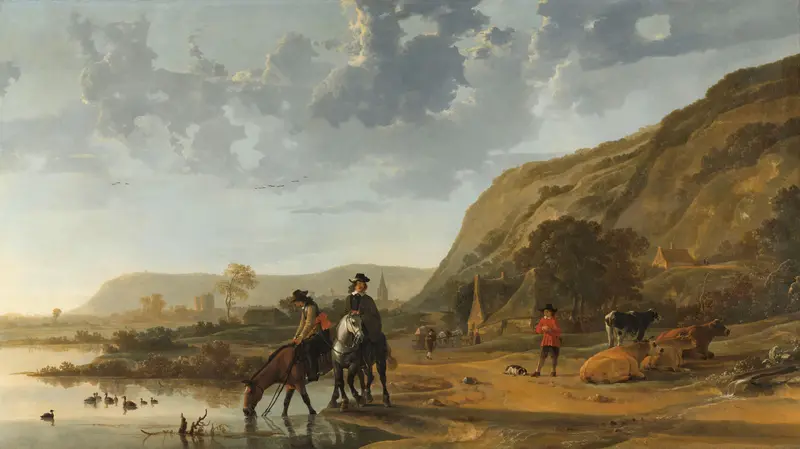
River Landscape with Riders
Aelbert Cuyp

The Maas at Dordrecht
Aelbert Cuyp
Gezicht op Dordrecht
Aelbert Cuyp
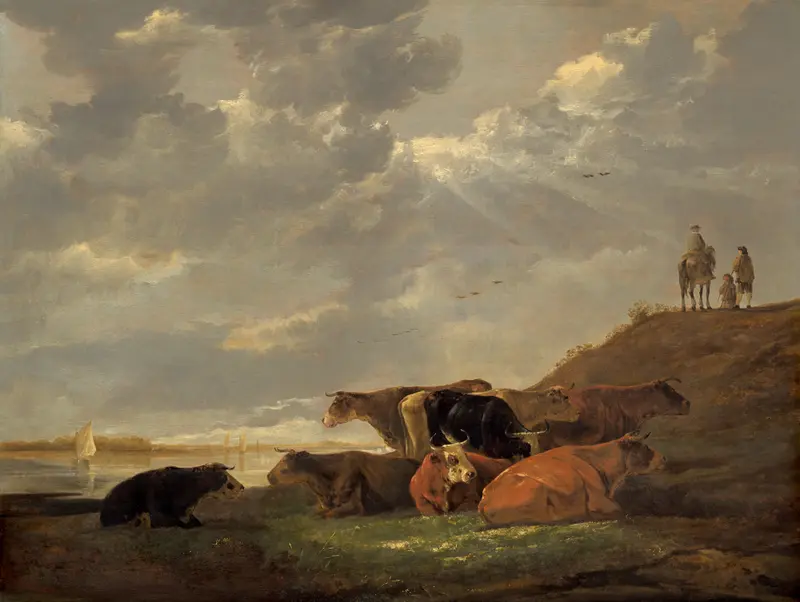
River Landscape with Cows
Aelbert Cuyp
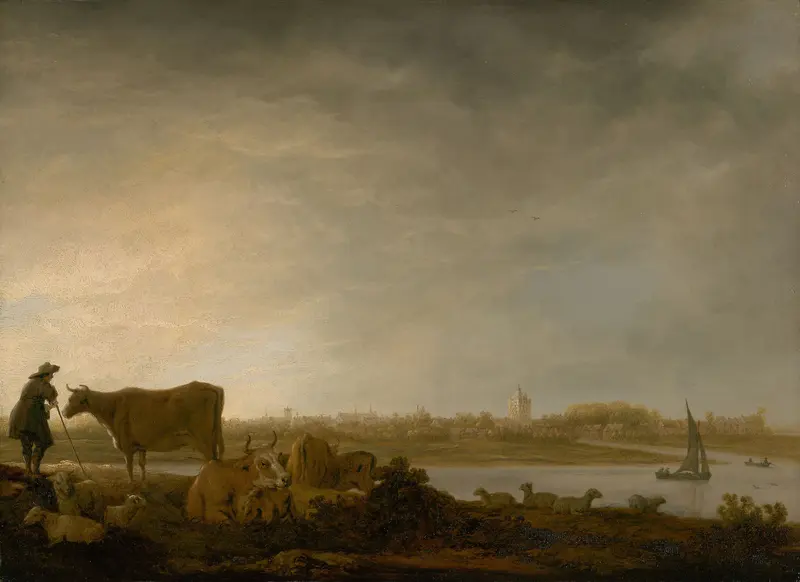
A View of Vianen with a Herdsman and Cattle by a River
Aelbert Cuyp
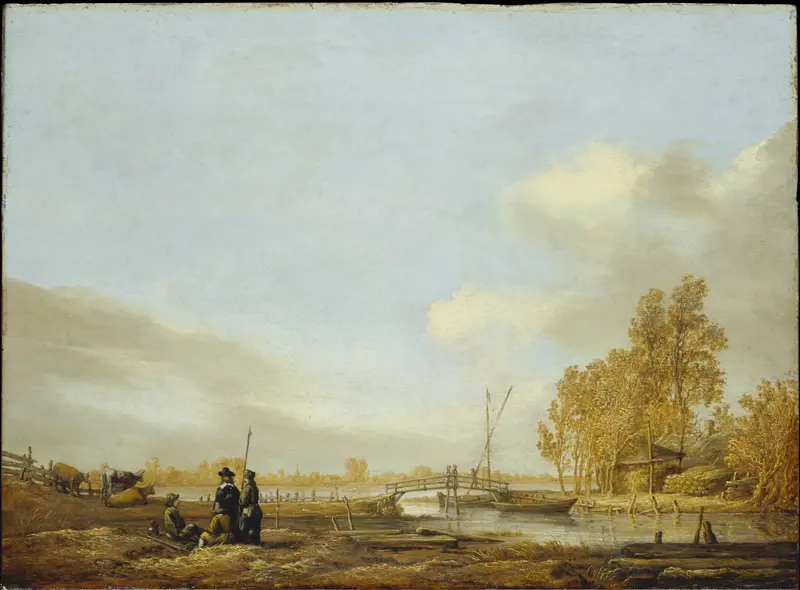
River Landscape with Footbridge
Aelbert Cuyp
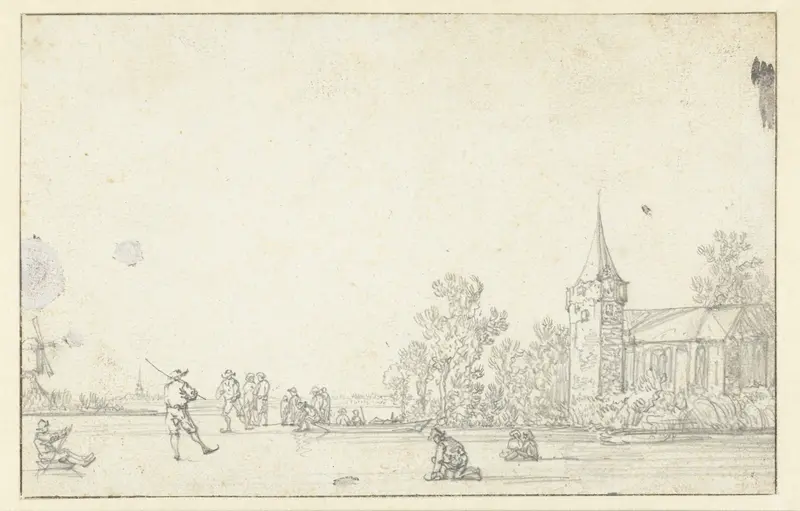
Bevroren rivier met schaatsers bij een kerk
Aelbert Cuyp

Cattle near a River
Aelbert Cuyp
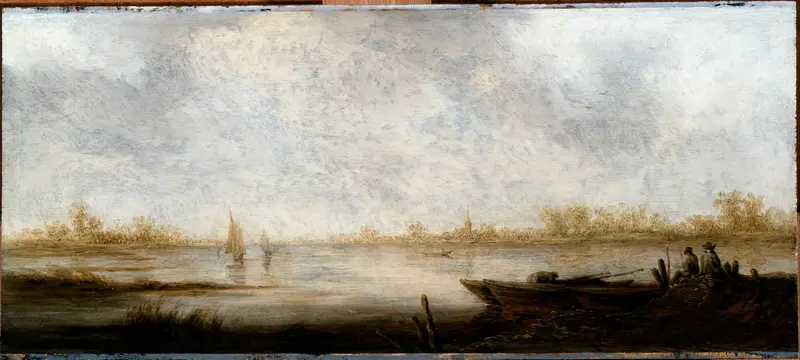
River Landscape
Aelbert Cuyp
More Landscape Art

The Starry Night
Vincent van Gogh

View of Delft
Johannes Vermeer

Water Lilies
Claude Monet

The Grand Canal, Venice, looking north-west from the Ca' Corner to the Ca' Contarini degli Scrigni, with the campanile of Santa Maria della Carità
Canaletto

Windsor Castle
Canaletto

The Grand Canal looking North-East from the Palazzo Dolfin-Manin to the Rialto Bridge
Canaletto