
Landscape with Stone Bridge — History & Facts
A single tree, gnarled and reaching, claims the center of Landscape with Stone Bridge, its branches splaying across the sky like the gestures of a silent actor. The stone bridge, half-swallowed by shadow, draws the eye to the left, its arch just visible above the gentle curve of a stream. The artist’s hand is everywhere in the restless lines of foliage, the quick, searching marks that suggest both movement and stillness.
Light seeps through the leaves, pooling in patches on the ground, guiding the viewer from the rooted trunk to the water’s edge and back again. In this quiet moment, the world feels paused—nature observed with a kind of attentive patience, as if the artist hoped to catch it in the act of simply being. Works like this, created between 1623 and 1690, belong to a period when landscape drawing was coming into its own as a genre in Northern Europe. Artists such as Antonie Waterloo found inspiration in the countryside, producing studies that collectors prized for their apparent spontaneity and truth to nature.
These drawings were not mere studies for larger paintings, but valued objects in their own right, often passed hand to hand among connoisseurs. Today, this sheet resides in the National Museum of Art, Architecture and Design, a quiet testament to an era when the landscape itself became a worthy subject. Let your eye linger on the bridge and the tangled branches—each line is a trace of an artist’s wandering gaze, centuries ago.
More Artworks by Antonie Waterloo
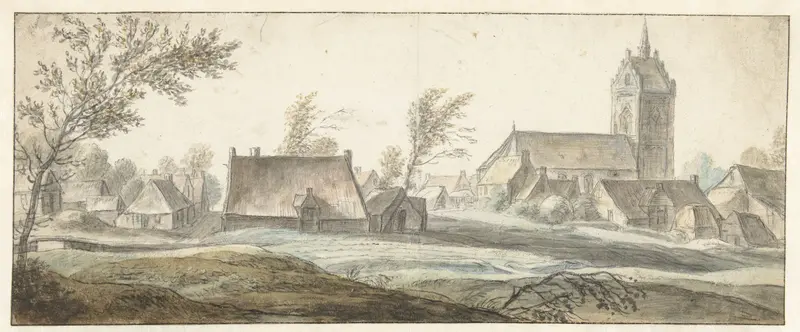
Gezicht op het dorp Soest
Antonie Waterloo
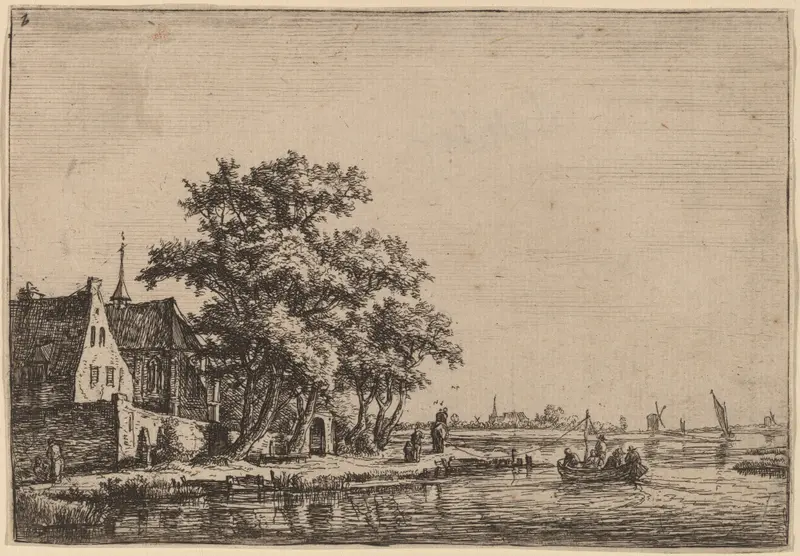
Churchyard at the Waterside
Antonie Waterloo
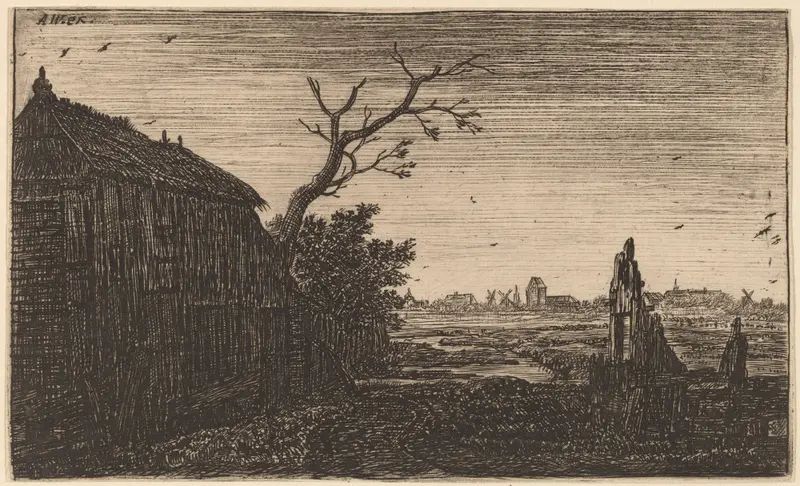
The Sluice
Antonie Waterloo
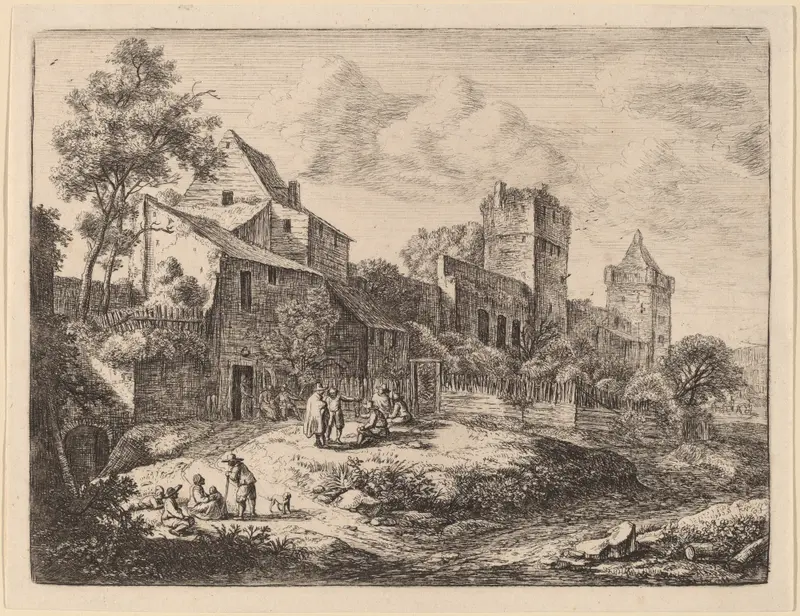
Square in Front of an Inn
Antonie Waterloo
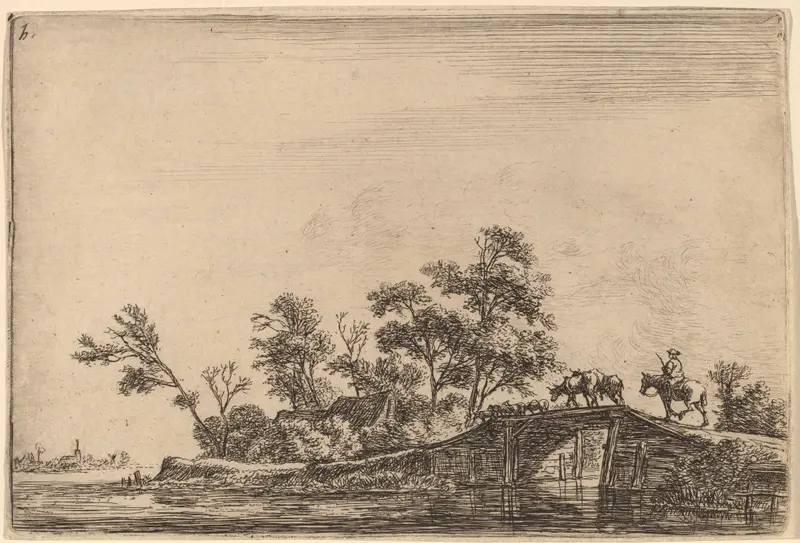
Rider and Flock on a Bridge
Antonie Waterloo
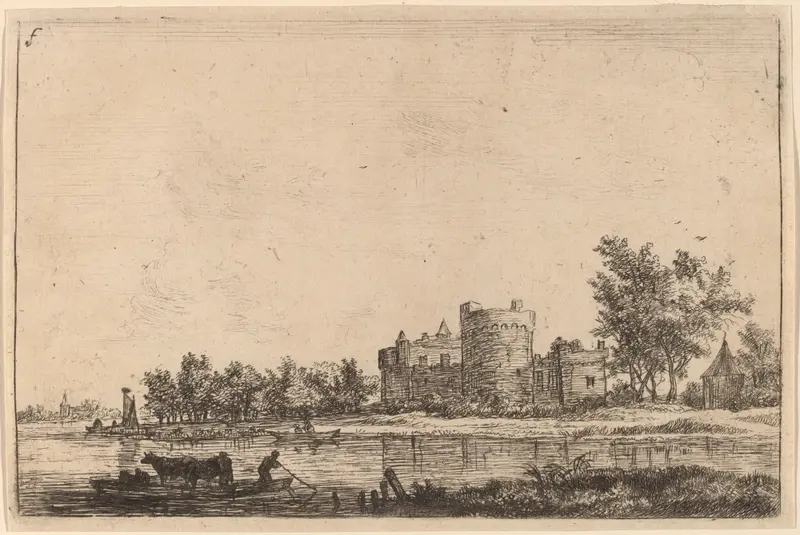
Two Cows on a Ferry
Antonie Waterloo
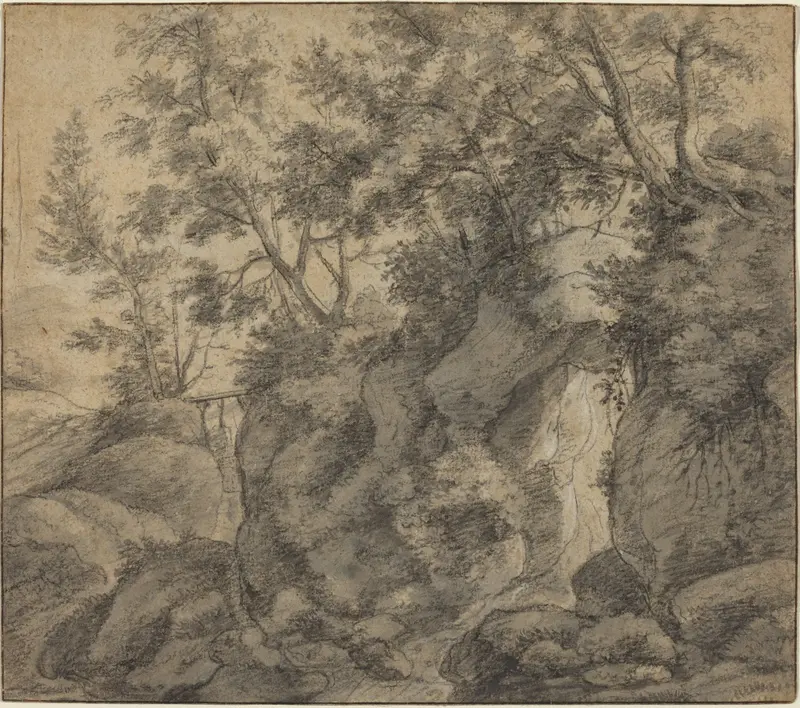
Landscape with a Wooded Ravine
Antonie Waterloo
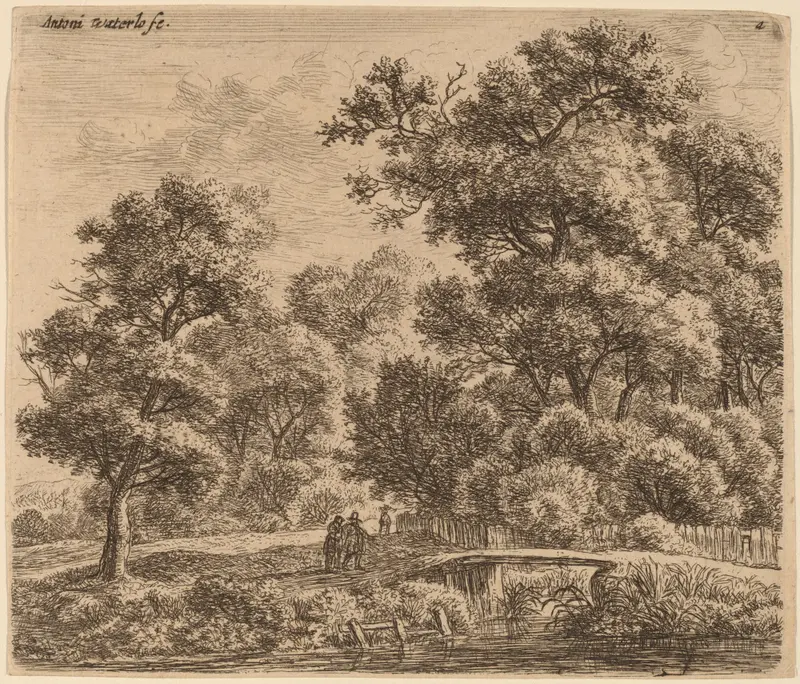
Wooded Landscape with a Bridge
Antonie Waterloo
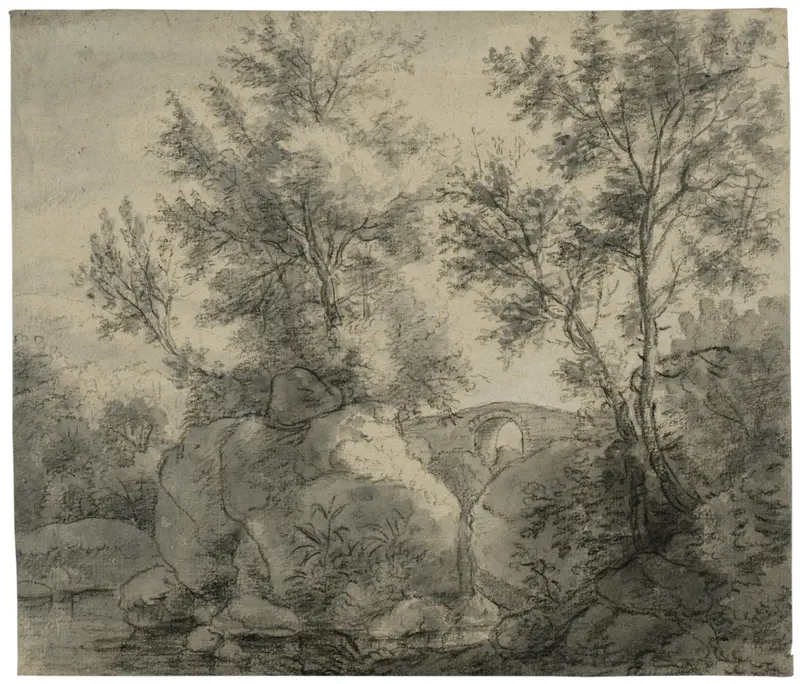
Rocky Landscape with a Stone Bridge
Antonie Waterloo
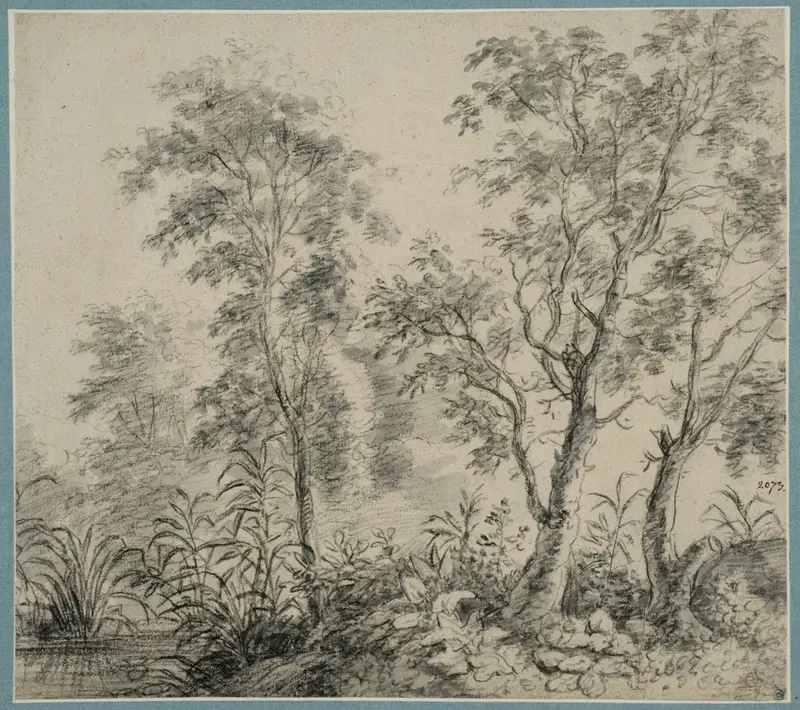
River Bank with a Row of Trees
Antonie Waterloo
More Landscape Art

The Starry Night
Vincent van Gogh

View of Delft
Johannes Vermeer

Water Lilies
Claude Monet

The Grand Canal, Venice, looking north-west from the Ca' Corner to the Ca' Contarini degli Scrigni, with the campanile of Santa Maria della Carità
Canaletto

Windsor Castle
Canaletto

The Grand Canal looking North-East from the Palazzo Dolfin-Manin to the Rialto Bridge
Canaletto