
Laveuses au bord de la rivière — History & Facts
Who listens when art speaks of silence? In Laveuses au bord de la rivière, the brushstrokes capture a moment steeped in tranquility yet tinged with an unspoken sorrow, inviting us to pause and reflect. Look to the left at the gentle ripple of the river, where flecks of white and blue swirl together, mimicking the delicate movement of water reflecting the sky. The figures of the washerwomen, dressed in soft, muted colors, provide a stark contrast against the vibrant backdrop of lush greenery. Notice how the light falls upon their hands, deftly working at the fabric, yet the shadows cast by their forms suggest the burdens they carry—an exploration of labor laced with an inherent melancholy. Delve deeper into the composition, where the stillness of the water mirrors the quiet resolve of the women, evoking themes of resilience and grief.
The way the landscape envelops them hints at nature's indifference to their toil and emotional weight. The gentle colors, while beautiful, serve as a reminder of the fleeting nature of moments, suggesting that amid life’s routines lies an undercurrent of loss and longing. In 1886, Eugène Boudin was painting in Honfleur, where he focused on landscapes and figures, captivated by the interplay between light and nature. At this time, Impressionism was gaining momentum, and Boudin was a significant precursor, influencing artists like Monet.
His work reflects both personal and collective experiences, capturing not just scenes of beauty, but also the poignant, quieter stories that linger beneath the surface.
More Artworks by Eugène Boudin
Browse all →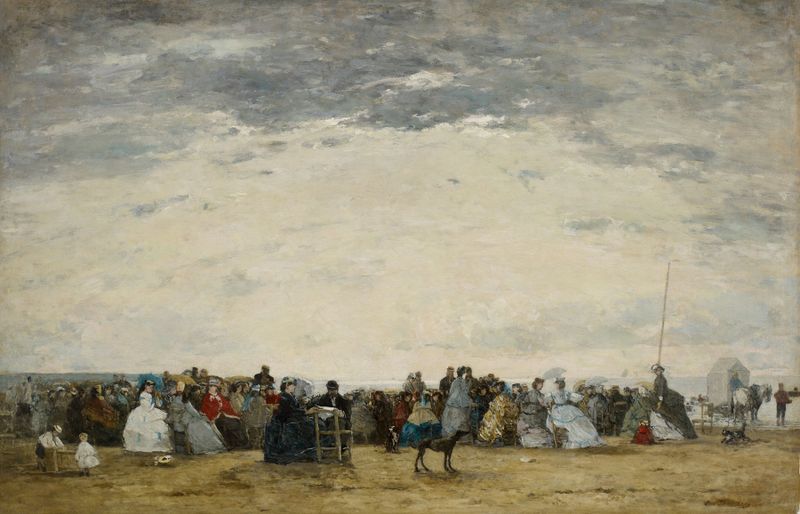
Vacationers on the Beach at Trouville
Eugène Boudin

Washerwoman near Trouville
Eugène Boudin
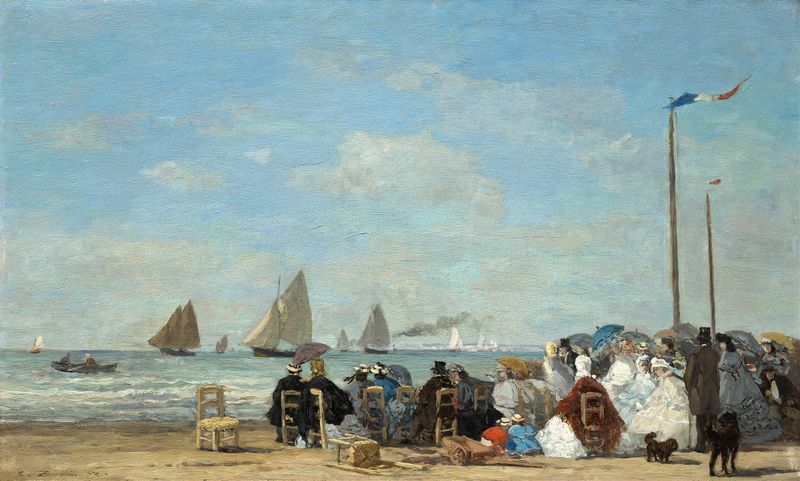
Beach Scene at Trouville
Eugène Boudin

Port aux environs d’Honfleur
Eugène Boudin

Le Faou, un coin du village
Eugène Boudin
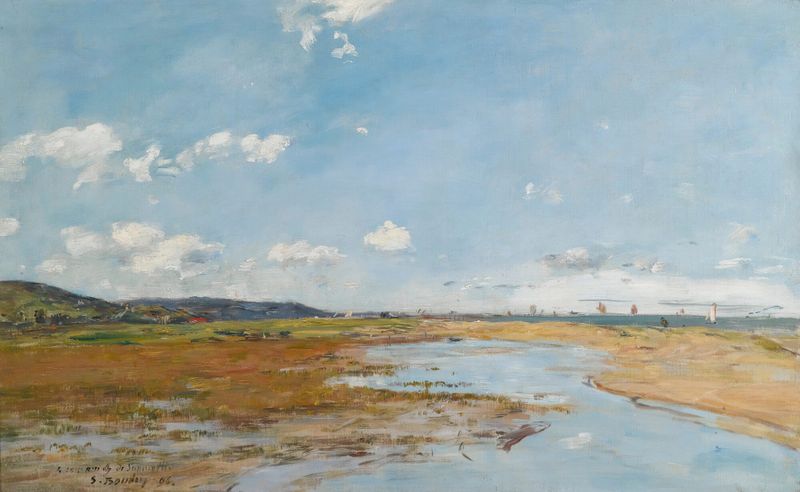
Deauville. Le Rivage
Eugène Boudin
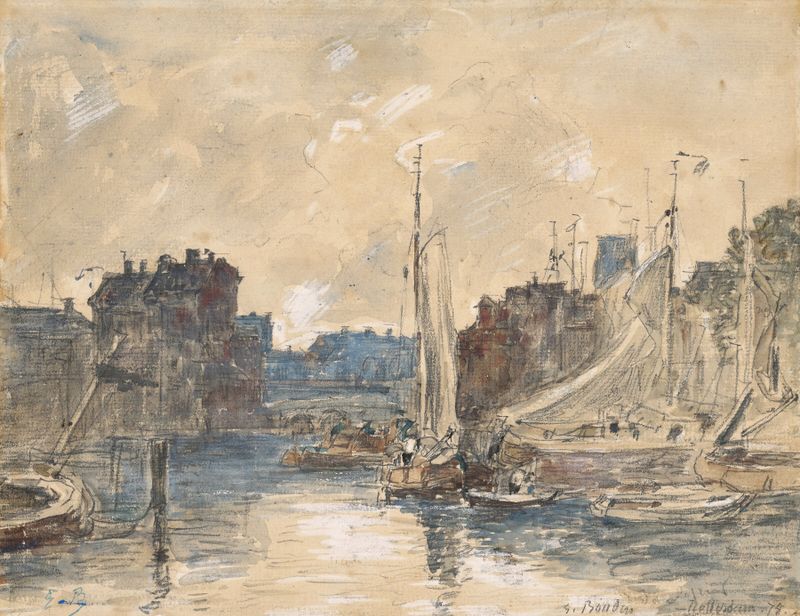
Port de Rotterdam
Eugène Boudin

View of Bordeaux, from the Quai des Chartrons
Eugène Boudin

Trouville, Scène De Plage
Eugène Boudin

Trouville, Le Port
Eugène Boudin





