
Laveuses au bord de la Touques — History & Facts
In Laveuses au bord de la Touques, color dances with emotion, inviting the viewer to experience not just a moment, but the essence of life itself. Look to the foreground at the two washerwomen bent over their work, their vibrant attire contrasting against the muted tones of the riverbank. The soft blues and gentle greens reflect the serenity of the water, while the energetic reds and yellows of their dresses pulse with vitality. Notice how the sunlight bathes the scene, illuminating the women’s faces and emphasizing the delicate ripples of water that shimmer beneath a hazy sky, capturing both the labor and the leisure of their everyday lives. Immerse yourself in the interplay of tranquility and toil—the serene river juxtaposed with the hardworking figures creates a poignant narrative about the dignity in labor.
The subtle brushwork evokes movement; a breeze stirs, and you can almost hear the fabric of their dresses rustling in the wind. This painting communicates a quiet reverence for nature and the resilience of those who rely upon it, highlighting the beauty in vulnerability and the strength within simplicity. Eugène Boudin painted this piece in 1895 while in Normandy, an area that profoundly influenced his career. At this time, Impressionism was gaining momentum, and Boudin was at the forefront of this movement, celebrated for his depictions of coastal life.
His work reflects both a personal connection to the landscape and a broader artistic exploration of light, color, and the fleeting moments of daily existence, which would continue to resonate in the art world for years to come.
More Artworks by Eugène Boudin
Browse all →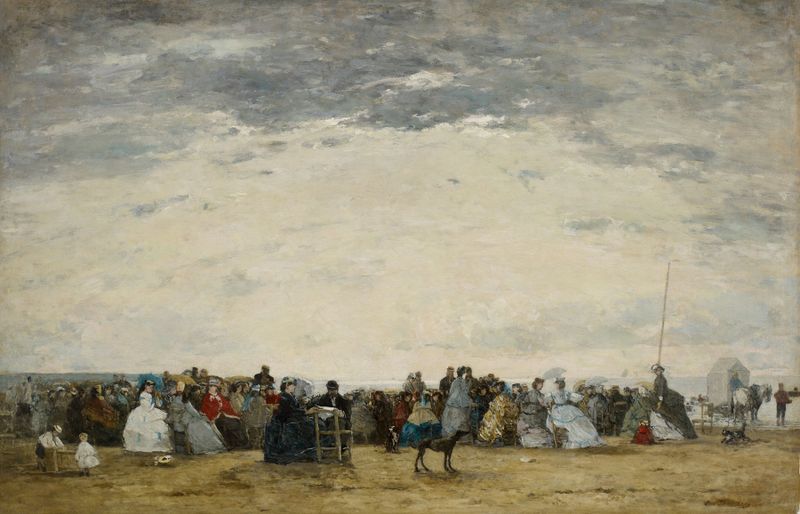
Vacationers on the Beach at Trouville
Eugène Boudin

Washerwoman near Trouville
Eugène Boudin
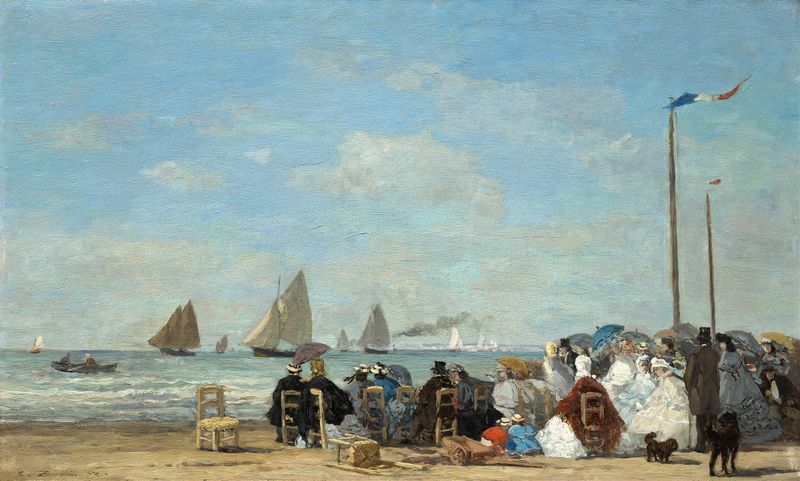
Beach Scene at Trouville
Eugène Boudin

Port aux environs d’Honfleur
Eugène Boudin

Le Faou, un coin du village
Eugène Boudin
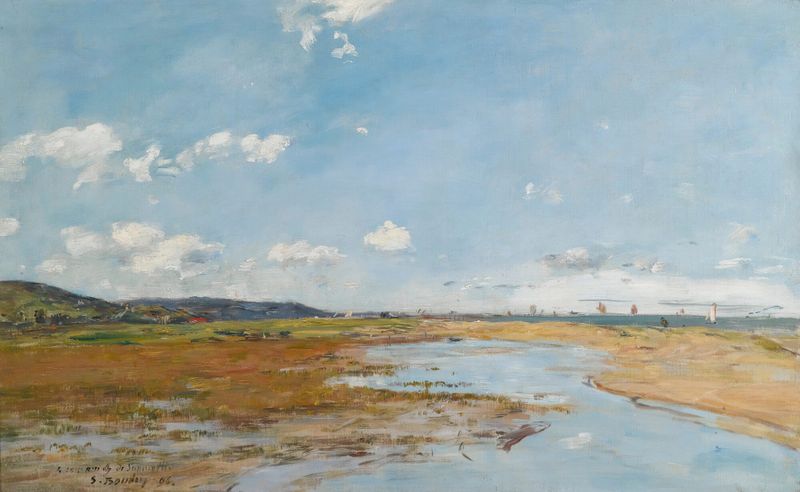
Deauville. Le Rivage
Eugène Boudin
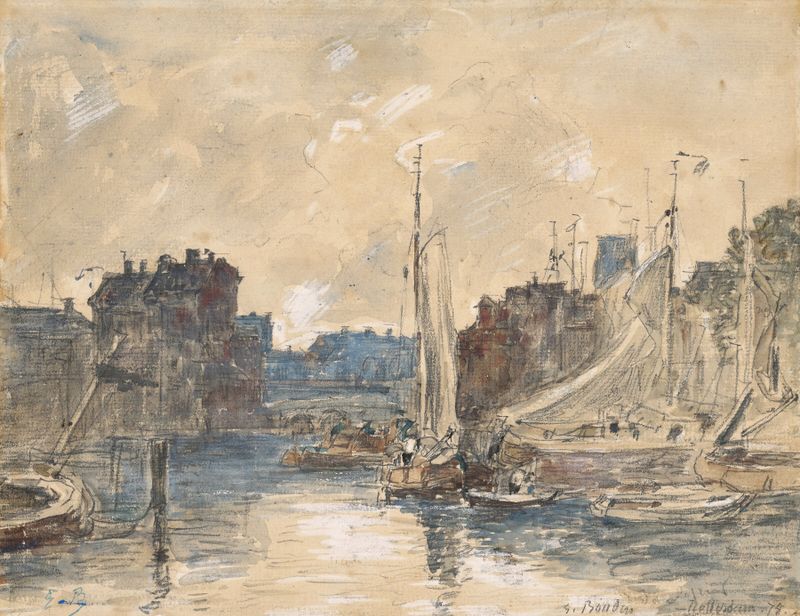
Port de Rotterdam
Eugène Boudin

View of Bordeaux, from the Quai des Chartrons
Eugène Boudin

Trouville, Scène De Plage
Eugène Boudin

Trouville, Le Port
Eugène Boudin





