
Laveuses au bord de la Touques — History & Facts
When did color learn to lie? In Laveuses au bord de la Touques, vibrant hues dance across the canvas, weaving a tapestry of innocence amidst the mundane. Each stroke invites an exploration of the human experience, revealing layers of emotion hidden beneath the surface of daily life. Look to the left, where the sunlight dapples the water, its reflections shimmering like liquid gold. Notice how the women, bent over their task, are cloaked in soft pastels, their garments blending harmoniously with the natural landscape.
The gentle curves of their forms echo the undulating riverbanks, while the soft blue of the sky envelops the scene, creating a serene yet vibrant atmosphere. Boudin’s technique of capturing light brings an immediacy to the moment, almost allowing the viewer to hear the soft splash of water against the stones. Yet, beneath this idyllic portrayal lies a tension between labor and leisure. The women’s focused gestures suggest a profound connection to their work, an innocence that contrasts with the complex world beyond the riverbank.
The juxtaposition of their vibrant attire against the muted backdrop highlights their resilience, as if they stand as timeless guardians of tradition amidst the relentless march of modernity. This simple scene encapsulates the duality of existence, where innocence persists even in the face of change. Eugène Boudin created this work between 1894 and 1897, during a period of burgeoning artistic exploration in France. By that time, he had established himself as a predecessor to Impressionism, focusing on plein air painting and the nuances of light and color.
As the art world began to embrace new forms of expression, Boudin remained devoted to capturing the beauty of everyday life, celebrating the often-overlooked moments that resonate with profound significance.
More Artworks by Eugène Boudin
Browse all →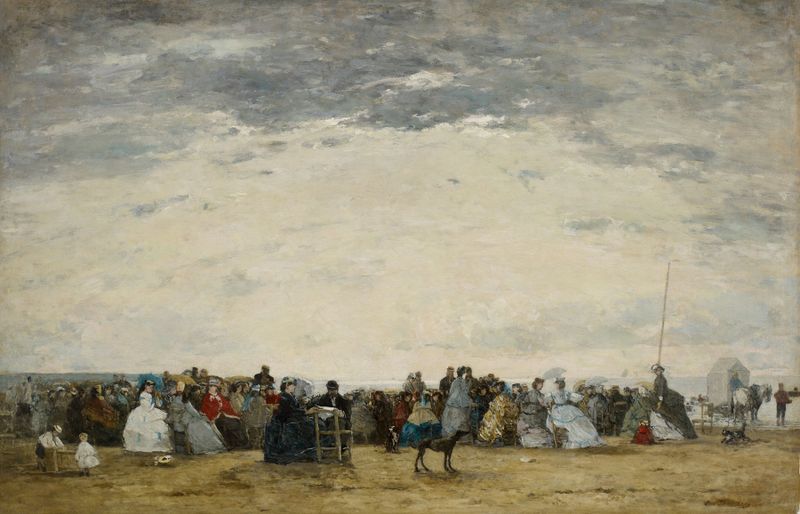
Vacationers on the Beach at Trouville
Eugène Boudin

Washerwoman near Trouville
Eugène Boudin
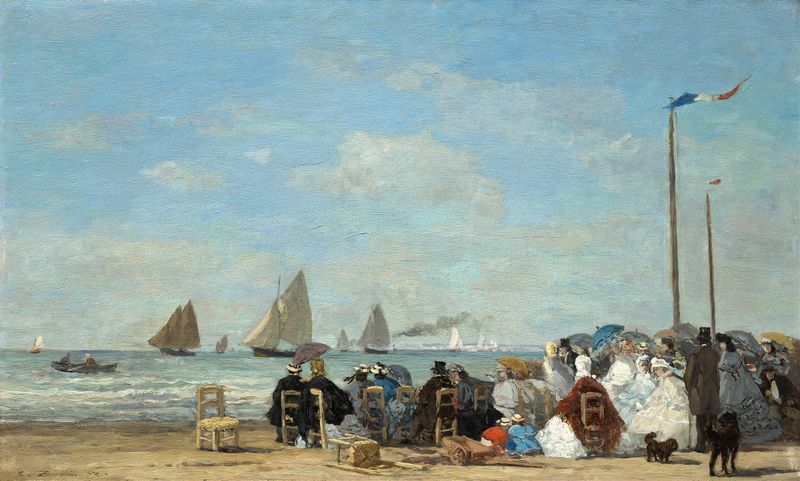
Beach Scene at Trouville
Eugène Boudin

Port aux environs d’Honfleur
Eugène Boudin

Le Faou, un coin du village
Eugène Boudin
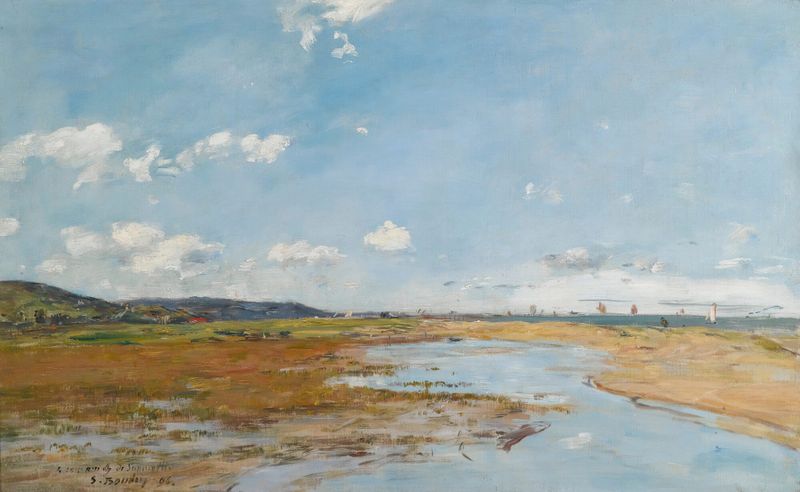
Deauville. Le Rivage
Eugène Boudin
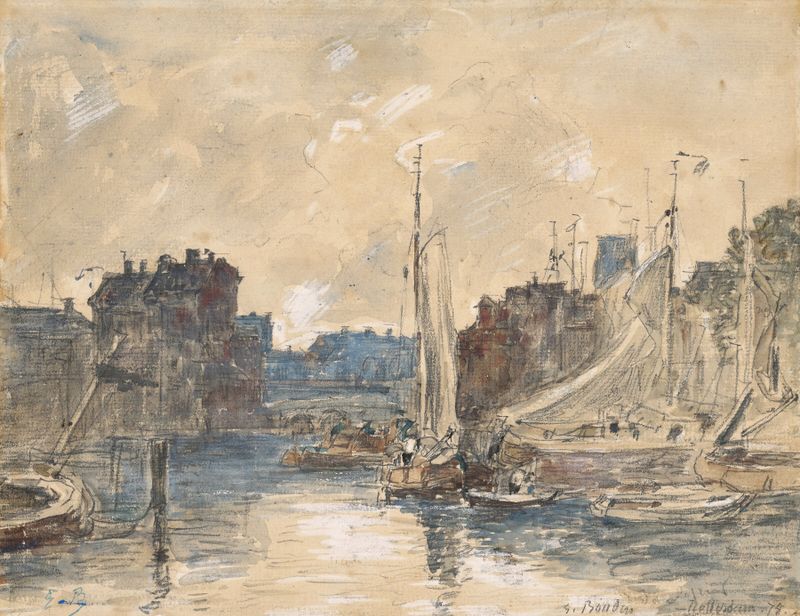
Port de Rotterdam
Eugène Boudin

View of Bordeaux, from the Quai des Chartrons
Eugène Boudin

Trouville, Scène De Plage
Eugène Boudin

Trouville, Le Port
Eugène Boudin





