
Le Bec du Hoc, Grandcamp — History & Facts
When Georges Seurat painted Le Bec du Hoc, Grandcamp in 1885, he was not yet the celebrated pioneer of Pointillism, but a young artist experimenting with a radical new way of seeing. This small coastal headland in Normandy had recently become a site of fascination for artists and tourists alike, its dramatic cliffs and shifting light drawing painters from Paris. Seurat visited Grandcamp in the summer of 1885, working outdoors to capture the changing atmosphere with a scientific precision that was new to French painting.
The painting marks one of the earliest instances where Seurat applied his divisionist technique to a landscape, laying the groundwork for his later, more famous works. The view Seurat chose is quiet but charged with intention: the jutting promontory of Bec du Hoc divides sea and sky, its chalky face catching the pale light of the Channel. In the foreground, the land slopes gently, dotted with tufts of grass rendered in minute, distinct touches of color. The horizon is a band of silvery blue, and the sea below shimmers with a mosaic of tiny brushstrokes, each calculated to blend optically in the viewer’s eye.
Unlike the tempestuous cliffs of Claude Monet or the romantic drama of earlier seascapes, Seurat’s approach is analytical—each element is reduced to its essentials, the composition balanced and serene. The painting invites the viewer to linger, to see the landscape not just as a place, but as a harmony of light and color. The precise early history of Le Bec du Hoc, Grandcamp is not fully documented, but it is known that Seurat kept many of his landscapes in his studio during his lifetime, refining his technique and showing them selectively to friends and critics. The painting stands at a turning point in his career, just before the unveiling of his monumental A Sunday Afternoon on the Island of La Grande Jatte.
Today, Le Bec du Hoc, Grandcamp is recognized as a key work in the evolution of Neo-Impressionism, and it resides in the collection of the Museo del Prado, offering visitors a glimpse into the moment when Seurat’s scientific vision began to transform the language of art.
More Artworks by Georges Seurat
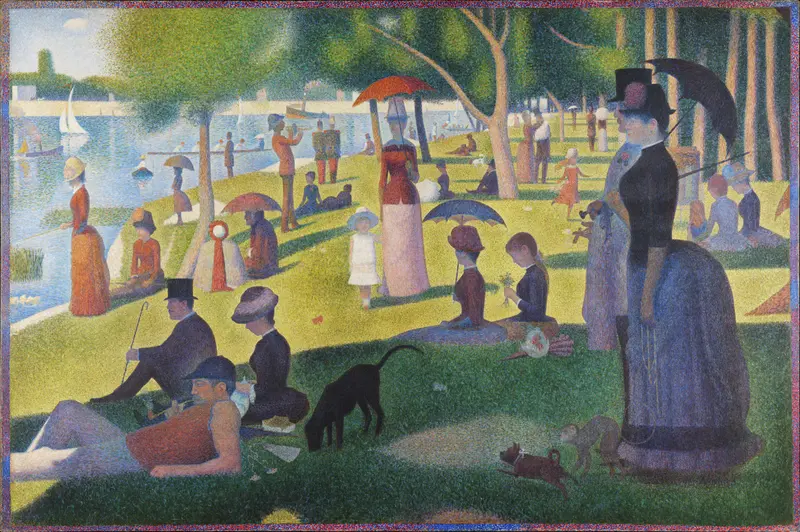
A Sunday Afternoon on the Island of La Grande Jatte
Georges Seurat
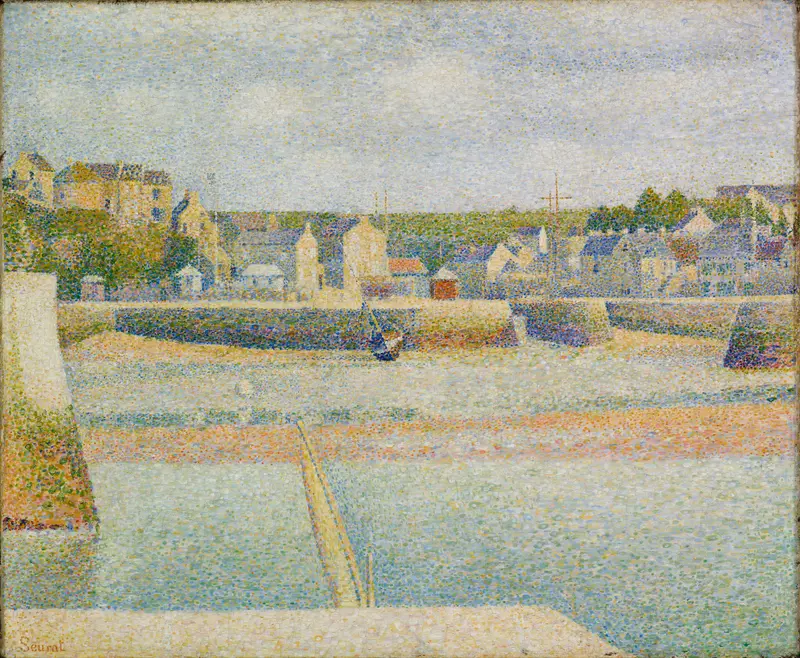
Port-en-Bessin, The Outer Harbor (Low Tide)
Georges Seurat
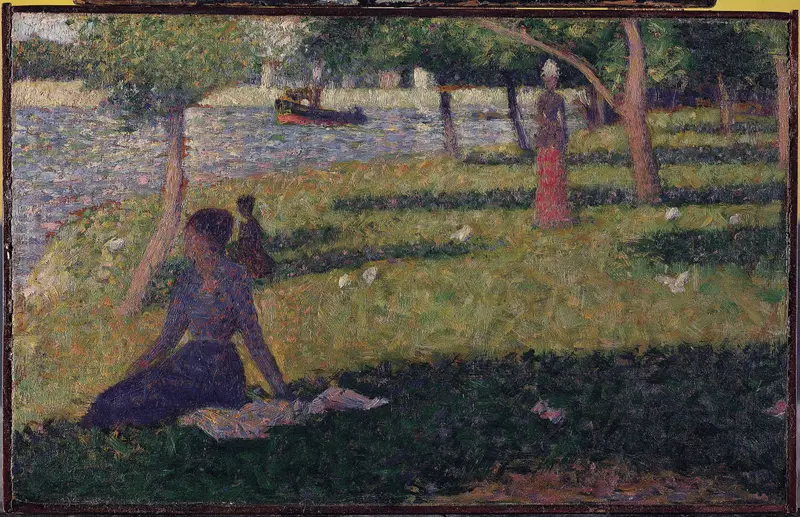
Étude pour ‘La Grande Jatte’ (Study for ‘La Grande Jatte’)
Georges Seurat
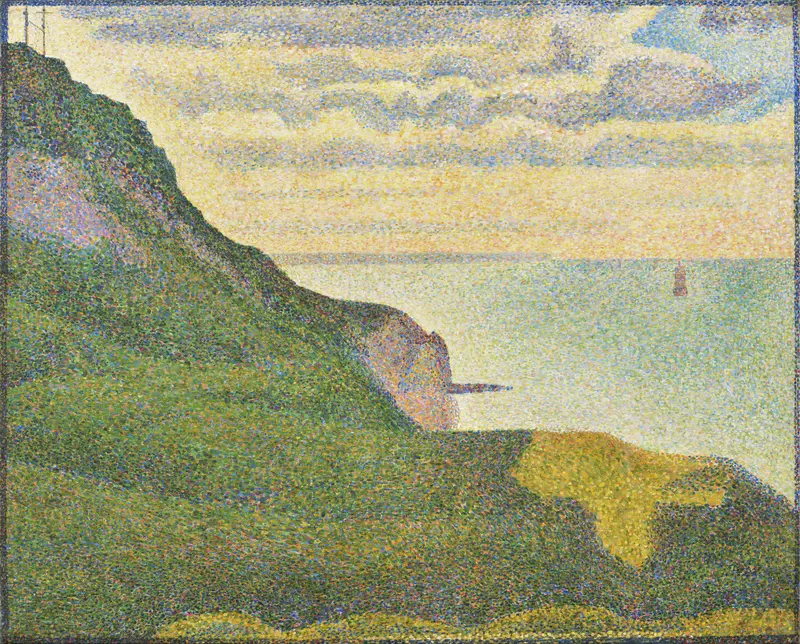
Seascape at Port-en-Bessin,Normandy
Georges Seurat
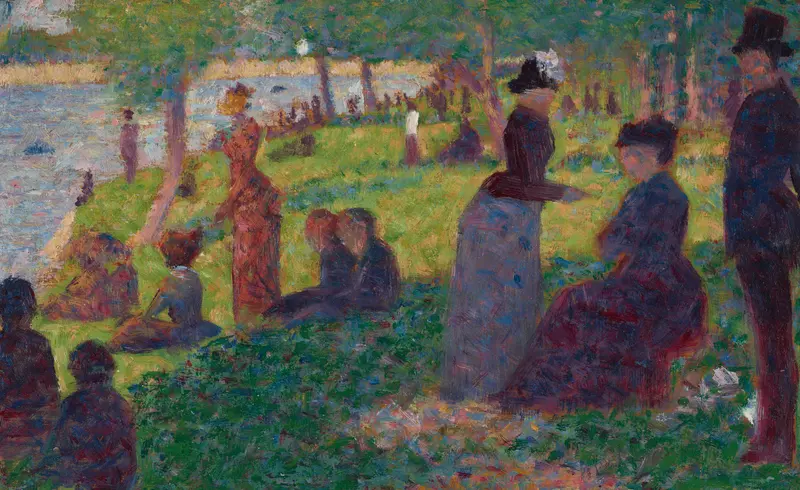
Oil Sketch for "A Sunday on La Grande Jatte — 1884"
Georges Seurat
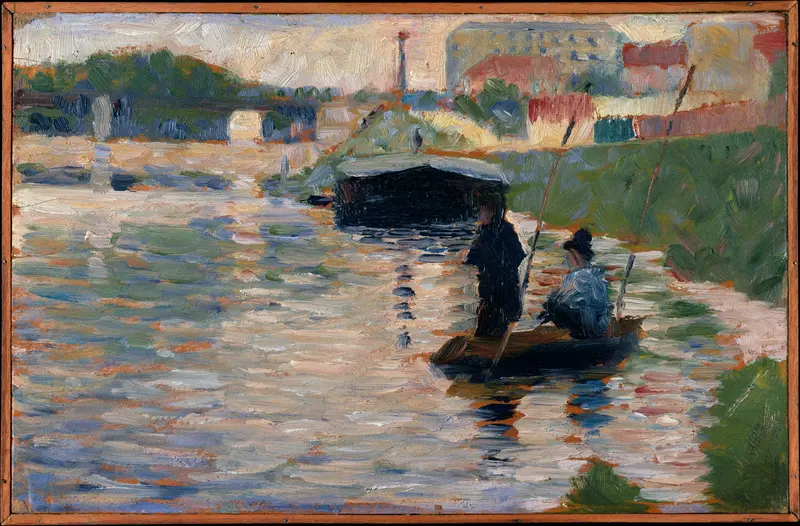
View of the Seine
Georges Seurat
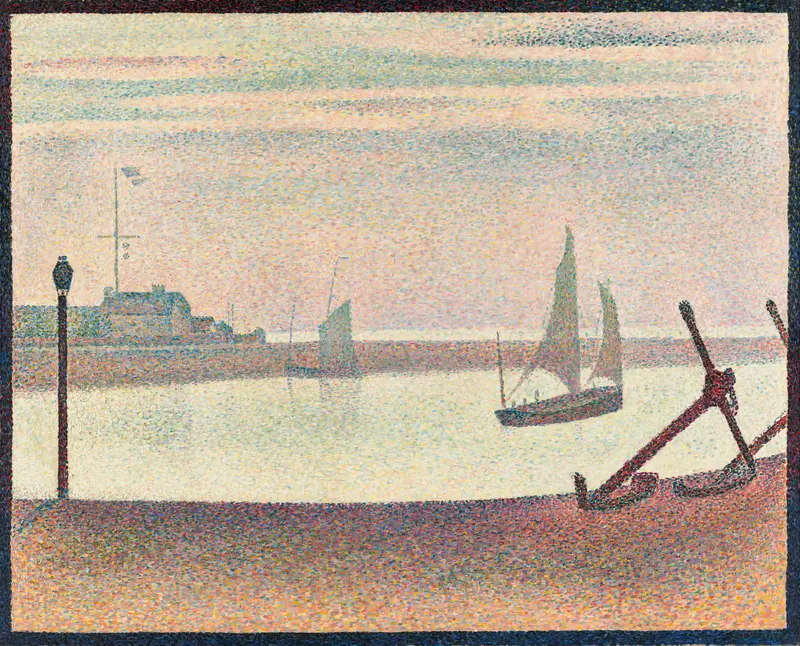
The Channel at Gravelines, Evening
Georges Seurat
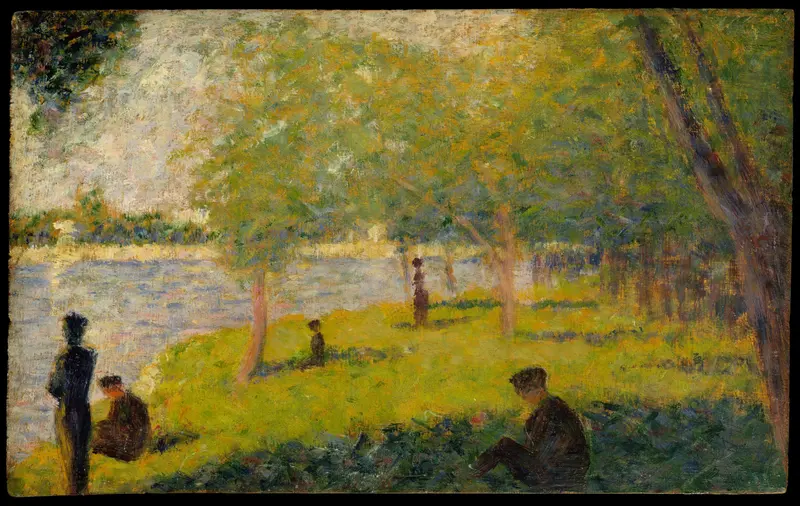
Study for ‘A Sunday on La Grande Jatte’
Georges Seurat
Study for A Sunday on La Grande Jatte
Georges Seurat
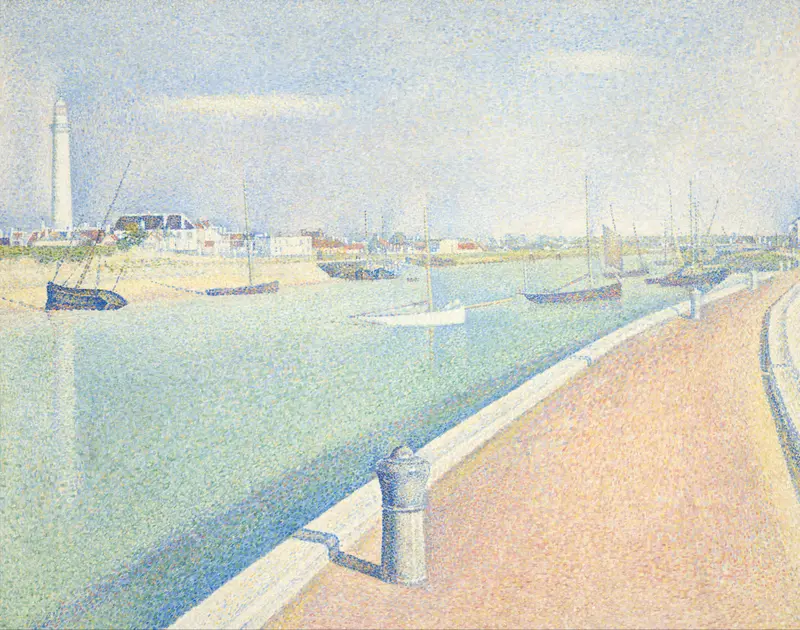
The Channel of Gravelines, Petit Fort Philippe
Georges Seurat
More Landscape Art

The Starry Night
Vincent van Gogh

View of Delft
Johannes Vermeer

Water Lilies
Claude Monet

The Grand Canal, Venice, looking north-west from the Ca' Corner to the Ca' Contarini degli Scrigni, with the campanile of Santa Maria della Carità
Canaletto

Windsor Castle
Canaletto

The Grand Canal looking North-East from the Palazzo Dolfin-Manin to the Rialto Bridge
Canaletto