
Le Carrefour Drouot à Paris — History & Facts
What secret hides in the quiet of the canvas? Beneath the surface of urban life lies a story of transformation, revolution, and the echoes of the past. Look to the left at the bustling street, where figures move with purpose, their forms a blend of shadow and light. Notice how Raffaëlli captures the interplay of tones, using a muted palette that conveys both the vibrancy and the starkness of the Parisian landscape. The brushwork is dynamic yet controlled, drawing your gaze toward the central intersection, which serves as a crossroads not just of streets, but of lives and ambitions.
The architecture looms overhead, its solemnity contrasted by the fleeting gestures of the pedestrians below. In this scene, the juxtaposition of movement and stillness creates an emotional tension that invites reflection. The throng of figures, each absorbed in their own world, hints at the loneliness of modernity amidst the backdrop of a rapidly changing society. The light filtering through the buildings casts elongated shadows, symbolizing the weight of history pressing upon the present, while the subtle expressions on the faces convey a collective hope, mingled with uncertainty. Raffaëlli painted this work during a time of social upheaval and artistic reinvention in late 19th-century Paris.
He was deeply influenced by the Impressionists but sought to portray the gritty realities of urban life. The city was undergoing significant change; the industrial revolution brought new opportunities and challenges, inspiring artists to reflect on the human experience against this backdrop of transformation.
More Artworks by Jean François Raffaëlli
Browse all →
Autumn In Paris
Jean François Raffaëlli

Le jardin du Luxembourg
Jean François Raffaëlli
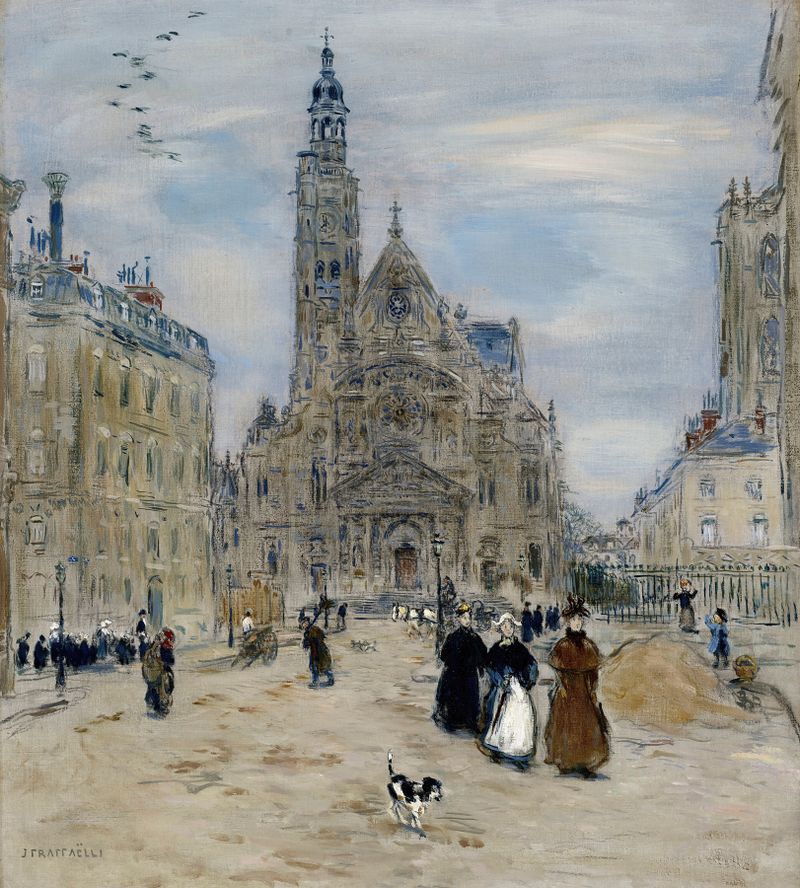
Saint-Étienne-du-Mont, Paris
Jean François Raffaëlli
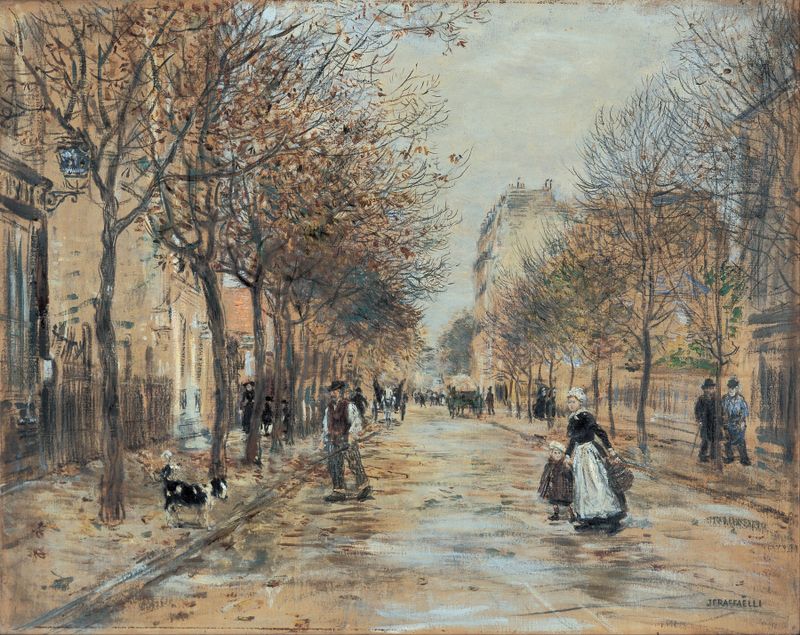
Street in Asnières
Jean François Raffaëlli
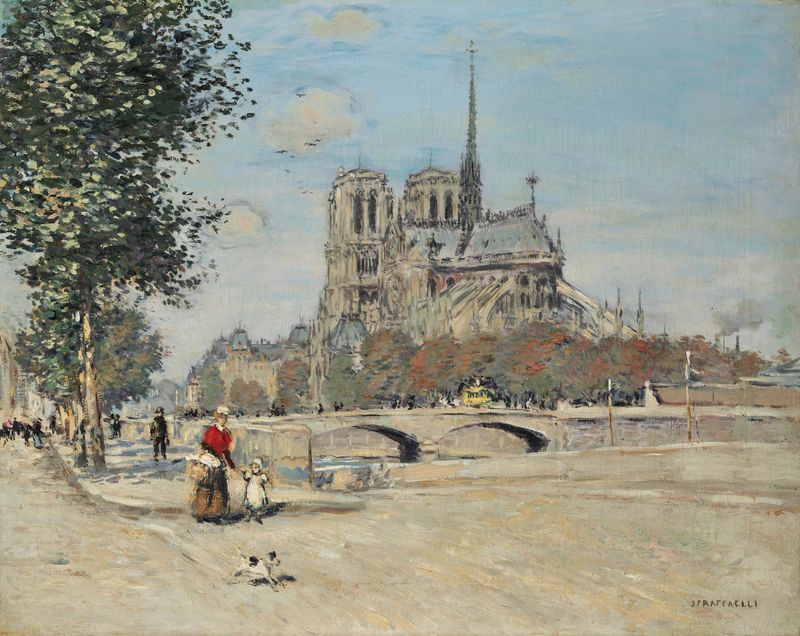
Notre-Dame de Paris et le pont de l’Archevêché
Jean François Raffaëlli

Place de Saint-Germain des Prés, Paris
Jean François Raffaëlli
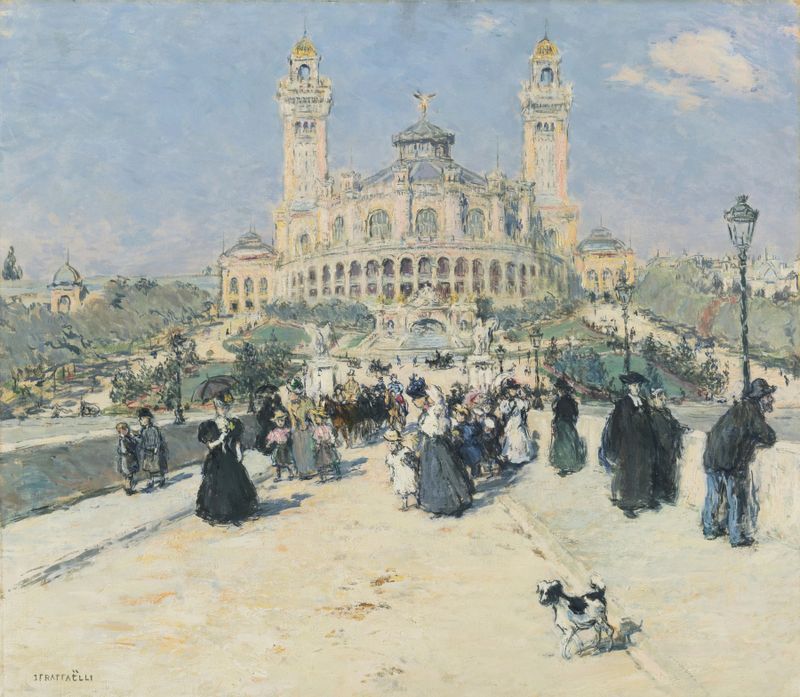
Le Trocadéro
Jean François Raffaëlli

Les Champs-Élysées
Jean François Raffaëlli

Le boulevard des Italiens
Jean François Raffaëlli

The Quai Malaquais, Paris
Jean François Raffaëlli





