
Le Coup de vent — History & Facts
What grips the eye in Le Coup de vent is the sense of urgent movement, as a mother and her children struggle forward against an invisible force. The wind, unseen but everywhere present, is made visible by the way coats balloon, skirts whip, and bodies lean. Steinlen’s lines are restless, almost frantic, carving the figures out of the paper with a trembling energy that matches the tension in their faces.
The mother, bundled and burdened, clutches her child and a heavy sack, her gaze fixed ahead, while the older children cling to her and each other, their feet barely finding purchase on the slick ground. The world around them is stripped to essentials: a few trees bent by the gale, a road that disappears into emptiness. Every mark in the composition serves the story of displacement and endurance. Created in 1915, this work belongs to the grim world of the First World War, a time when millions of civilians—mothers, children, the elderly—were forced to flee their homes in France.
Artists like Théophile Alexandre Steinlen turned their attention to these human costs, producing images for publications, posters, and prints that bore witness to suffering and resilience. This print, held today in the Bibliothèque nationale de France, is part of a larger documentary effort to record the war’s impact on ordinary lives. History has kept few traces of each individual journey, but works like this one invite us to look closer, to read the wind and the faces, and to remember the silent stories that crossed every road.
More Artworks by Théophile Alexandre Steinlen

Village et charrette
Théophile Alexandre Steinlen
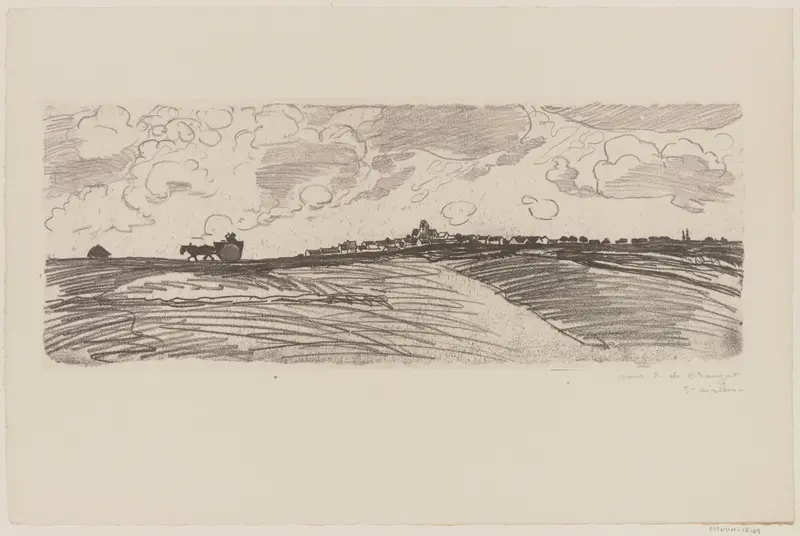
Village et charrette
Théophile Alexandre Steinlen
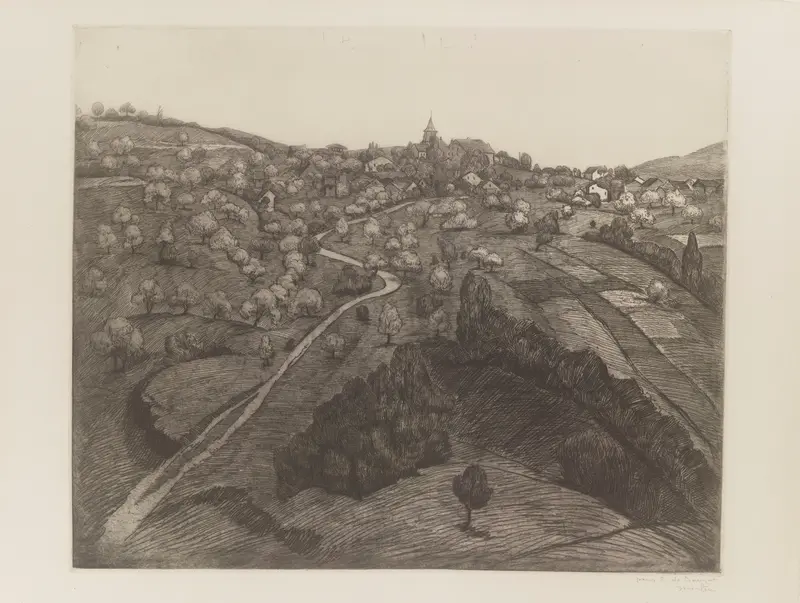
Vue de Belmont, près de Lausanne
Théophile Alexandre Steinlen
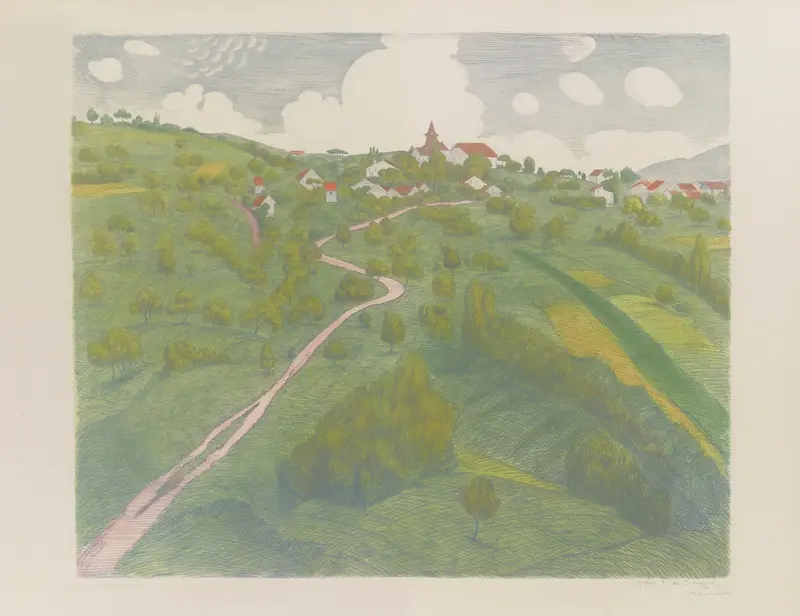
Vue de Belmont, près de Lausanne
Théophile Alexandre Steinlen
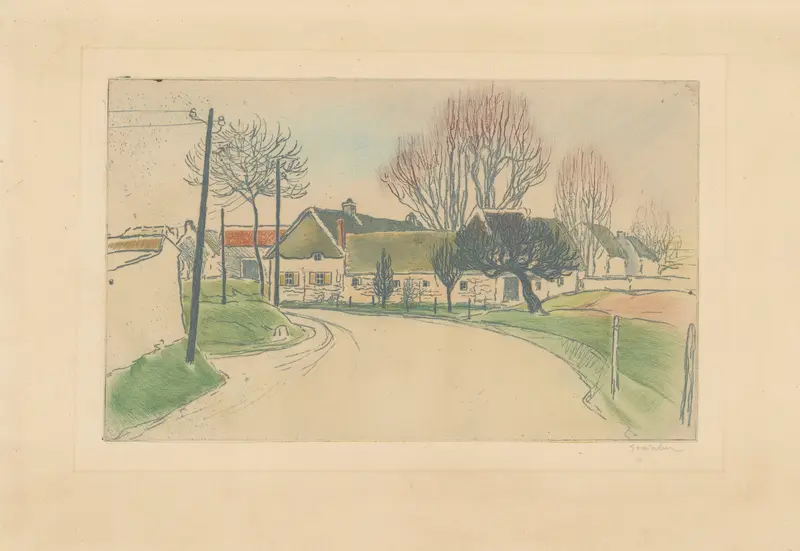
La maison à l’entrée du village
Théophile Alexandre Steinlen
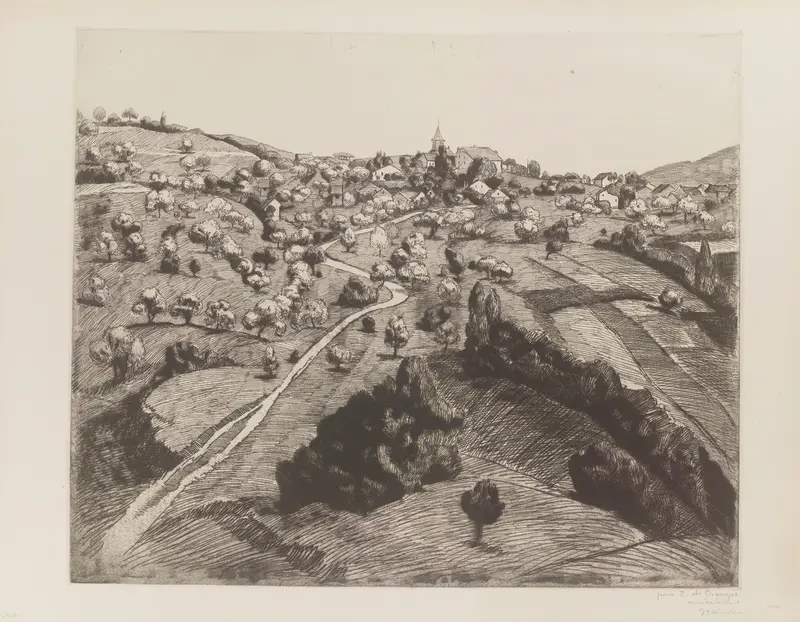
Vue de Belmont, près de Lausanne
Théophile Alexandre Steinlen
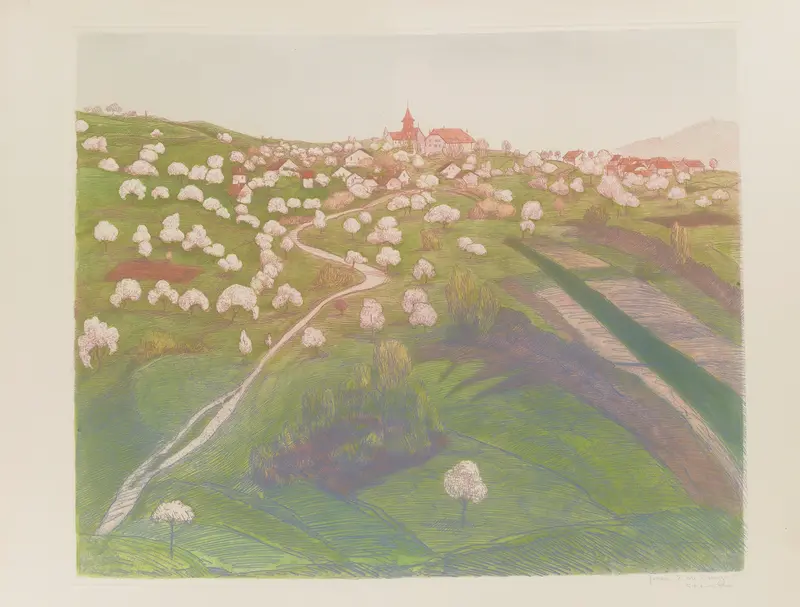
Vue de Belmont, près de Lausanne, n° 2
Théophile Alexandre Steinlen
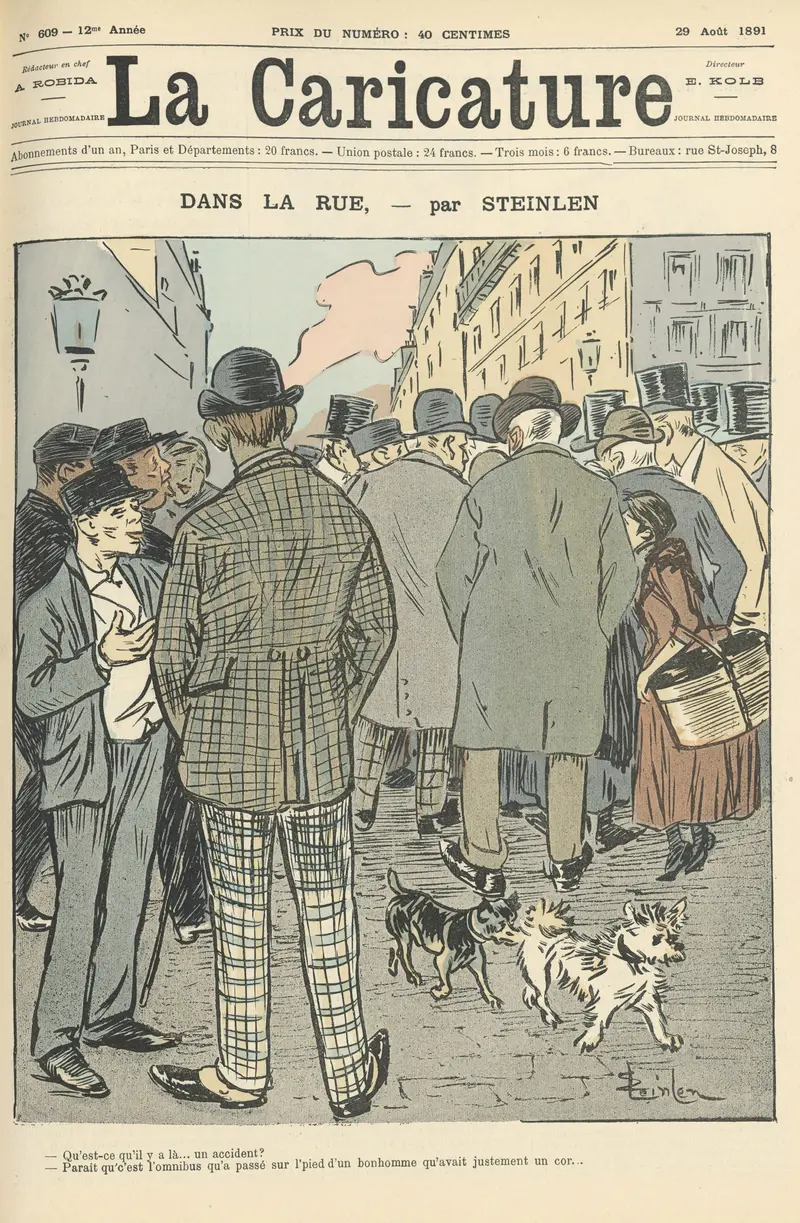
Dans la rue (La Caricature, 29 août 1891)
Théophile Alexandre Steinlen
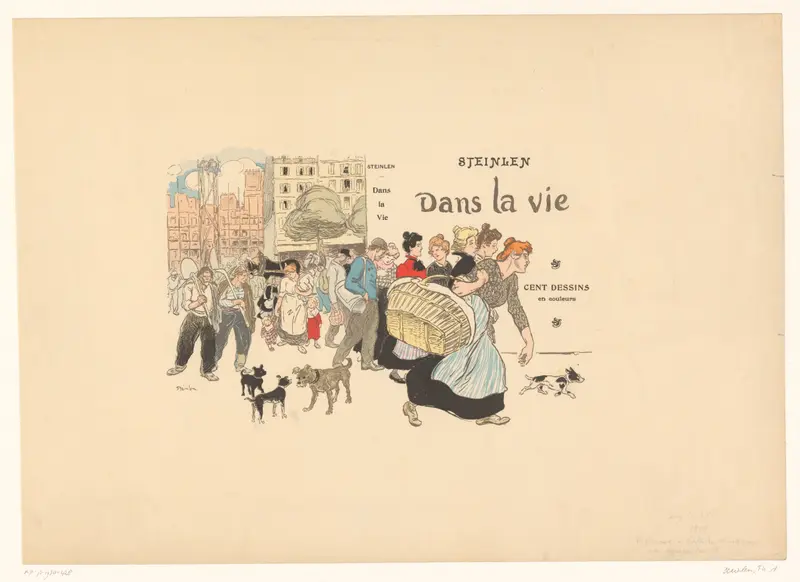
Dans la vie
Théophile Alexandre Steinlen
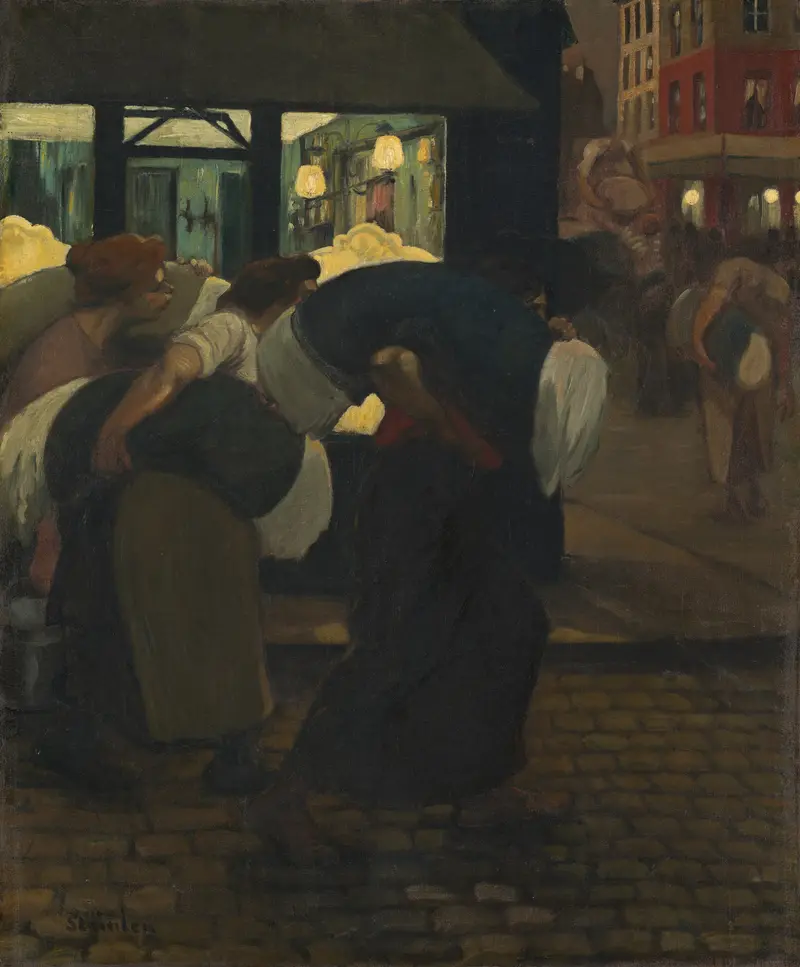
The Laundresses
Théophile Alexandre Steinlen
More Genre Scene Art

Banquet of the Officers of the St George Civic Guard
Frans Hals

Rembrandt and Saskia in the Scene of the Prodigal Son
Rembrandt van Rijn

Bal du moulin de la Galette
Pierre-Auguste Renoir

Quadrille at the Moulin Rouge
Henri de Toulouse-Lautrec

A Burial at Ornans
Gustave Courbet

When Will You Marry?
Paul Gauguin