
Le jardin public — History & Facts
Each brushstroke in Le jardin public beckons us to consider the divine moments hidden in everyday life. Here, nature and humanity intertwine, revealing a sacred space where the mundane becomes extraordinary. Look to the center of the composition, where figures rest on a sunlit bench, their relaxed postures hinting at the languid passage of time. Notice how the vibrant greens of the foliage envelop them—a lush canopy of life contrasted against the soft dapple of sunlight filtering through the leaves.
The deliberate choice of warm, inviting hues reflects an intimate connection to nature, guiding the eye through the serene tableau. Delve into the details that reveal deeper emotional currents. The juxtaposition of the figures' stillness against the vibrant backdrop of a bustling park evokes a profound sense of contemplation amidst chaos. Each figure seems to embody a different facet of existence, highlighting joys and sorrows alike, while the organic forms of the trees symbolize life’s cyclical nature, hinting at the divine within the ordinary. Created in 1915, Le jardin public emerged during a tumultuous period marked by World War I, as Pierre Bonnard settled in France amid the chaos.
This was a time when traditional art faced challenges and transformations. The artist, known for his intimate depictions of domestic life, sought refuge in the beauty of the natural world, capturing moments that resonate with an eternal sense of peace and contemplation amidst the external turmoil.
More Artworks by Pierre Bonnard
Browse all →
Les deux fiacres (Boulevard des Batignolles)
Pierre Bonnard

Le Balcon Et L’ombrelle
Pierre Bonnard

Paysage de Vernon
Pierre Bonnard

Place Pigalle at Night
Pierre Bonnard
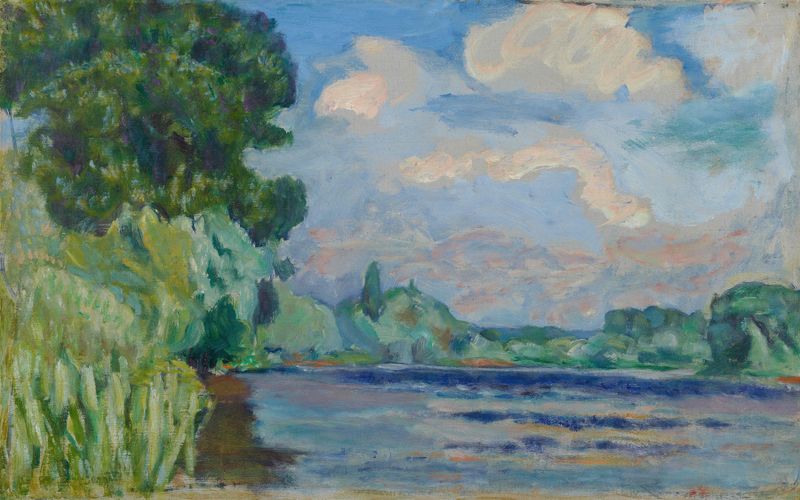
La Seine à Vernon
Pierre Bonnard

Les Toits
Pierre Bonnard
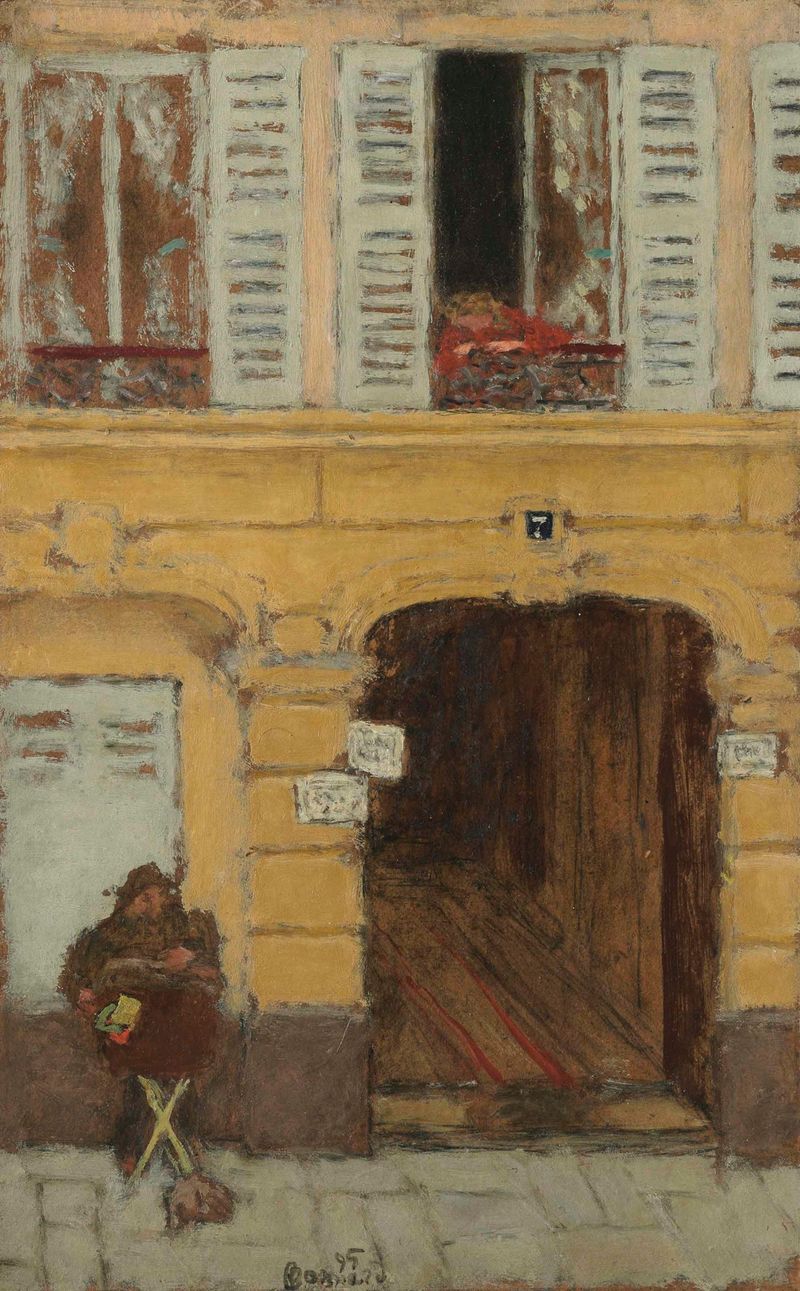
L’orgue de Barbarie ou Le joueur d’orgue
Pierre Bonnard

Paysage de Saint-Tropez
Pierre Bonnard

Soleil Couchant
Pierre Bonnard
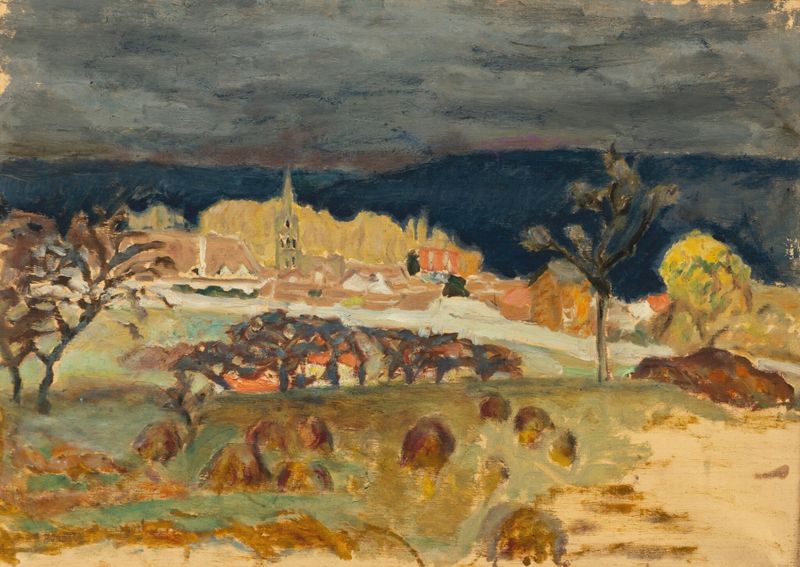
Village, ciel d’orage
Pierre Bonnard





