
Le Marché et la fontaine des Innocents en 1855 — History & Facts
What secret hides in the quiet of the canvas? In the serene yet bustling market scene, light dances delicately, whispering stories of lives woven together in a moment suspended in time. Look to the left at the radiant fountain, its crystalline waters glimmering under the soft embrace of sunlight. The artist employs a muted palette, allowing the subtle interplay of warm and cool hues to create a sense of harmony among the vendors and shoppers. Notice how figures are arranged in gentle arcs, guiding the eye through the composition and inviting you into their shared experience.
The elaborate architectural details of the surrounding buildings frame the scene, enhancing the vibrancy of life pulsating through the marketplace. Delve deeper, and you’ll discover the emotional currents coursing through this tableau. The juxtaposition of light and shadow signifies the balance between fleeting moments of joy and the undercurrents of daily toil. Each face tells a story—some animated with laughter, others weighed down by the burdens of the day.
The fountain, a central motif, symbolizes renewal amidst the everyday struggles, offering a momentary pause in the hustle. Created between 1915 and 1945, the artist painted this work during a time when Europe was marked by upheaval and change. Living in Paris, Hoffbauer was influenced by the artistic movements of the time, particularly Impressionism, which celebrated light and everyday life. The market scene represents both a nostalgic view of community and an expression of resilience, capturing the essence of human connection during particularly trying times.
More Artworks by Fédor Hoffbauer
Browse all →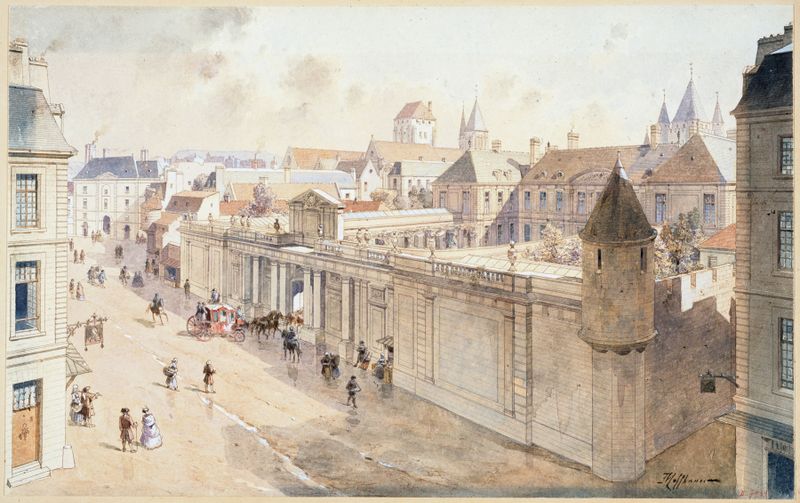
Le palais du Grand Prieur au Temple, en 1770
Fédor Hoffbauer
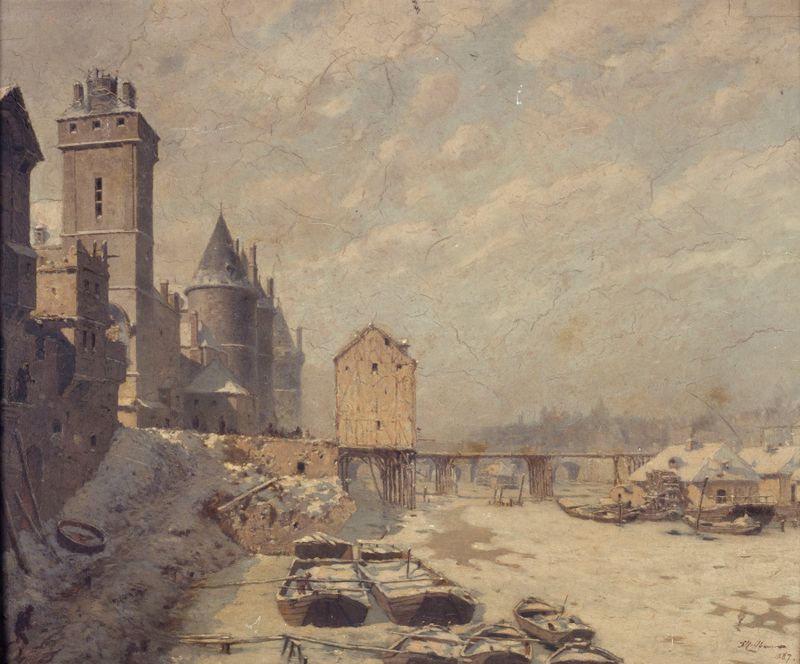
La tour de l’Horloge, la Conciergerie et le pont au Change, en 1621
Fédor Hoffbauer

Banquet des officiers de la marine Russe, dans la salle des fêtes à l’Hôtel de Ville. Fêtes Franco-Russes à Paris
Fédor Hoffbauer

Le Grand Châtelet et le pont de Bois, 1621-1645
Fédor Hoffbauer
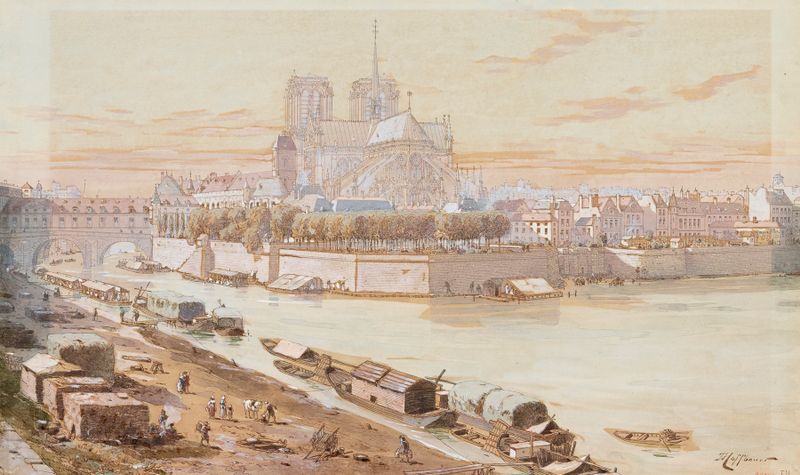
Notre-Dame et l’Evêché en 1750
Fédor Hoffbauer

Vue panoramique de Paris en 1588, depuis les toits du Louvre, avec le Pont-Neuf en construction
Fédor Hoffbauer
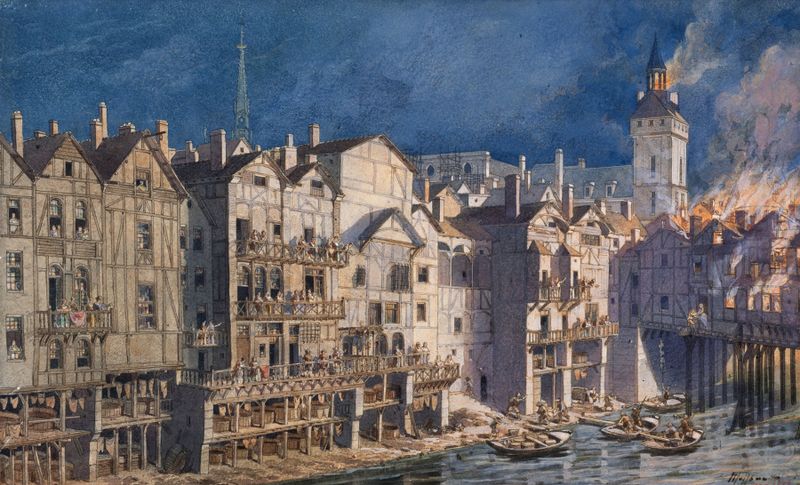
La Cité entre le pont Notre Dame et le pont au Change en 1621
Fédor Hoffbauer

L’Hôtel de Ville et le pont d’Arcole en 1842
Fédor Hoffbauer

Le Cimetière des Innocents en 1750
Fédor Hoffbauer
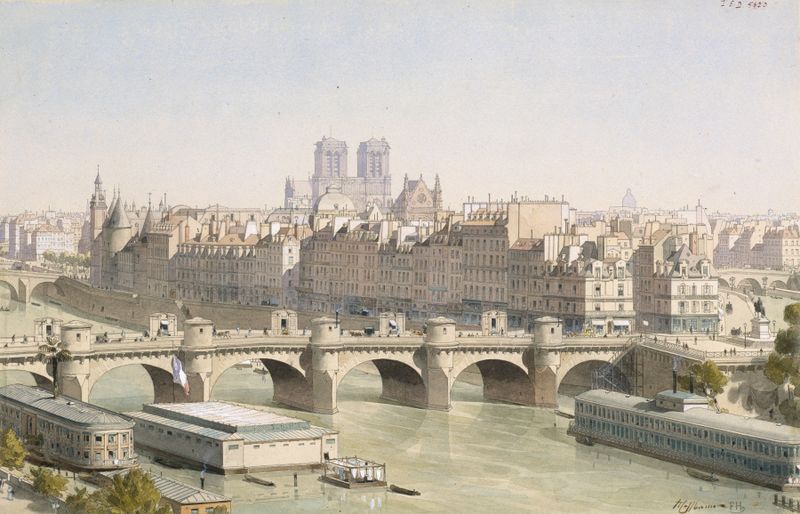
Vue de l’île de la Cité et le pont-Neuf avec ses boutique, vers 1840
Fédor Hoffbauer





