
Le médaillon bleu — History & Facts
A single, commanding blue medallion draws the eye immediately, its classical profile floating like a coin pressed into the geometry of the modern world. Around it, bold blocks of ochre and cream jostle for space, interrupted by the looping, mechanical branches of a stylized plant. Every edge is deliberate, every shadow crisp: Fernand Léger’s Le médaillon bleu is a painting that refuses to settle into the background, instead inviting the viewer to puzzle out the relationship between the organic and the constructed. The head in the medallion, rendered in profile and framed by a deep blue, feels both ancient and strangely new—echoes of a Greek coin or a Roman cameo, but set within a world of machinery and abstraction.
The plant’s limbs, too, are more pipe than vine, their leaves flattened into near-sculptural forms. Léger’s palette—yellow, black, cream, and that electric blue—sets a mood of clarity and invention, as if the painting is assembling itself before your eyes. This is not a scene of nature or myth, but a conversation between past and present, between the enduring forms of antiquity and the restless energies of the twentieth century. Painted in 1928, Le médaillon bleu belongs to a moment when artists like Léger were reshaping the language of painting, blending the mechanical with the classical in ways that still feel fresh.
The world that produced this work was one of factories, jazz, and the first flickers of cinema—an era hungry for new symbols, yet still haunted by the old. Léger’s painting stands as a testament to that tension, and its energy lingers: the longer you look, the more the medallion seems to turn, the more the branches seem to reach.
More Artworks by Fernand Léger

The Tugboat Bridge
Fernand Léger
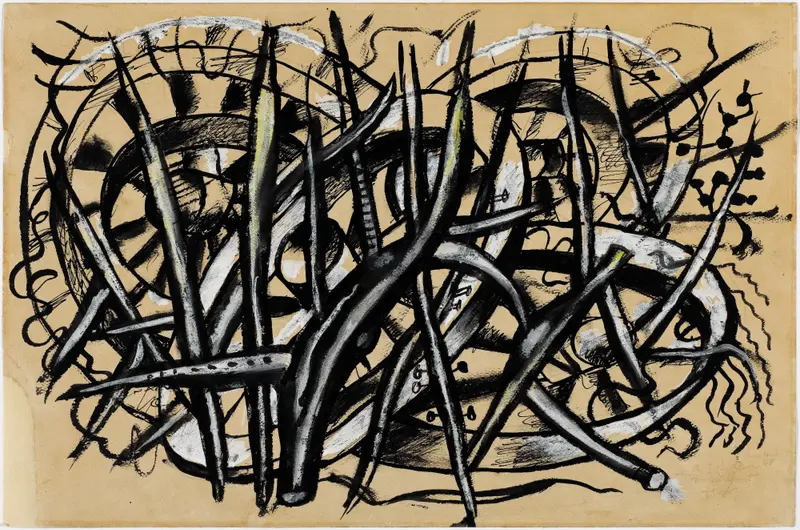
The Wheels
Fernand Léger

Le Cirque Médrano
Fernand Léger
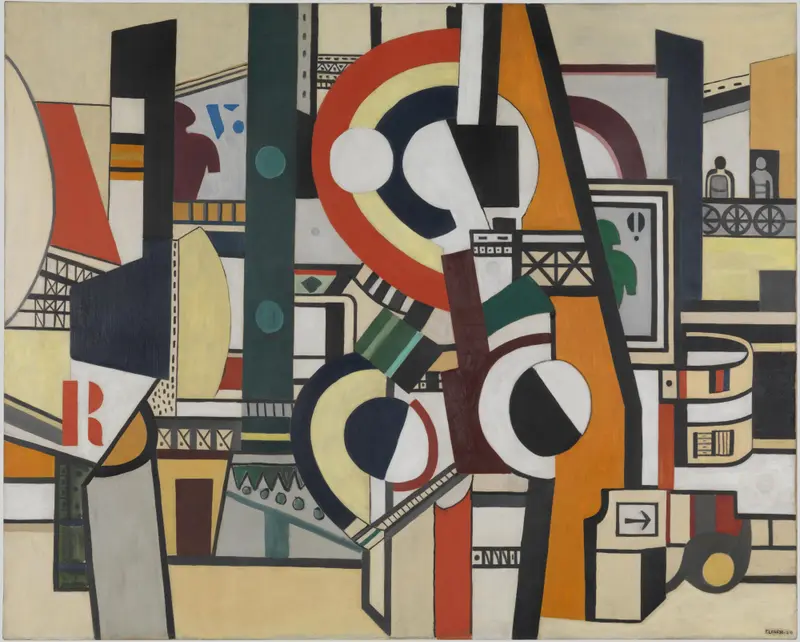
The Disks in the City
Fernand Léger
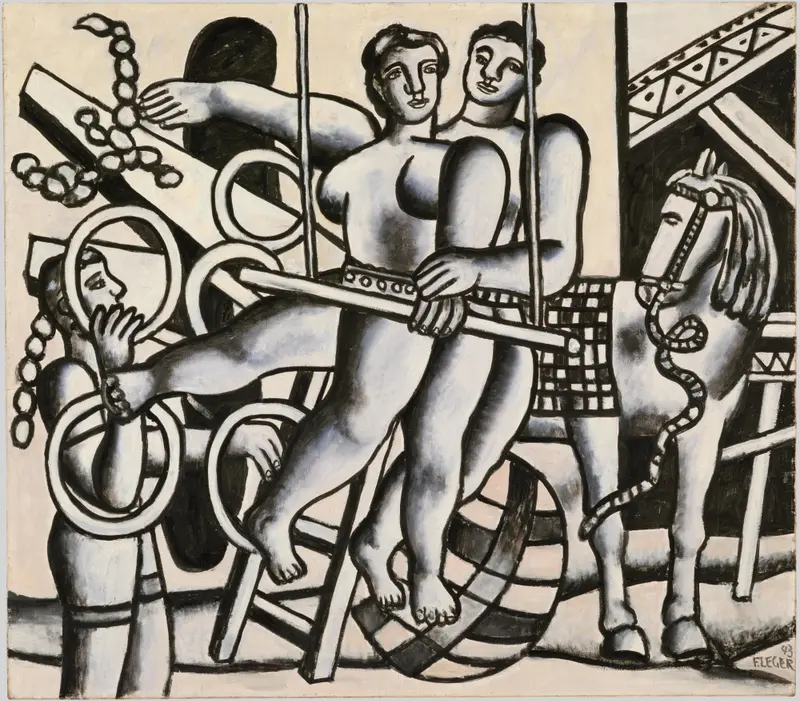
Le Jongleur et les acrobates
Fernand Léger
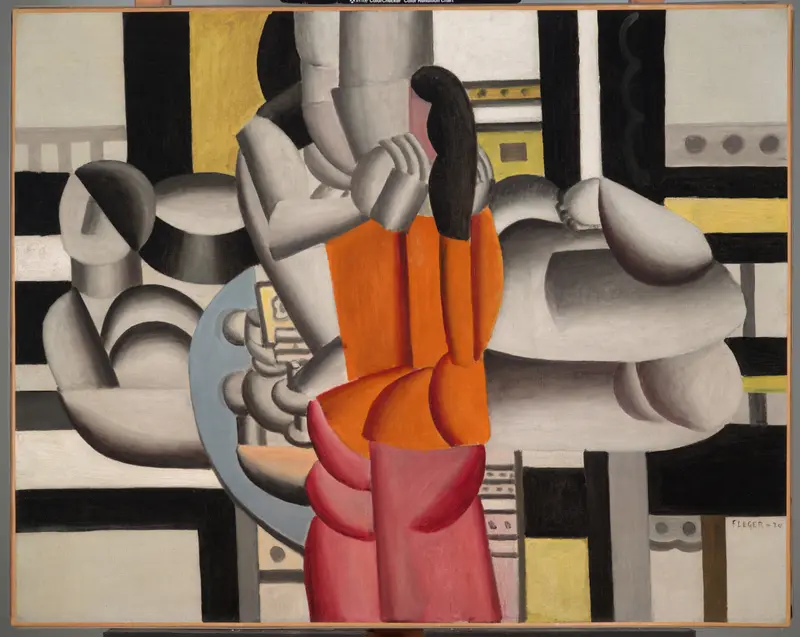
Three Women and Still Life (Déjeuner)
Fernand Léger
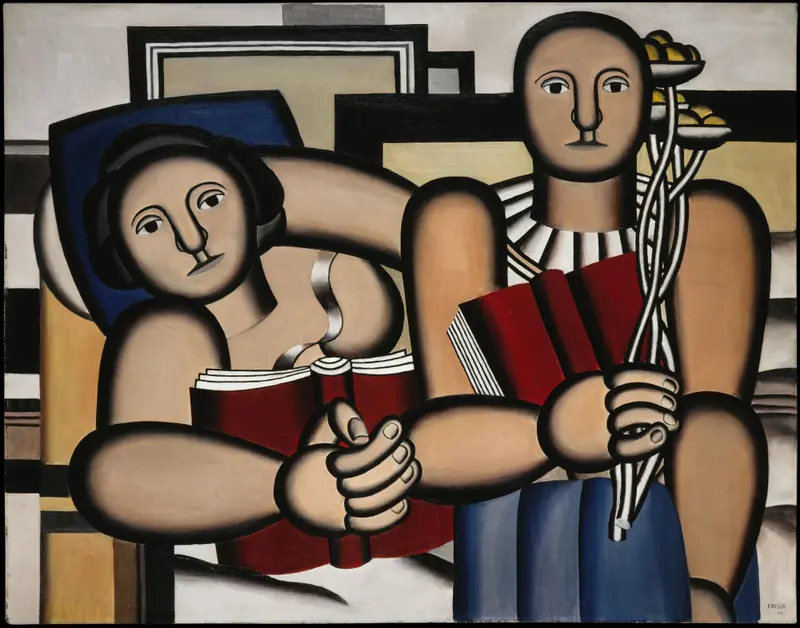
Reading
Fernand Léger
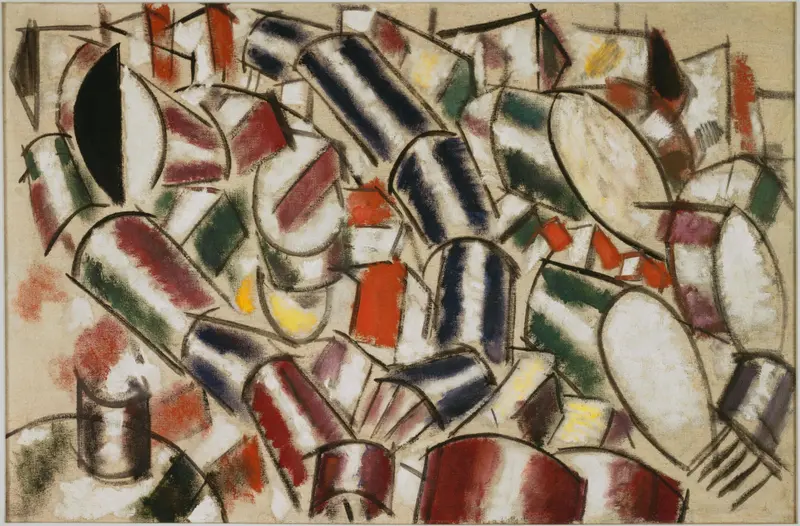
Femme couchée
Fernand Léger
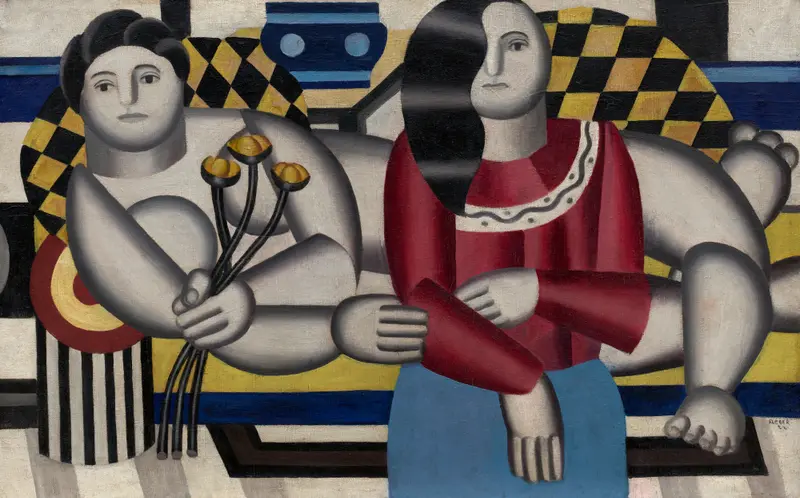
Woman holding flowers
Fernand Léger
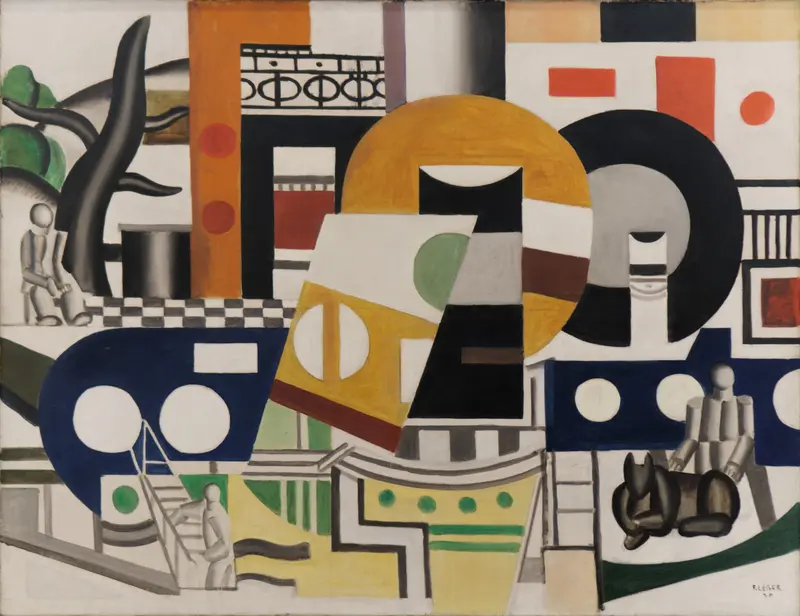
The Tug
Fernand Léger



