
Le pêcheur — History & Facts
Where does light end, and longing begin? In the stillness of Le pêcheur, silence echoes through the tranquil waters, inviting contemplation and introspection. Look to the center of the canvas, where a solitary fisherman, silhouetted against a gentle dusk, casts his line into the shimmering lake. Notice how the light dances across the surface, glistening like diamonds, while soft hues of blue and gold blend seamlessly to create an atmosphere of serenity. The composition balances the figure's quiet concentration with the expansive expanse of nature, drawing the eye naturally to the contrast between man and the boundless world around him. The fisherman embodies a profound solitude, his posture suggesting both resolve and yearning.
The quietude of the scene reflects a moment that spans beyond mere action; it hints at the transcendent connection between human aspiration and the natural environment. The soft brushstrokes and muted tones evoke a sense of nostalgia, allowing viewers to ponder their own relationships with nature and silence, as well as the weight of unspoken dreams. Created in 1857, the painting emerged during a significant period for Harpignies, who was heavily influenced by the Barbizon school of landscape painters. At this time, he sought to emphasize the beauty of rural life in France, moving away from the grandeur of historical subjects.
His focus on intimate scenes like this one reflects a broader artistic shift towards realism, inviting viewers to appreciate the subtle poetry found in everyday moments.
More Artworks by Henri-Joseph Harpignies
Browse all →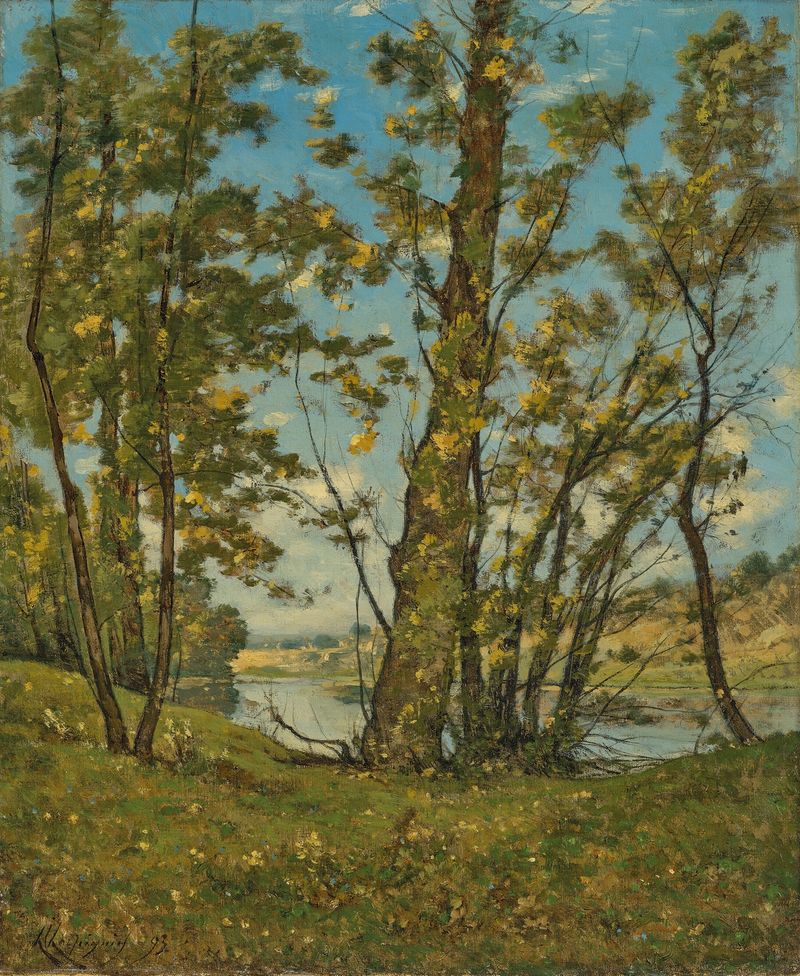
La Loire à Bonny
Henri-Joseph Harpignies
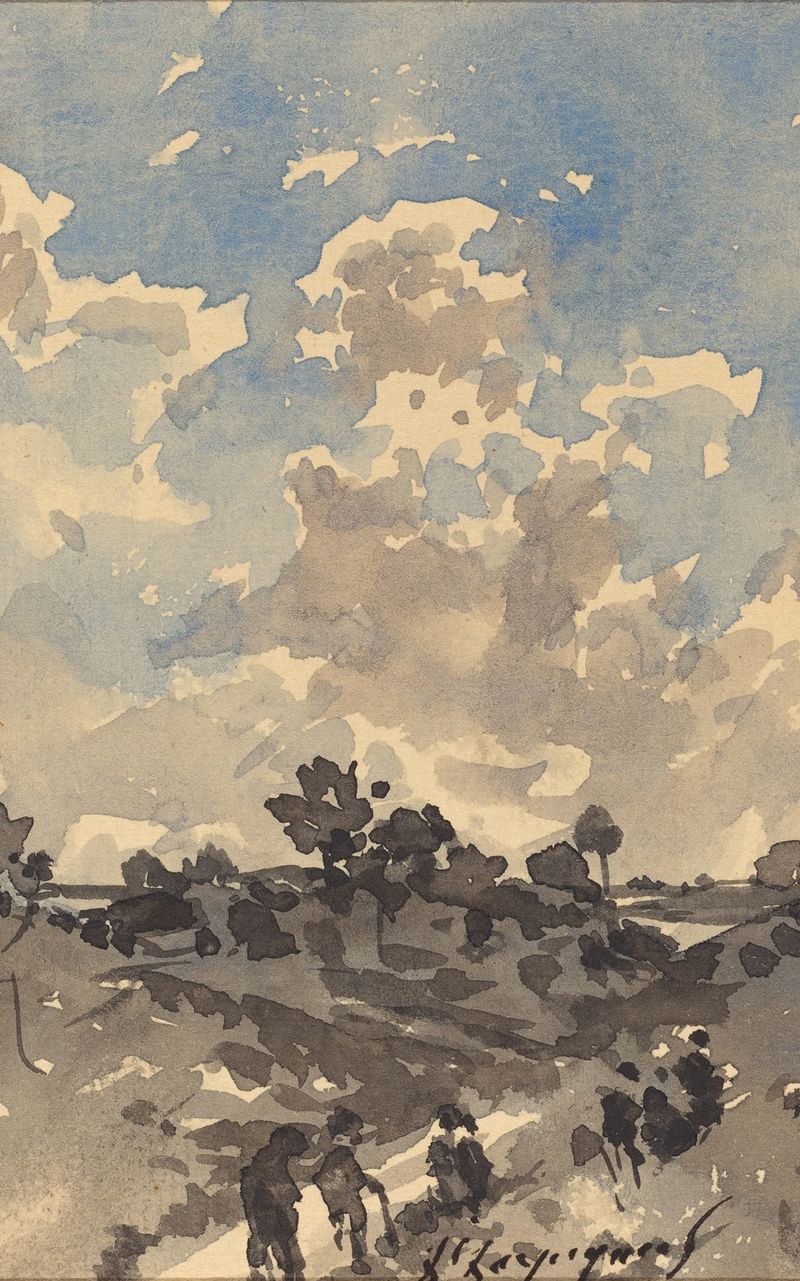
A Landscape with Figures Walking along a Path
Henri-Joseph Harpignies
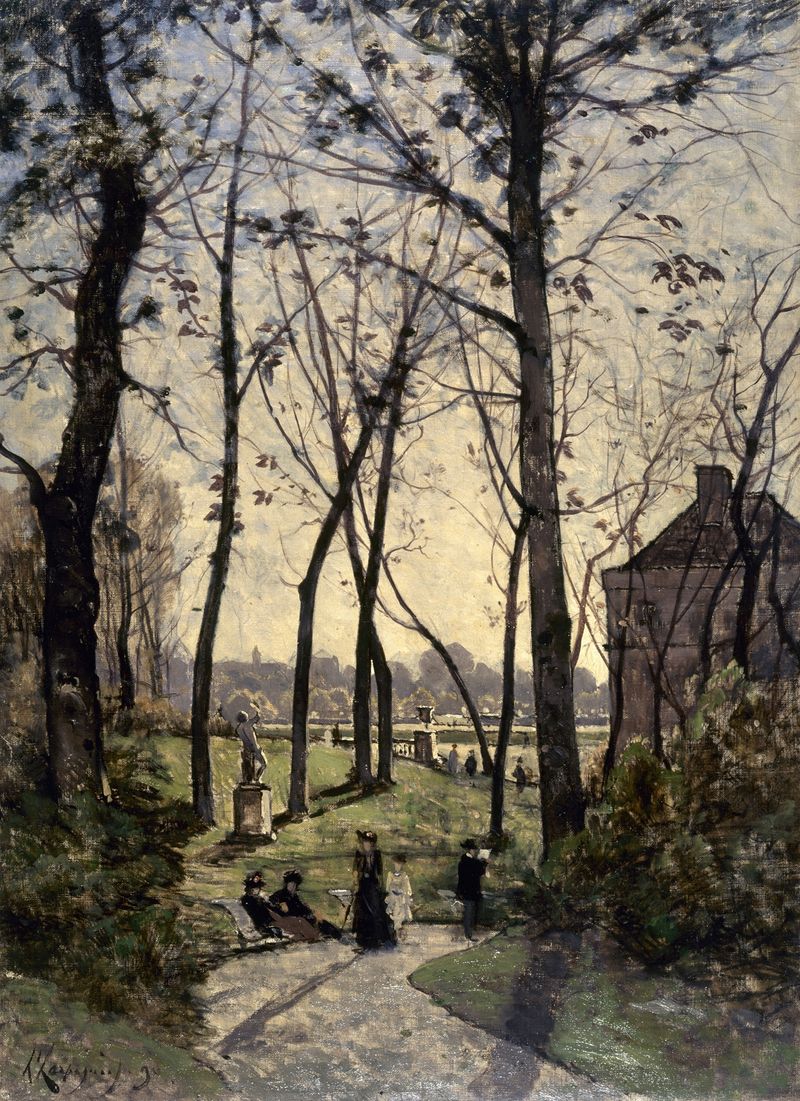
Le jardin du Luxembourg
Henri-Joseph Harpignies
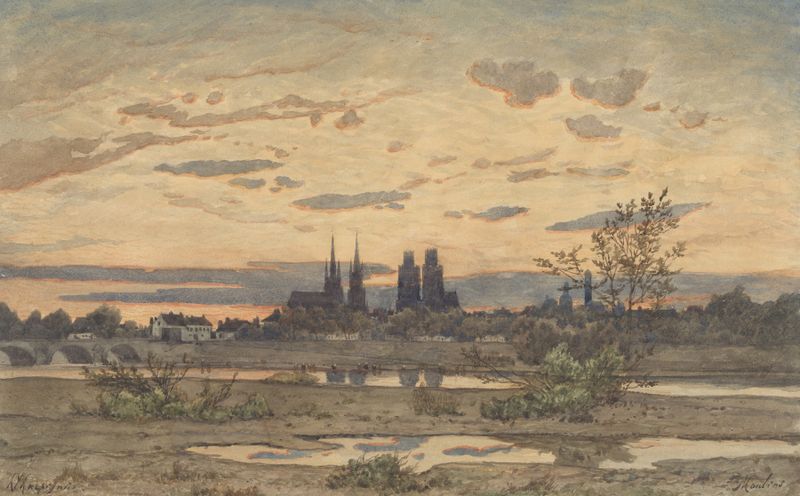
A View of Moulins
Henri-Joseph Harpignies
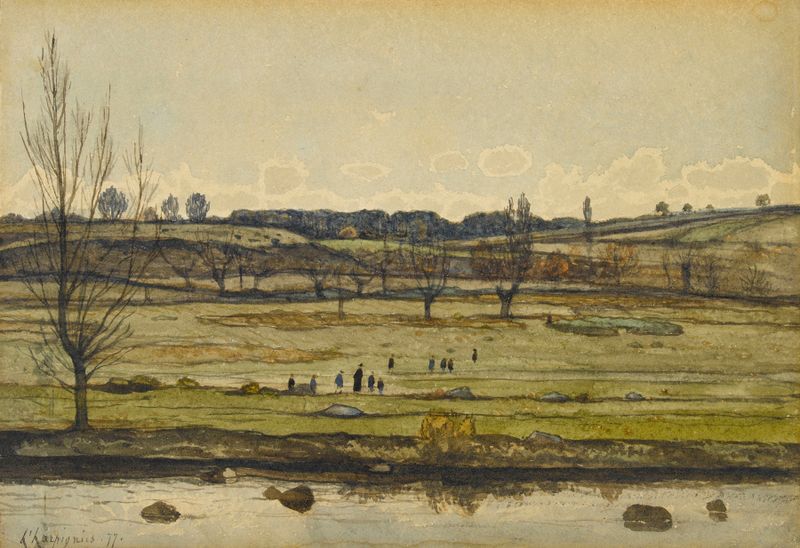
Paysage
Henri-Joseph Harpignies
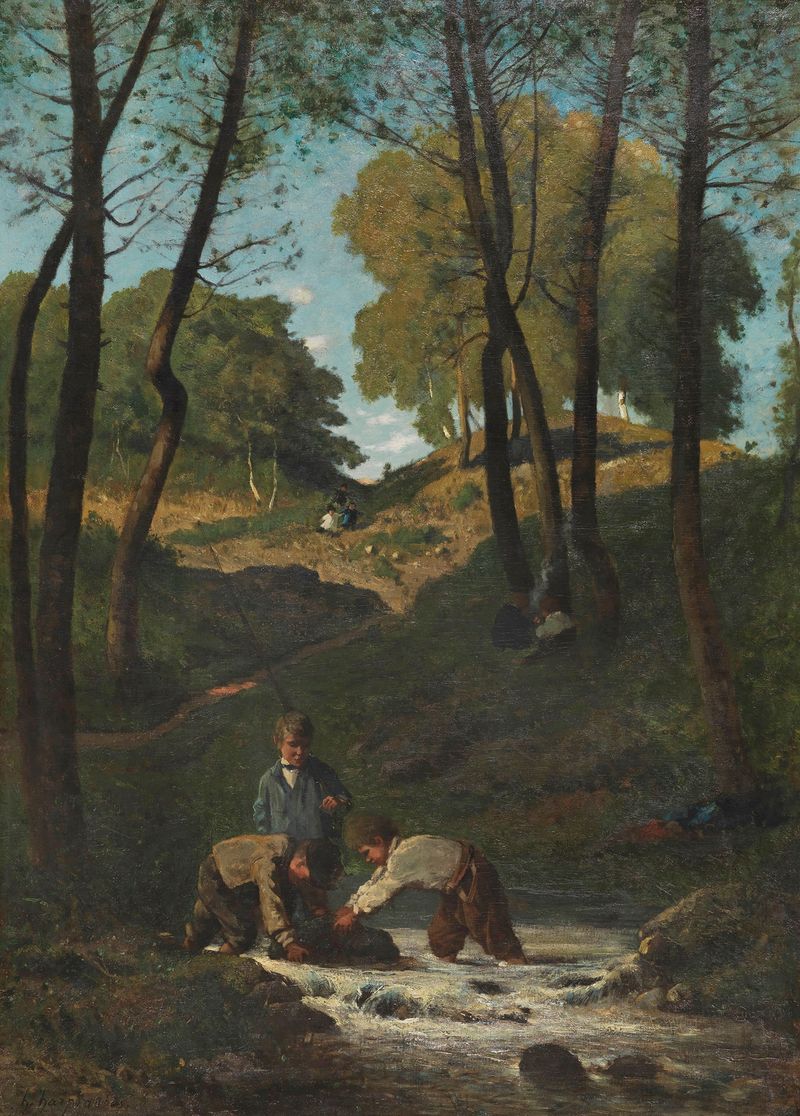
Chercheurs d’écrevisses
Henri-Joseph Harpignies
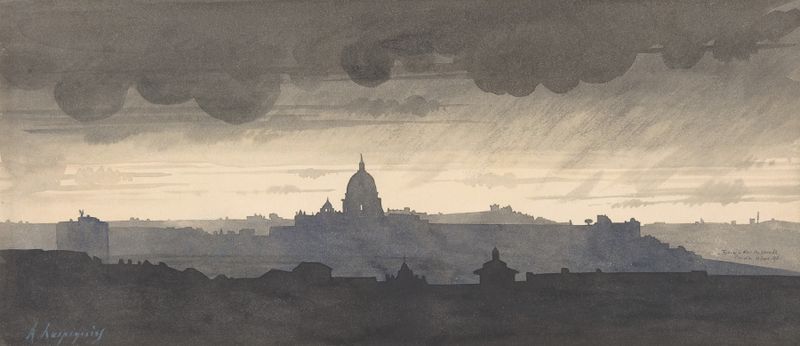
Saint Peter’s Seen From the Pincio, Rome
Henri-Joseph Harpignies
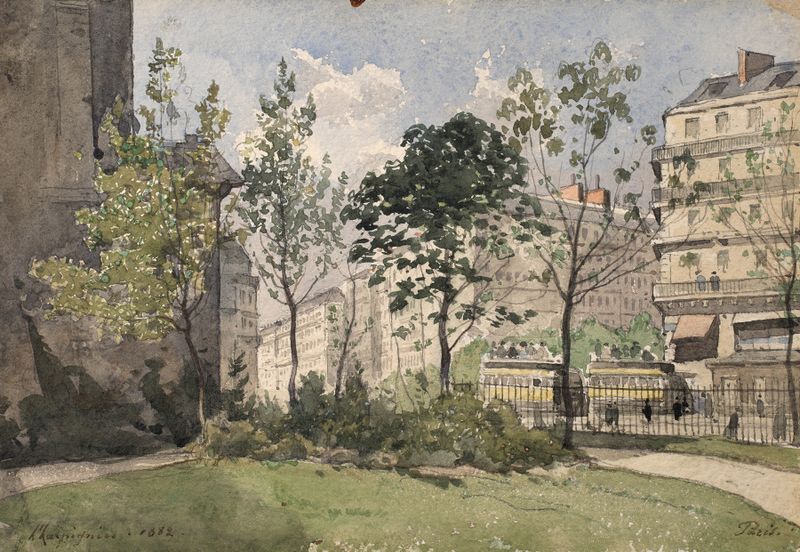
View of the forecourt of the Saint-Germain-des-Prés church
Henri-Joseph Harpignies
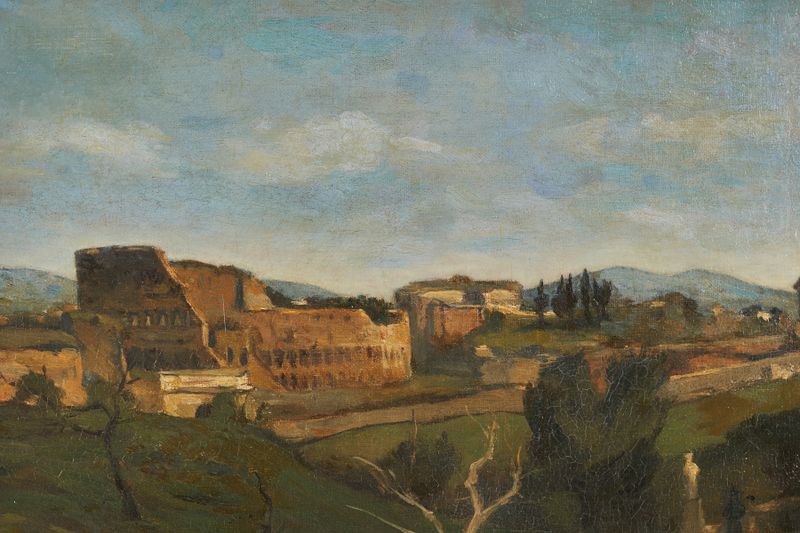
Le Colisée à Rome
Henri-Joseph Harpignies

Villefranche
Henri-Joseph Harpignies





