
Le quai de l’Hôtel-de-Ville et le pont Louis-Philippe — History & Facts
What secret hides in the quiet of the canvas? The stillness of Le quai de l’Hôtel-de-Ville et le pont Louis-Philippe invites contemplation, a void that beckons the viewer to delve deeper into its tranquil embrace. Focus first on the serene reflection of the buildings in the water, where soft brush strokes create a mirror image that dances with gentle ripples. The cool blues and warm earthy tones play against each other, evoking a sense of harmony and calm. Notice how the arch of the bridge leads the eye toward the horizon, suggesting a journey both literal and metaphorical, while the well-defined architecture stands as a testament to human achievement amidst nature's serenity. Yet, beneath this placid surface lies a tension—a conflict between the permanence of the structure and the ever-changing water.
The juxtaposition of solid forms against the fluidity of the river evokes thoughts of stability versus transience. The quietude can also hint at a deeper existential void, where the beauty of the scene may mask an underlying longing or absence, urging the viewer to ponder what lies beyond the visible. In 1899, Frédéric Houbron painted this piece during a period marked by rapid industrial change in Paris. As new artistic movements like Impressionism flourished, he sought to capture the essence of his surroundings with a more traditional approach.
At this time, the city was in the throes of modernization, and the artist’s choice to depict such a tranquil scene speaks to a desire to preserve the fleeting beauty of the past against an encroaching modernity.
More Artworks by Frédéric Houbron
Browse all →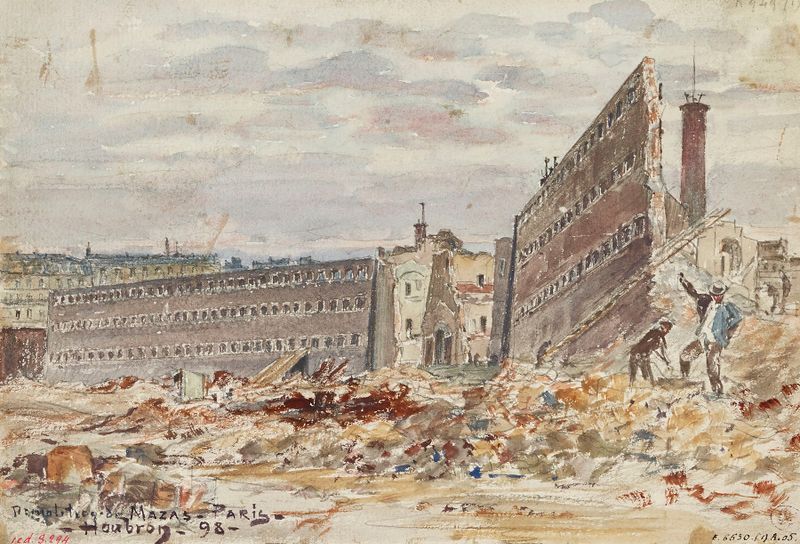
Démolition de la prison Mazas, 23, 25 boulevard Diderot (ancien boulevard Mazas)
Frédéric Houbron
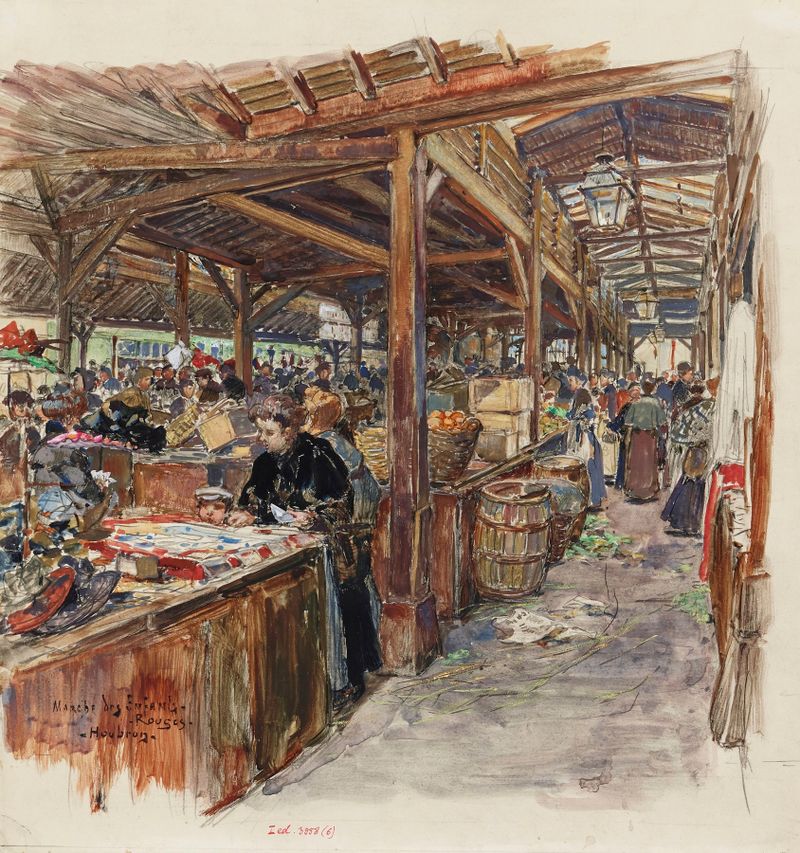
Intérieur du Marché des Enfants Rouges. 3ème arrondissement
Frédéric Houbron
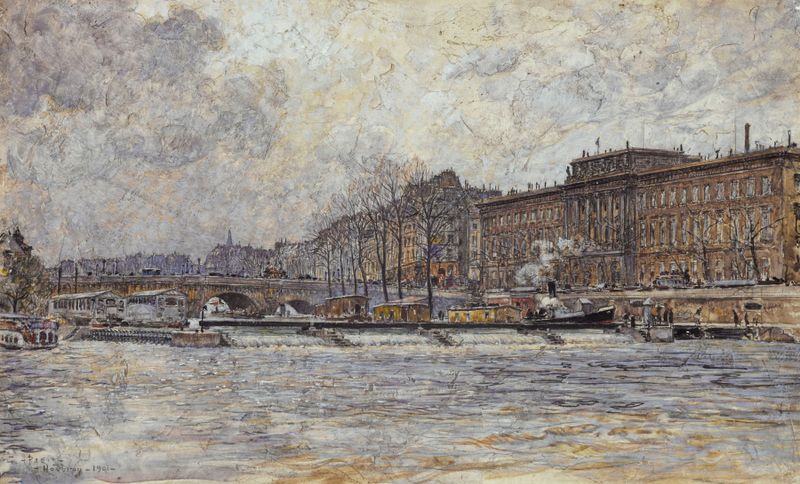
L’Hôtel de la Monnaie et le Pont-Neuf
Frédéric Houbron

Quai des Orfèvres. Paris. 1906
Frédéric Houbron
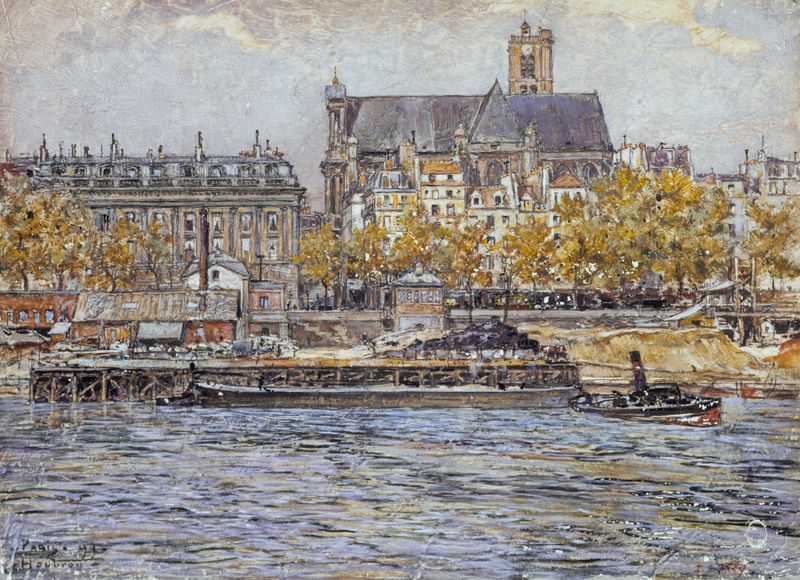
Le quai de l’Hôtel-de-Ville et l’église Saint-Gervais-Saint-Protais
Frédéric Houbron
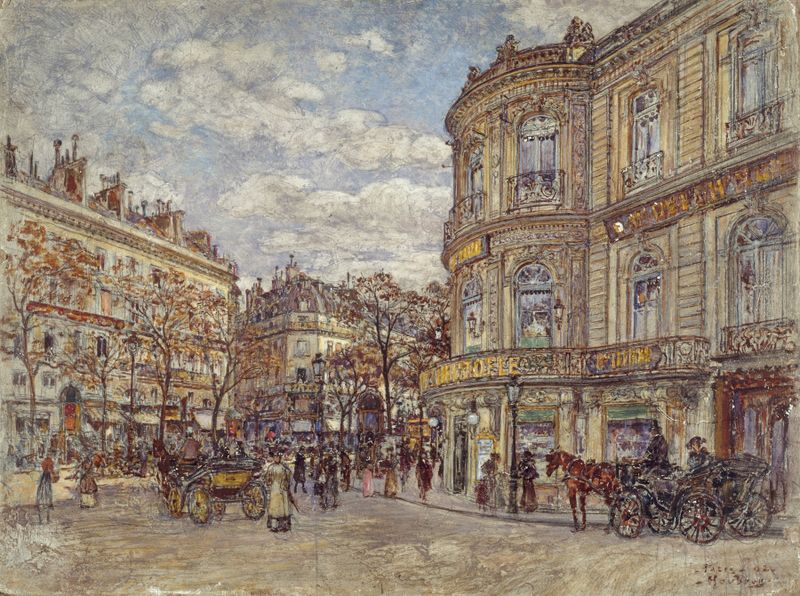
Le Pavillon de Hanovre, rue Louis-le-Grand
Frédéric Houbron

La rue du Chevalier-de-la-Barre, avec le Sacré-Cœur en construction
Frédéric Houbron
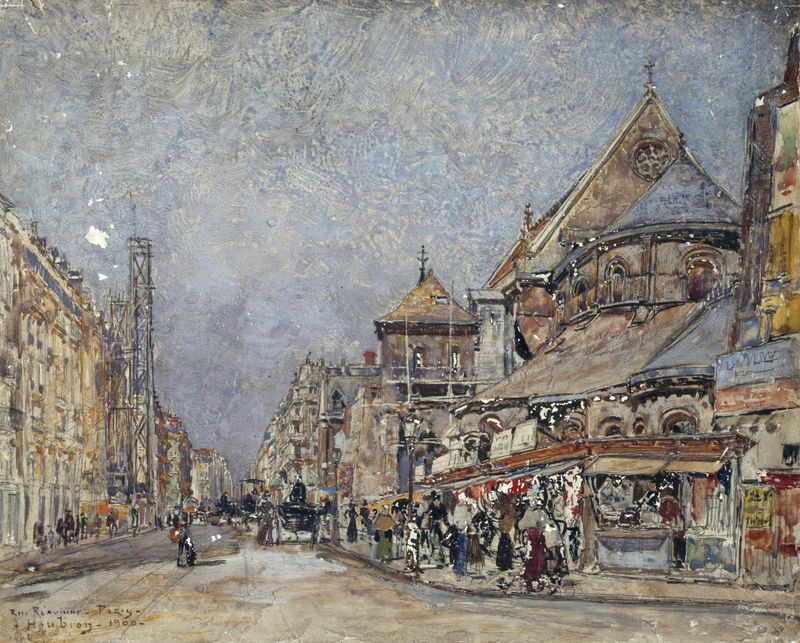
La rue Réaumur et le chevet de l’église Saint-Martin-des-Champs
Frédéric Houbron
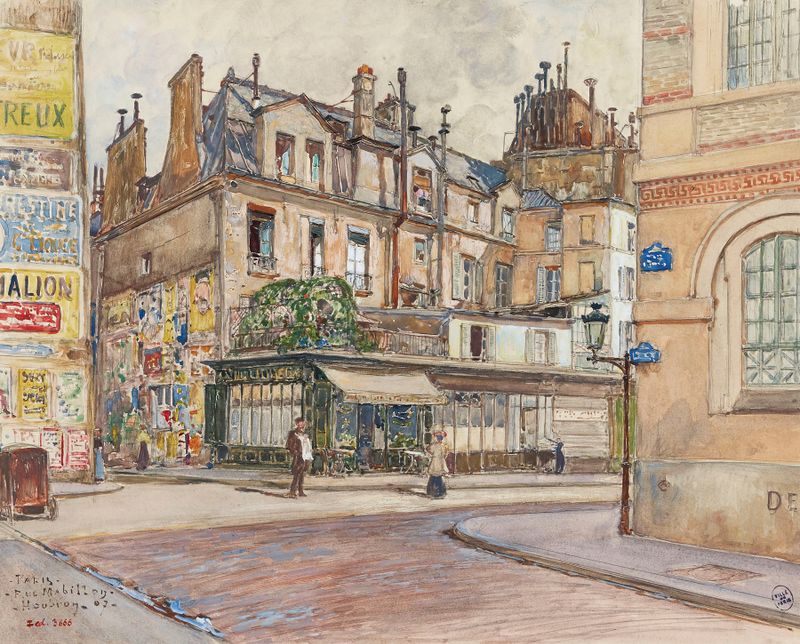
Angle rue Mabillon et rue Clément, en 1907. 5ème et 6ème arrondissements
Frédéric Houbron
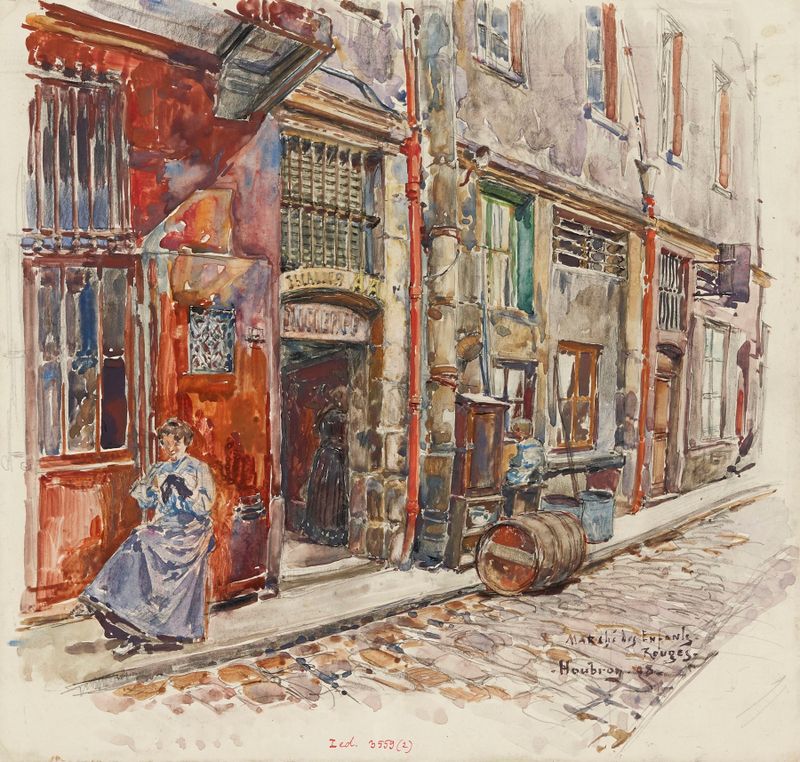
Entrée escalier A du Marché des Enfants-Rouges, en 1908. 3ème arrondissement
Frédéric Houbron





