
Les falaises de Gréville (The Cliffs of Gréville) — History & Facts
Can paint confess what words never could? In Les falaises de Gréville, the cliffs rise with an imposing yet serene presence, whispering secrets of the earth beneath layers of texture and color, longing for understanding. Look to the left at the rugged cliff face, where the earthy ochres and browns blend seamlessly, embodying the raw power of nature's artistry. Notice how the cool blues of the sea contrast sharply with the sunlit greens of the grass, invoking a sense of harmony amidst the tumult of land and water. The composition draws the eye along the edge of the cliff, where the interplay of light and shadow conveys both majesty and fragility.
Each brushstroke feels deliberate, imbuing the scene with a tactile quality that invites the viewer to reach out and connect. Delve deeper into the juxtaposition of strength and vulnerability, as the cliffs stand resolute against the relentless tide, yet appear shaped by the gentle caress of the wind and waves. The hints of human presence in the distance suggest a relationship with the land; it is both a refuge and a challenge, evoking a sense of solitude in the vast expanse. This painting tells a story of resilience, of nature's quiet confession through its unyielding form and serene beauty, holding within it echoes of human experience. During the years 1871 to 1872, the artist found solace in the coastal landscapes of Normandy, seeking refuge in the simplicity of rural life after the tumultuous events surrounding the Franco-Prussian War.
This period marked a pivotal moment in Millet's career as he sought to explore themes of nature and humanity, capturing the essence of the world around him. As he painted Les falaises de Gréville, he was not only documenting the physical landscape but also reflecting the emotional landscape of a society in search of healing and hope.
More Artworks by Jean-François Millet
Browse all →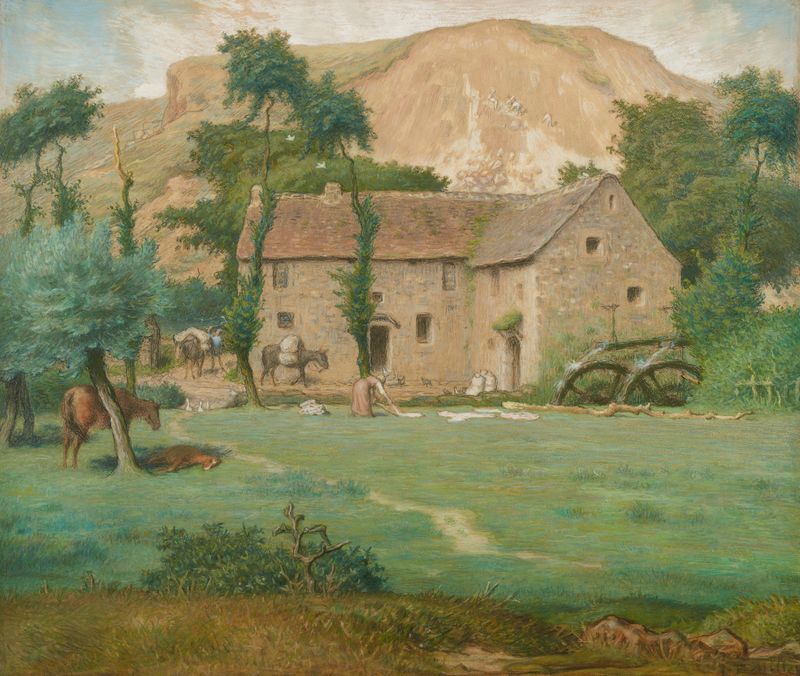
Watermill at the Foot of a Mountain, Allier
Jean-François Millet
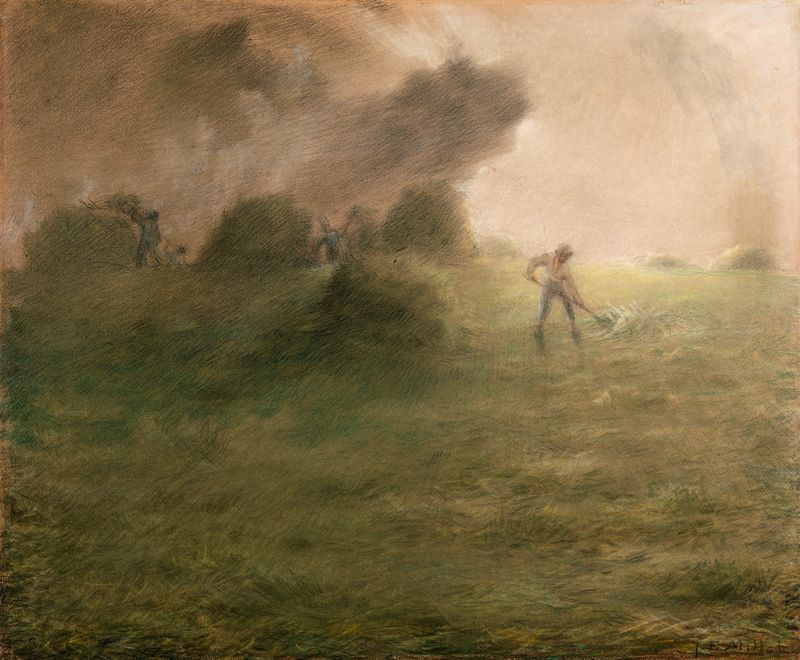
A Storm during Haymaking
Jean-François Millet
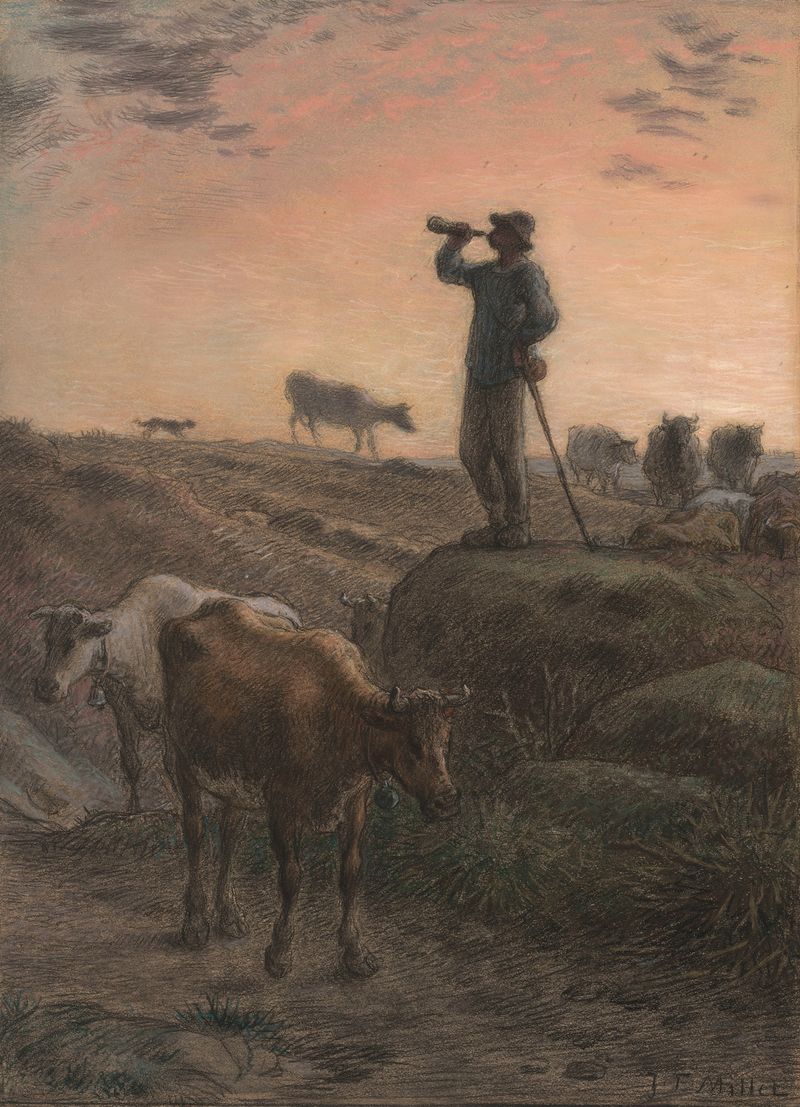
Calling Home the Cows
Jean-François Millet
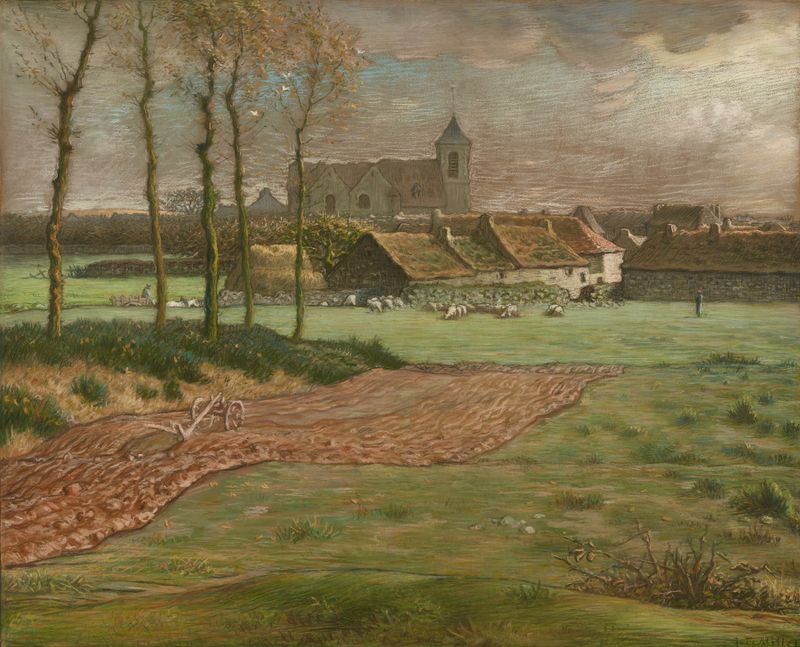
The Church at Chailly
Jean-François Millet
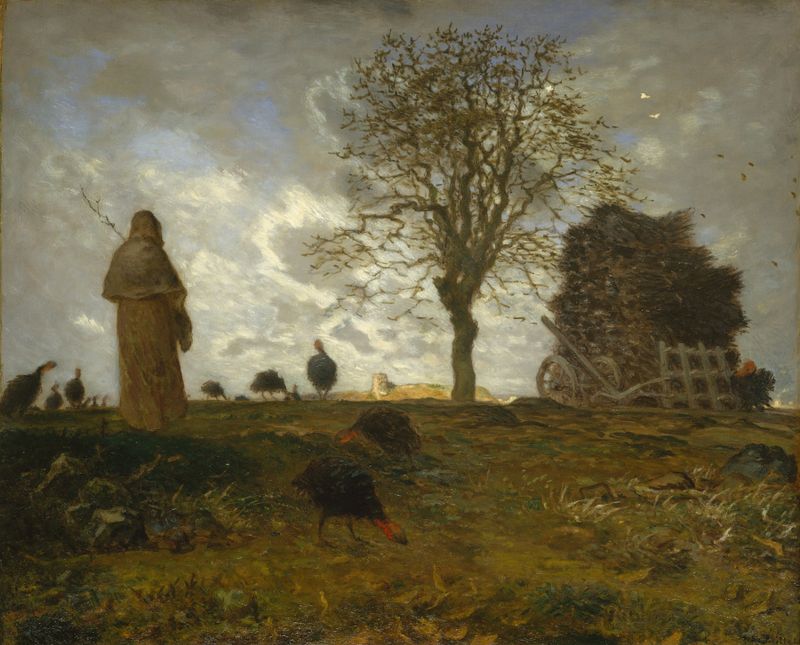
Autumn Landscape with a Flock of Turkeys
Jean-François Millet
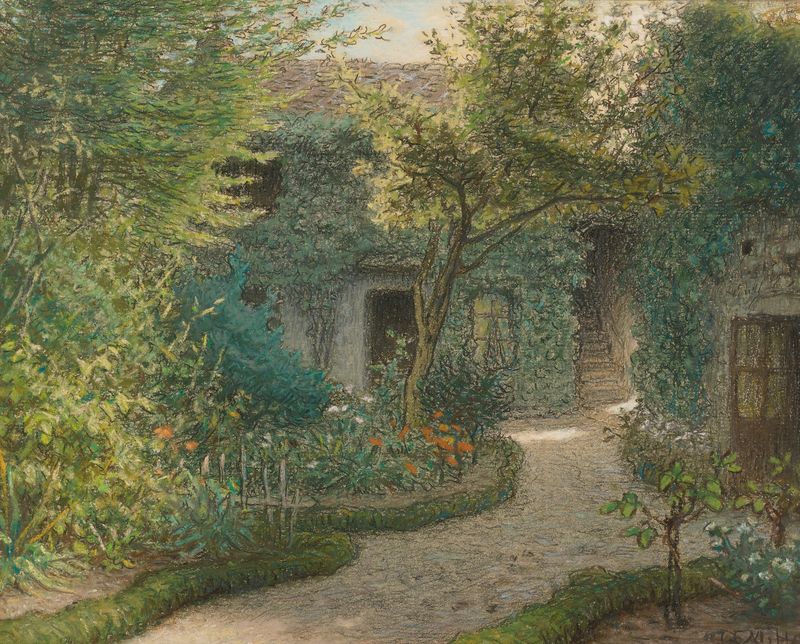
Théodore Rousseau’s House In Barbizon
Jean-François Millet
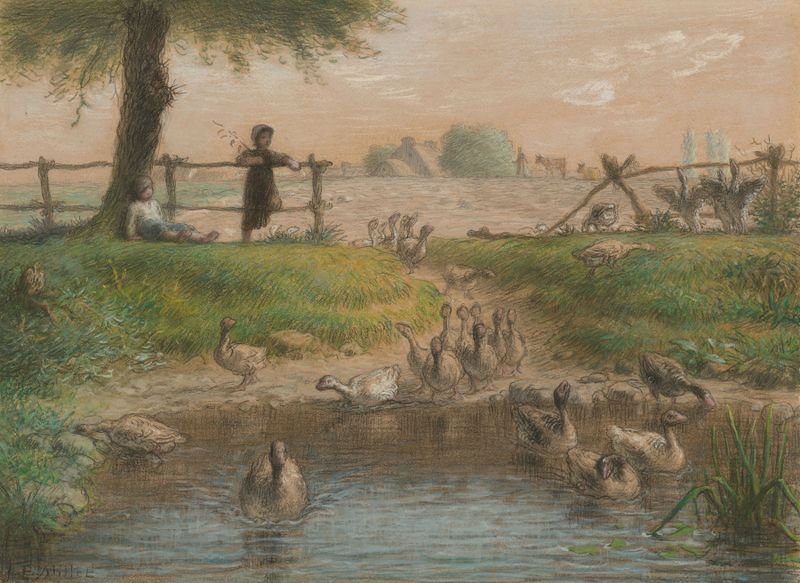
Peasant Children at Goose Pond
Jean-François Millet
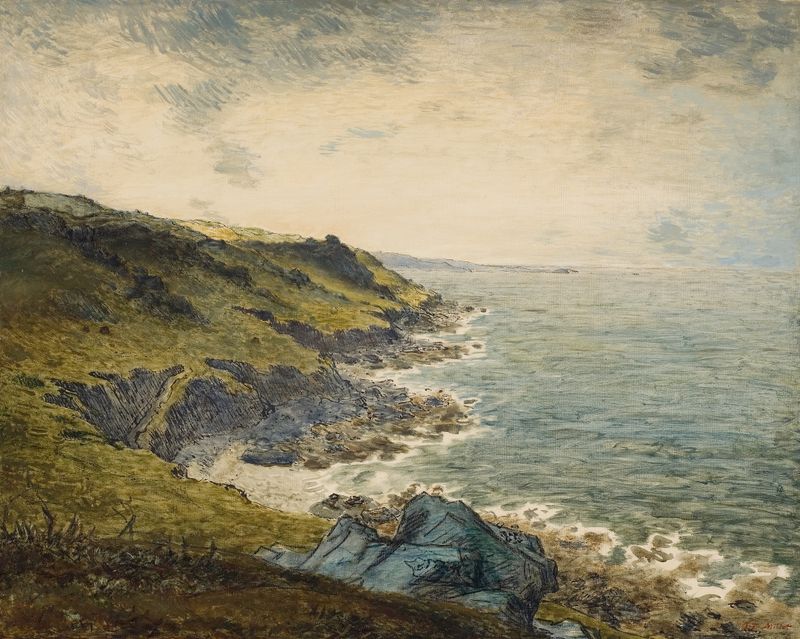
The Coast at Gréville
Jean-François Millet
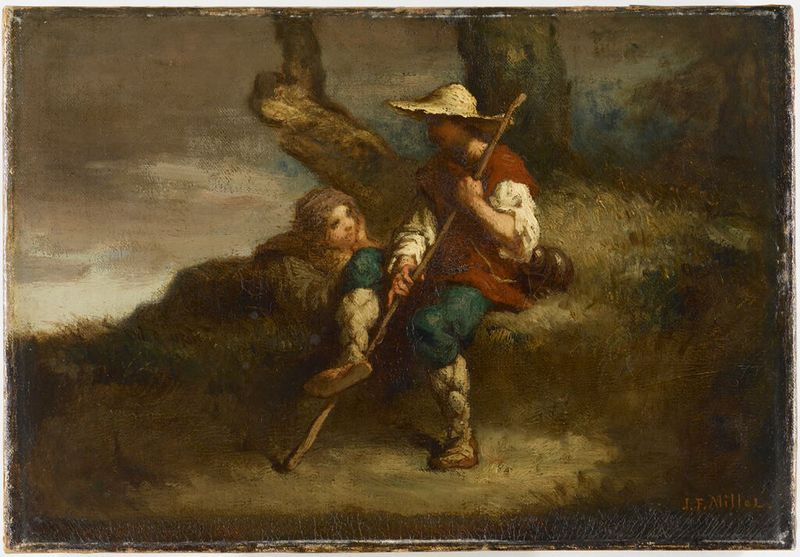
Shepherds Resting
Jean-François Millet
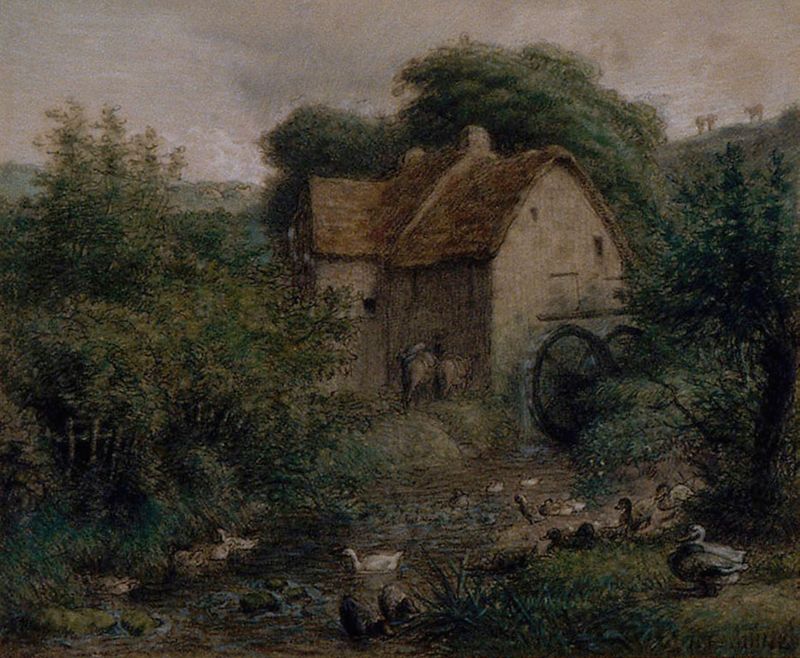
The Old Mill
Jean-François Millet





