
Lille PdBA nattier scene galante — History & Facts
What draws the eye first is the playful exchange of glances: a young man, caught mid-pour, fixes his gaze on his companion, his hand steadying hers as if inviting her into the game. The moment is lush with suggestion—wine brims at the edge of the glass, grapes tumble onto the table, and the blue silk of her dress pools in soft folds, a foil to his loose, open shirt. Above them, a canopy of vines and fruit hints at Bacchic pleasures, while the gentle curve of their bodies draws the viewer into their private world.
The artist uses light to caress the woman’s face and bare shoulder, making her the quiet center of attention; her small smile and the tilt of her head signal complicity, not coyness. The palette is ripe with the warmth of late summer, yet the scene is staged for intimacy, not spectacle. Painted in 1737, this work belongs to the world of Jean-Marc Nattier, a painter famed for his ability to blend portraiture with the flirtatious spirit of the Rococo scene galante. In the France of Louis XV, such images were prized by an elite eager to see themselves reflected in mythic or pastoral play, their pleasures both refined and lightly veiled.
These paintings, often destined for private salons, celebrated wit, beauty, and the art of seduction—qualities that defined the age as much as its politics or wars. While history has kept few traces of this particular canvas beyond its date and current home, its charm lies in how it captures a fleeting, conspiratorial joy. Let your gaze linger on the intertwined hands and the shared smile: this is the theatre of desire, staged for those who know how to look.
More Artworks by Jean-Marc Nattier

Madame Crozat de Thiers and Her Daughter
Jean-Marc Nattier
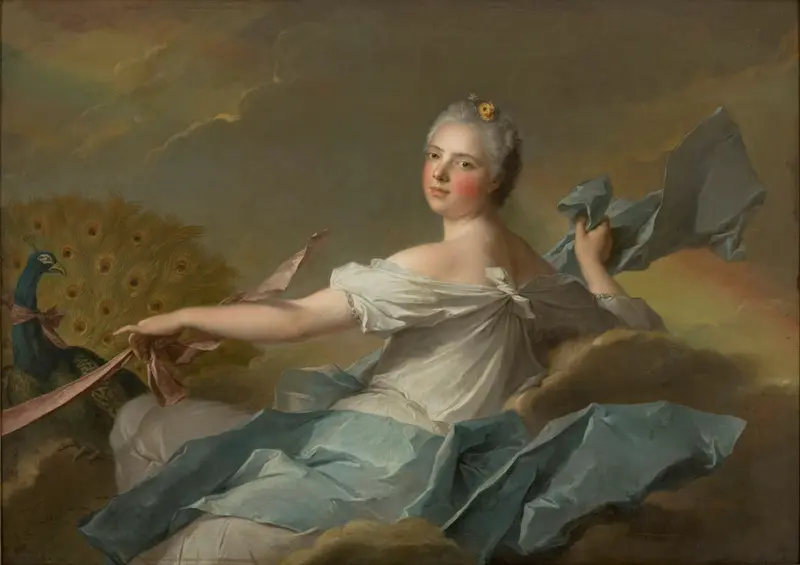
Princess Marie Adélaïde of France - The Air
Jean-Marc Nattier
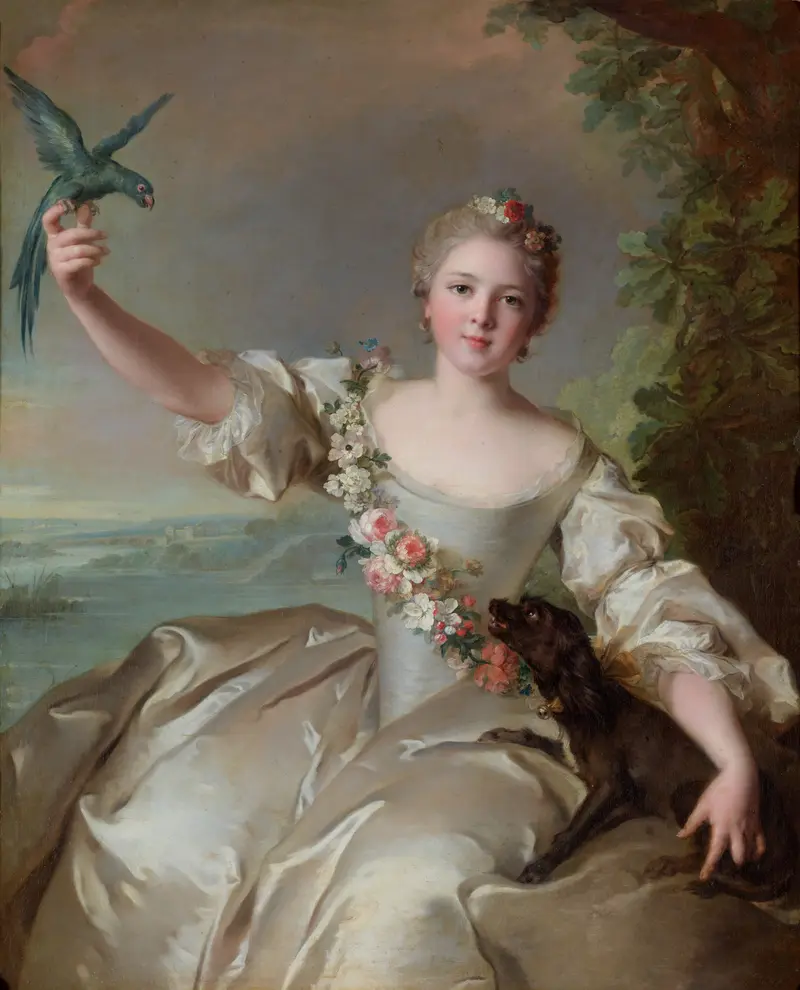
Portrait de Mathilde de Canisy, marquise d'Antin
Jean-Marc Nattier
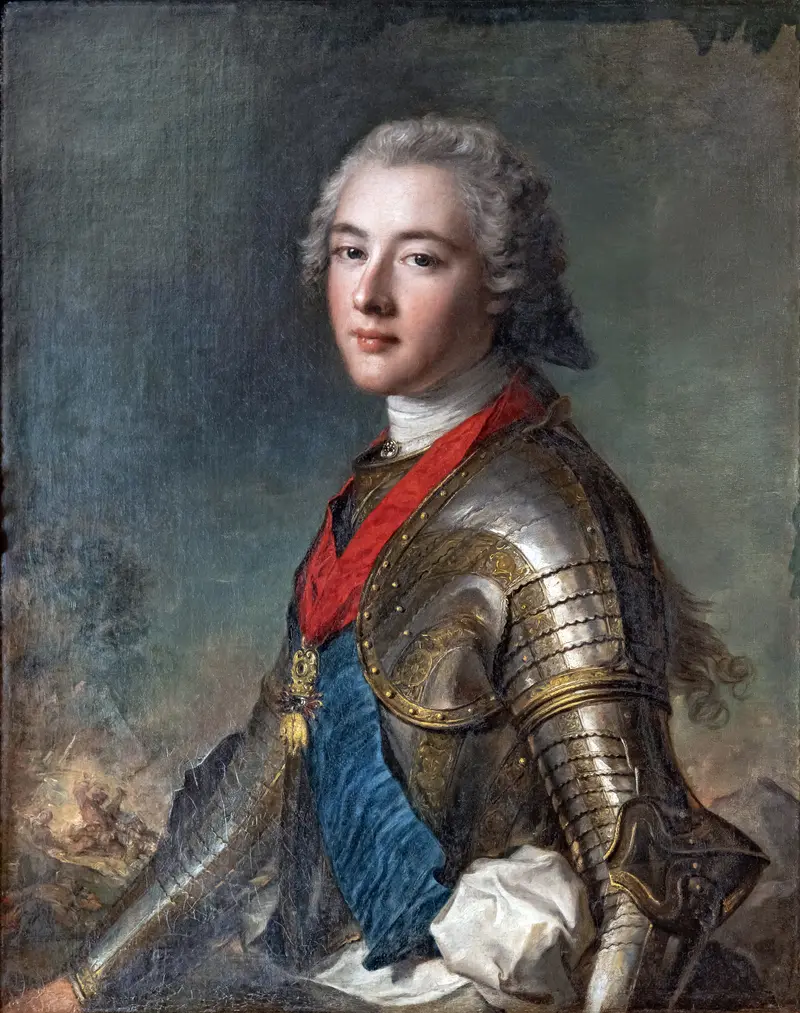
Bemberg Fondation Toulouse - Portrait de Louis Jean Marie de Bourbon, Duc de Penthièvre - Jean Marc Nattier inv.1158 82x65.4
Jean-Marc Nattier
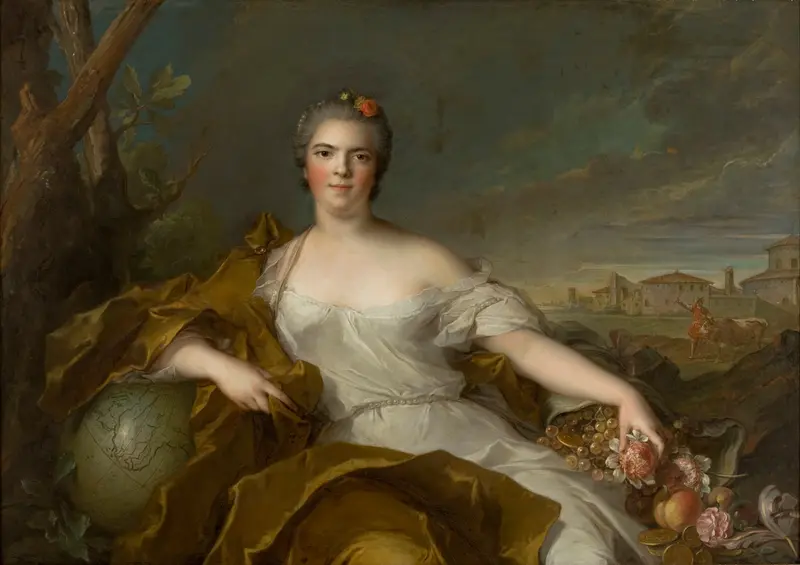
Princess Louise-Élisabeth of France - The Earth
Jean-Marc Nattier
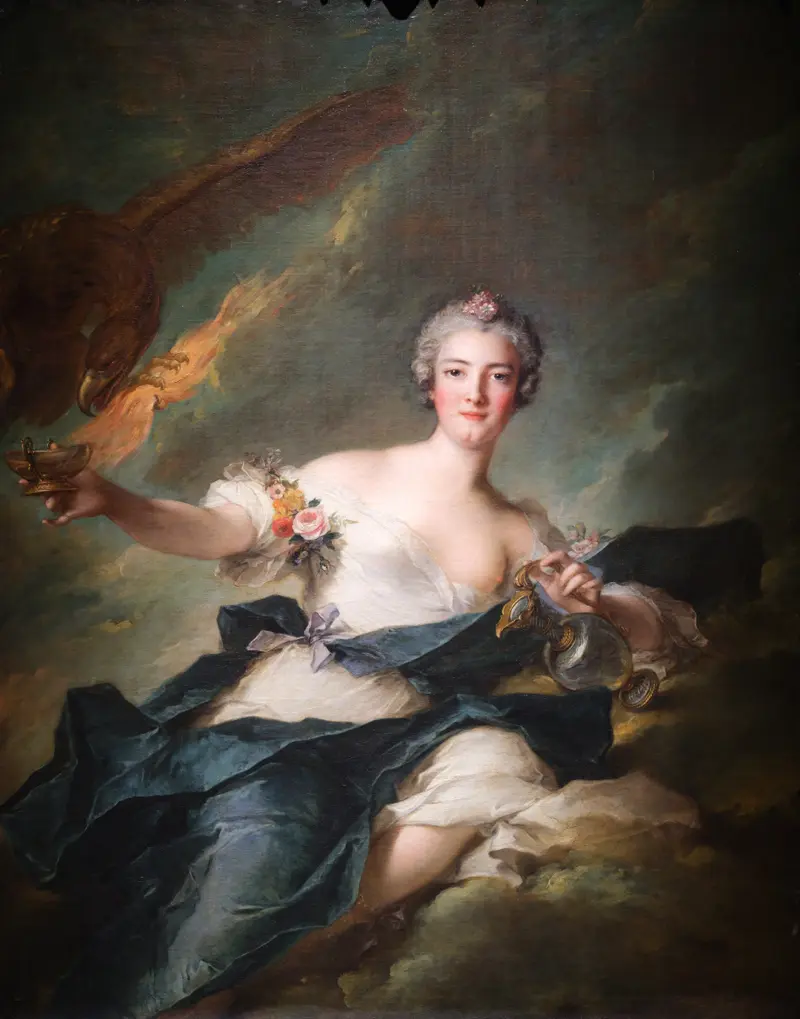
The Duchess of Chaulnes Represented as Hebe
Jean-Marc Nattier
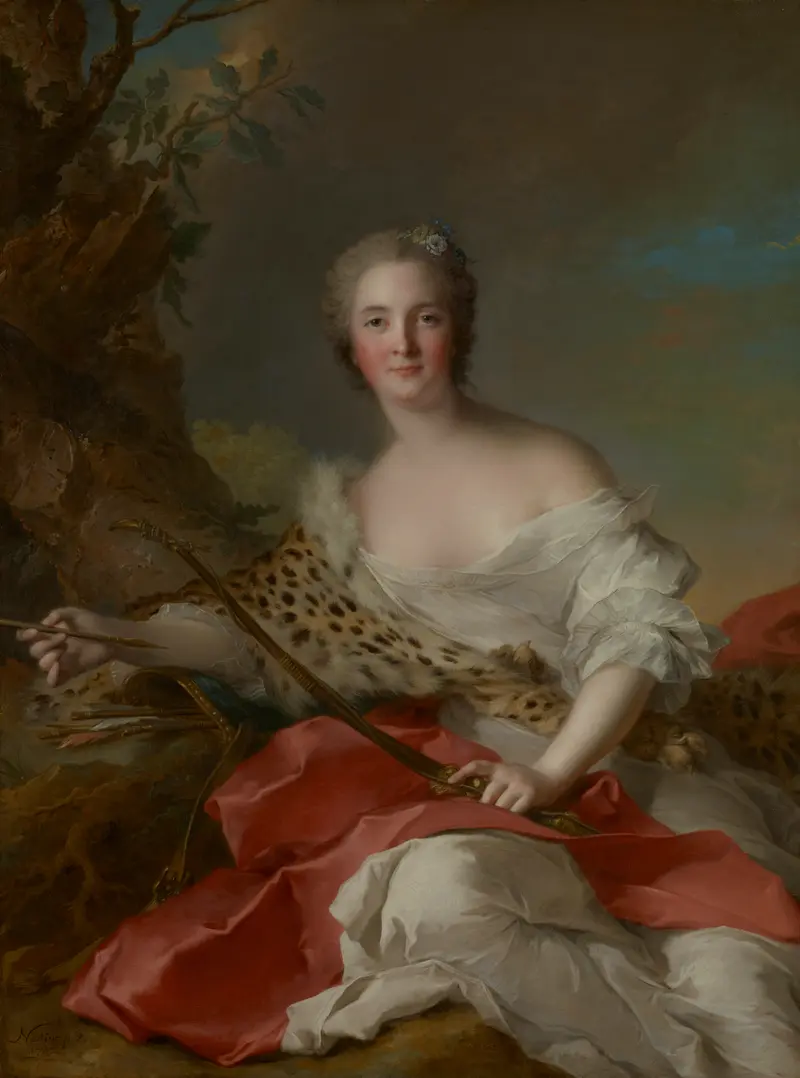
Portrait of Madame Bonnier de la Mosson as Diana (Constance-Gabrielle-Magdeleine du Monciel de Lauraille
Jean-Marc Nattier
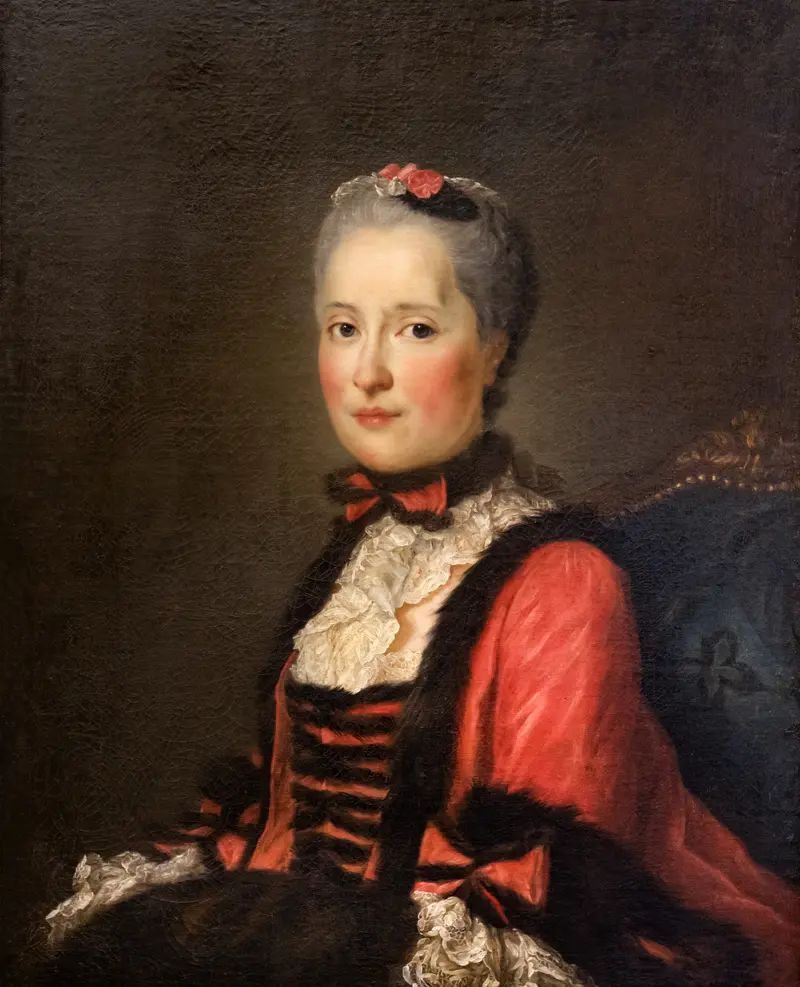
Portrait of Marie-Josephe of Saxony, Dauphine of France
Jean-Marc Nattier
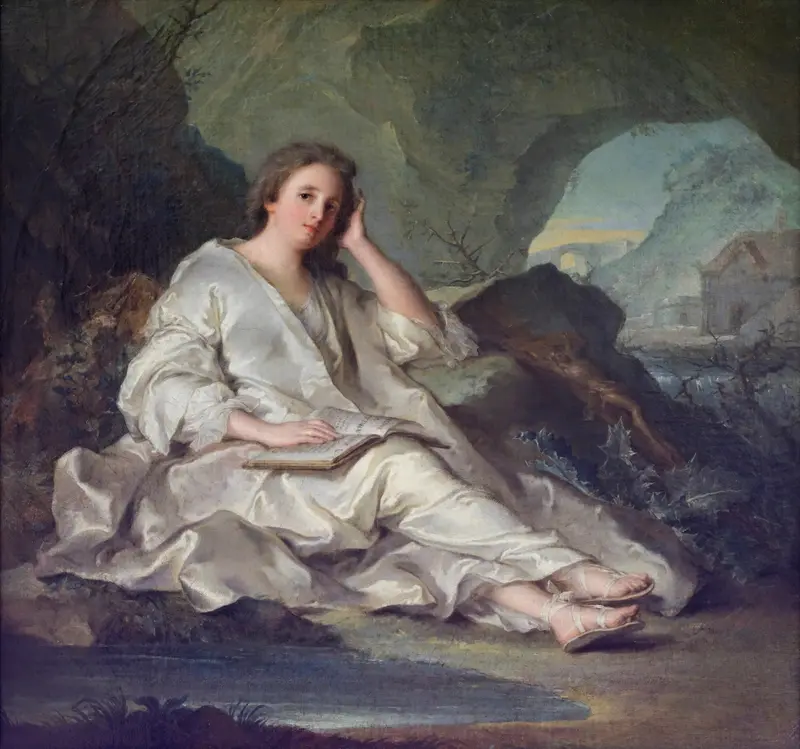
La Madeleine, ou Une Pénitente dans le désert Musée du Louvre Peintures INV 6880 ; MR
Jean-Marc Nattier
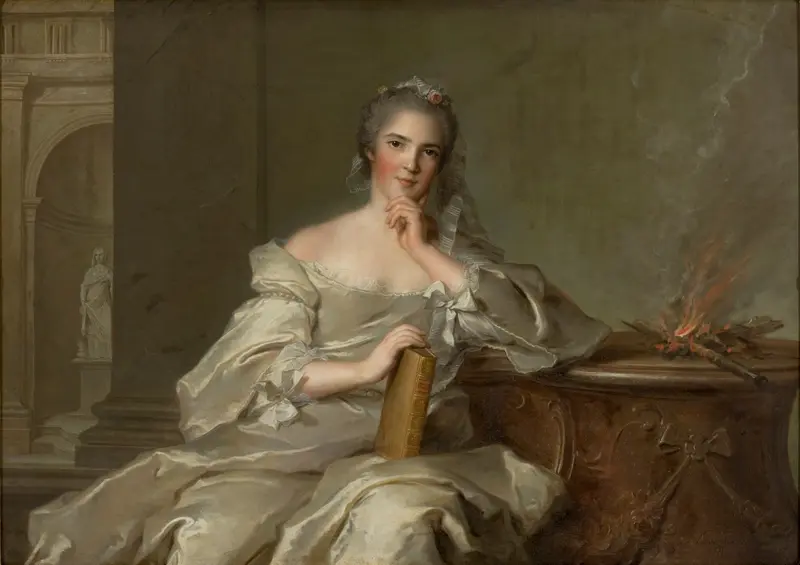
Princess Anne-Henriette of France - The Fire
Jean-Marc Nattier
More Genre Scene Art

Banquet of the Officers of the St George Civic Guard
Frans Hals

Rembrandt and Saskia in the Scene of the Prodigal Son
Rembrandt van Rijn

Bal du moulin de la Galette
Pierre-Auguste Renoir

Quadrille at the Moulin Rouge
Henri de Toulouse-Lautrec

A Burial at Ornans
Gustave Courbet

When Will You Marry?
Paul Gauguin