
Madonna and Child with the Young Saint John — History & Facts
What draws the eye first in Madonna and Child with the Young Saint John is not the grandeur of the figures, but the intimacy of their exchange. The Virgin sits quietly at the mouth of a shadowed grotto, her gaze lowered in gentle affection as the Christ Child, perched on her lap, reaches out to the young Saint John. The children’s gestures are full of life: Christ’s hand extends in a playful, almost tentative greeting, while John, half-turned, presses close to Mary as if seeking reassurance.
The blue of the Madonna’s robe, luminous against the earthy greens and browns, anchors the composition, while the soft light that falls on the trio draws the viewer into the heart of their private world. Every fold of fabric, every curl of hair, seems chosen to heighten the sense of quiet connection. Works like this, painted in the 1510s by Antonio da Correggio, belong to a moment in Italian art when religious images were shifting from the formal to the personal. Such paintings were often commissioned for private devotion, intended to bring the holy figures into the intimate space of the home.
The Museo del Prado’s online gallery preserves this example, dated between 1515 and 1517, as a testament to that transformation. In Correggio’s hands, the sacred becomes approachable, the miraculous woven into the everyday. Look again at the tender tilt of Mary’s head, and the way the distant blue landscape seems to promise a world beyond the cave: here, the Renaissance ideal of grace finds its most human expression.
More Artworks by Antonio da Correggio

Virgin and Child with the Young Saint John the Baptist
Antonio da Correggio
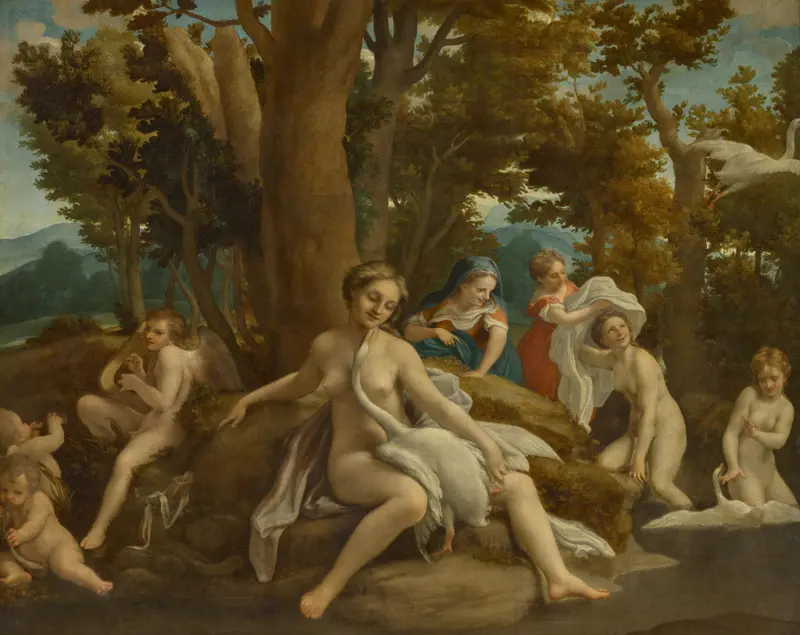
Leda and the Swan
Antonio da Correggio
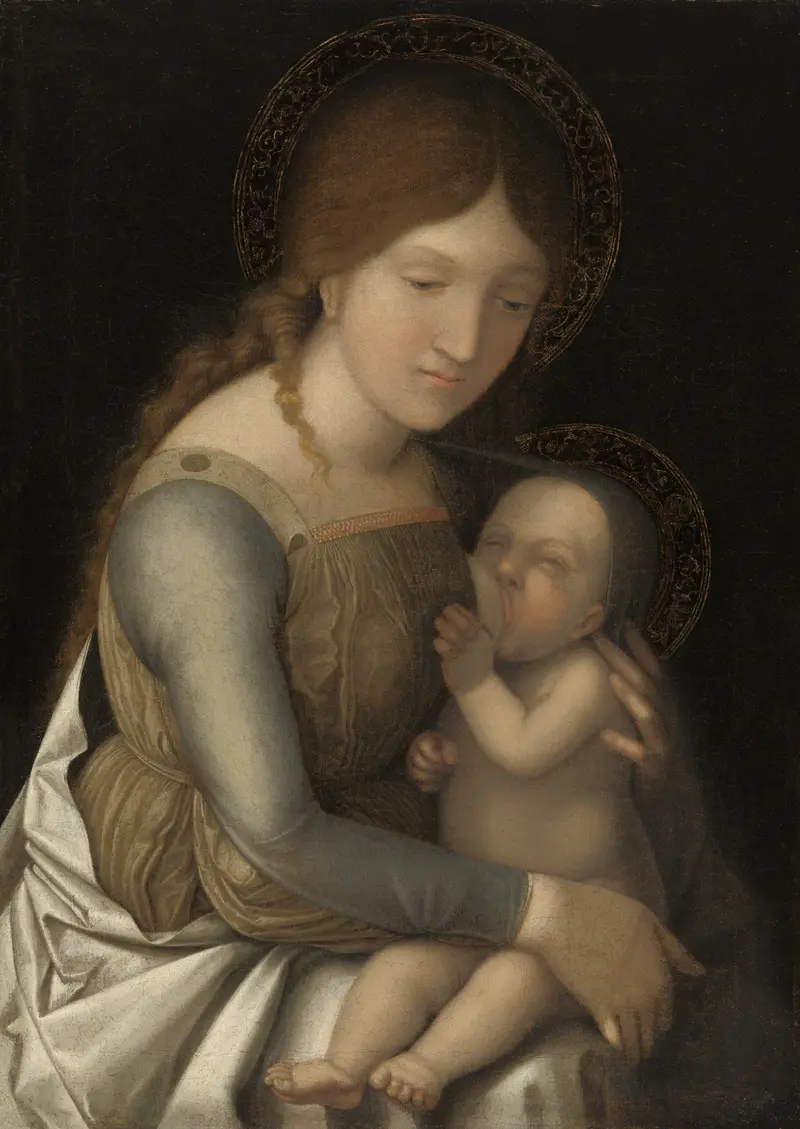
Madonna and Child
Antonio da Correggio
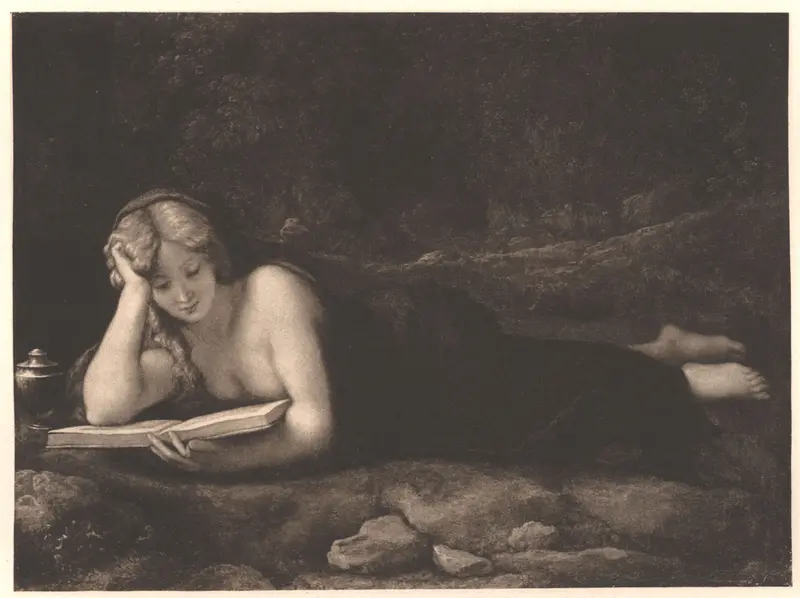
Penitent Magdalene
Antonio da Correggio
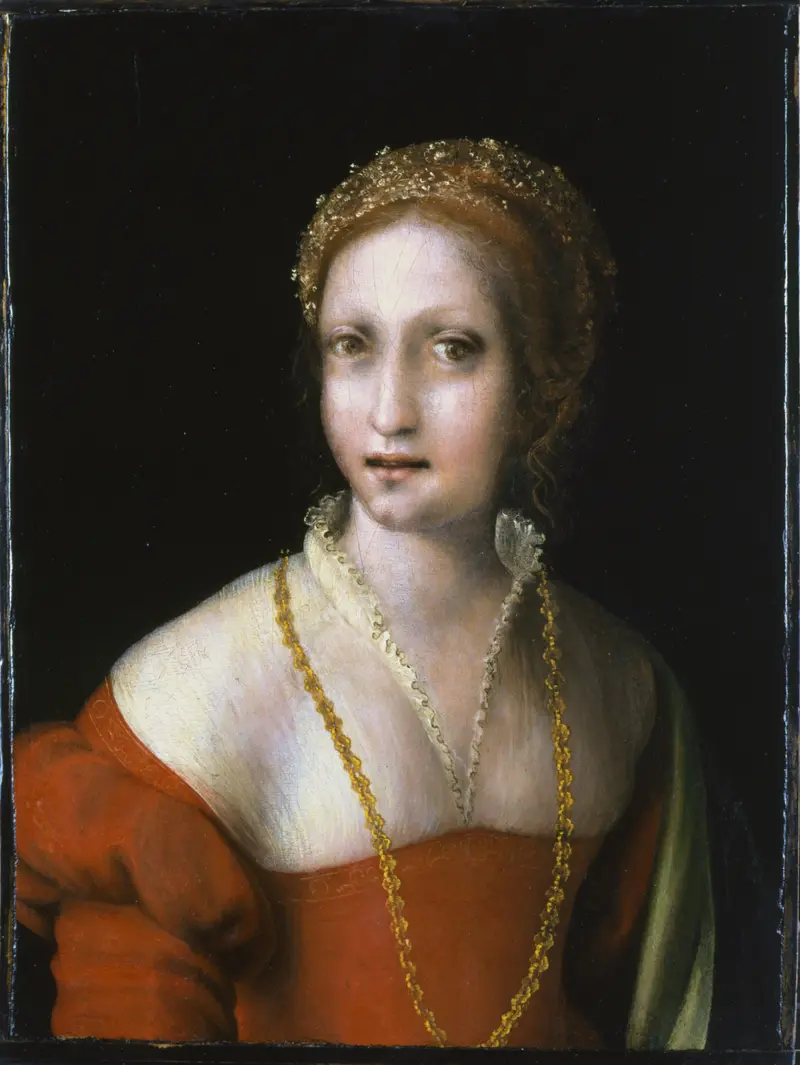
Portrait of a Young Girl
Antonio da Correggio
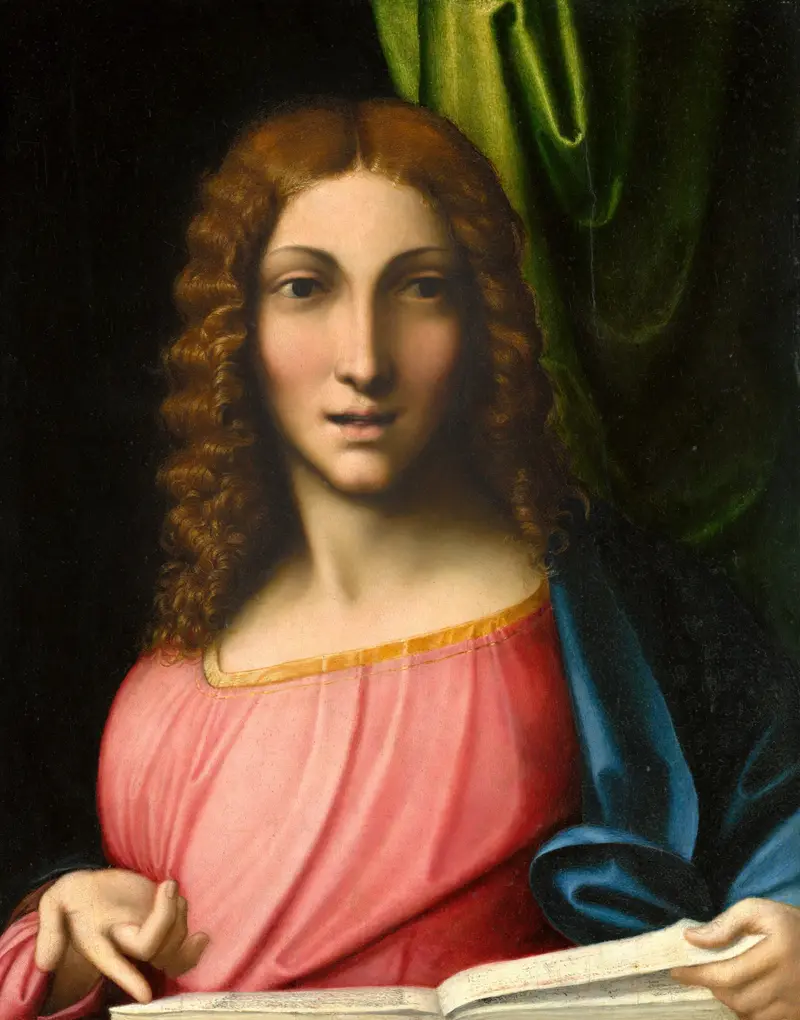
Christ in the Temple
Antonio da Correggio

Nativity
Antonio da Correggio
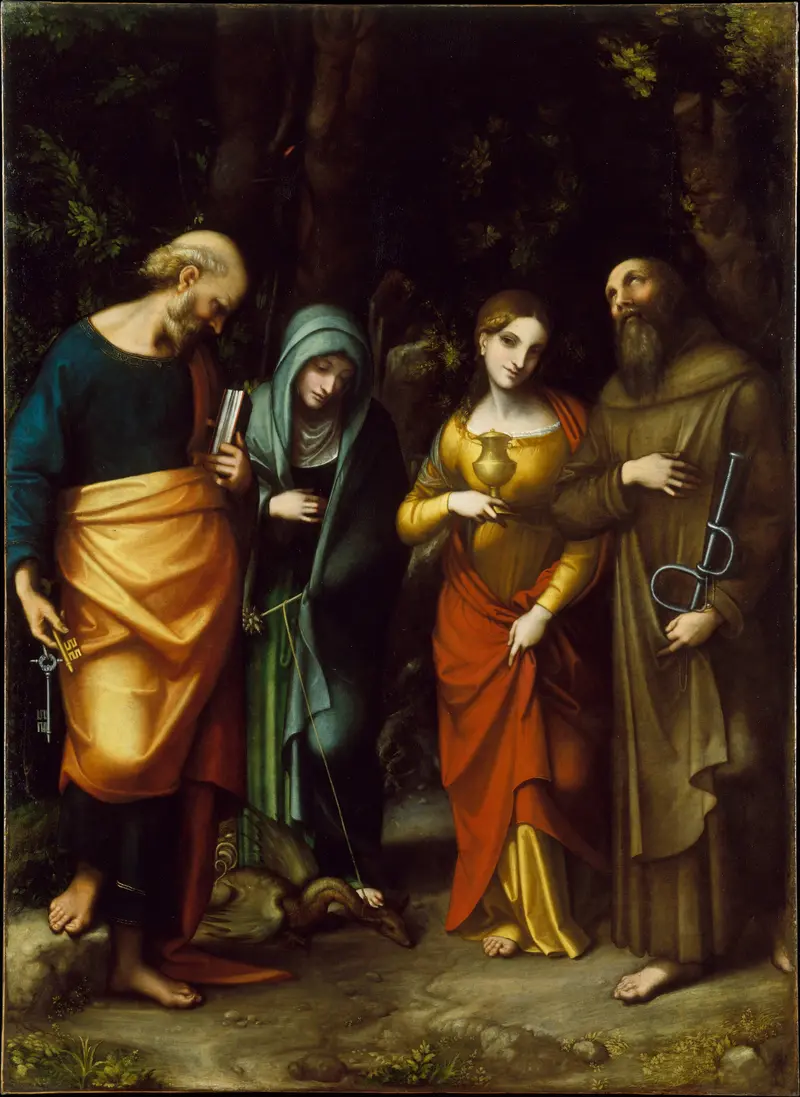
Saints Peter, Martha, Mary Magdalen, and Leonard
Antonio da Correggio
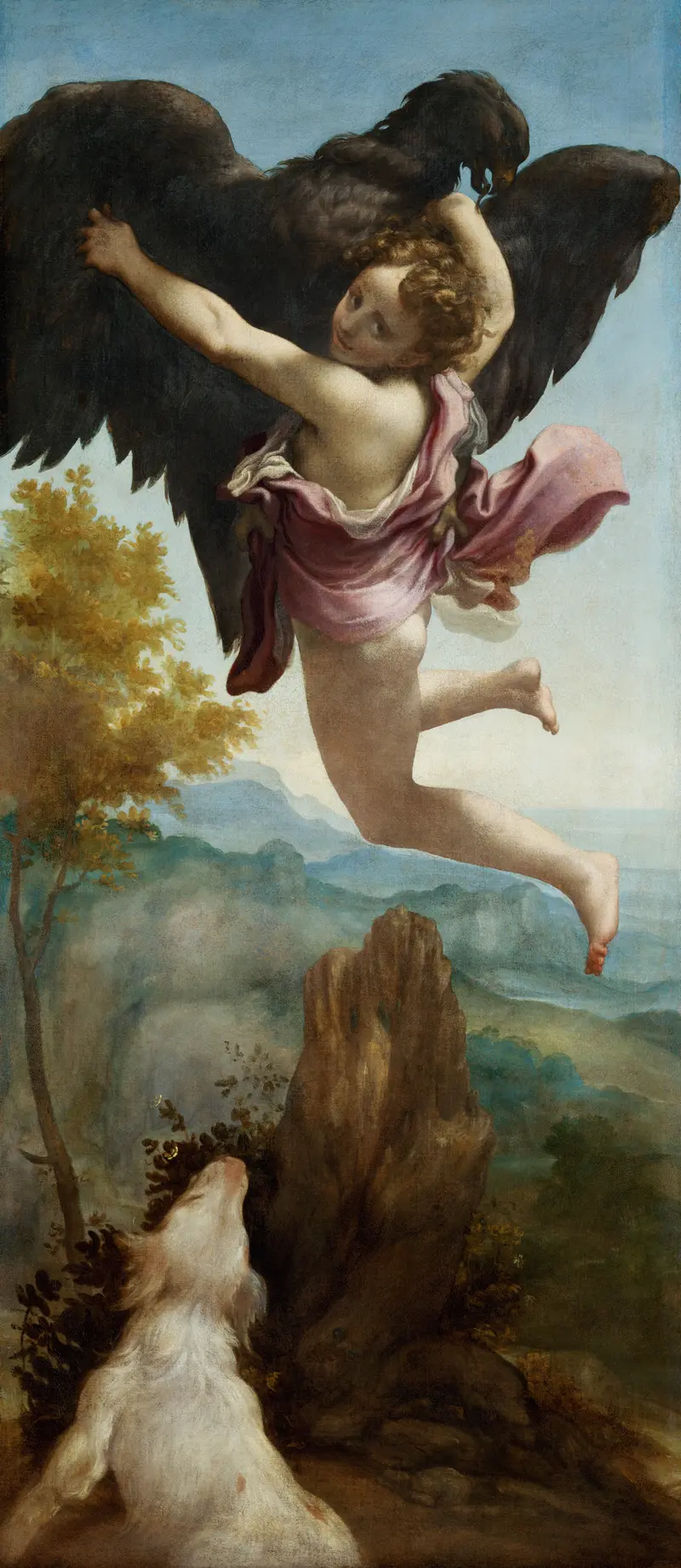
The Loves of Jupiter
Antonio da Correggio

Study for the "Madonna della Scodella" [recto]
Antonio da Correggio





