
Madonna della tenda — History & Facts
When Madonna della tenda left the workshop of Raphael around 1513, it quickly became one of the most admired images of the Virgin and Child in Renaissance Italy. What sets this painting apart is its intimate scale and composition, which many believe was inspired by Raphael’s own earlier work, Madonna della seggiola, painted just a year before. The two paintings are often discussed together, as they share not only similar poses but also a sense of domestic warmth unusual for grand altarpieces.
The name “della tenda” (“of the curtain”) comes from the distinctive green drapery that frames the scene, a detail that continues to intrigue art historians. At the center of Madonna della tenda, the Virgin Mary wraps her arms protectively around the Christ Child, who leans trustingly into her embrace. To their side, the young John the Baptist gazes in adoration, his hands clasped in prayer. The curtain, pulled back as if revealing a private moment, creates a sense of immediacy and closeness, drawing the viewer into the sacred family’s world.
The Christ Child’s gesture—one arm around his mother, the other reaching towards John—symbolizes the unity between the two cousins and hints at Christ’s future sacrifice. Compared to Leonardo da Vinci’s earlier Virgin of the Rocks, Raphael opts for a gentler, more approachable Madonna, emphasizing maternal tenderness over mystery. Though the exact patron of Madonna della tenda remains unknown, it was likely commissioned for private devotion, given its size and intimate mood. The painting’s journey through history is less documented than some of Raphael’s larger altarpieces, but it is known to have entered the collection of the Bavarian royal family by the 18th century, eventually finding its home in Munich’s Alte Pinakothek.
Today, it stands as a testament to Raphael’s late period, when his art achieved a delicate balance between ideal beauty and human affection, influencing generations of artists who sought to capture the same sense of warmth and harmony.
More Artworks by Raphael

Madonna of the Goldfinch
Raphael

Madonna with the Fish
Raphael
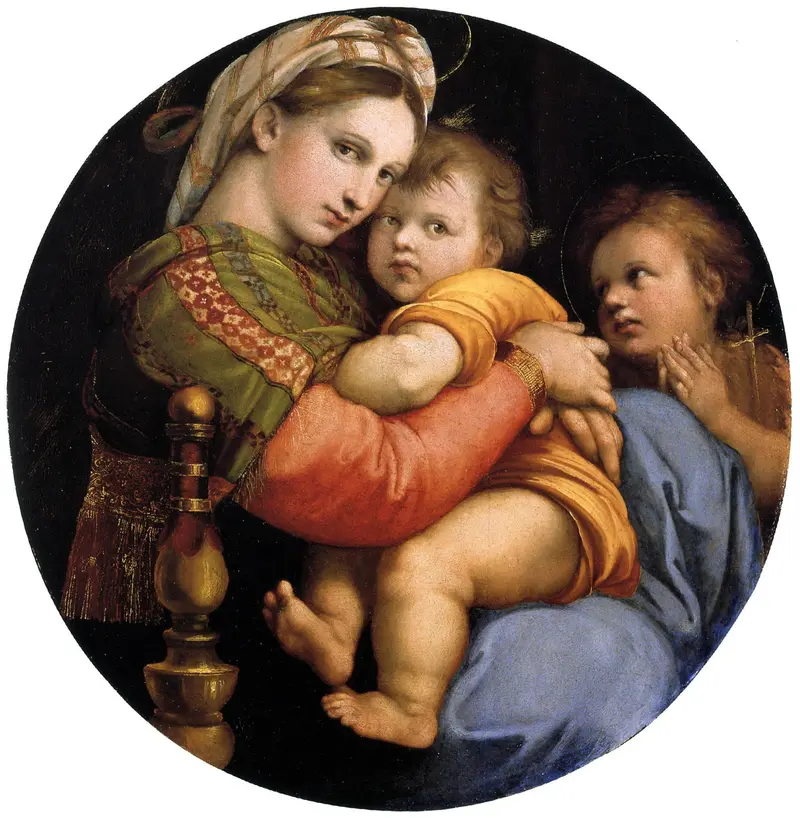
Madonna and Child (Madonna della Seggiola)
Raphael
Seated Madonna and Child
Raphael
Portrait of a Young Man
Raphael
The Marriage of the Virgin
Raphael
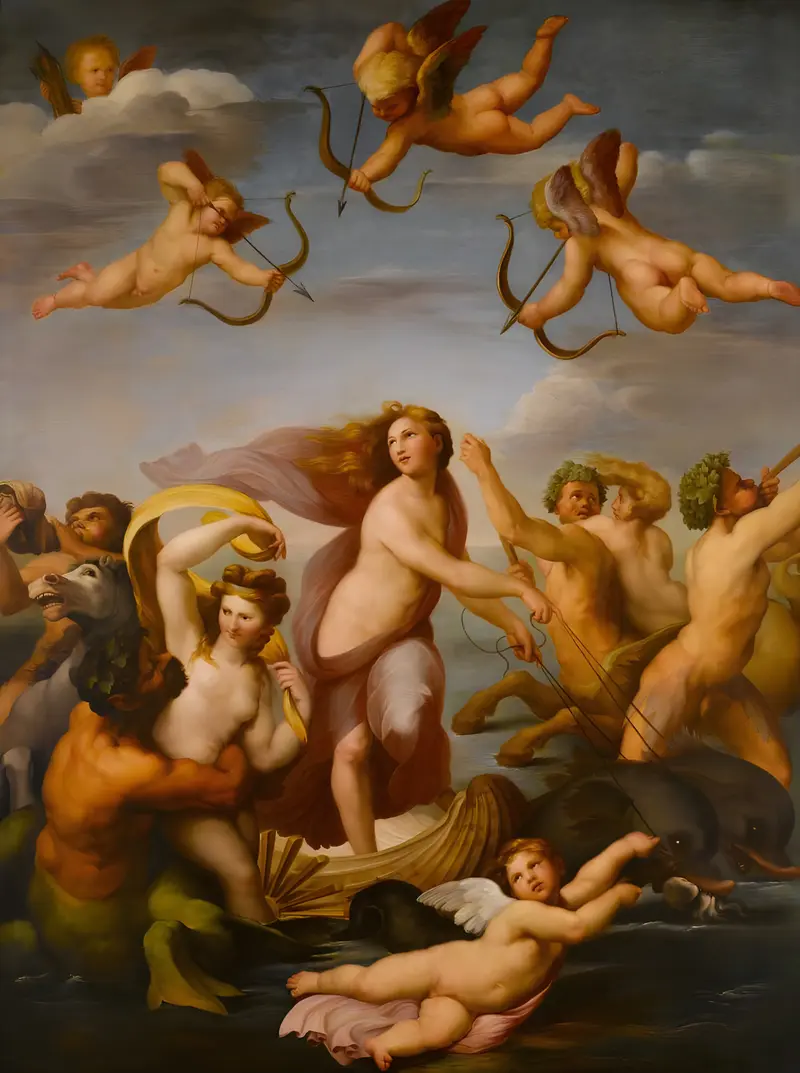
The Triumph of Galatea (copy after Raphael)
Raphael
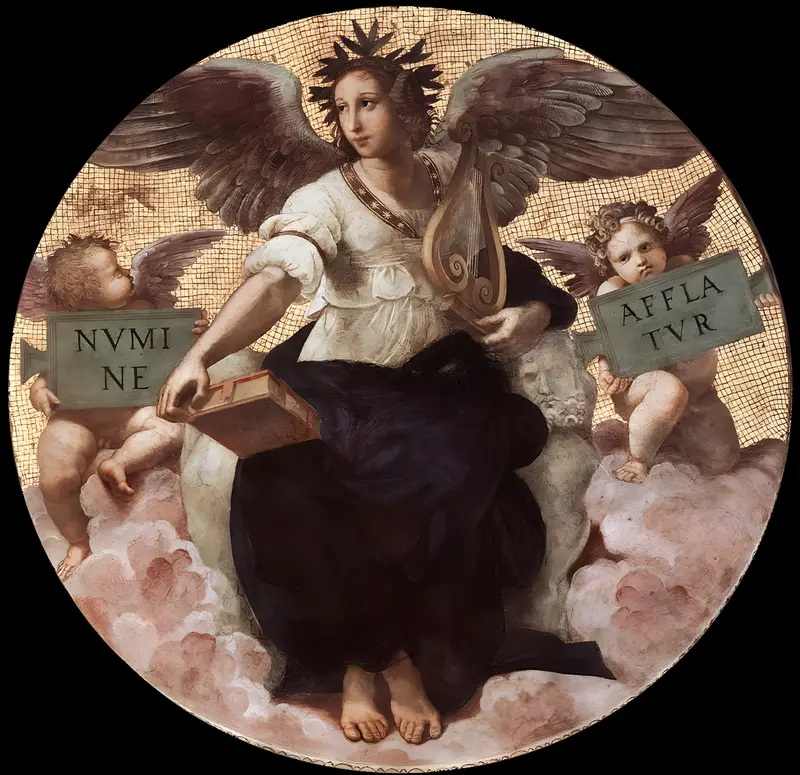
Poetry
Raphael
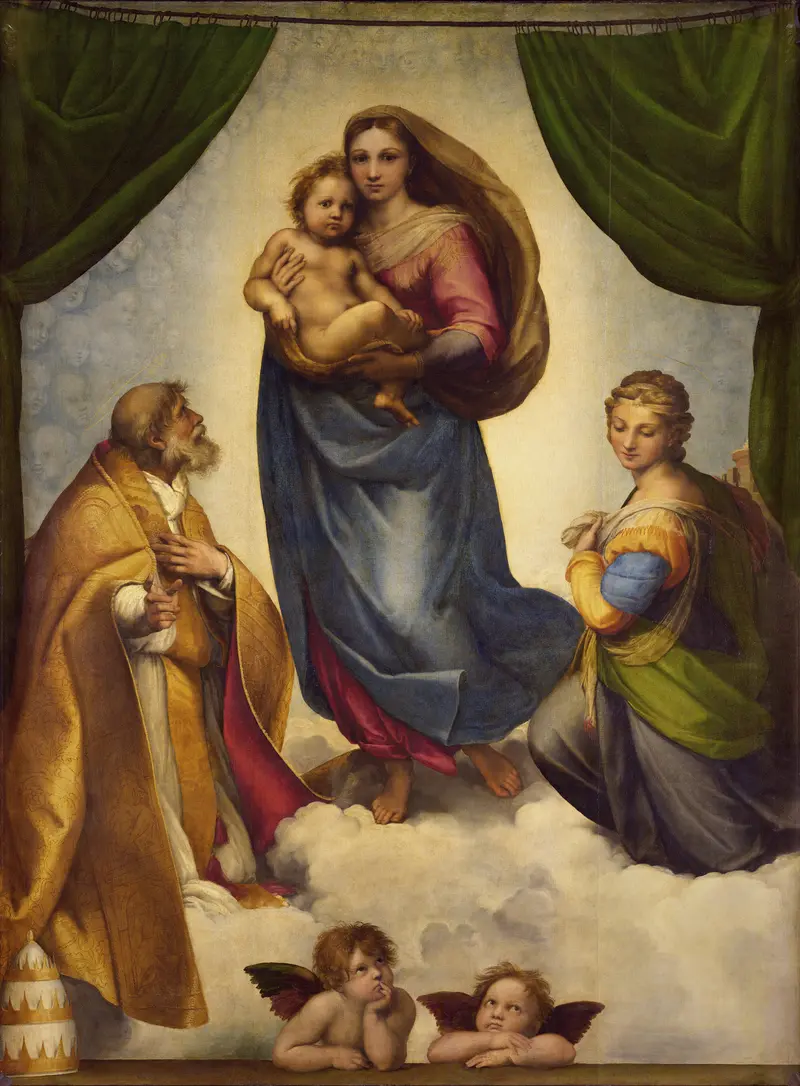
Sistine Madonna
Raphael
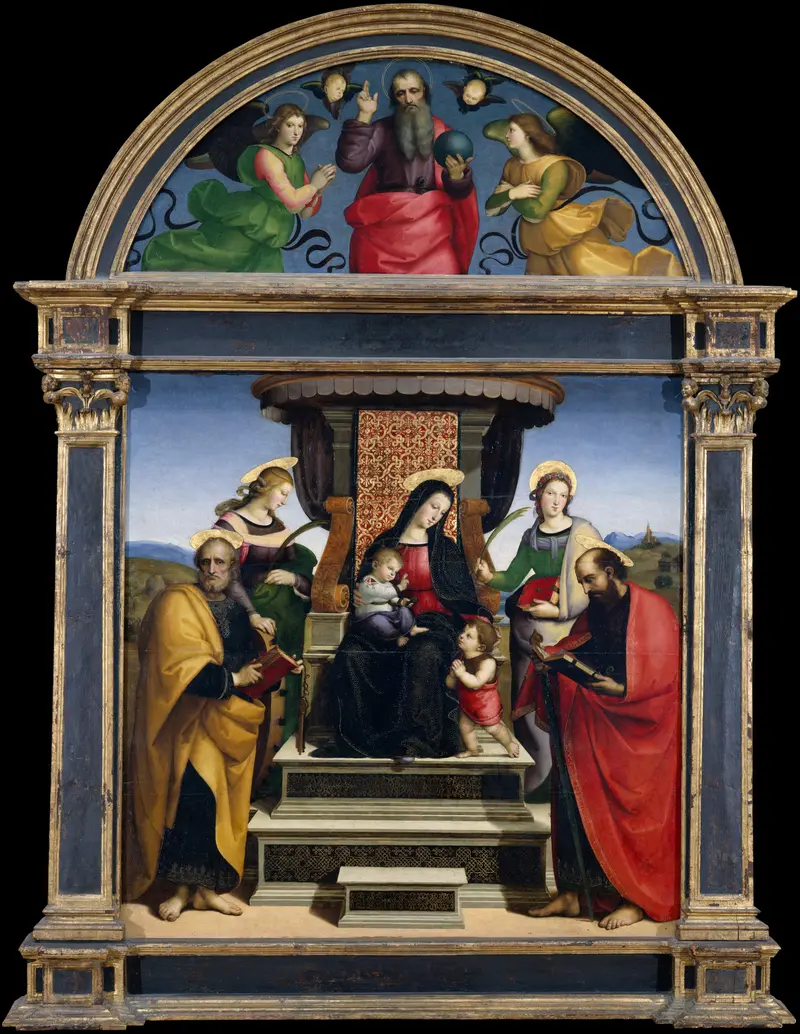
Madonna and Child Enthroned with Saints
Raphael




