
Madonna with child and two angel musicians — History & Facts
A golden haze gathers around the Madonna, drawing the viewer into a scene where music and divinity meet. The infant Christ, perched securely in his mother’s lap, turns toward an angel who coaxes melody from a bowed instrument—his small hand reaching, as if to touch the music itself. Another angel, lips parted in silent song, frames the left, while a host of cherubic faces peek from the clouds above, their gaze gentle and intent.
The light in Madonna with child and two angel musicians is not just illumination, but a haloed presence, circling Mary’s head and suffusing the clouds, guiding the eye from the sacred figures to the heavens. Correggio’s palette, rich in honeyed golds and deep blues, sets a mood both intimate and otherworldly, inviting the viewer to linger in this moment of quiet harmony. Painted around 1511-1512, this work belongs to an era when scenes of the Madonna and Child were central to both public devotion and private contemplation in Renaissance Italy. Artists like Antonio da Correggio were sought for their ability to blend the human and the divine, often commissioned by churches or wealthy families wishing to display both faith and taste.
The presence of music-making angels in such images spoke to the period’s fascination with harmony as a metaphor for celestial order. Though history has kept few traces of this particular painting’s early life, its survival allows us to witness how Correggio, even in his youth, could transform a familiar subject into a vision of warmth and gentle awe—an invitation to listen as much as to look.
More Artworks by Antonio da Correggio

Virgin and Child with the Young Saint John the Baptist
Antonio da Correggio
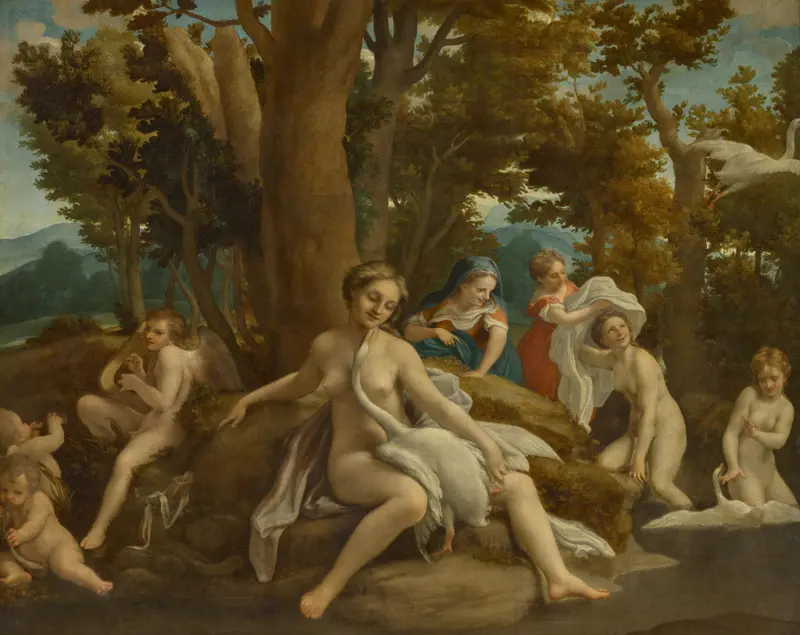
Leda and the Swan
Antonio da Correggio
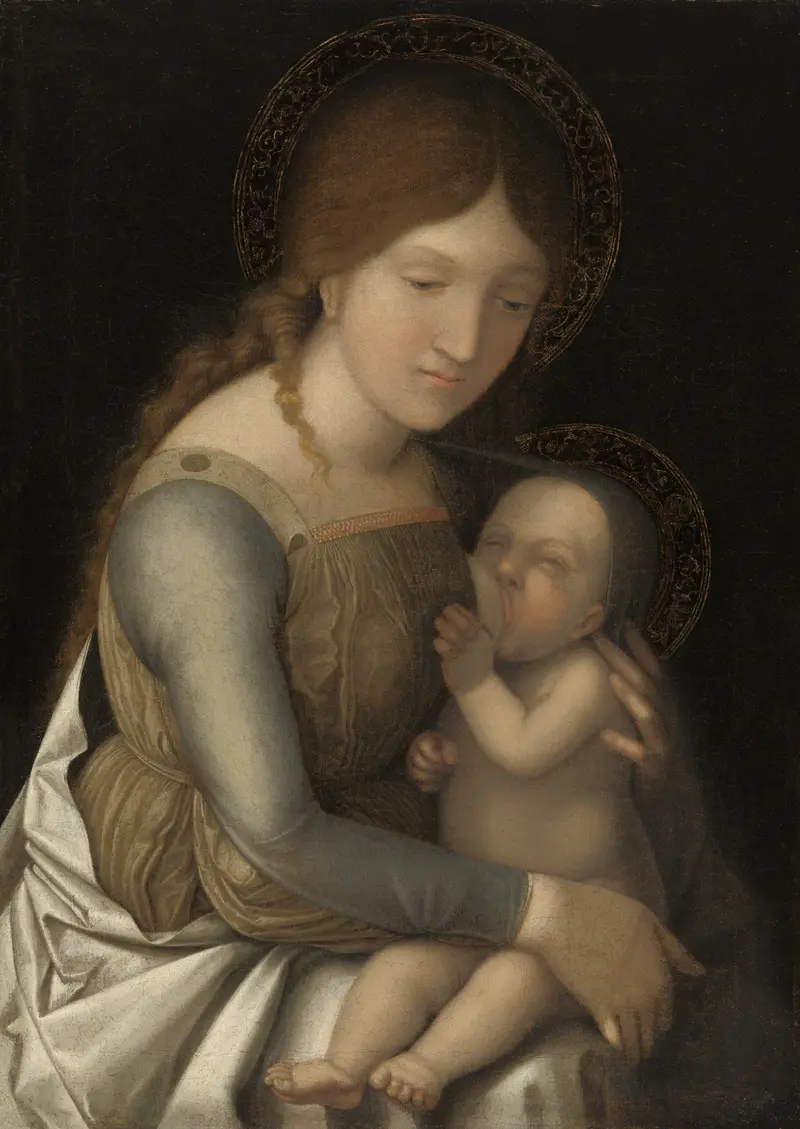
Madonna and Child
Antonio da Correggio
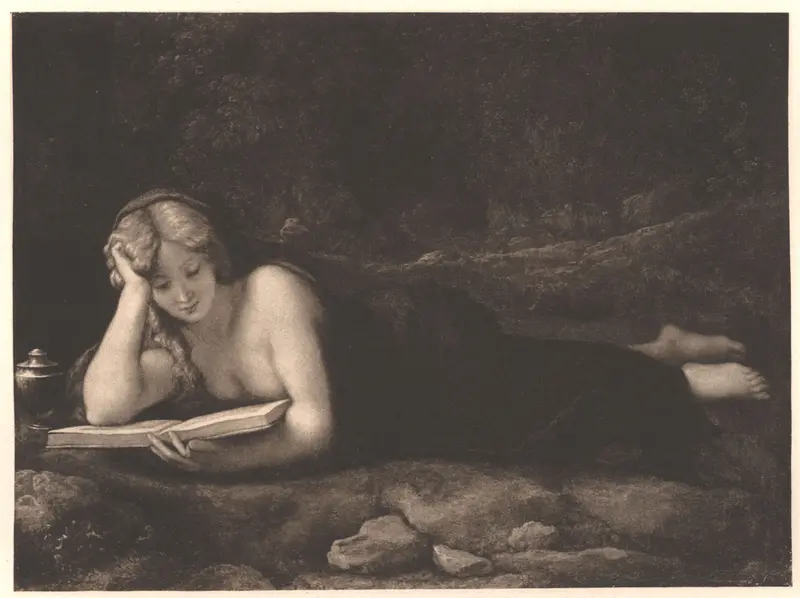
Penitent Magdalene
Antonio da Correggio
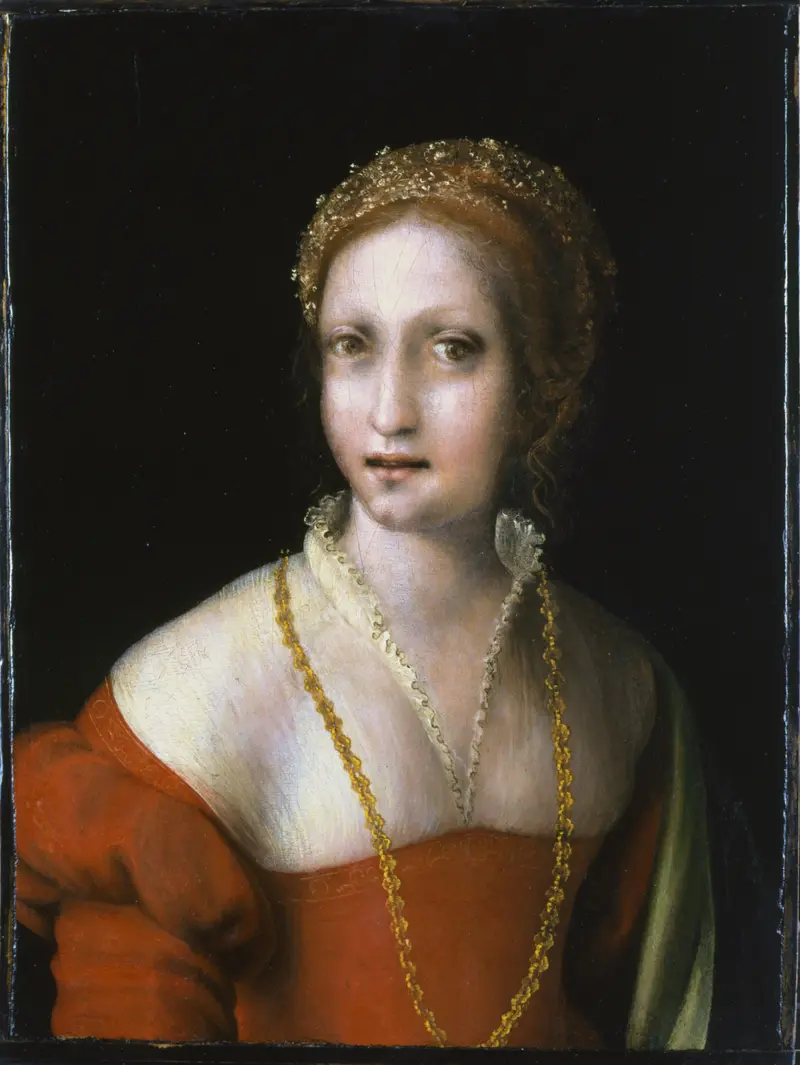
Portrait of a Young Girl
Antonio da Correggio
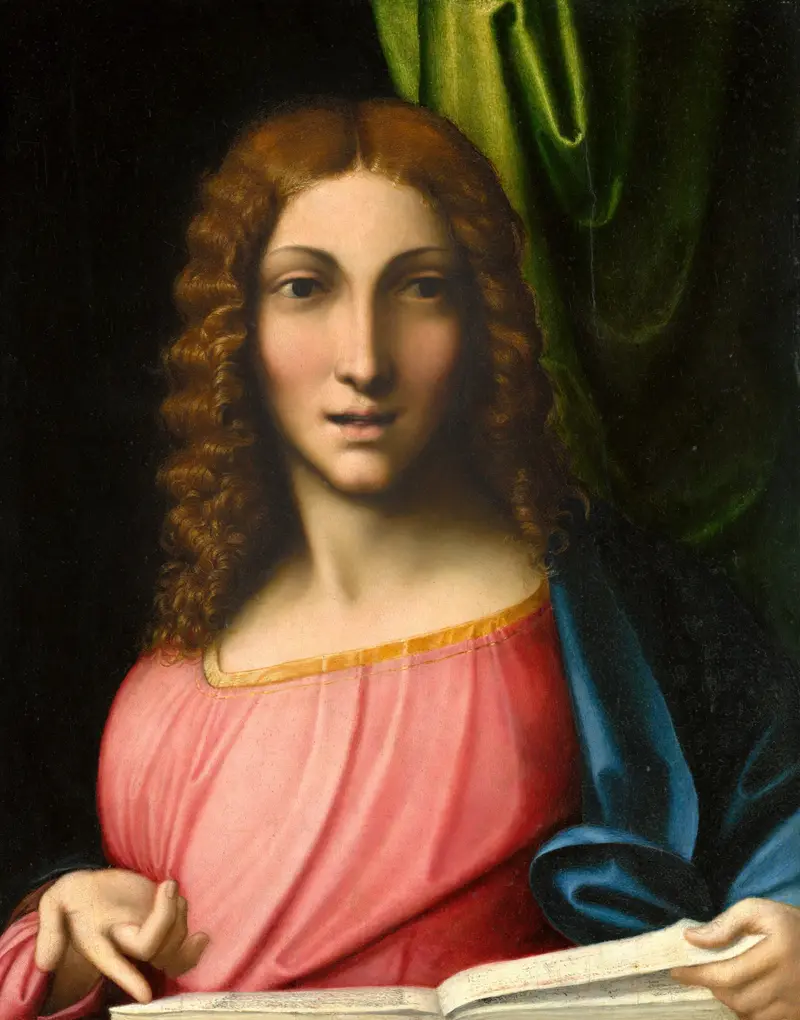
Christ in the Temple
Antonio da Correggio

Nativity
Antonio da Correggio
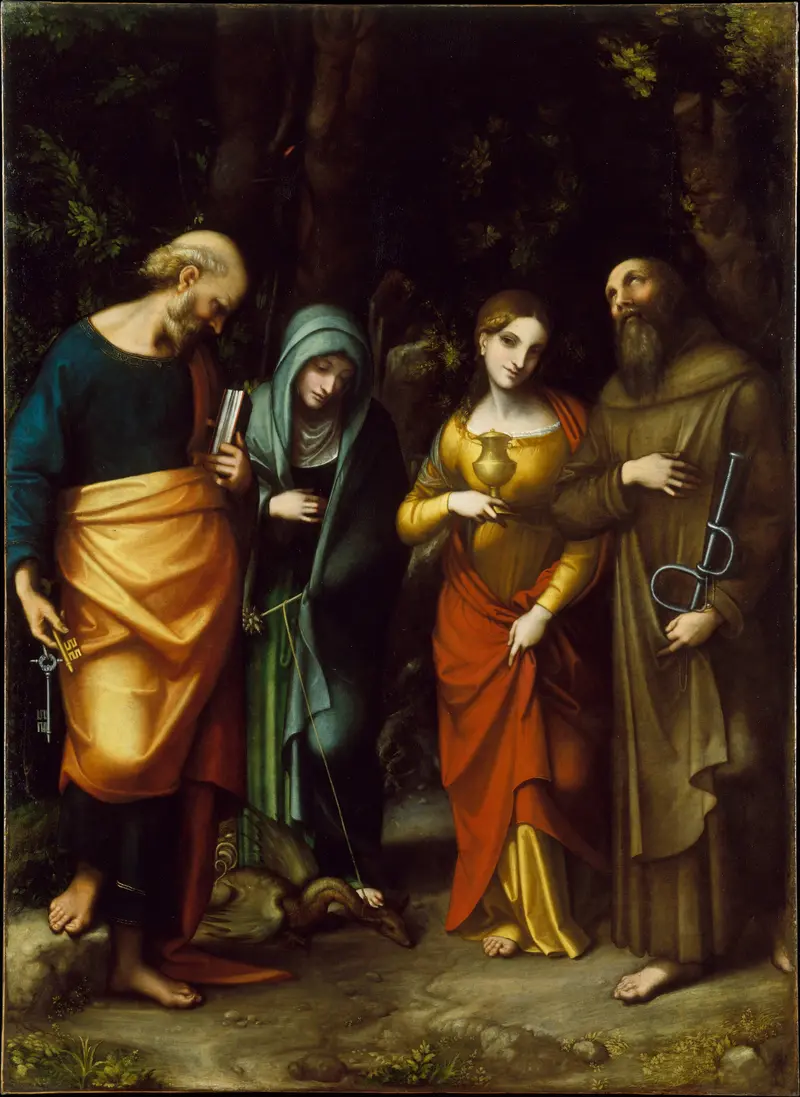
Saints Peter, Martha, Mary Magdalen, and Leonard
Antonio da Correggio
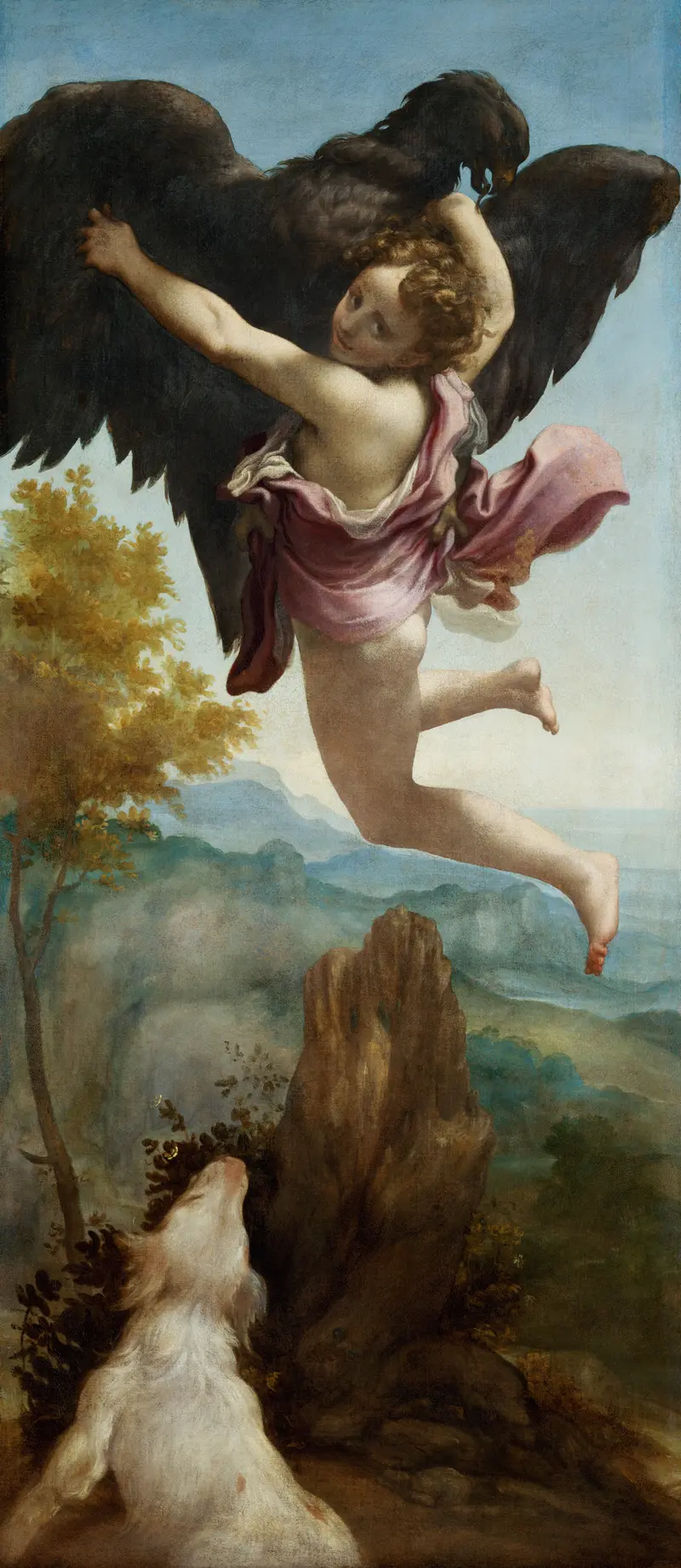
The Loves of Jupiter
Antonio da Correggio

Study for the "Madonna della Scodella" [recto]
Antonio da Correggio





