
Man op een ezel — History & Facts
When did color learn to lie? In Man op een ezel, a vivid discourse on the duality of nature and art unfolds, inviting contemplation on truth and deception within our perceptions. Focus on the central figure, a man confidently perched upon a donkey, his posture imbued with a relaxed authority. The rich greens and earthy browns of the landscape envelop him, while the interplay of sunlight and shadow brings the scene to life. Notice how the gentle curve of the donkey’s back contrasts against the man’s upright stance, a visual metaphor for balance and harmony in the chaos of existence. As you explore the background, consider how the distant hills loom, kissed by the golden light of a setting sun, whispering secrets of a world beyond.
This juxtaposition of the mundane with the ethereal hints at a deeper narrative—perhaps the man’s journey is both physical and metaphysical, a journey toward enlightenment amidst the trivialities of life. The artist's choice of color contributes to this tension, as vibrant hues mingle with dark shades, evoking both vitality and uncertainty. Created in 1644, this work emerges from the Dutch Golden Age, a period marked by flourishing art and culture. Nicolaes Pietersz Berchem, noted for his landscapes and genre scenes, painted during a time of political and social upheaval in the Netherlands.
The vibrant colors and lively compositions of his works reflect not only the beauty of the countryside but also a collective yearning for stability and identity amid revolution.
More Artworks by Nicolaes Pietersz Berchem
Browse all →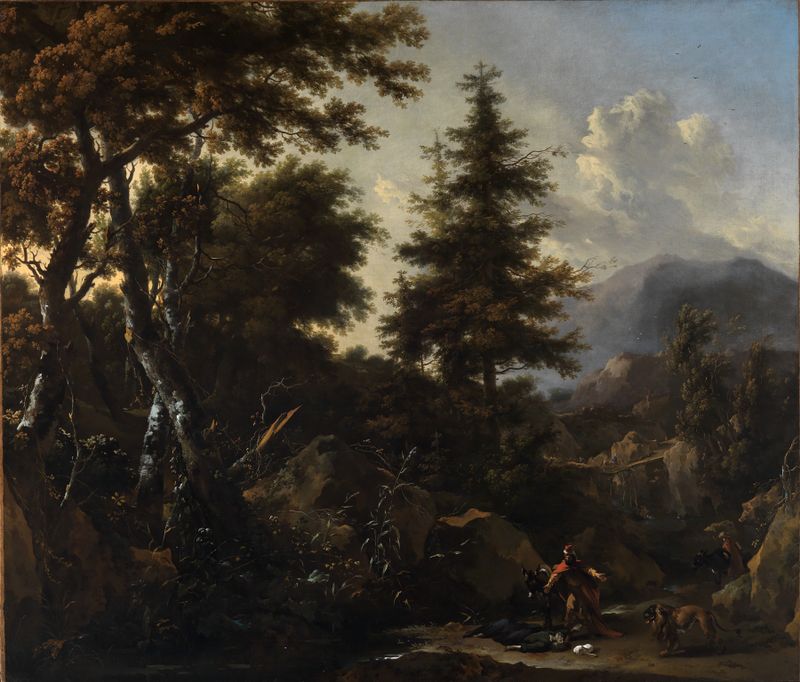
Schlucht im Bergwald mit alttestamentlicher Staffage
Nicolaes Pietersz Berchem
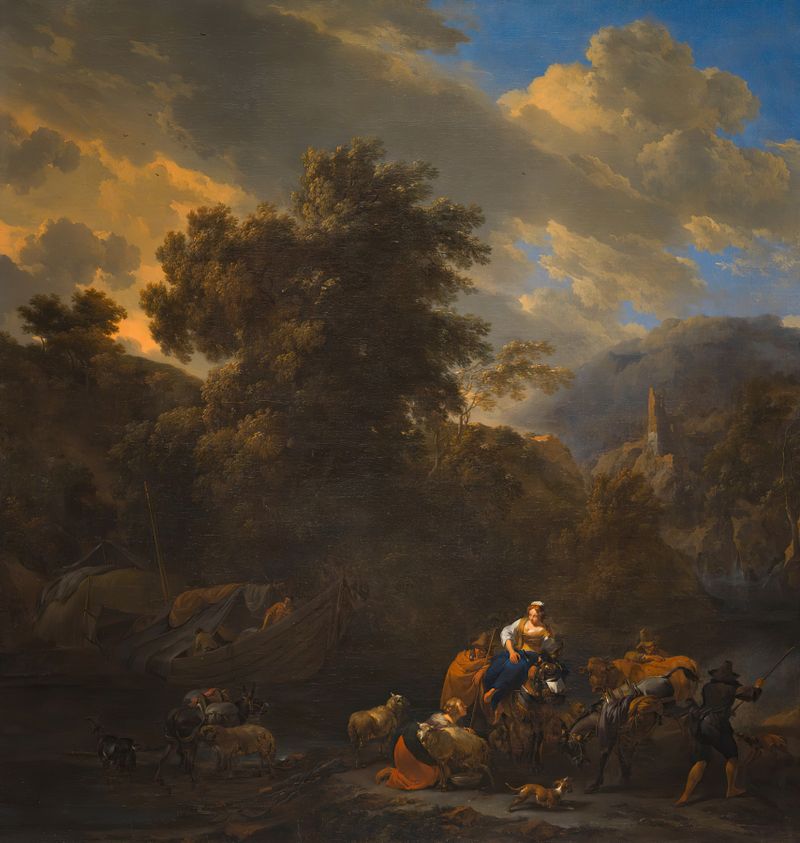
Italianate Landscape with Figures and Pack Animals on the Banks of a River
Nicolaes Pietersz Berchem
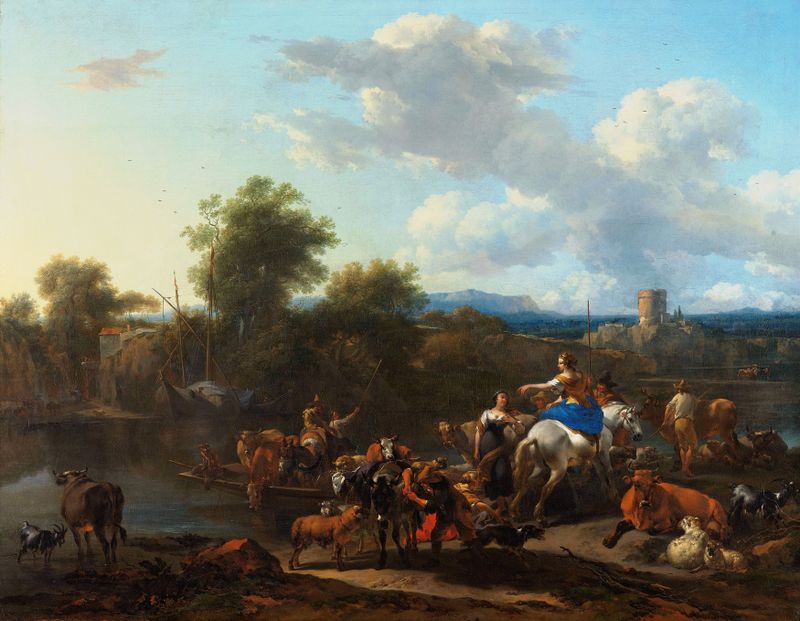
The Cattle Ferry
Nicolaes Pietersz Berchem
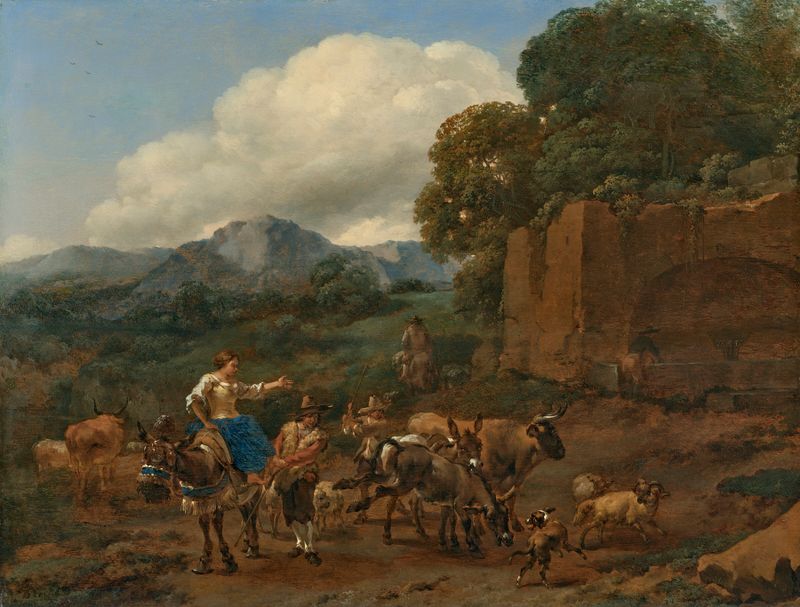
An Italianate landscape with a shepherdess on a mule and a shepherd, herding cattle, sheep, donkeys and dogs on a mountain track next to ruins
Nicolaes Pietersz Berchem
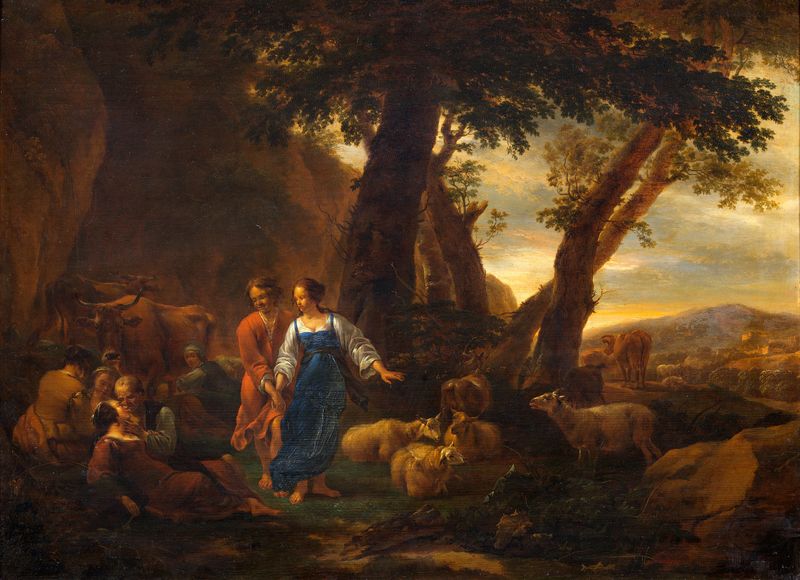
Landscape with Peasants and Cattle
Nicolaes Pietersz Berchem
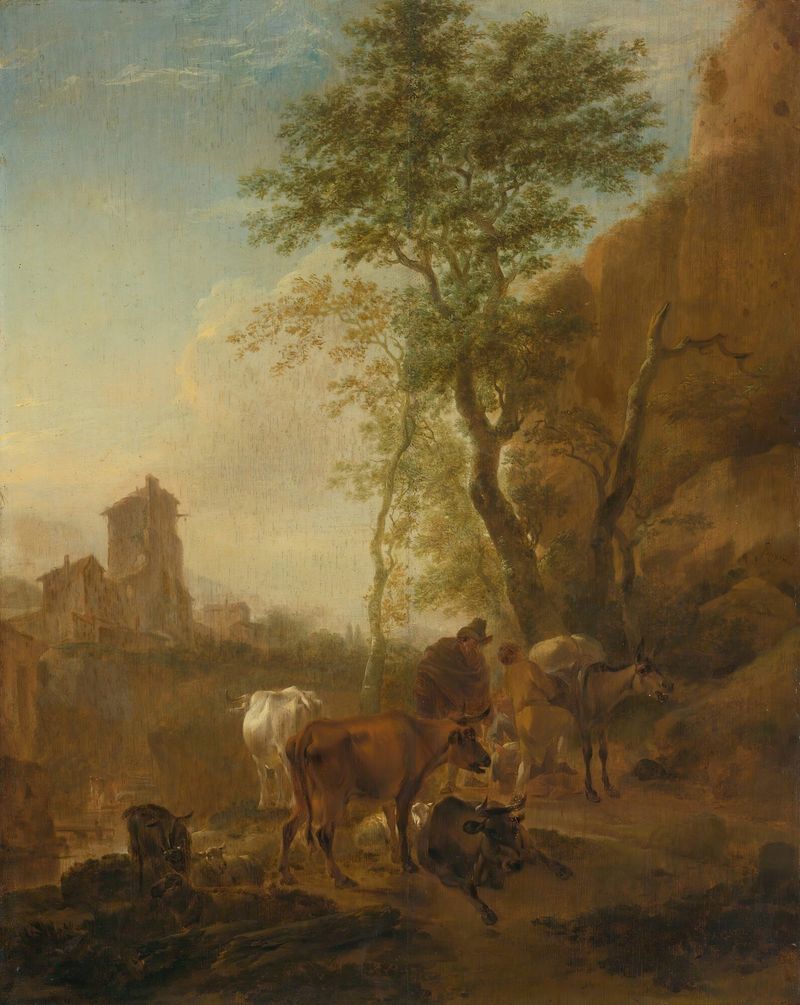
Italianate Landscape With Cows
Nicolaes Pietersz Berchem
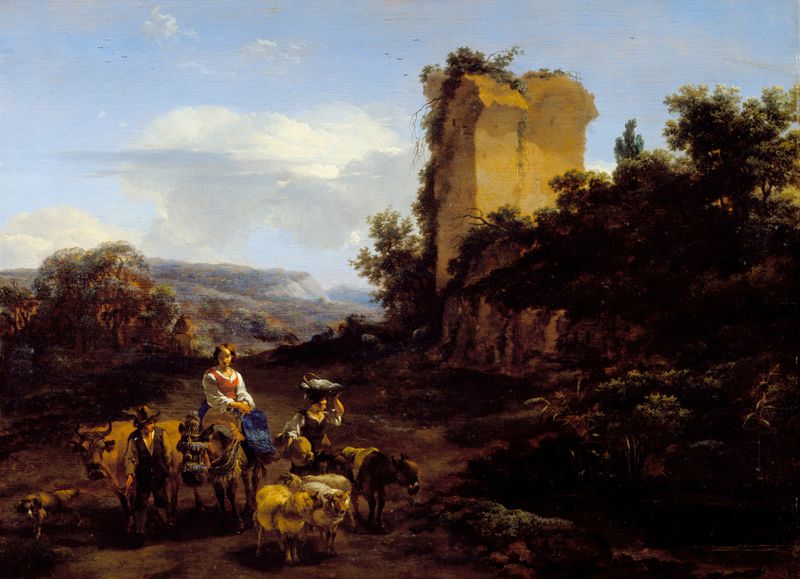
Landscape with Ruins and Travelers
Nicolaes Pietersz Berchem
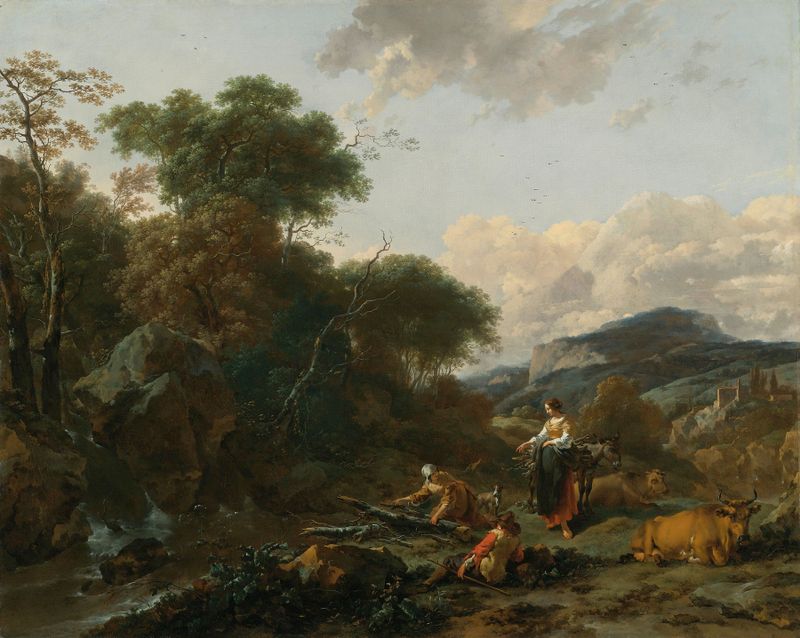
A Landscape With Figures
Nicolaes Pietersz Berchem
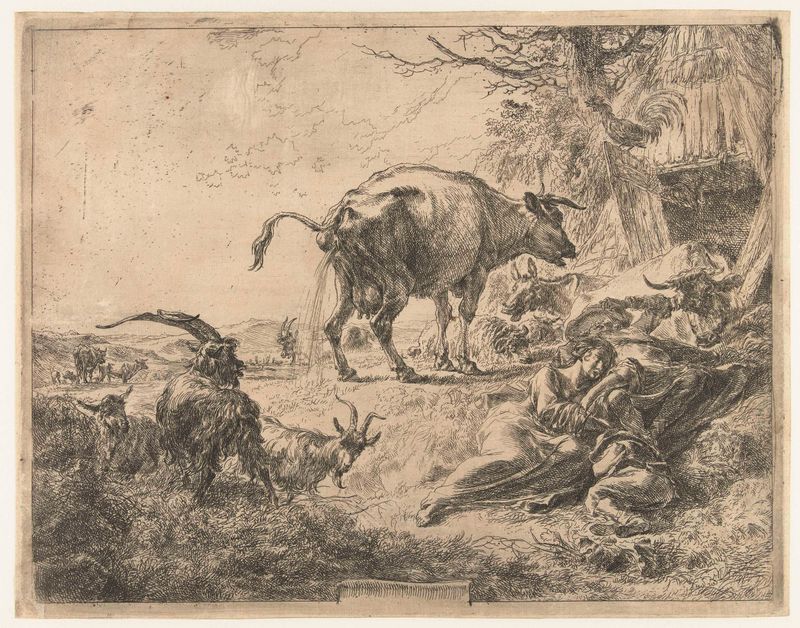
Slapende herdersfamilie en rustend vee
Nicolaes Pietersz Berchem
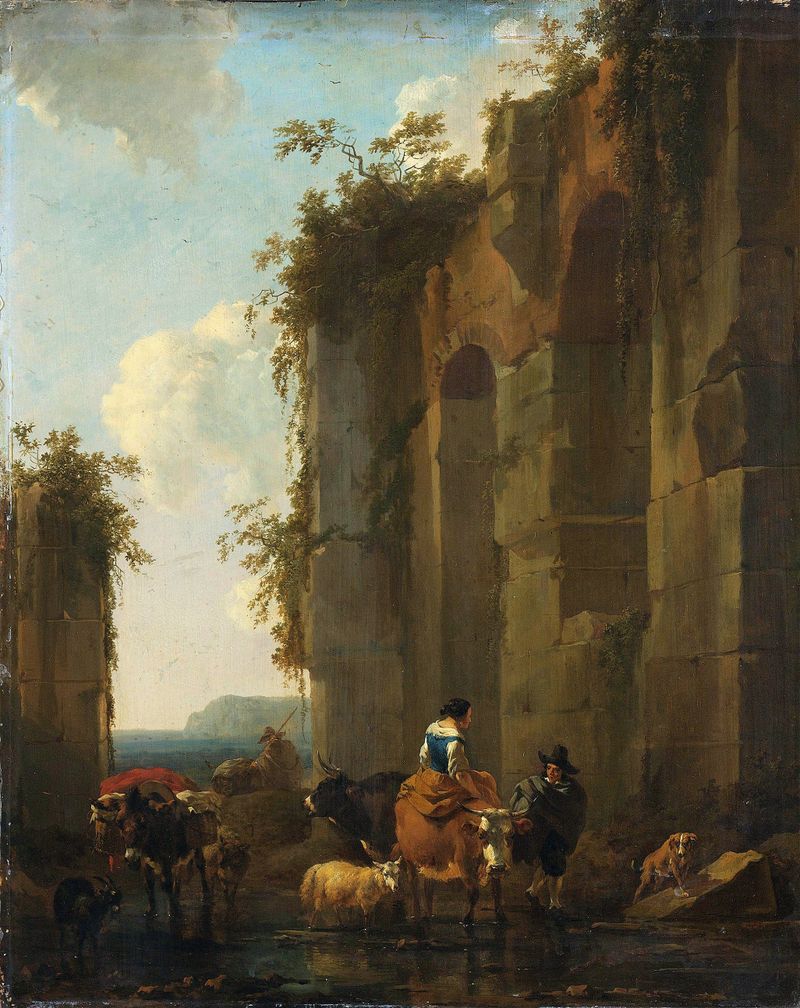
Ruins in Italy
Nicolaes Pietersz Berchem





