
Margaret McKittrick — History & Facts
It is the eyes that first hold you in Margaret McKittrick by Abbott Handerson Thayer. They meet the viewer directly, steady and unguarded, set in a face that seems to hover between childhood and adulthood. The hair, loose and untamed, frames her features with a coppery halo, while the brushwork of her garment is left rough and unfinished, as if the artist wanted all attention to rest on the living presence of the sitter.
The background recedes into darkness, pushing the figure forward, her pale skin and light blouse glowing against the shadow. Thayer’s handling of paint is both precise and restless: the face is modeled with care, but the shoulders dissolve into broad, visible strokes, lending the portrait a sense of immediacy and intimacy. Around 1903, American portraiture was shifting away from the rigid formality of earlier decades, embracing a looser, more psychological approach. Abbott Handerson Thayer was known for his portraits and allegorical figures, often imbuing his sitters with a sense of spiritual intensity.
Works like this were rarely mere likenesses; they were invitations to contemplate character and soul. Little is recorded about the journey of this particular painting, now preserved in the Google Cultural Institute’s digital collection, but its unfinished quality and searching gaze capture a moment when American artists were reimagining what a portrait could do. The longer you look, the more the sitter seems to look back, asking as many questions as she answers.
More Artworks by Abbott Handerson Thayer
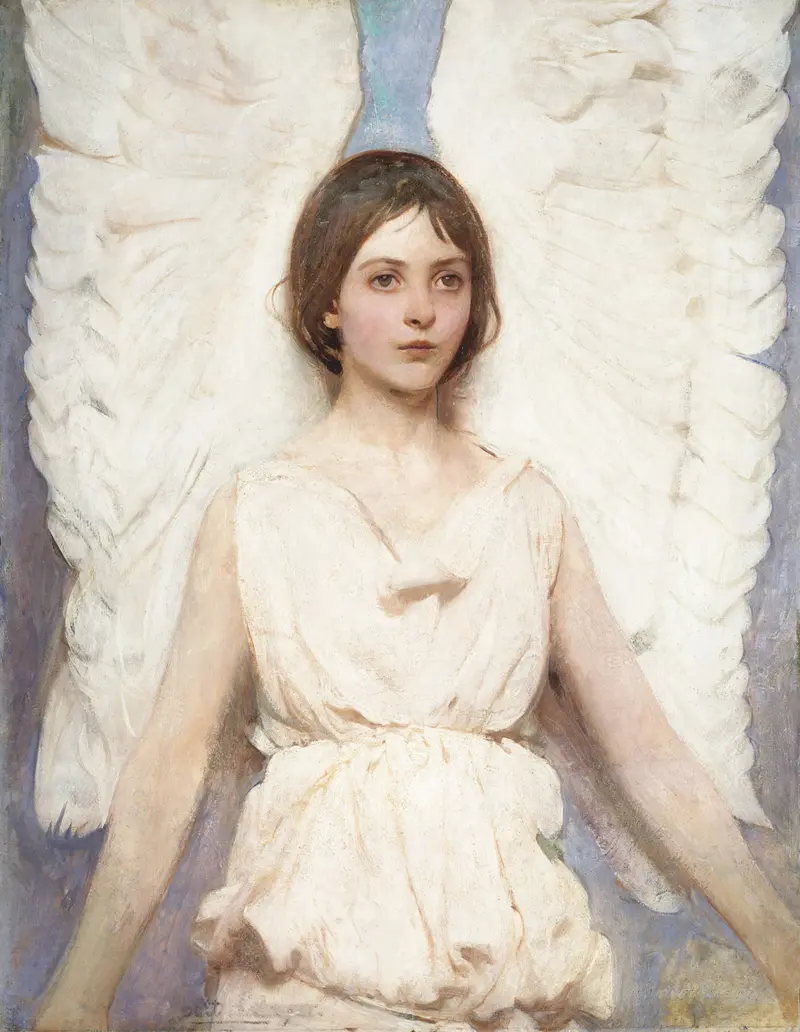
Angel
Abbott Handerson Thayer

Mount Monadnock
Abbott Handerson Thayer
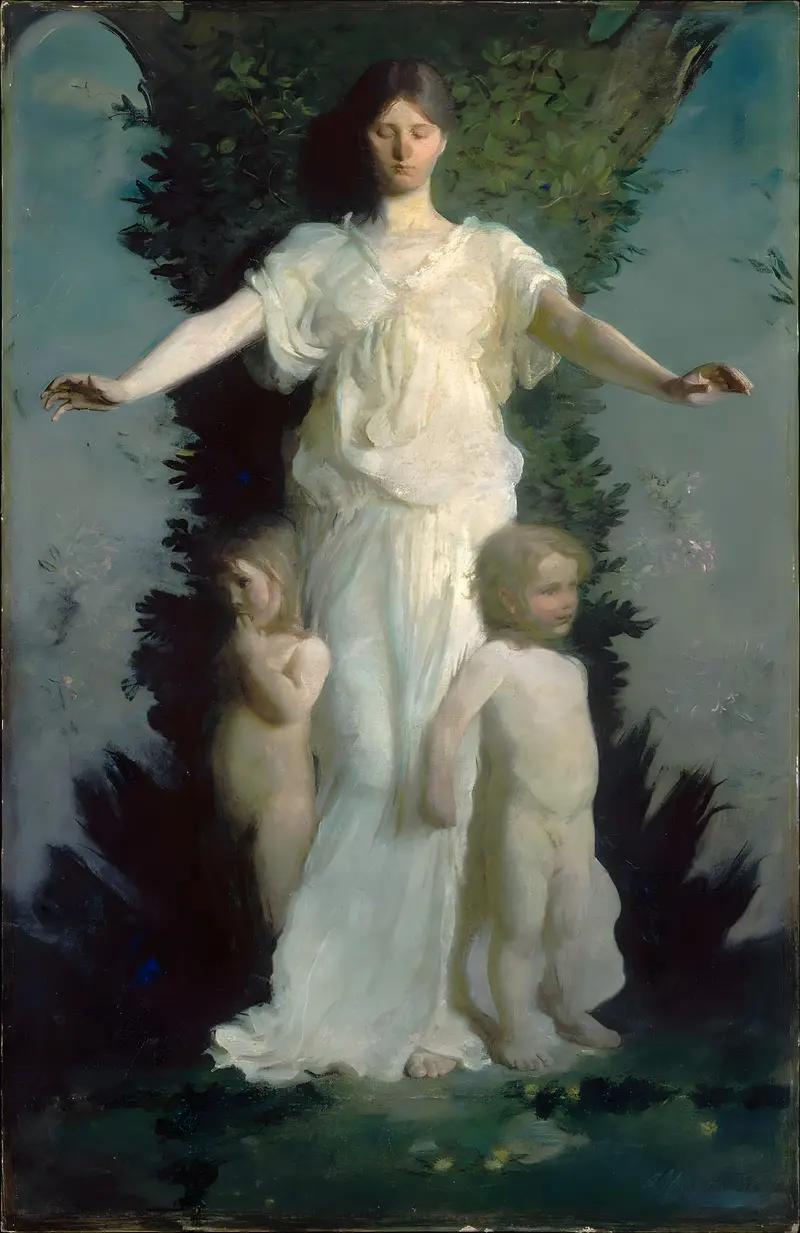
Caritas
Abbott Handerson Thayer

Winter, Monadnock
Abbott Handerson Thayer
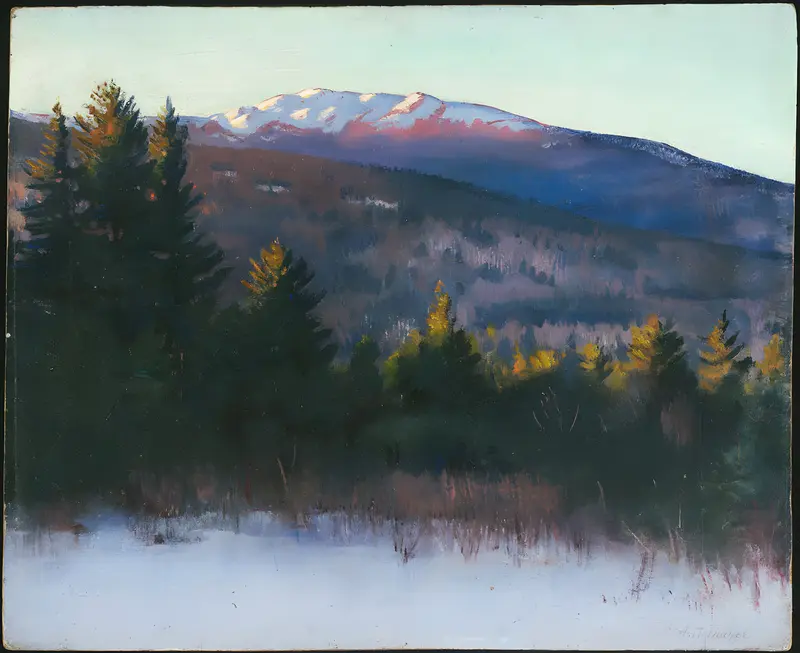
Mount Monadnock
Abbott Handerson Thayer
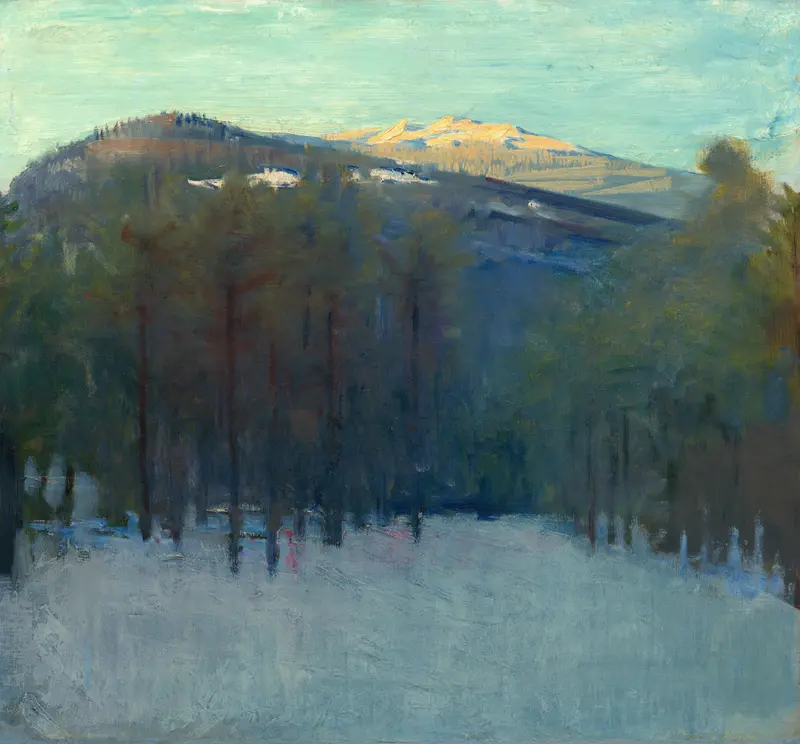
Mount Monadnock
Abbott Handerson Thayer
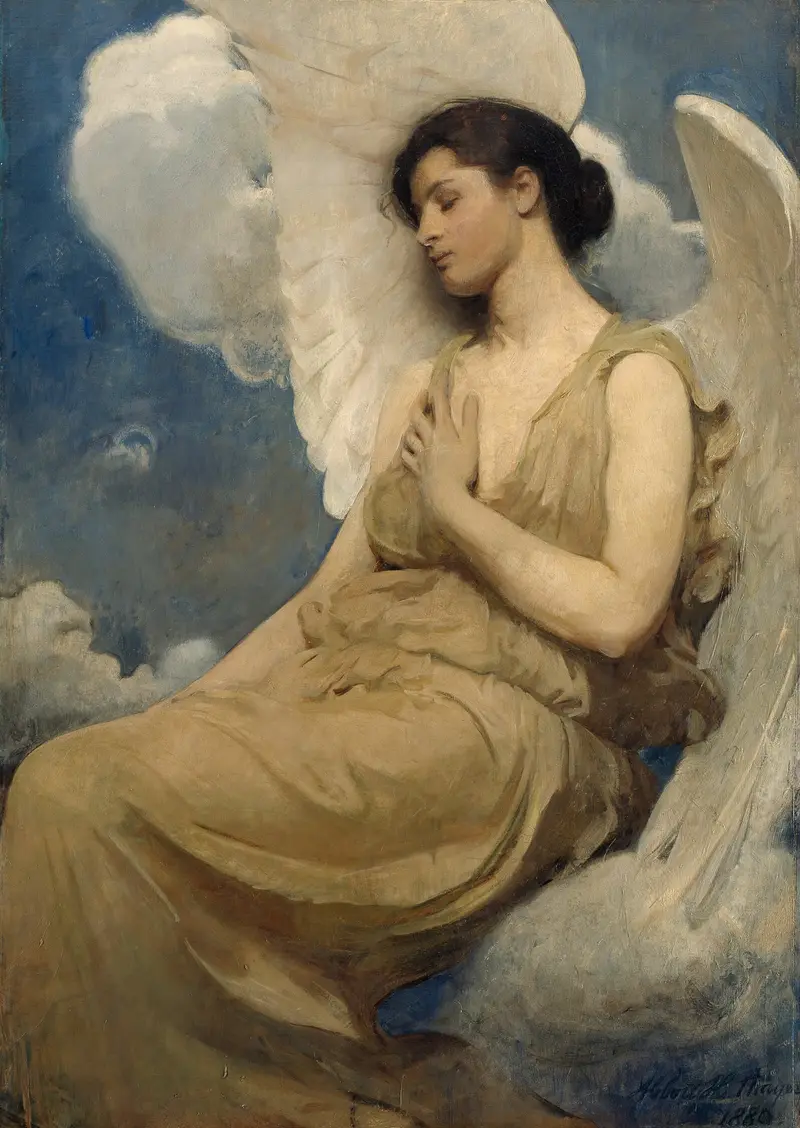
Winged Figure
Abbott Handerson Thayer

Dublin Pond, New Hampshire
Abbott Handerson Thayer
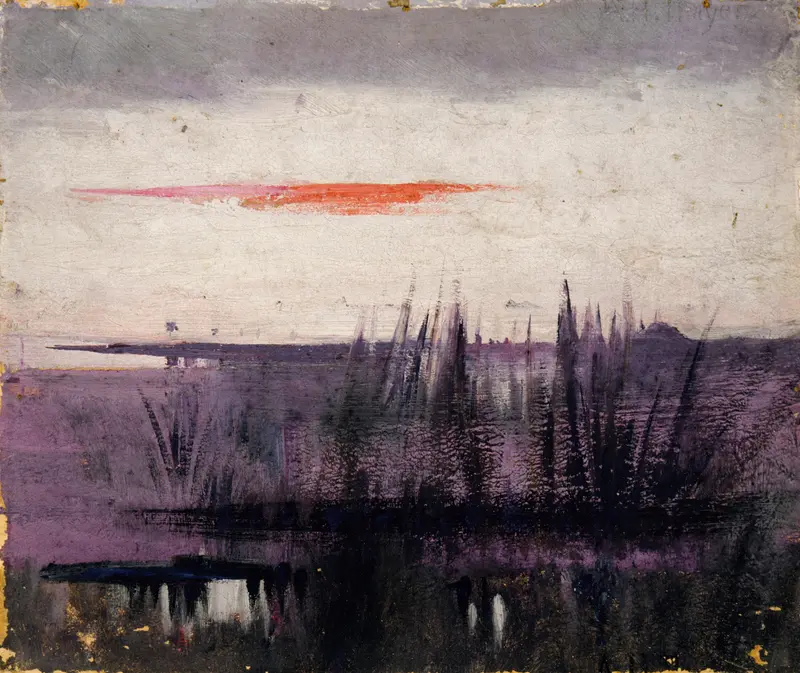
The Sky Simulated By White Flamingoes Study For Book, Concealing Coloration In The Animal Kingdom
Abbott Handerson Thayer
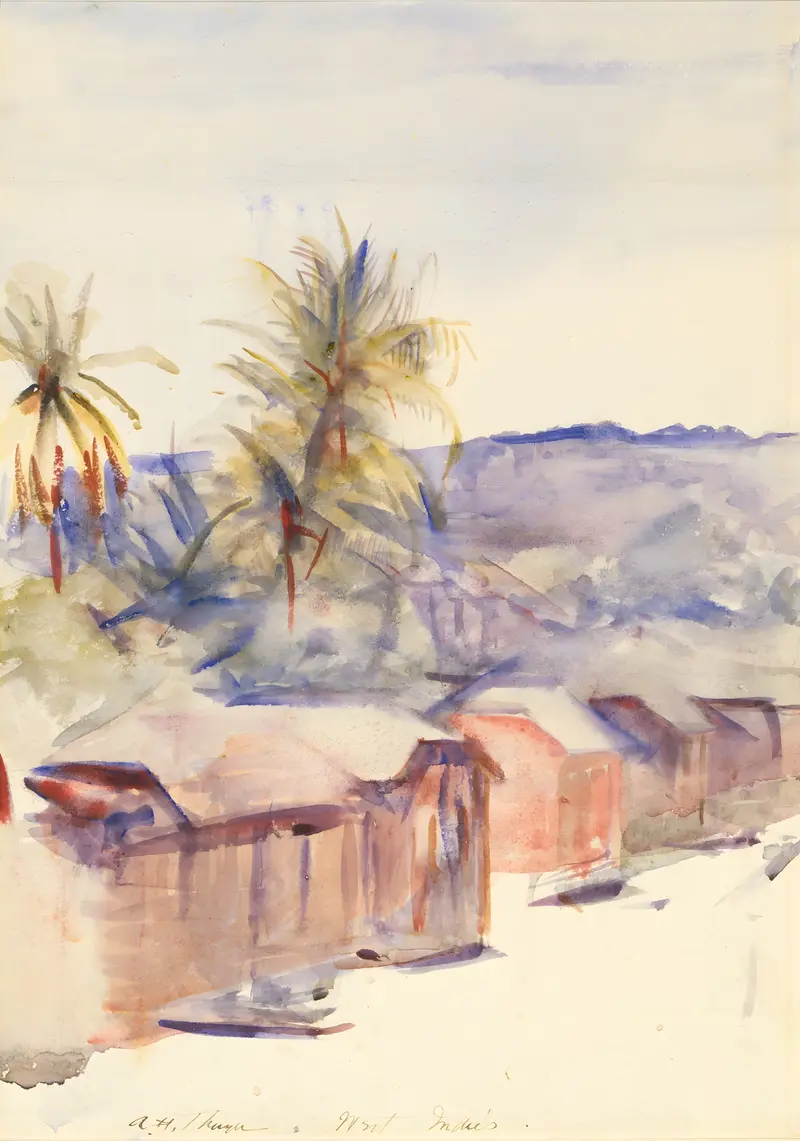
Village Street, Dominica
Abbott Handerson Thayer





