
Margate — History & Facts
When did color learn to lie? In the vibrant realm of Margate, hues dance across the canvas, inviting us into a world where perception intertwines with reality. This painting beckons the viewer to ponder the authenticity of what they see, revealing the delicate balance between illusion and truth. Look to the horizon where the gentle waves kiss the shore, a wash of sapphire and teal intermingling with the sun-drenched sand. The artist employs broad, sweeping brushstrokes that capture the movement of both water and sky, while the play of light creates a shimmering effect that feels almost surreal.
Notice how the soft clouds reflect a palette of pastel pinks and blues, creating an ethereal atmosphere that envelopes the scene. This careful layering of color not only evokes a sense of tranquility but also hints at the transient nature of beauty. Delving deeper, the juxtaposition of light and shadow reveals an underlying tension, where the joy of a day at the beach contrasts with the fleeting moments of life. Tiny figures scattered along the shoreline embody ephemeral happiness, yet their subtle isolation within the vast landscape speaks to a universal yearning for connection.
The sea, both inviting and unknowable, mirrors the complexities of human emotion, blurring the lines between serenity and solitude. In 1849, while creating this work, the artist found himself in a period of personal exploration, often reflecting on the changing landscapes of British society post-Industrial Revolution. As leisure became more accessible, scenes like those in Margate captured the burgeoning spirit of the time, merging the natural beauty of the coast with evolving social themes. At this moment, Callow's brush became a vessel for both nostalgia and innovation, bridging a gap between traditional representation and the emerging influences of modernity.
More Artworks by William Callow
Browse all →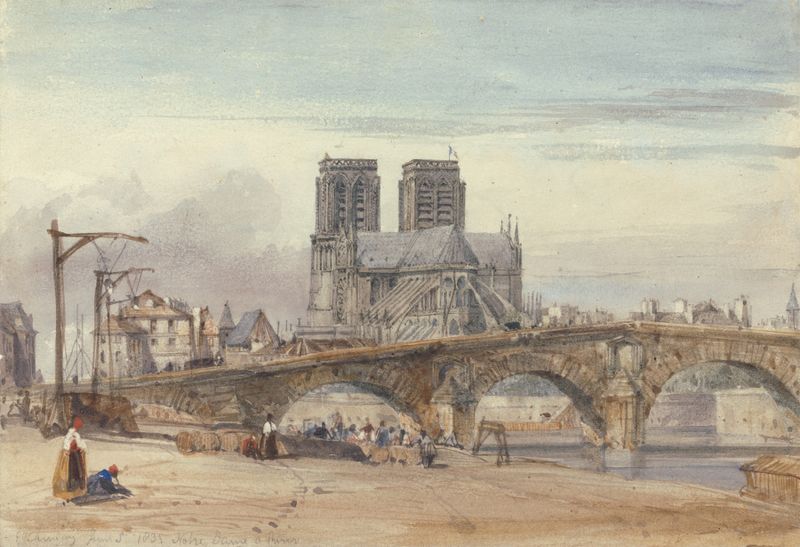
Notre Dame, Paris
William Callow
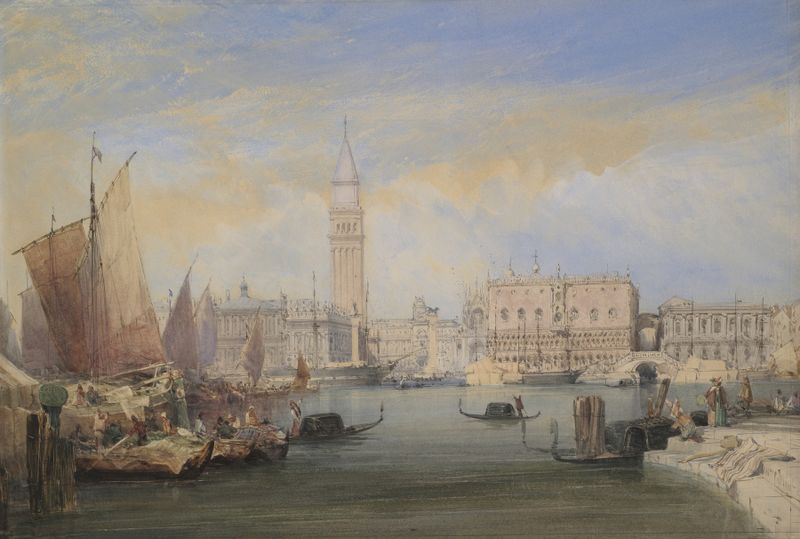
Venice from St. Giorgio
William Callow
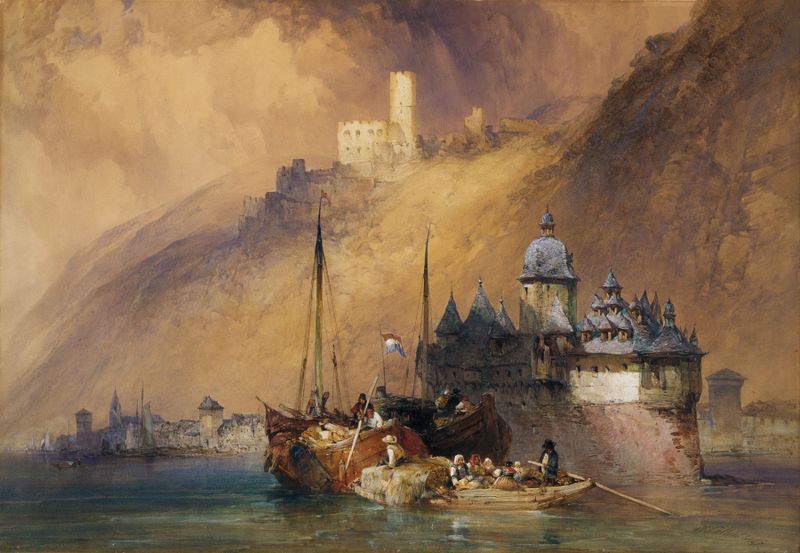
The Phalz Castle on the Rhine
William Callow

The Luxor, Paris, December 1833
William Callow

On the Wharfe, Bolton Abbey
William Callow

Caesar’s Tower, Warwick Castle
William Callow
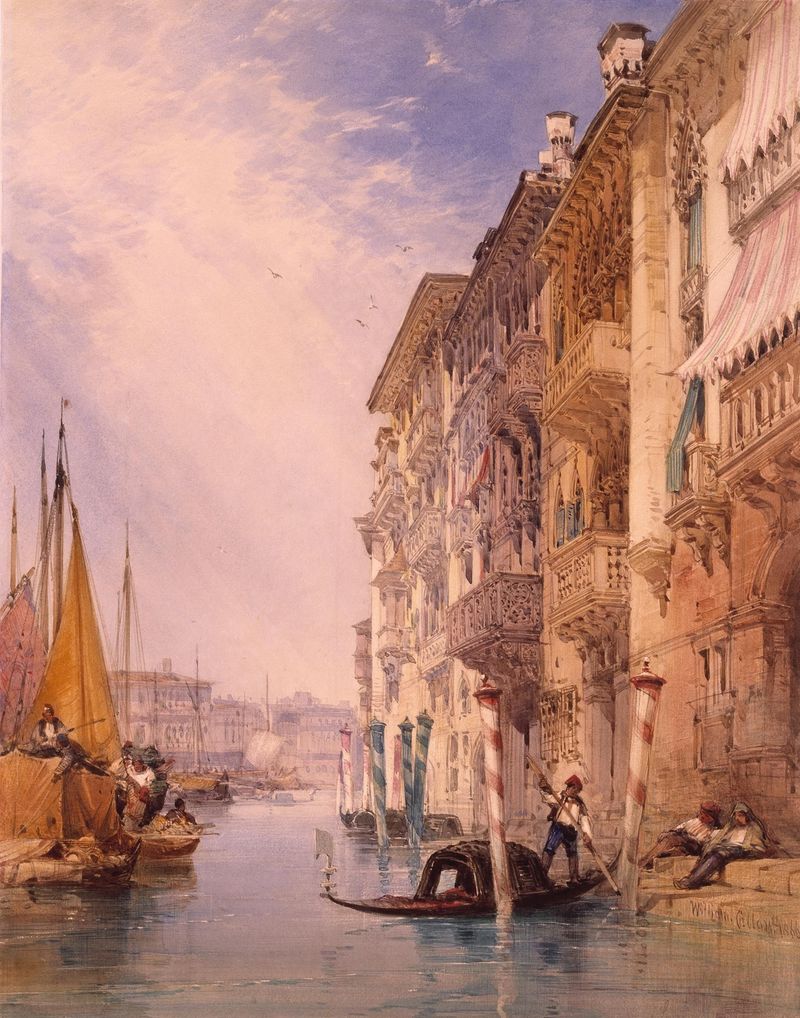
A Gondola on the Grand Canal, Venice
William Callow

Rheinfels and St. Goar
William Callow
Castel Sant’Angelo, Rome
William Callow

Entering Harbour
William Callow





