
Marquise de Broglie (1718-1777) as Sultana — History & Facts
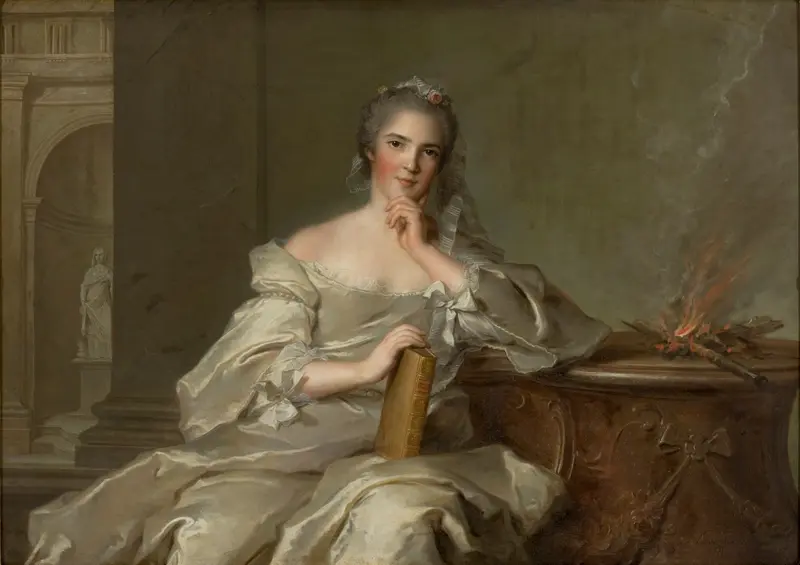
What draws the viewer in first is the confident, almost playful gaze of the sitter, her cheeks flushed with the bloom of life, her lips poised between amusement and reserve. The richness of her costume—a shimmering brocade gown edged with fur, crowned by a delicate headdress set with pearls and a plume—signals both her rank and the fantasy at play. This is not a portrait of daily life, but a masquerade: the sitter adopts the guise of a sultana, a role that invites the viewer into the world of 18th-century Orientalism, where European aristocrats delighted in imagining themselves as figures from far-off courts.
The light, warm and soft, caresses her skin and the silken folds of her dress, drawing the eye to the textures that define her presence: the crisp white ruffle at her neckline, the intricate gold and red patterns, the subtle sheen of the fabric. Every detail is designed to enchant, to suggest both luxury and a playful escape from the ordinary. Painted in 1742, this work belongs to a period when portraits were not merely records of appearance, but performances of identity and fantasy. In the France of Jean-Marc Nattier, it was fashionable for noblewomen to be depicted in exotic or allegorical costume, a trend that reflected both the court’s fascination with distant cultures and the painter’s own gift for theatrical invention.
Such portraits were often commissioned to mark special occasions or to display a sitter’s wit and sophistication. Today, the painting is held in the Nationalmuseum, its journey and the full story of its sitter’s life largely lost to time. Yet the image remains a window onto the playful self-inventions of the Rococo elite—inviting us, centuries later, to imagine the stories behind that poised, knowing smile.
More Artworks by Jean-Marc Nattier

Madame Crozat de Thiers and Her Daughter
Jean-Marc Nattier
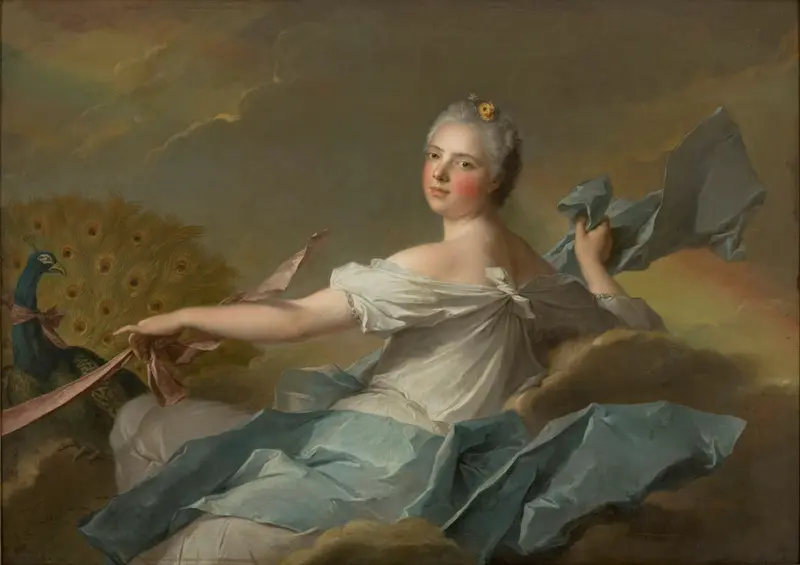
Princess Marie Adélaïde of France - The Air
Jean-Marc Nattier
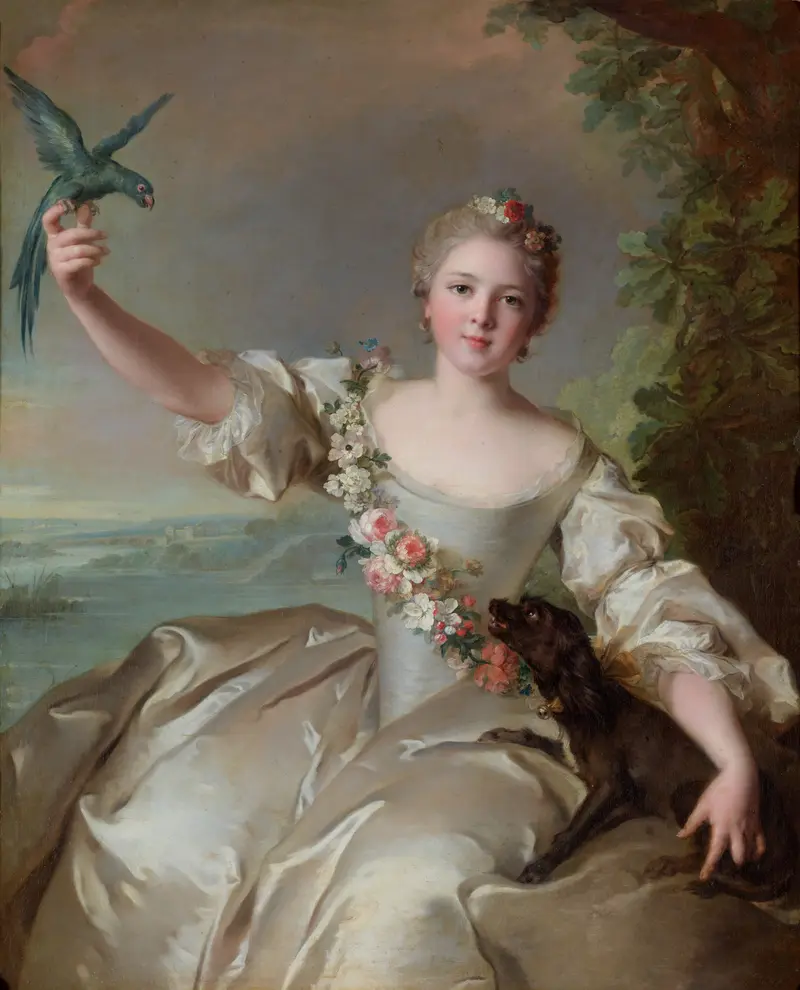
Portrait de Mathilde de Canisy, marquise d'Antin
Jean-Marc Nattier
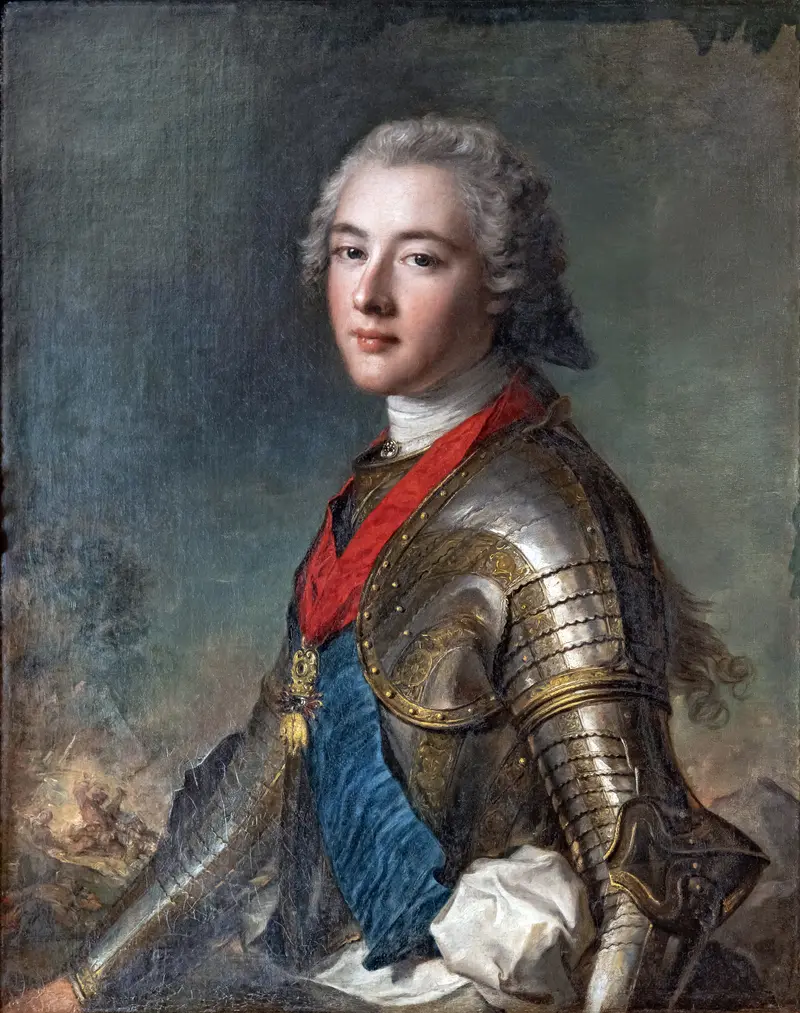
Bemberg Fondation Toulouse - Portrait de Louis Jean Marie de Bourbon, Duc de Penthièvre - Jean Marc Nattier inv.1158 82x65.4
Jean-Marc Nattier
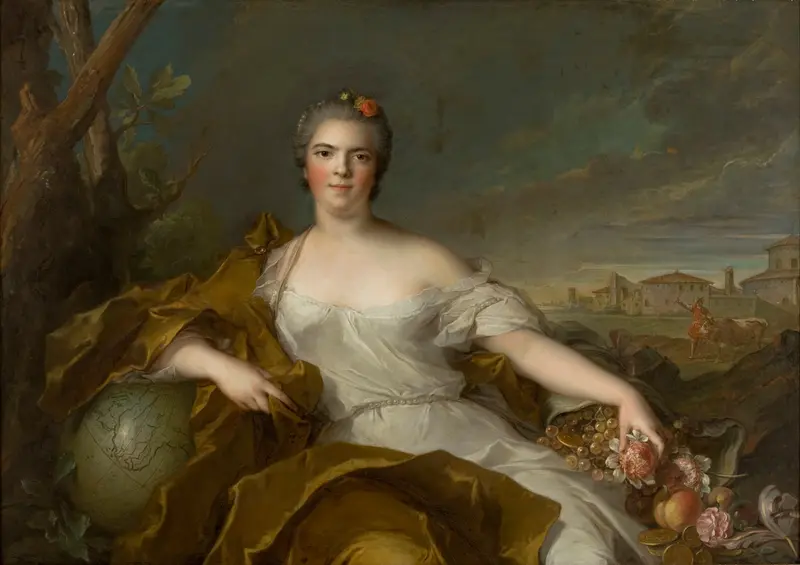
Princess Louise-Élisabeth of France - The Earth
Jean-Marc Nattier
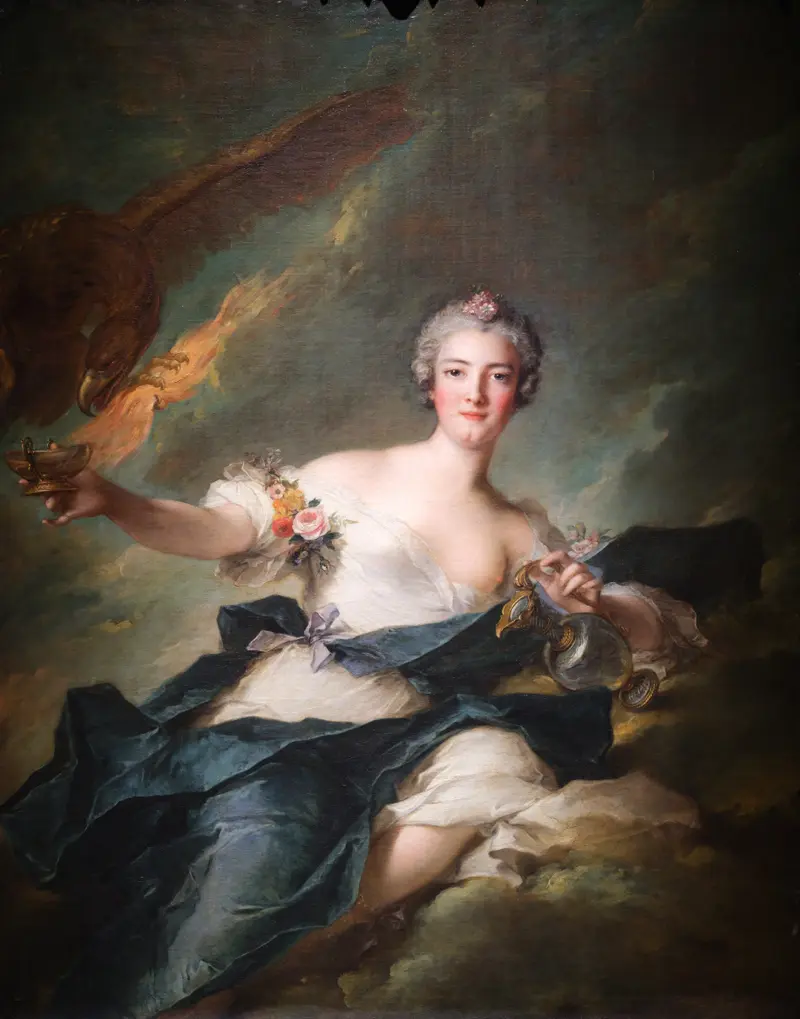
The Duchess of Chaulnes Represented as Hebe
Jean-Marc Nattier
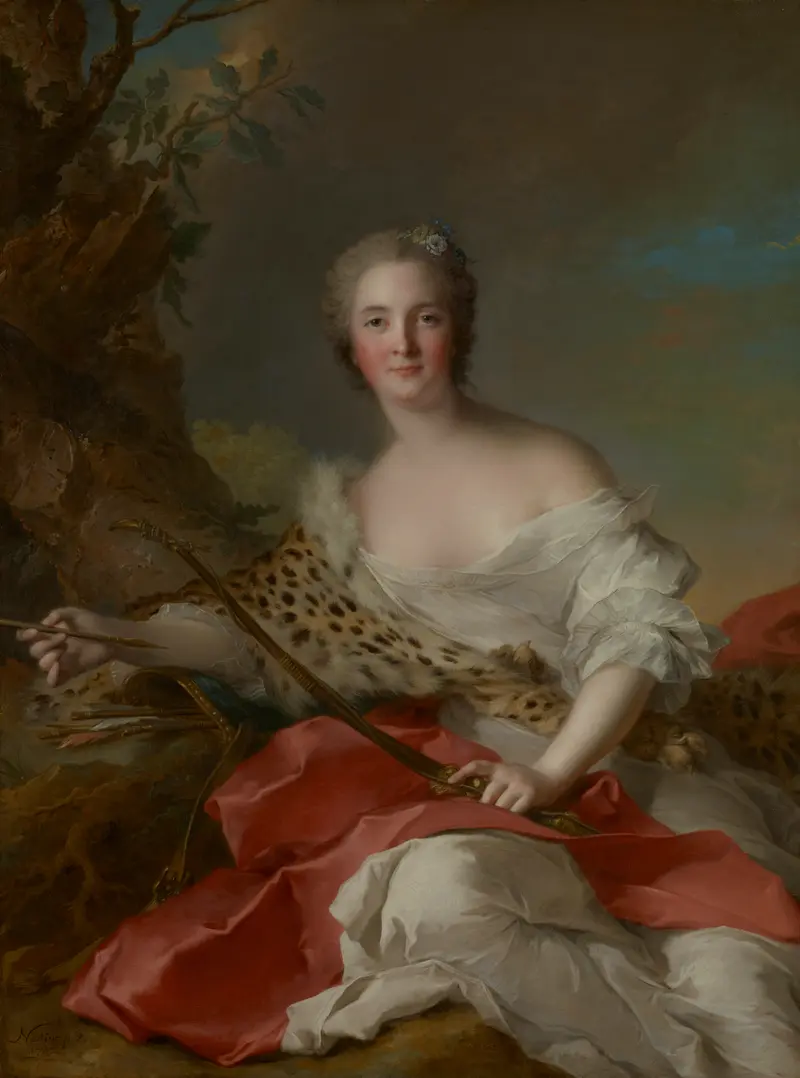
Portrait of Madame Bonnier de la Mosson as Diana (Constance-Gabrielle-Magdeleine du Monciel de Lauraille
Jean-Marc Nattier
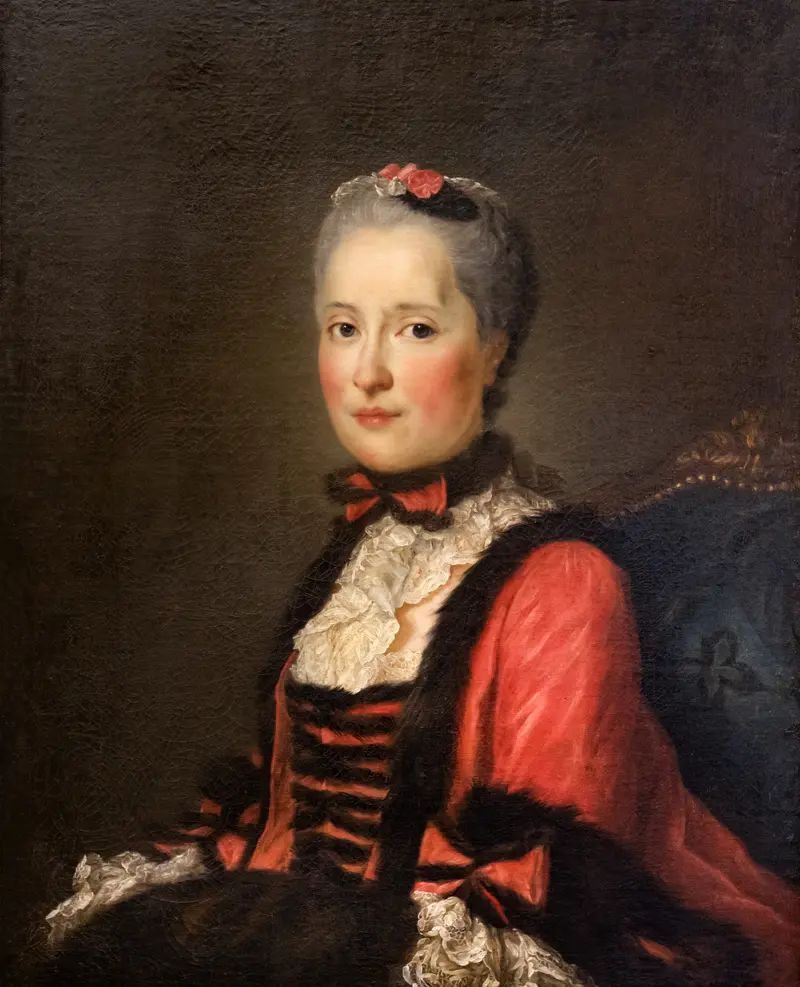
Portrait of Marie-Josephe of Saxony, Dauphine of France
Jean-Marc Nattier
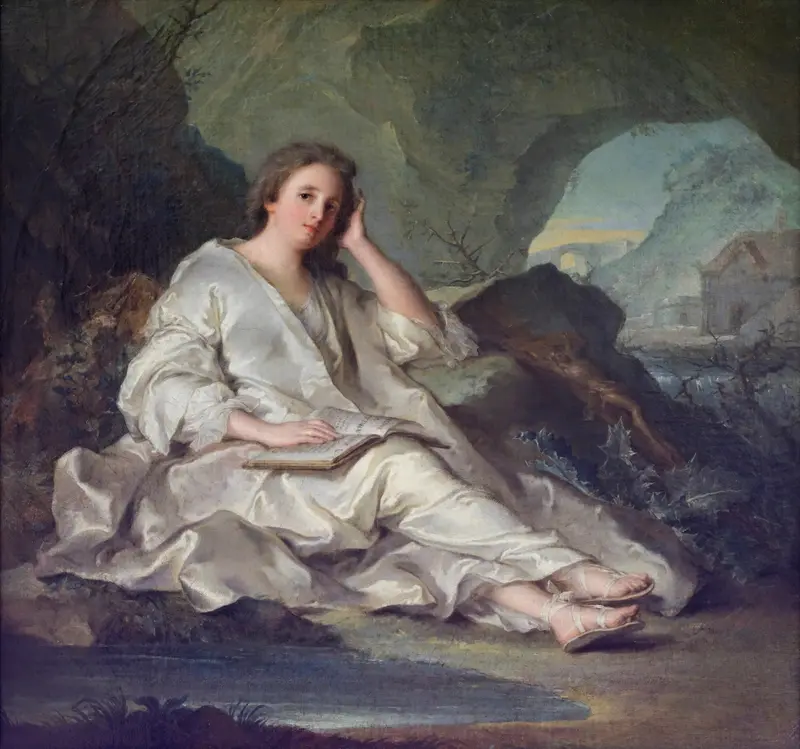
La Madeleine, ou Une Pénitente dans le désert Musée du Louvre Peintures INV 6880 ; MR
Jean-Marc Nattier
Princess Anne-Henriette of France - The Fire
Jean-Marc Nattier





