
Masculine wave — History & Facts
When Masculine wave appeared in 1845, it was quickly linked to Katsushika Hokusai’s celebrated fascination with the sea, but unlike his famous The Great Wave off Kanagawa, this work’s very existence has long been a subject of debate among scholars. Some believe it to be a late experiment by Hokusai, created during the final years of his life, when he was already renowned and working in relative isolation. The uncertainty surrounding its medium—whether it is a print, painting, or drawing—has only added to its mystique.
What is certain is that the title itself, Masculine wave, was recorded in an 1850s inventory of Hokusai’s estate, suggesting it was recognized as a distinct work soon after his death. The image captures a single, towering wave, its crest curling forward with muscular force, dwarfing a lone fishing boat that clings to the lower edge of the composition. Unlike the more famous The Great Wave, where the drama is shared between nature and the vulnerable figures below, here the focus is entirely on the elemental energy of the water. The wave is rendered with bold, almost calligraphic strokes, its ridges sharp and angular, evoking a sense of raw power.
The absence of Mount Fuji—a fixture in many of Hokusai’s marine scenes—shifts the narrative from the spiritual to the physical, emphasizing the wave’s dominance. This approach stands in contrast to Utagawa Hiroshige’s softer, more lyrical seascapes, highlighting Hokusai’s unique vision. Little is known about the early journey of Masculine wave as an object. If it was indeed created in Hokusai’s last years, it likely remained in his studio until his death in 1849, passing through the hands of his heirs and collectors in Edo (now Tokyo).
The lack of documentation has made attribution challenging, with some experts questioning whether it is an autograph work or a product of Hokusai’s studio. Today, the piece is rarely exhibited, and its whereabouts are sometimes listed as “location unknown” in museum records, underscoring its elusive status within both Hokusai’s oeuvre and the broader tradition of Ukiyo-e.
More Artworks by Katsushika Hokusai

The Great Wave off Kanagawa
Katsushika Hokusai
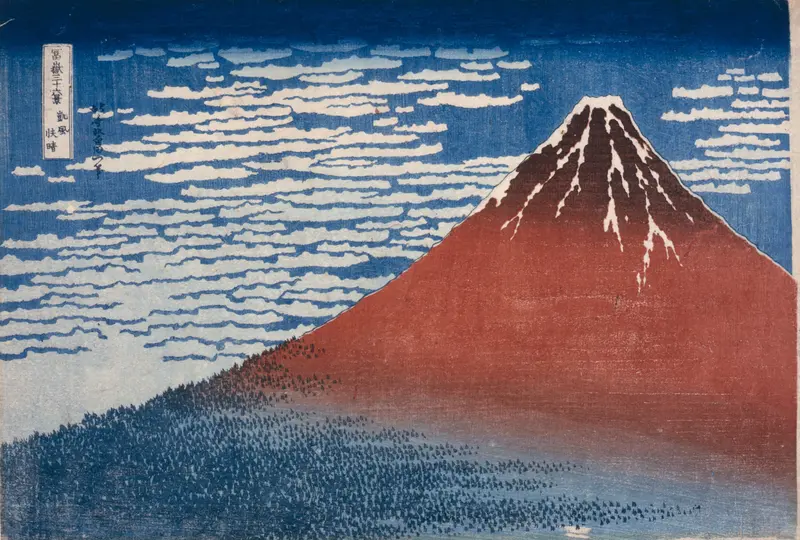
Fine Wind, Clear Morning (Red Fuji)
Katsushika Hokusai
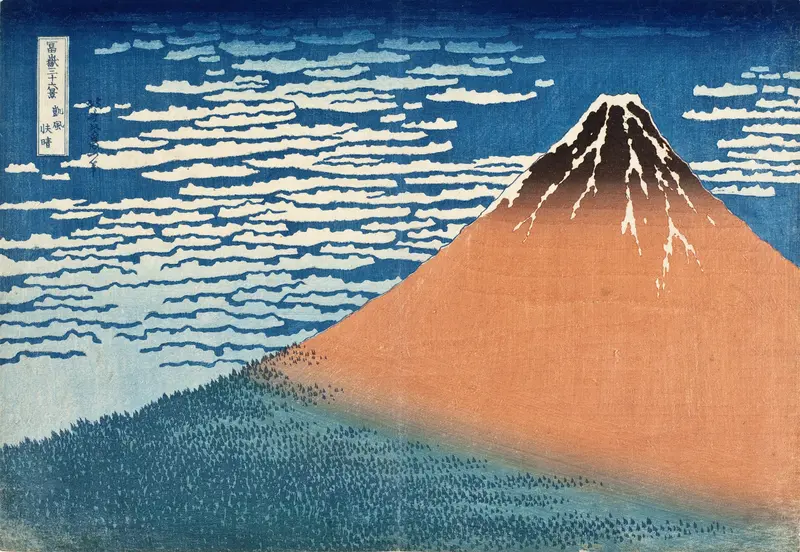
South Wind, Clear Dawn
Katsushika Hokusai
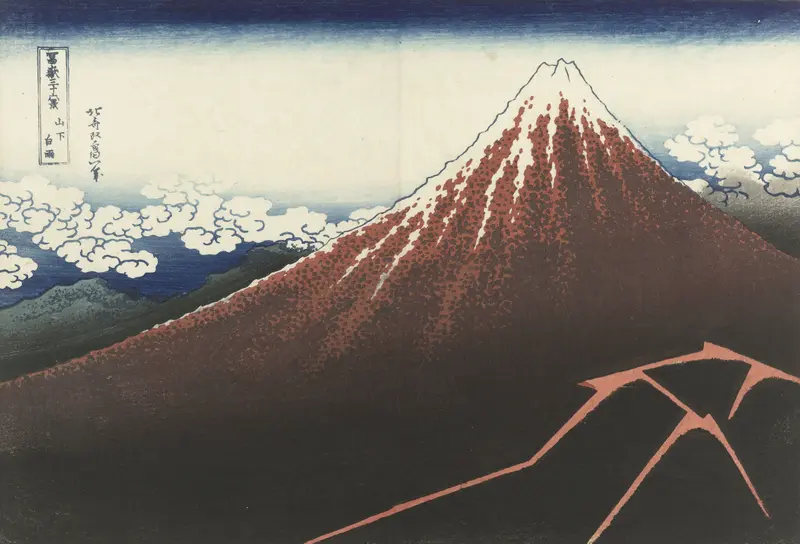
Rainstorm Beneath the Summit
Katsushika Hokusai
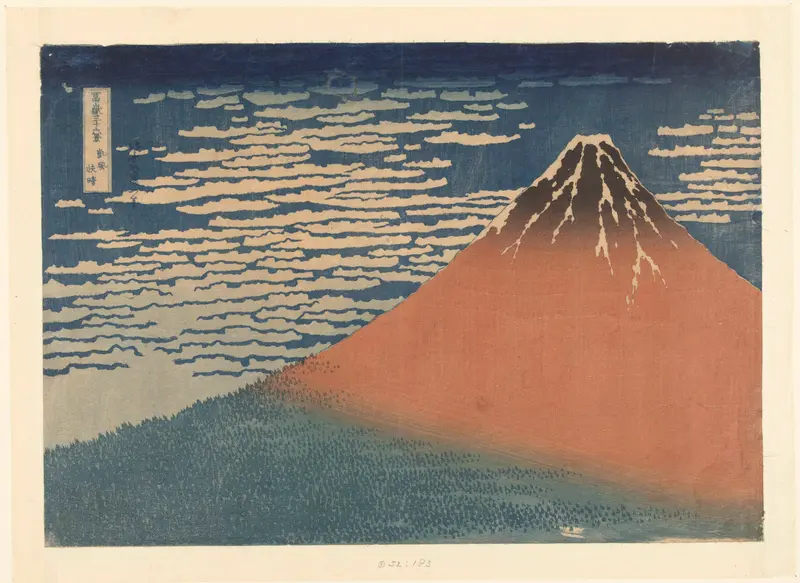
Clear Weather with a Southerly Wind
Katsushika Hokusai
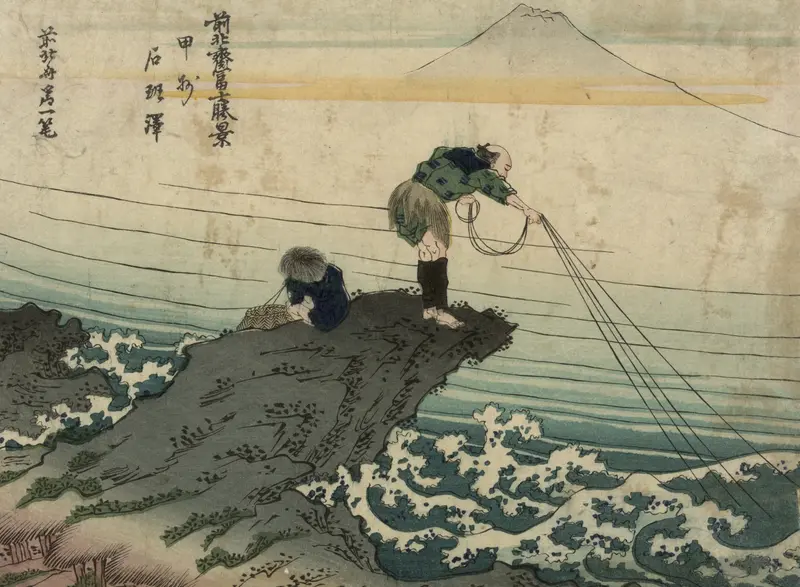
Kōshū kajikazawa
Katsushika Hokusai
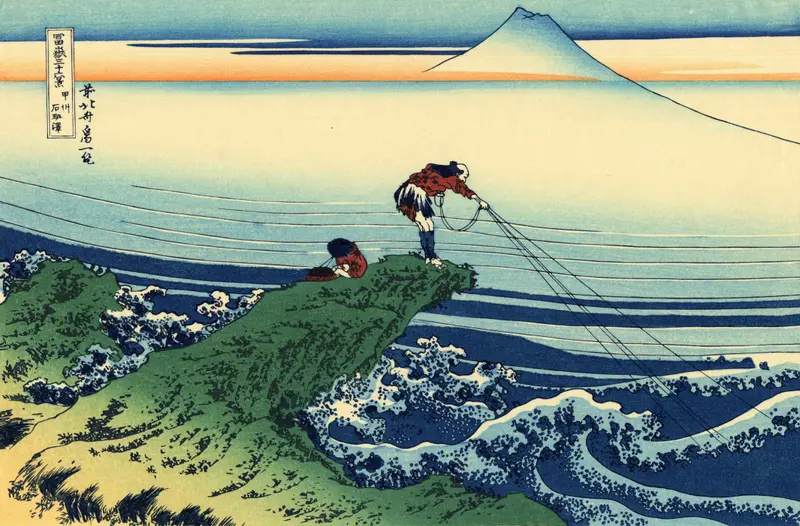
Kōshū kajikazawa 2
Katsushika Hokusai
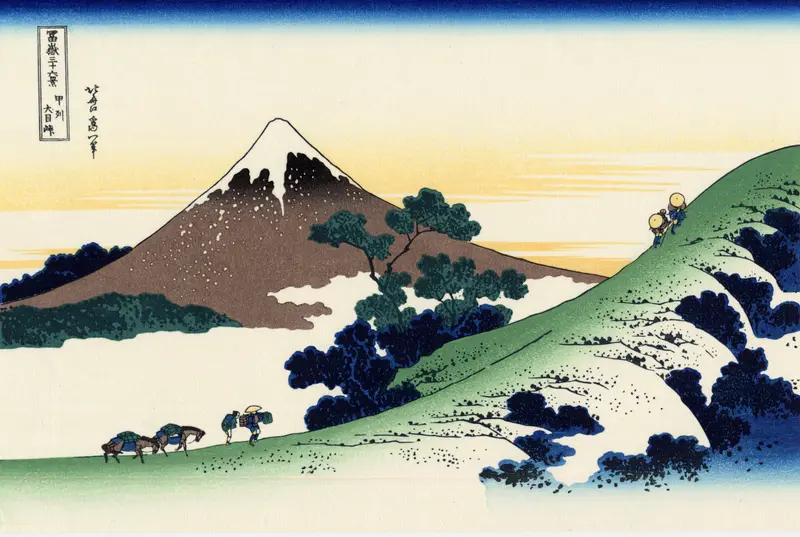
Inume Pass in Kai Province (Kôshû inume-tôge)
Katsushika Hokusai

Yoro Falls in Mino Province (Mino no Yoro no taki), from the series "A Tour of Waterfalls in Various Provinces (Shokoku taki meguri)"
Katsushika Hokusai
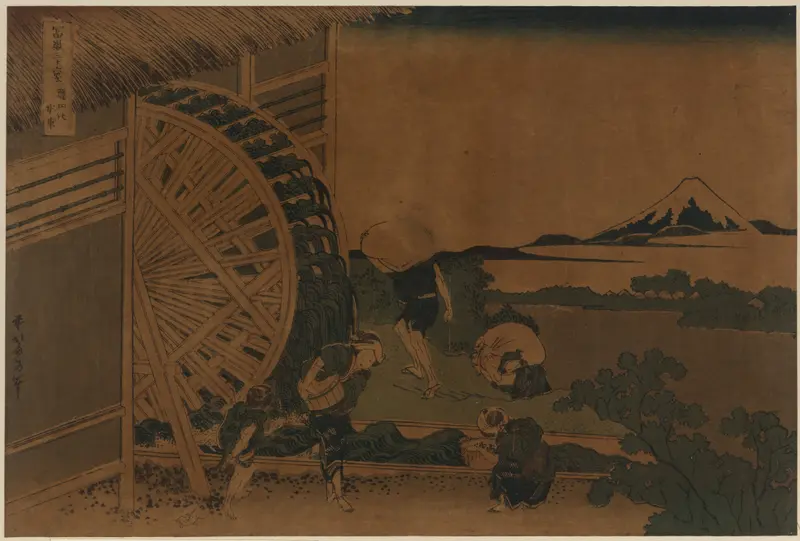
Onden no suisha
Katsushika Hokusai




