
Massif figure in a landscape — History & Facts
When Massif figure in a landscape appeared in the 1882 Salon des Artistes Français, it marked one of the earliest public glimpses of Georges Seurat’s evolving technique—years before the debut of his famous pointillism. Critics at the time were unsure what to make of its bold, blocky forms and the ambiguous presence dominating the scene. Unlike later works, this canvas stands alone; no known preparatory studies or variants survive, making it a unique window into Seurat’s experimental years.
Its title, too, has prompted debate: is the “massif figure” a literal person, or a metaphor for the weight of human presence in nature? At the heart of the composition, a solitary figure looms, monumental against a rolling, sunlit landscape. The figure’s broad silhouette, rendered in heavy, almost sculptural strokes, seems to merge with the earth itself—suggesting a kinship between human and land. A single tree leans toward the figure, its branches echoing the curve of the figure’s back, while the distant horizon glows with a pale, uncertain light.
Unlike the lively crowds of Seurat’s later A Sunday Afternoon on the Island of La Grande Jatte, here the mood is one of introspection and solitude. The painting invites the viewer to consider the relationship between self and environment, a theme also explored by Jean-François Millet in his depictions of rural laborers, though Seurat’s approach is more enigmatic and abstract. The precise provenance of Massif figure in a landscape remains uncertain, as records from Seurat’s early career are fragmentary. It is believed to have been retained in the artist’s studio until his death in 1891, after which it passed through several private collections in Paris.
Unlike his later pointillist masterpieces, this work was largely overlooked by collectors until the mid-20th century, when renewed interest in Seurat’s formative years brought it into public view. Today, it stands as a testament to the artist’s restless experimentation, occupying a quiet but significant place in the study of early Post-Impressionism.
More Artworks by Georges Seurat
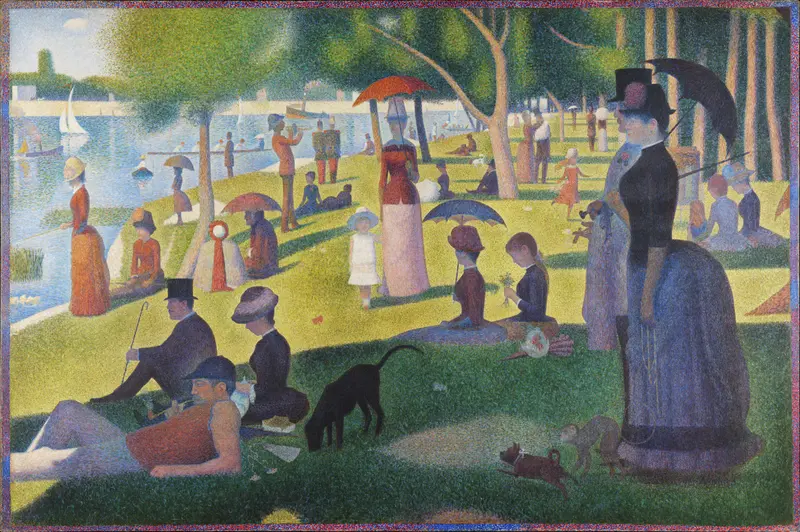
A Sunday Afternoon on the Island of La Grande Jatte
Georges Seurat
Port-en-Bessin, The Outer Harbor (Low Tide)
Georges Seurat
Étude pour ‘La Grande Jatte’ (Study for ‘La Grande Jatte’)
Georges Seurat
Seascape at Port-en-Bessin,Normandy
Georges Seurat
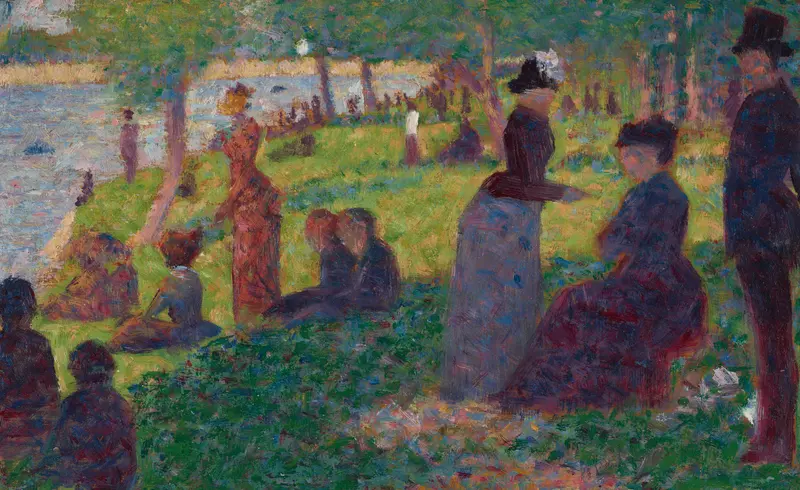
Oil Sketch for "A Sunday on La Grande Jatte — 1884"
Georges Seurat
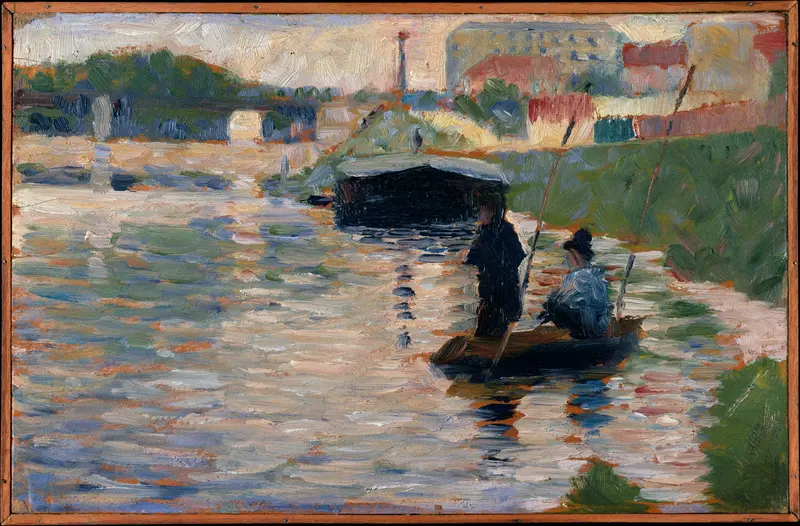
View of the Seine
Georges Seurat
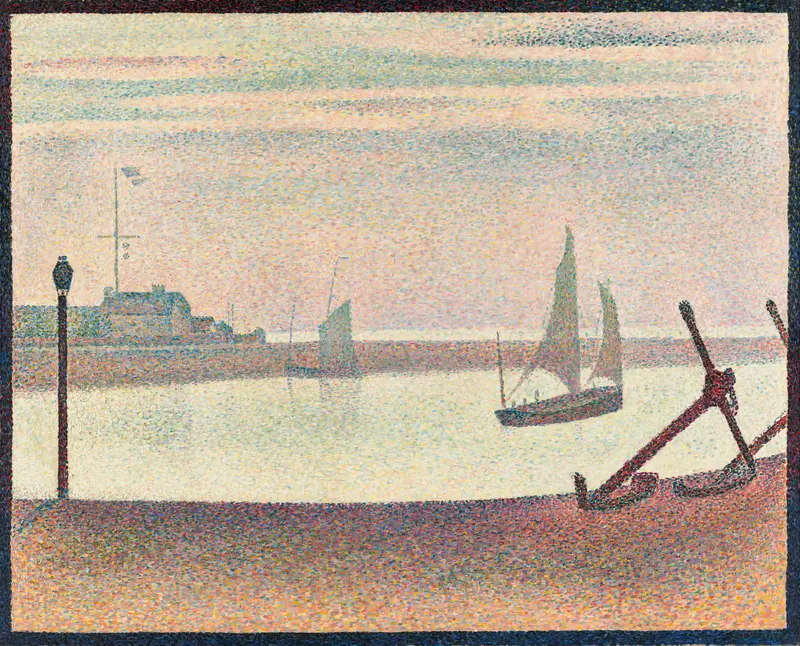
The Channel at Gravelines, Evening
Georges Seurat
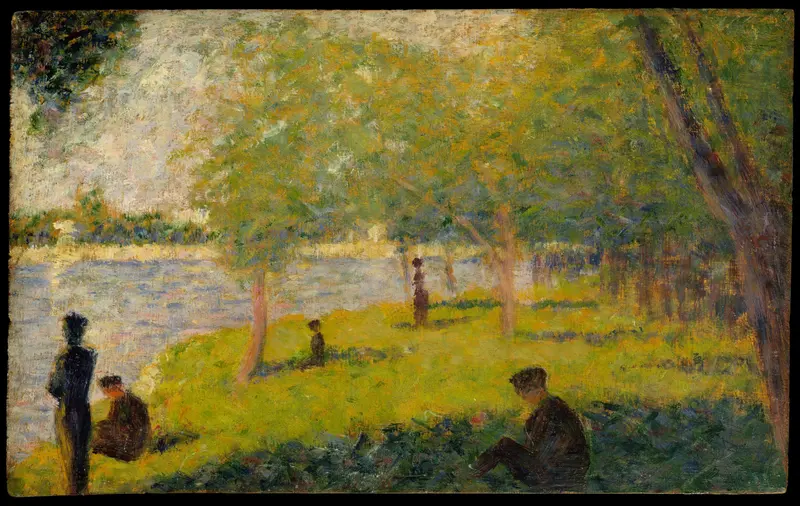
Study for ‘A Sunday on La Grande Jatte’
Georges Seurat
Study for A Sunday on La Grande Jatte
Georges Seurat
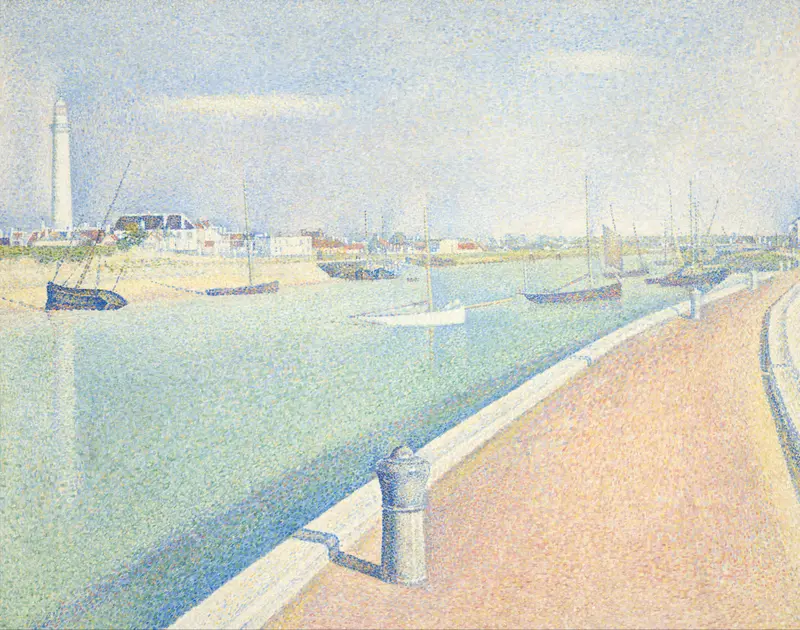
The Channel of Gravelines, Petit Fort Philippe
Georges Seurat
More Landscape Art

The Starry Night
Vincent van Gogh

View of Delft
Johannes Vermeer

Water Lilies
Claude Monet

The Grand Canal, Venice, looking north-west from the Ca' Corner to the Ca' Contarini degli Scrigni, with the campanile of Santa Maria della Carità
Canaletto

Windsor Castle
Canaletto

The Grand Canal looking North-East from the Palazzo Dolfin-Manin to the Rialto Bridge
Canaletto