
Meeresstudie bei Etretat (mit Felsküste zur Linken) — History & Facts
Did the painter know this moment would outlive them? In Meeresstudie bei Etretat (mit Felsküste zur Linken), the essence of fleeting beauty is captured, a testament to nature's mesmerizing allure and the artist's skillful hand. Look to the left where the rugged cliffs rise defiantly against the horizon, their textures rendered with exquisite precision. The gentle swell of the sea dances beneath a brooding sky, shades of blue intermingling with soft grays, creating an atmosphere thick with anticipation. Notice how the light breaks through the clouds, illuminating patches of water and casting playful reflections that suggest movement and depth, inviting the viewer to contemplate the vastness beyond the shoreline. Beyond the immediate beauty, the interplay of light and shadow evokes a feeling of transience, as if the scene is both a celebration of nature's splendor and a poignant reminder of its impermanence.
The distant horizon, where the water meets the sky, suggests illusions of infinite possibility, while the stark solidity of the cliffs grounds the composition in reality, creating a tension between the ephemeral and the enduring. Each brushstroke adds to this emotional complexity, encouraging a reflection on the duality of life and our place within it. In 1836, Johann Wilhelm Schirmer painted this work during a period of burgeoning Romanticism, where artists sought to express the sublime power of nature. Living in Germany yet inspired by the coastal beauty of Normandy, Schirmer was at the forefront of landscape painting, navigating the shifting tides of artistic expression as Europe grappled with industrialization and the tensions it brought to traditional views of nature.
More Artworks by Johann Wilhelm Schirmer
Browse all →
Waldlandschaft mit Blick auf Olevano und den Monte Cavo
Johann Wilhelm Schirmer
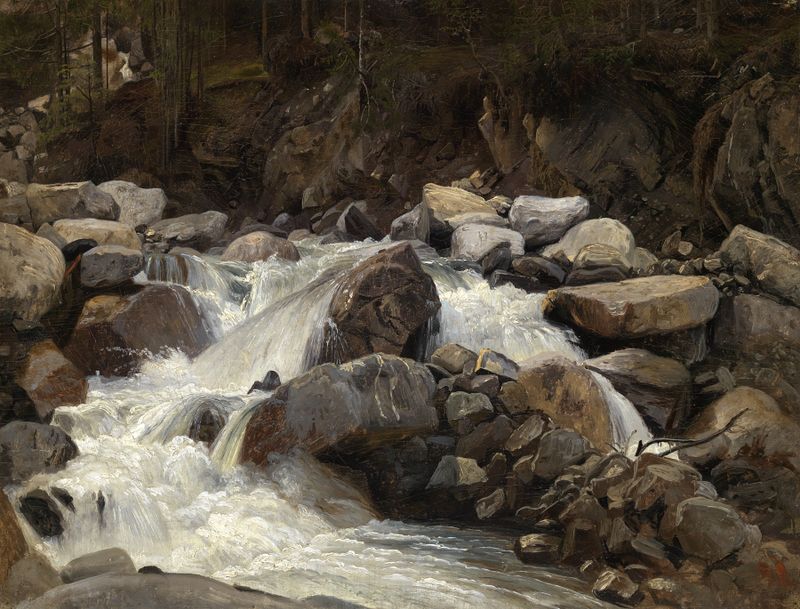
Schweizer Gebirgsbach
Johann Wilhelm Schirmer
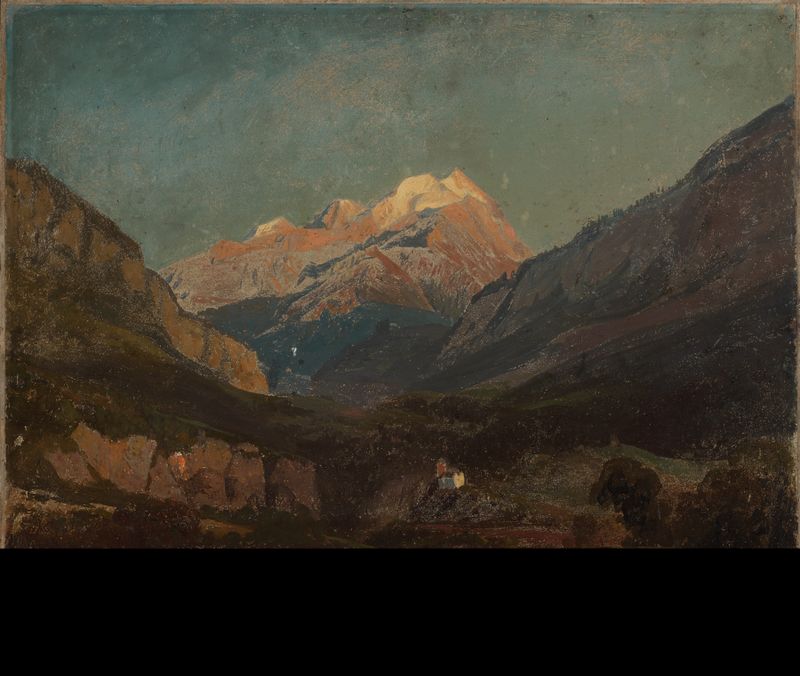
Schweizer Gebirgslandschaft mit Kapelle und fernem Schneegipfel
Johann Wilhelm Schirmer

Schweizer Gebirgslandschaft mit dem Piz Beverin im Hintergrund
Johann Wilhelm Schirmer

Waldinneres mit Hirschen am Wasser
Johann Wilhelm Schirmer

The Wetterhorn
Johann Wilhelm Schirmer

Partie aus der Römischen Campagna
Johann Wilhelm Schirmer

Felsabhang in der Schweiz
Johann Wilhelm Schirmer
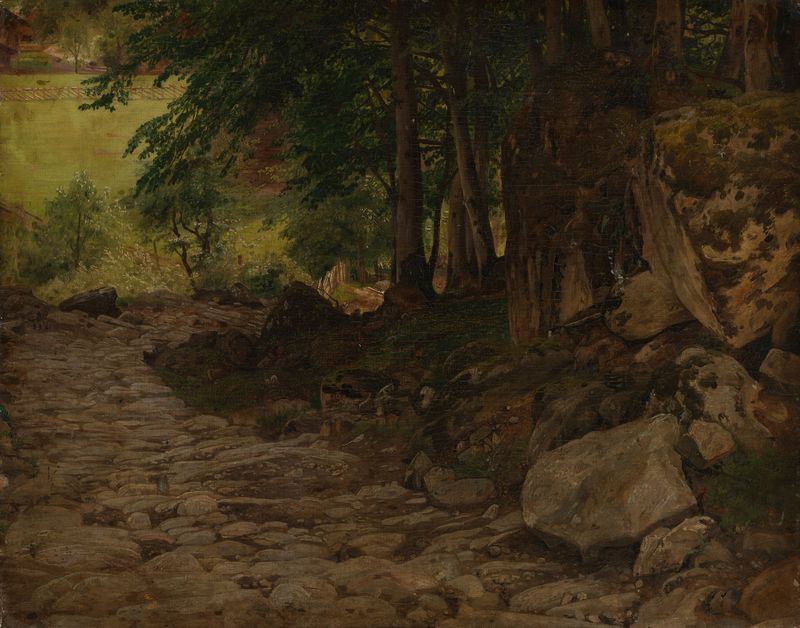
Felsweg in der Schweiz
Johann Wilhelm Schirmer
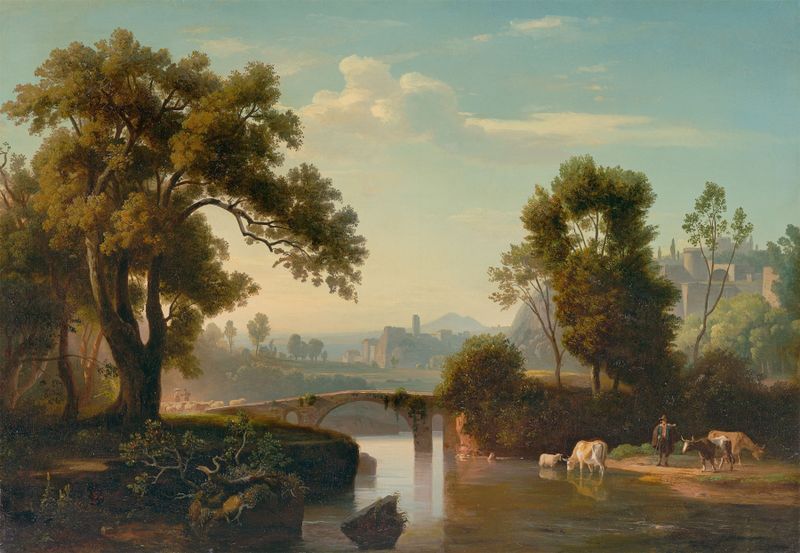
Italienische Landschaft mit Hirten
Johann Wilhelm Schirmer





