
Meeresstudie bei Etretat (mit Felsküste zur Rechten) — History & Facts
Could beauty survive in a century of chaos? In the delicate interplay of land and sea, Meeresstudie bei Etretat (mit Felsküste zur Rechten) evokes a sublime sense of ecstasy, capturing a fragile moment where nature breathes in vibrant colors and textures. Look to the stretch of the horizon, where the azure sea meets a brilliant sky, whispering secrets through the soft waves. The composition draws your eye to the rugged cliffs on the right, their earthy tones contrasting against the vibrant blues, while the gentle brushstrokes breathe life into the scene. Notice how the light dances upon the water, illuminating both the tranquil surface and the jagged edges of the rocks, creating a harmonious dialogue between serenity and strength. Beneath the beauty lies a profound tension—between the calmness of nature and the tumultuous human experience that characterized the era.
The cliffs, majestic yet imposing, seem to stand as silent witnesses to the passage of time, embodying resilience amidst the impermanence of the surrounding elements. This duality hints at a fleeting moment of ecstasy, suggesting that in chaos, one can find solace and inspiration. In 1836, Johann Wilhelm Schirmer painted this piece during a period marked by artistic exploration and the Romantic movement's embrace of nature. Living in Germany, he was influenced by the changing tides of European art, facing the growing industrialization around him.
This work reflects not only his deep appreciation for the natural world but also his desire to capture the timeless beauty that endures, even amid uncertainty.
More Artworks by Johann Wilhelm Schirmer
Browse all →
Waldlandschaft mit Blick auf Olevano und den Monte Cavo
Johann Wilhelm Schirmer
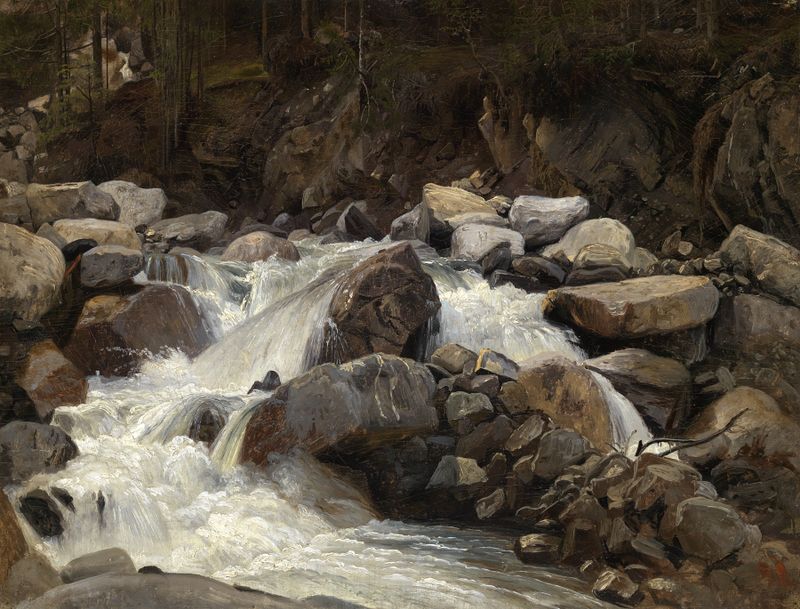
Schweizer Gebirgsbach
Johann Wilhelm Schirmer
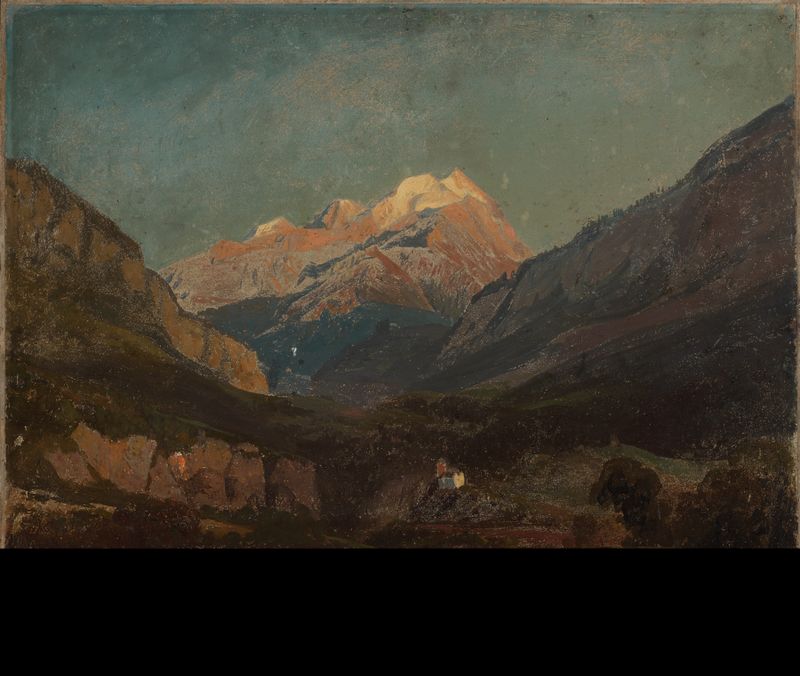
Schweizer Gebirgslandschaft mit Kapelle und fernem Schneegipfel
Johann Wilhelm Schirmer

Schweizer Gebirgslandschaft mit dem Piz Beverin im Hintergrund
Johann Wilhelm Schirmer

Waldinneres mit Hirschen am Wasser
Johann Wilhelm Schirmer

The Wetterhorn
Johann Wilhelm Schirmer

Partie aus der Römischen Campagna
Johann Wilhelm Schirmer

Felsabhang in der Schweiz
Johann Wilhelm Schirmer
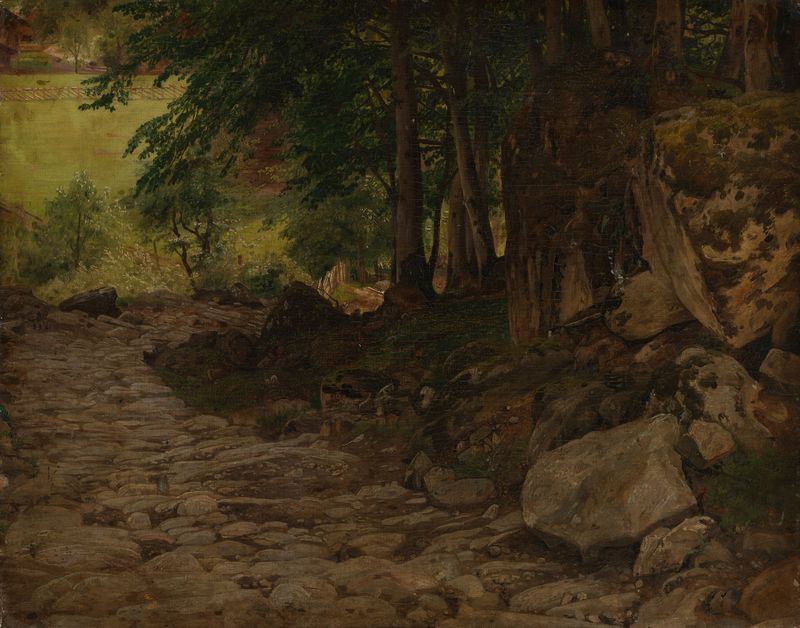
Felsweg in der Schweiz
Johann Wilhelm Schirmer
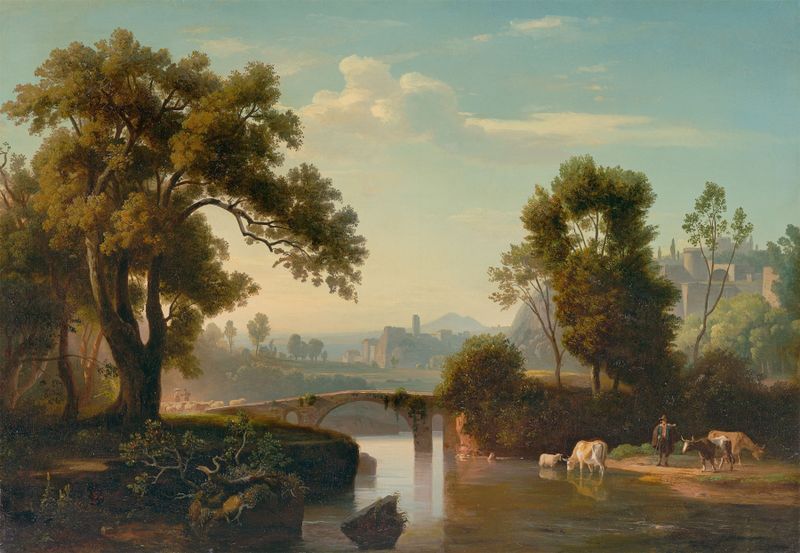
Italienische Landschaft mit Hirten
Johann Wilhelm Schirmer





