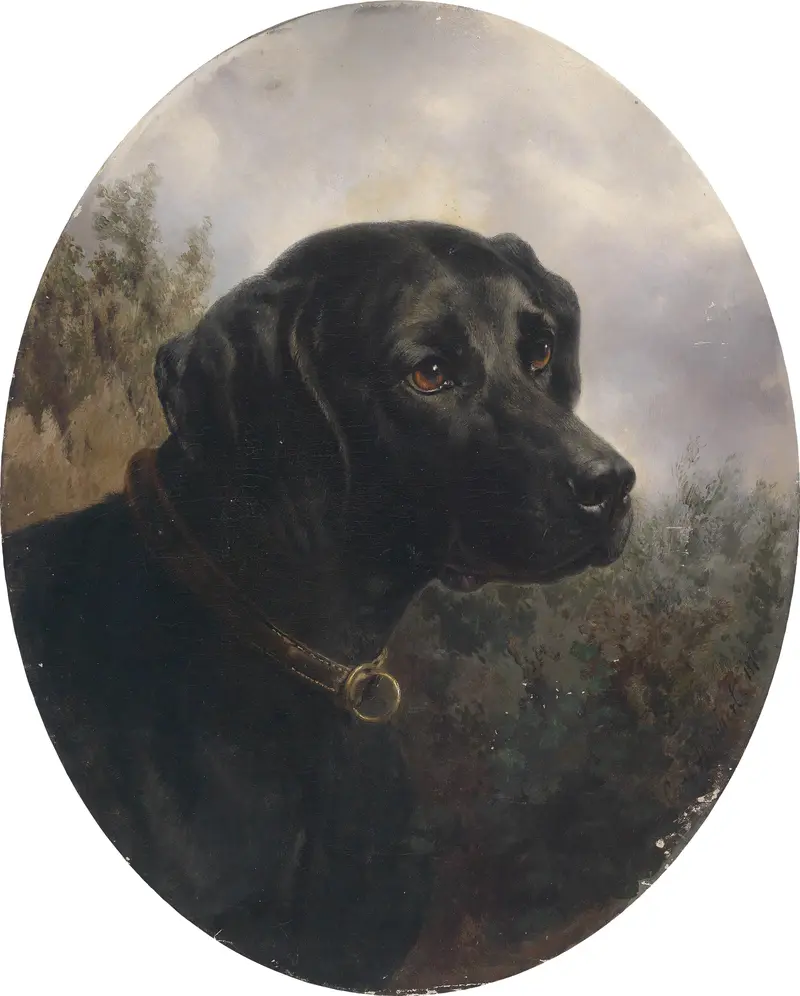
Melancholic, Phlegmatic — History & Facts
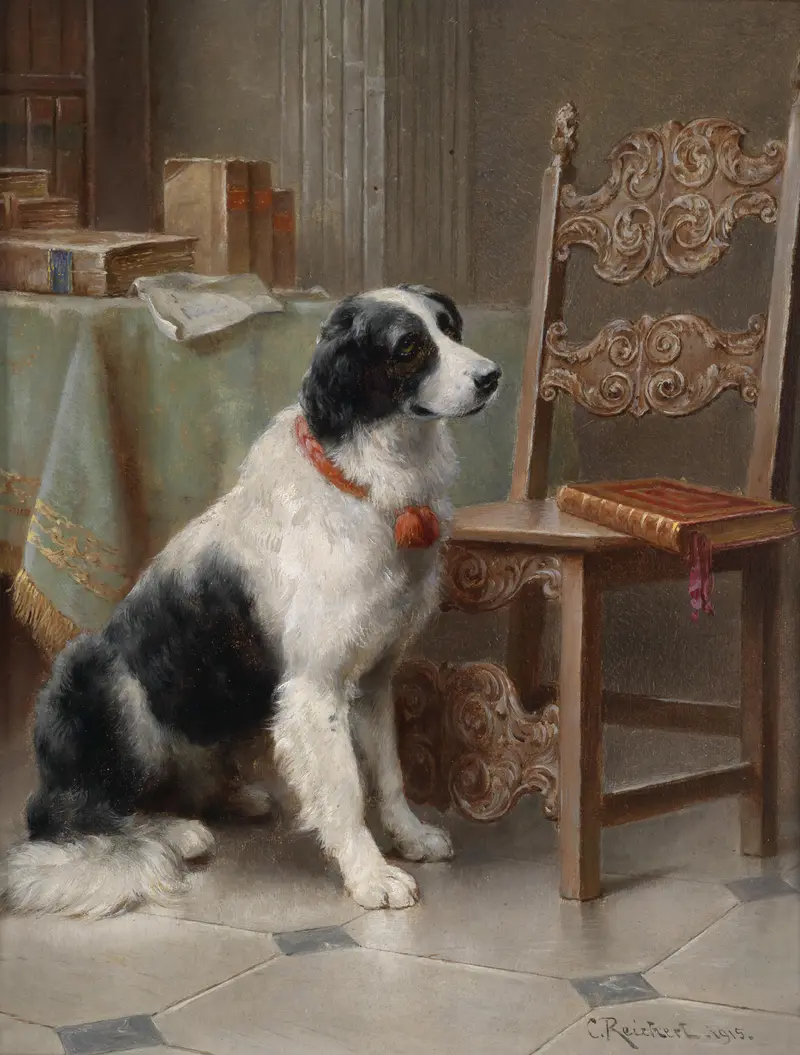
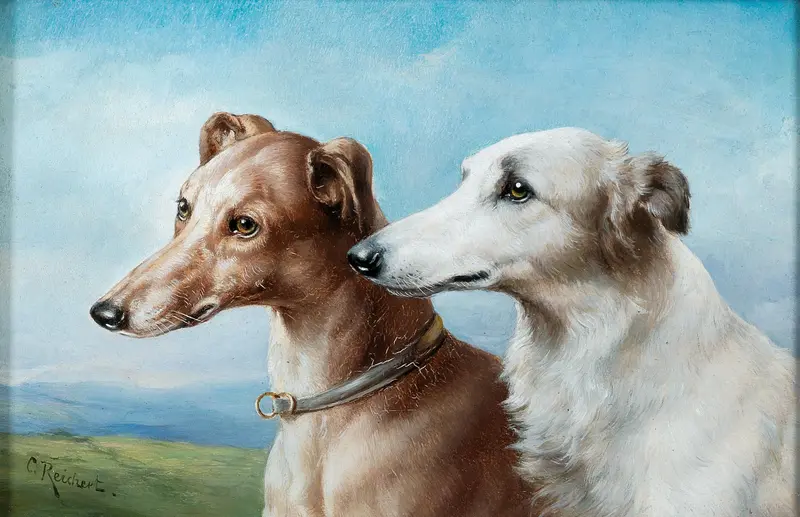
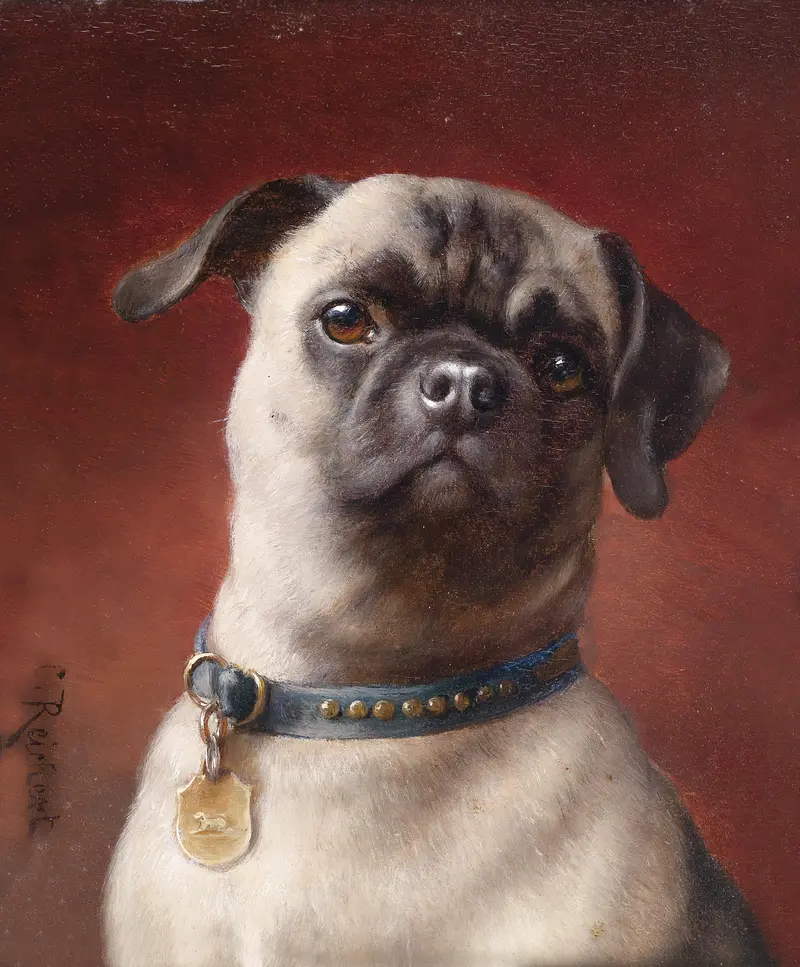
The gaze of these two dogs holds the viewer fast—one heavy with sorrow, the other shrewd and reserved, as if each animal carries a private world behind its eyes. In Melancholic, Phlegmatic, Carl Reichert chooses not action but character as his subject, inviting us to read the language of furrowed brows and drooping eyelids. The monumental head of the St.
Bernard, rendered with almost human sadness, dominates the composition, while the smaller, dark-coated companion sits upright, its narrowed eyes and pursed mouth suggesting a wary detachment. Reichert’s attention to the texture of fur and the moist shine of noses is not mere realism—it is a way to make us linger, to search for the story that might have brought these two together in such a moment. Painted by 1918, this work belongs to a world where animal portraiture was both a celebration of domestic companionship and a showcase for technical skill. In the late nineteenth and early twentieth centuries, such images were often commissioned by middle-class patrons eager to immortalize beloved pets, or by collectors who delighted in the personalities of animals as much as their appearance.
Carl Reichert was known for his ability to imbue animals with individuality, and here, the pairing of “melancholic” and “phlegmatic” types echoes the period’s fascination with physiognomy and temperament. Little is recorded about the specific journey of this painting, now listed in a Viennese auction catalogue, but its quiet drama is a reminder of how much feeling can be found in a single, silent glance.