
Milliners — History & Facts
A shaft of pale daylight slices across the scene, catching on the bowed heads and busy hands of three women absorbed in their work. The hush of concentration is almost audible, the outside world held at bay by heavy ochre curtains and the thick, sunlit glass of the window. The table at the center is scattered with the tools of their trade, but it is the interplay of shadow and light that draws the eye, suggesting the rhythm of a long afternoon spent in careful, repetitive labor.
The figures are rendered with broad, confident strokes, their faces half-lost in shadow, inviting the viewer to imagine the stories and ambitions behind each downturned gaze. Painted around 1901, Milliners by Albert Marquet belongs to a moment when artists were turning their attention to the quiet dignity of everyday work. The world outside the window—a jumble of rooftops and pale sky—reminds us of the city’s restless energy, but here, time seems to slow. Scenes like this, capturing working women at the turn of the twentieth century, became a favored subject for artists interested in the realities of modern life.
While little is recorded about this particular painting’s early history, its presence in the Hermitage Museum’s collection today speaks to the enduring fascination with these glimpses of ordinary existence. Look again at the light on the table, and consider how it transforms a simple workroom into a stage for observation and empathy.
More Artworks by Albert Marquet
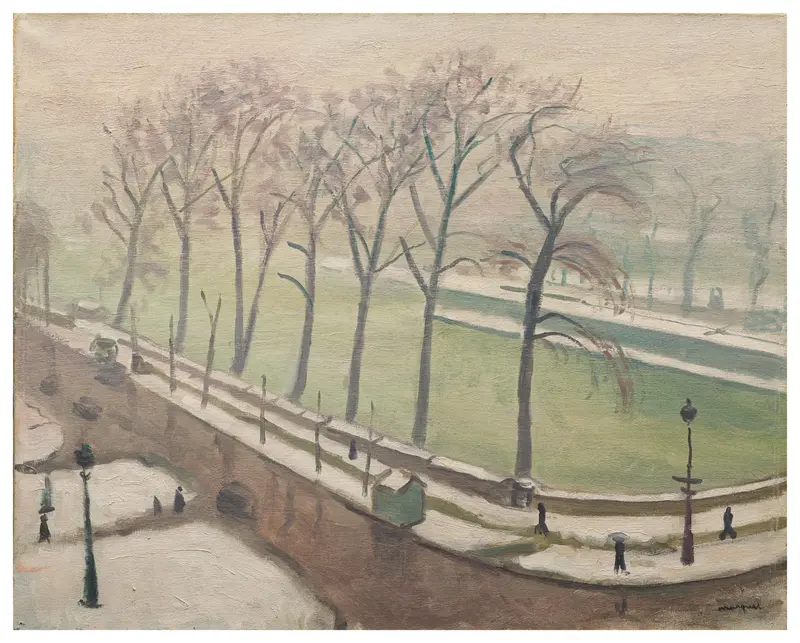
Pont-Neuf sous la neige
Albert Marquet

Le Port d’Alger
Albert Marquet
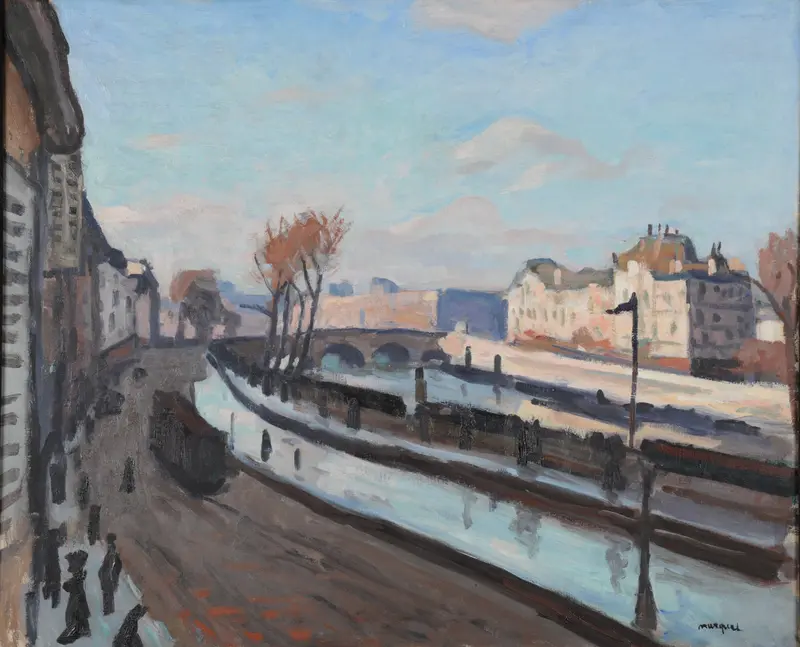
Le quai des Grands Augustins
Albert Marquet

Le jardin à l’Estaque
Albert Marquet
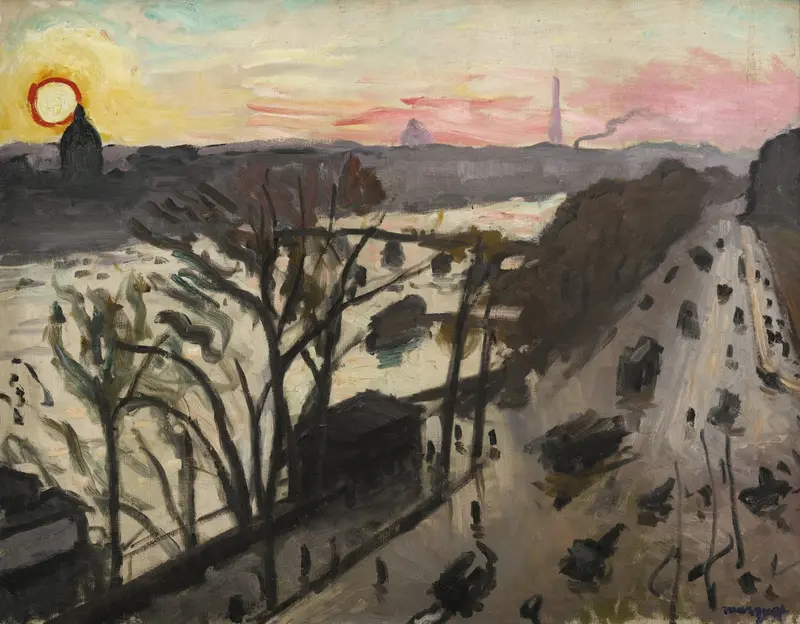
Paris, quai du Louvre, soleil d’hiver
Albert Marquet
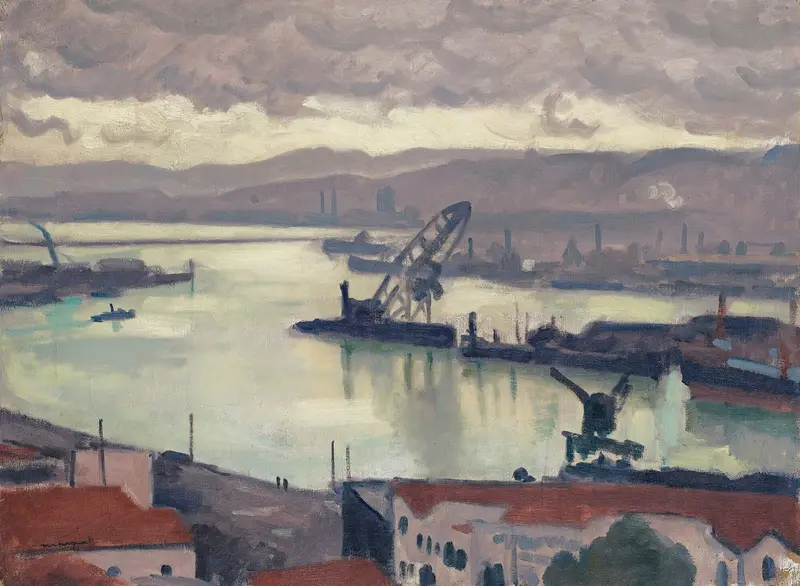
Alger, Temps Gris
Albert Marquet

Berge de la Seine à Méricourt
Albert Marquet
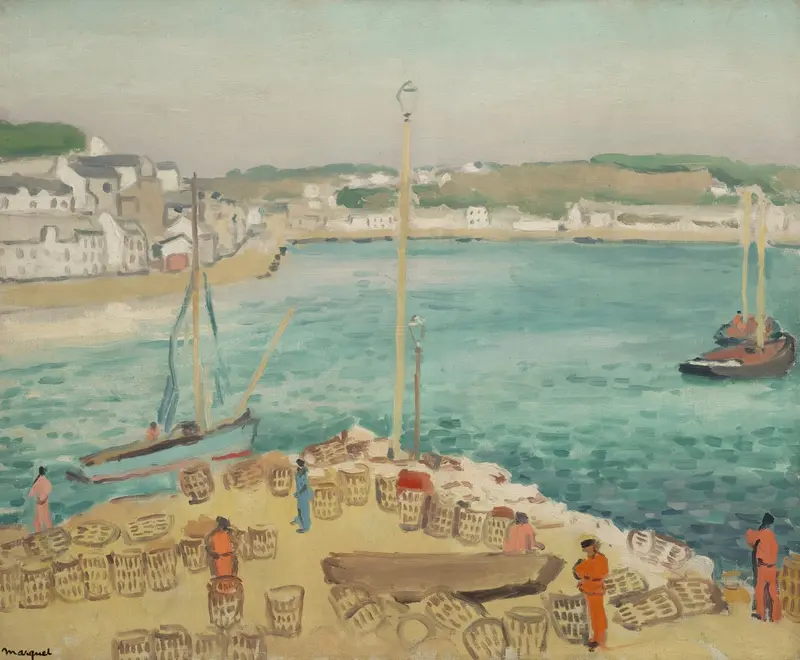
Audierne, les tonneaux
Albert Marquet
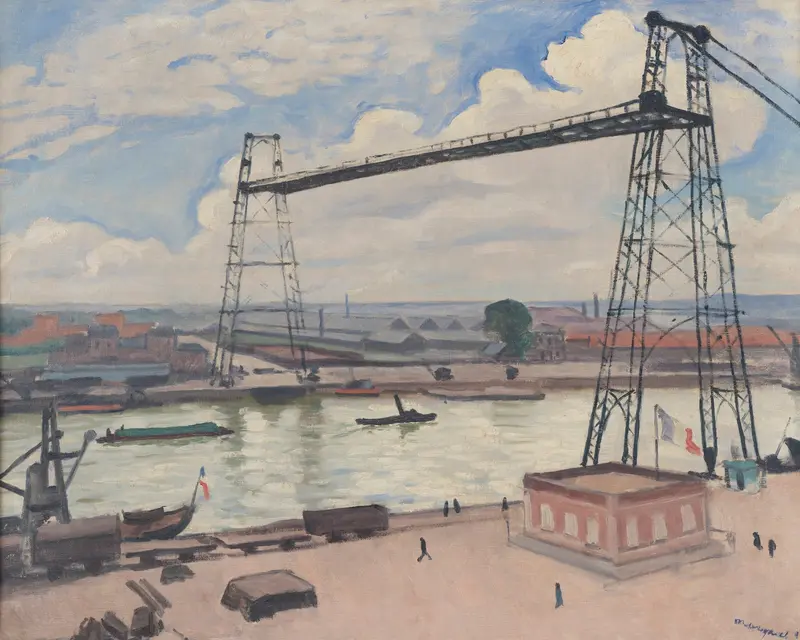
Rouen, le pont transbordeur
Albert Marquet
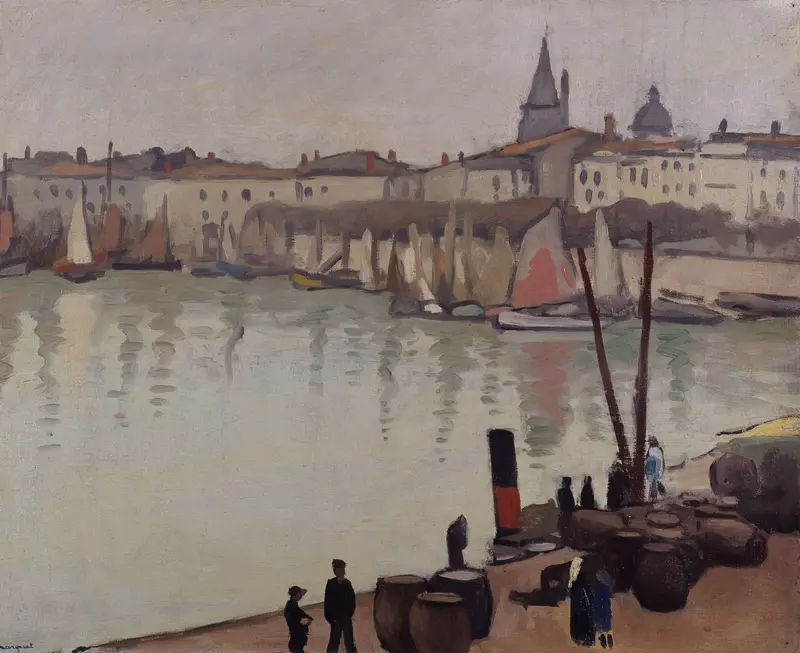
Port of La Rochelle
Albert Marquet
More Genre Scene Art

Banquet of the Officers of the St George Civic Guard
Frans Hals

Rembrandt and Saskia in the Scene of the Prodigal Son
Rembrandt van Rijn

Bal du moulin de la Galette
Pierre-Auguste Renoir

Quadrille at the Moulin Rouge
Henri de Toulouse-Lautrec

A Burial at Ornans
Gustave Courbet

When Will You Marry?
Paul Gauguin