
Moonrise — History & Facts
What secret hides in the quiet of the canvas? A tension lingers, like a whispered promise poised on the edge of betrayal, waiting for the right moment to unravel. Focus on the gentle gradient of twilight that envelops the horizon, where soft hues of blue and gold merge seamlessly. Notice how the delicate brushstrokes convey the tranquil surface of the water, reflecting the celestial spectacle above. The luminous moon, a silent sentinel, casts an ethereal light, guiding your gaze across the landscape.
This masterful use of color and light enhances the emotional landscape, inviting contemplation and introspection. Delve deeper into the scene, and you may feel the weight of stillness that belies the underlying tension. The lush foreground hints at life and vitality, yet the quiet water suggests something concealed beneath the surface. Here, the moon, both beautiful and aloof, could symbolize lost trust or unspoken grievances, capturing a moment that is both serene and charged with uncertainty.
This duality evokes a sense of vulnerability, asking viewers to confront the complexities of their own relationships. Inness painted this work in 1887, during a period marked by personal loss and artistic exploration. Having settled in New Jersey, he was increasingly drawn to the natural world and its emotional resonance. This was a time when many artists sought to convey deeper truths through landscape, reflecting both their inner turmoil and the broader societal shifts of the late 19th century.
More Artworks by George Inness
Browse all →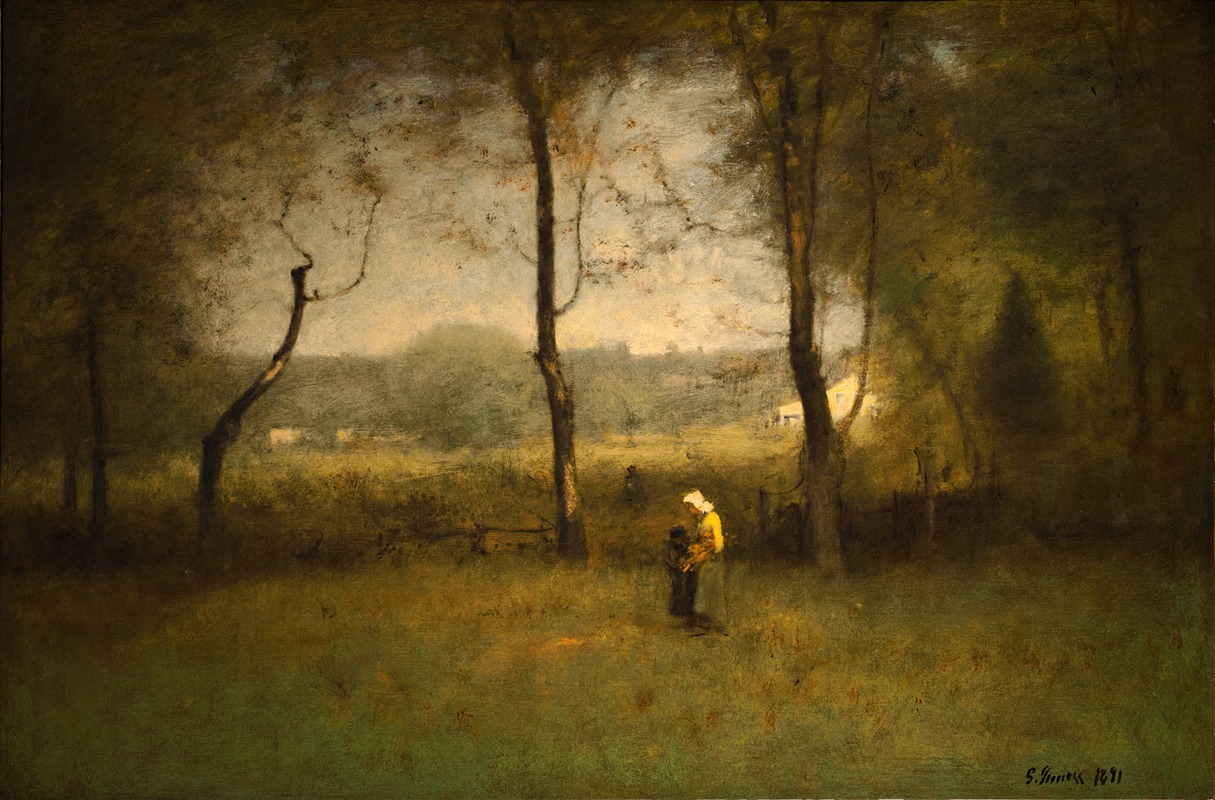
Autumn Woods
George Inness
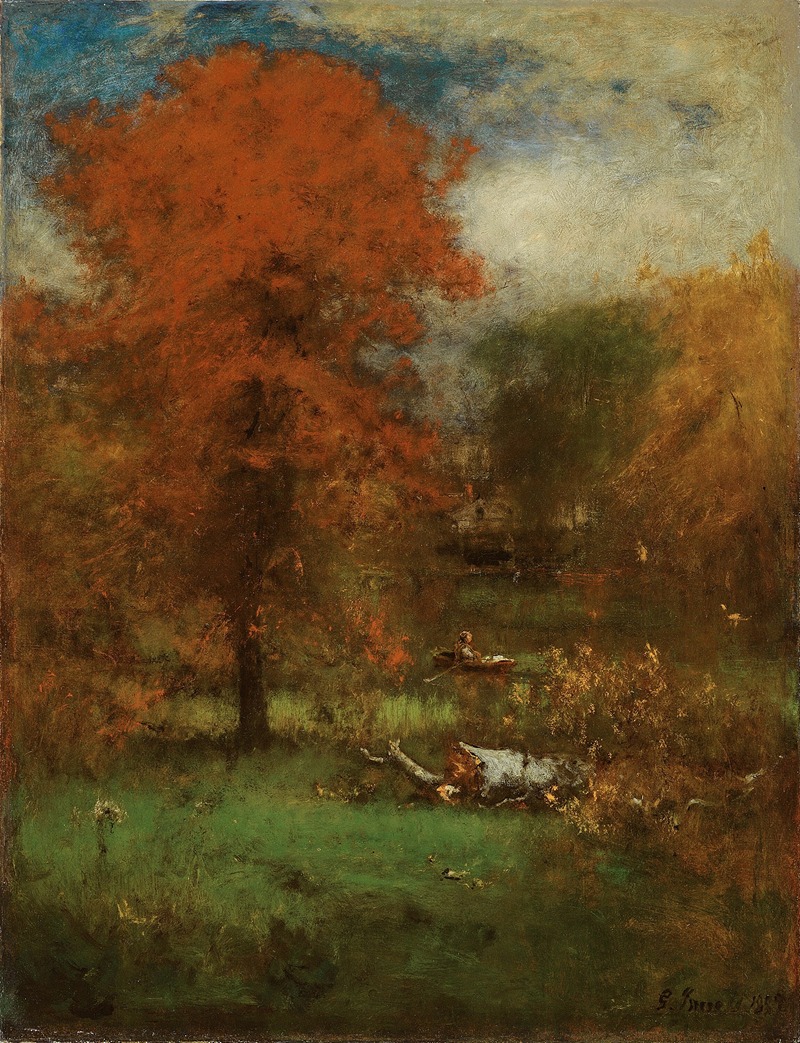
The Mill Pond
George Inness
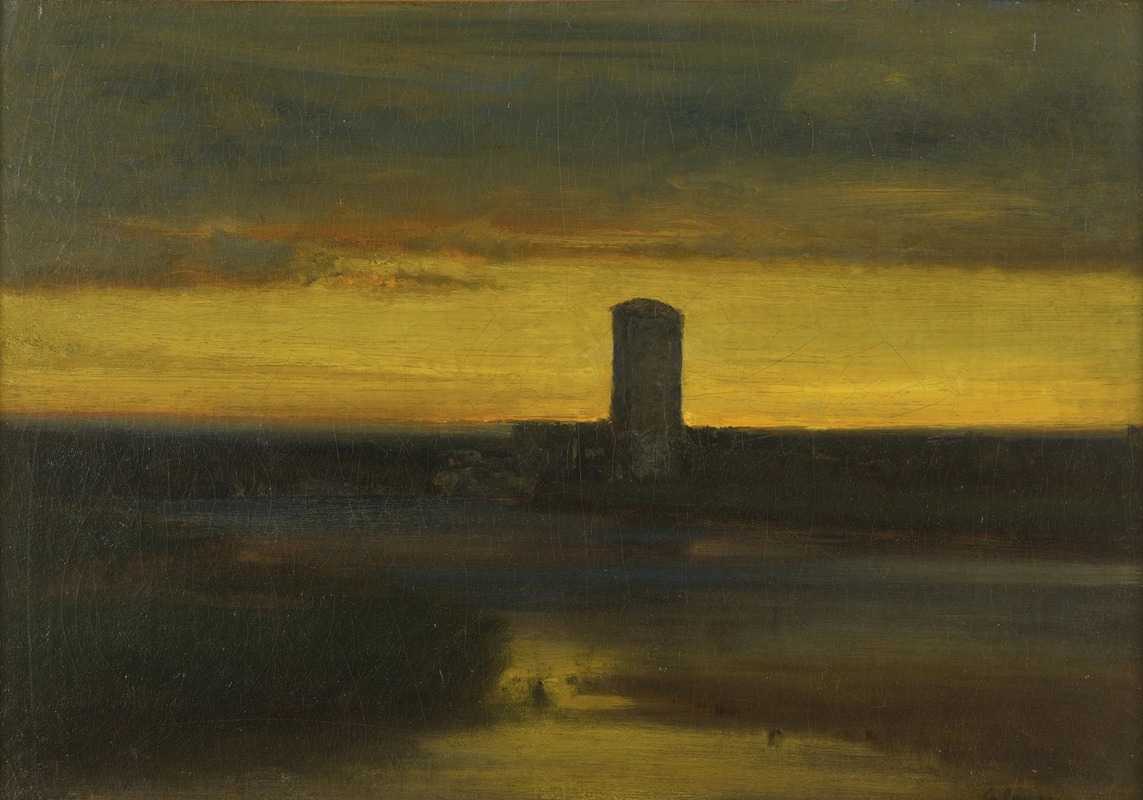
Afterglow
George Inness
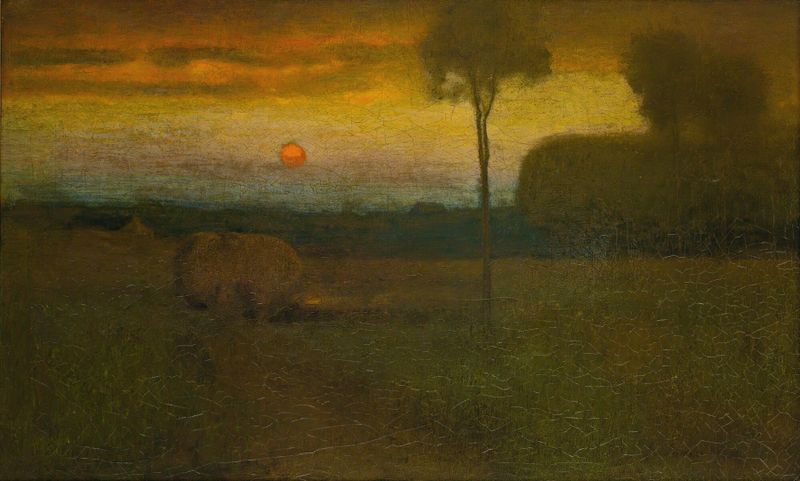
Landscape (Evening Landscape)
George Inness

Montclair
George Inness

View in Berkshire County, Massachusetts, Clearing Off after a September Storm
George Inness

October
George Inness
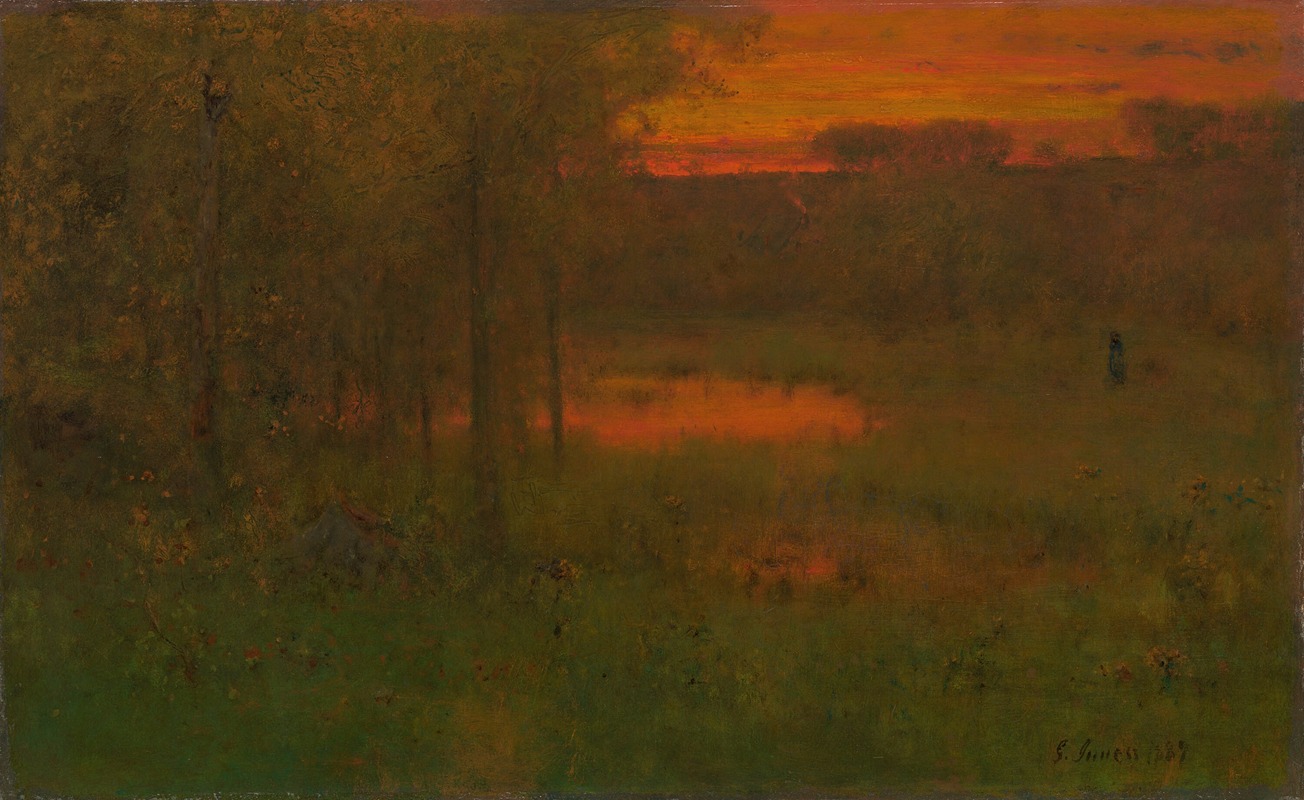
Landscape, Sunset
George Inness
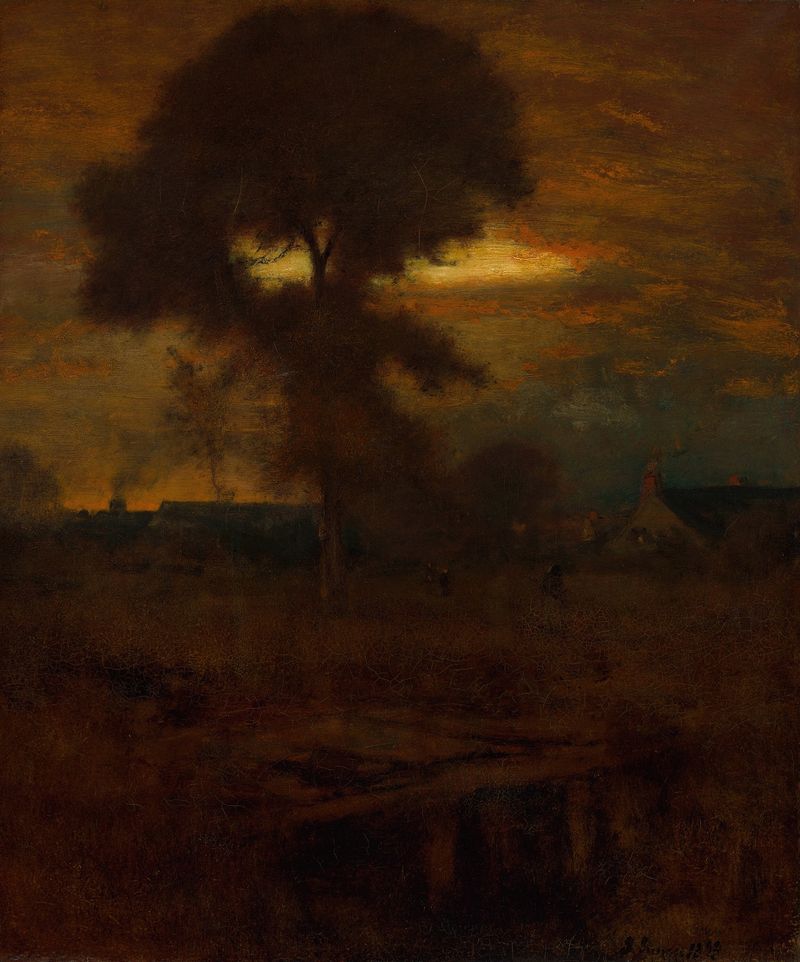
Afterglow
George Inness
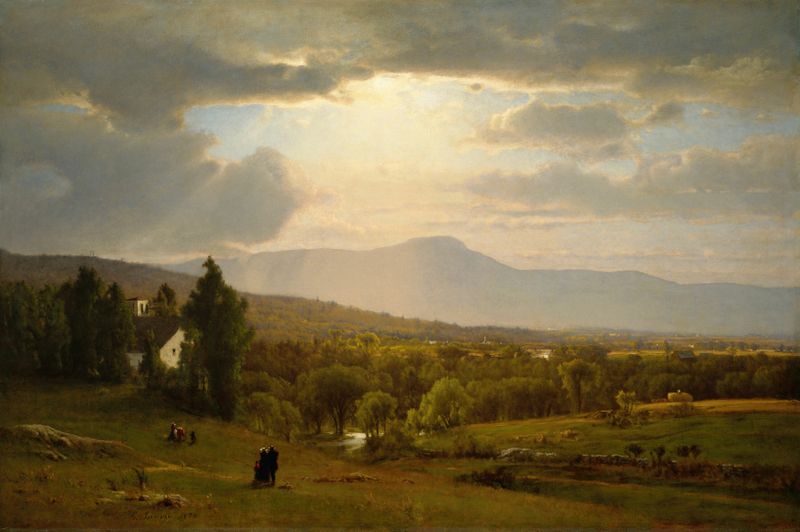
Catskill Mountains
George Inness





