Mountain Landscape with a Lake — History & Facts
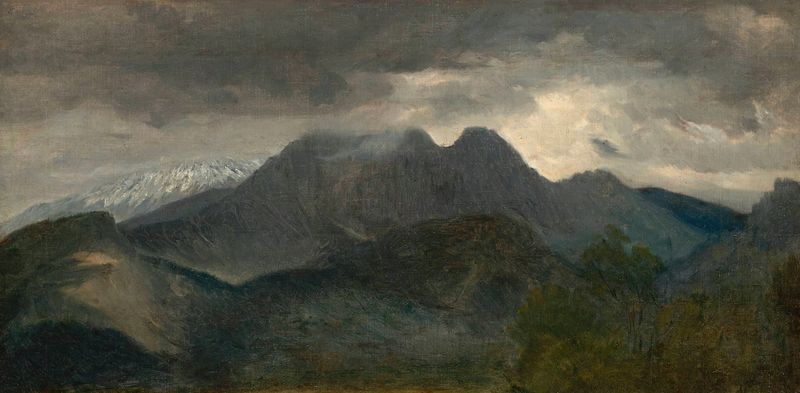
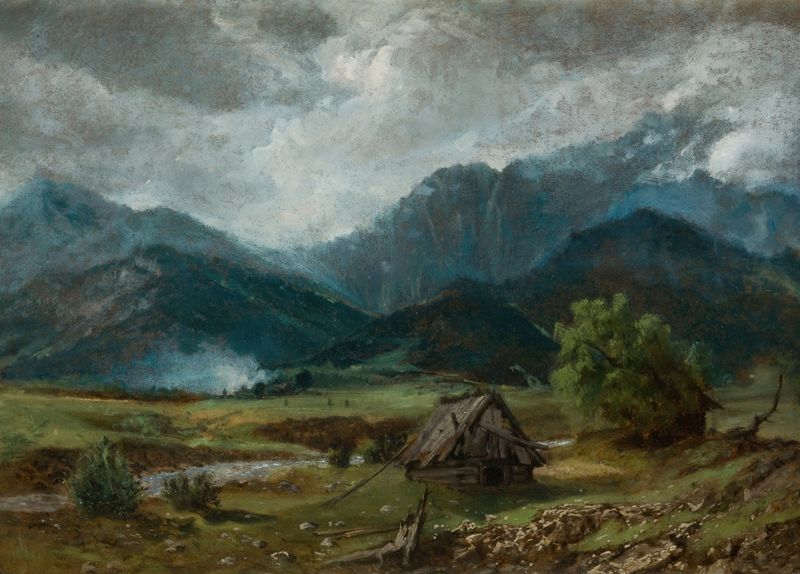
In the quietude of nature, truth emerges, draped in layers of color and form. Look to the foreground, where gentle waves ripple across the lake’s surface, reflecting a mosaic of the azure sky and verdant hills. Notice how the artist employs a delicate balance of greens and blues, inviting you to peer deeper into the tranquility of the scene. The interplay of light and shadow on the mountains creates a sense of depth, pulling your gaze upward to where peaks rise majestically against the horizon. Within the composition, contrasts abound—serenity juxtaposed with the ruggedness of nature.
The soft, flowing lines of the lake complement the sharp, imposing contours of the mountains, highlighting the duality of calmness and strength. Small details, such as the faint wisps of clouds or the delicate hints of flora at the water's edge, whisper stories of life and resilience, reinforcing the connection between the viewer and the landscape. In 1860, Kotsis painted this work amidst a growing movement of realism that sought to capture the beauty of the natural world. Living in Russia, he found inspiration in the landscapes around him, a reflection of the changing times in a country grappling with its identity.
This piece embodies not only his technical prowess but also his desire to convey an authentic truth through the lens of nature’s purest elements.