
Music in the Fields — History & Facts
A hush falls over the scene, as if the music itself has stilled the countryside. The eye is first caught by the pale figure at left, her gaze meeting the viewer’s with a quiet intensity, violin poised but not yet played. The figures cluster around a piano, their gestures gentle and absorbed—one child’s fingers hover above the keys, while another stands by, instrument in hand, and a third sits apart, head bowed, lost in her own world.
The brushwork is loose, almost dreamlike, blending the figures into the deep greens and blues of the landscape, so that music and nature seem to merge. In the distance, sheep graze quietly, reinforcing the sense of calm and rural ritual. Created in the early 1890s, Music in the Fields by Arthur Bowen Davies belongs to a moment when American artists were searching for new ways to express the poetry of everyday life. The painting’s mood is unmistakably of its time—neither a strict portrait nor a literal scene, but a vision shaped by the Symbolist and Tonalist movements that haunted the era’s salons.
Such works were rarely grand commissions; more often, they were intimate explorations, meant for private contemplation or small exhibitions, and today this piece resides in the Barnes Foundation. Little is recorded about the specific history of this canvas, but its quiet mystery is typical of Davies’ early career, inviting the viewer to linger, to listen, and to wonder what music might be drifting through the dusk.
More Artworks by Arthur Bowen Davies

Mirror of Illusion
Arthur Bowen Davies
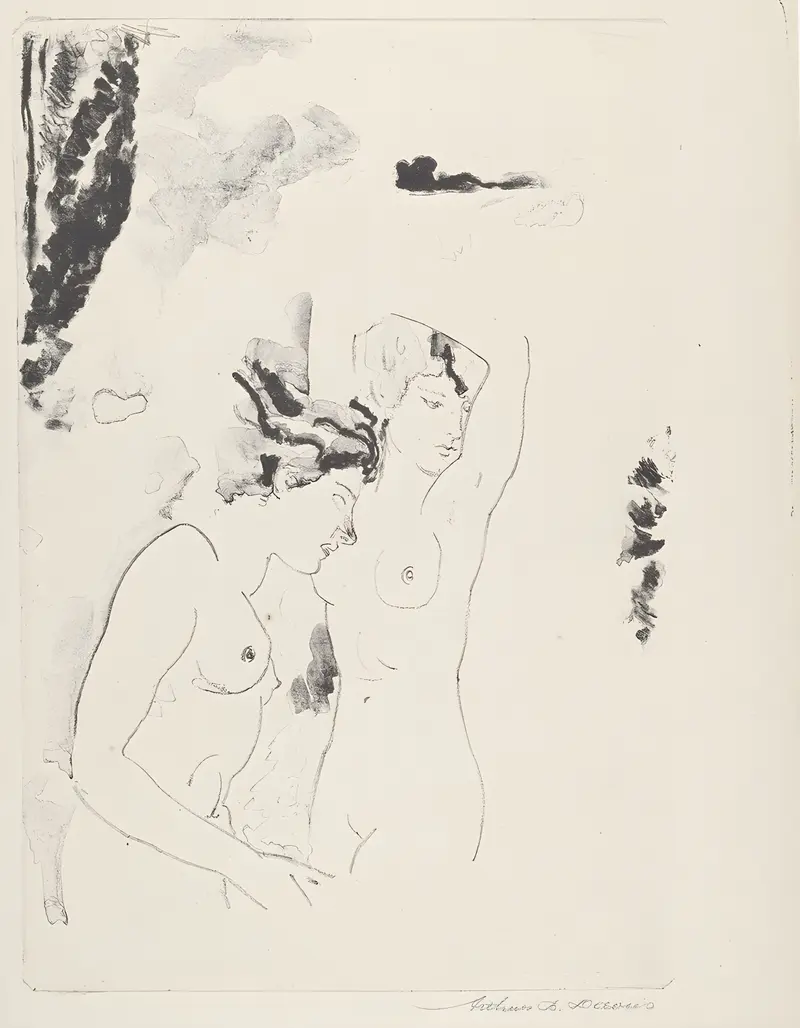
Nymphs of the Stream
Arthur Bowen Davies

Woman Dancing
Arthur Bowen Davies
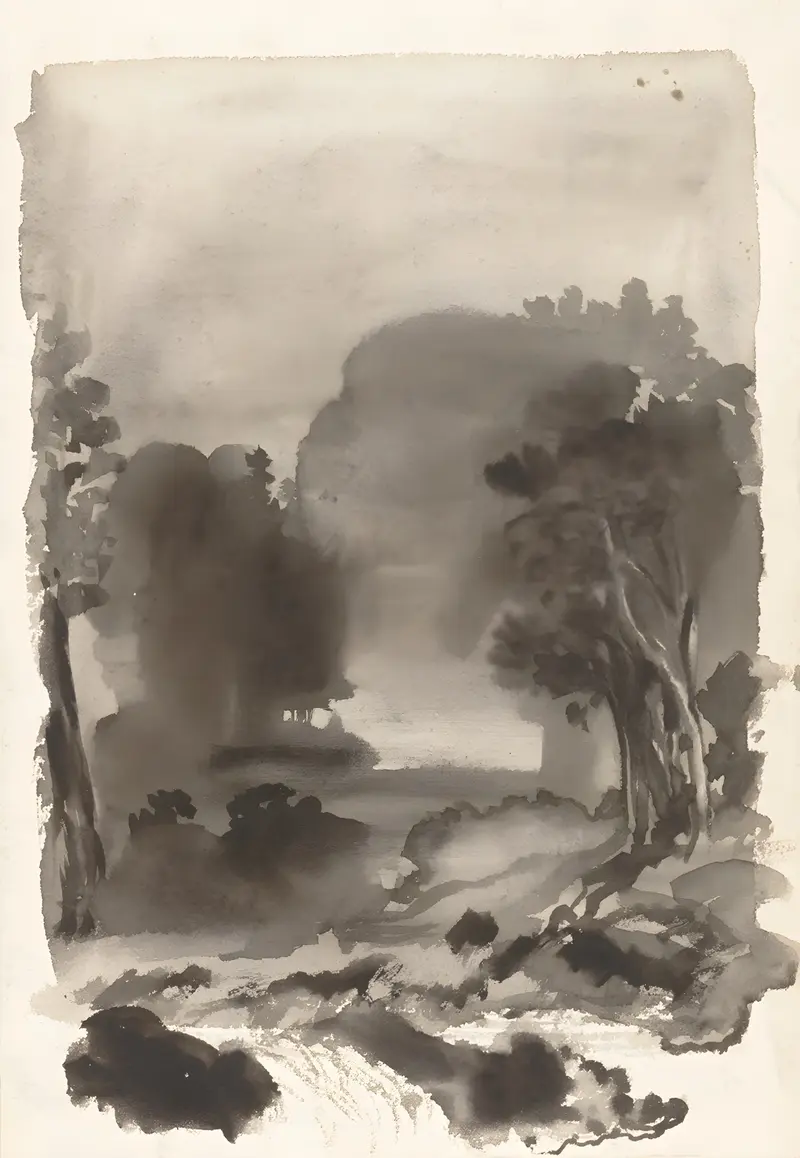
Landscape 2
Arthur Bowen Davies
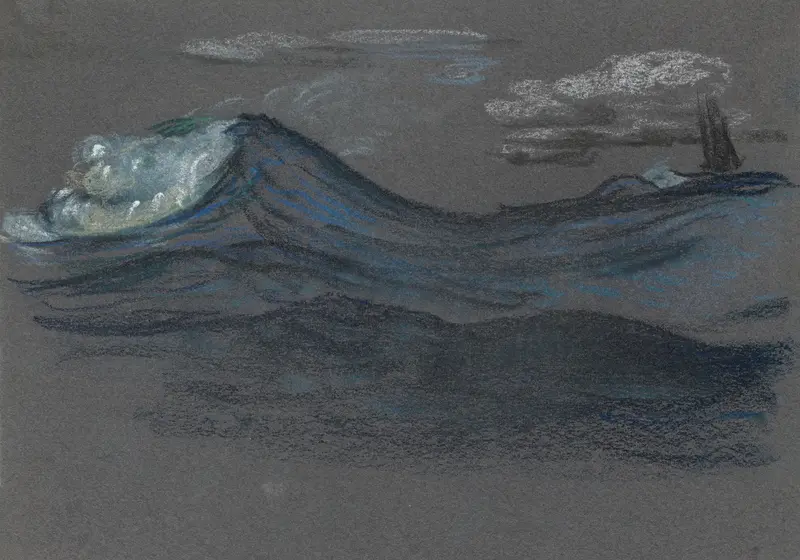
Ocean Swells
Arthur Bowen Davies
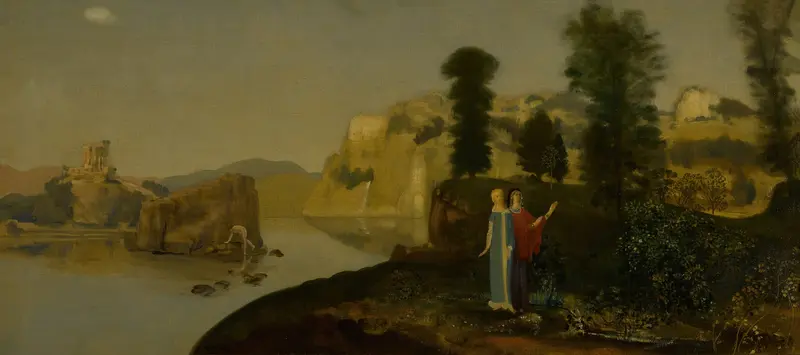
Silver Springs
Arthur Bowen Davies
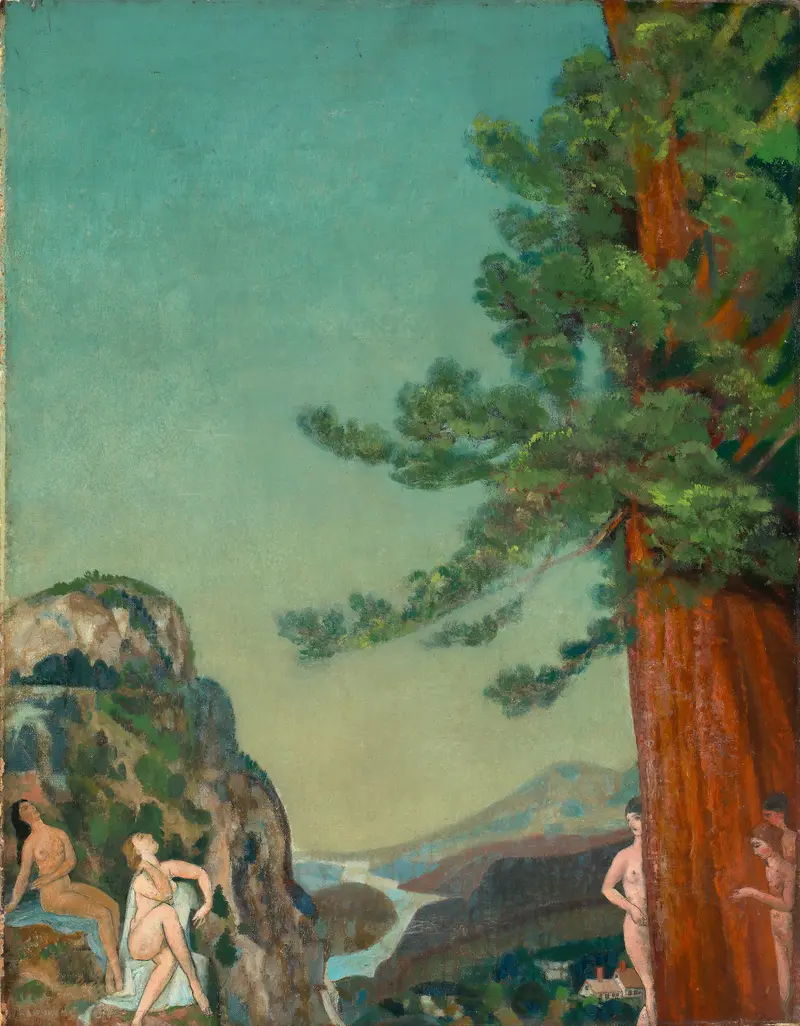
On the Cliffs
Arthur Bowen Davies

Landscape
Arthur Bowen Davies
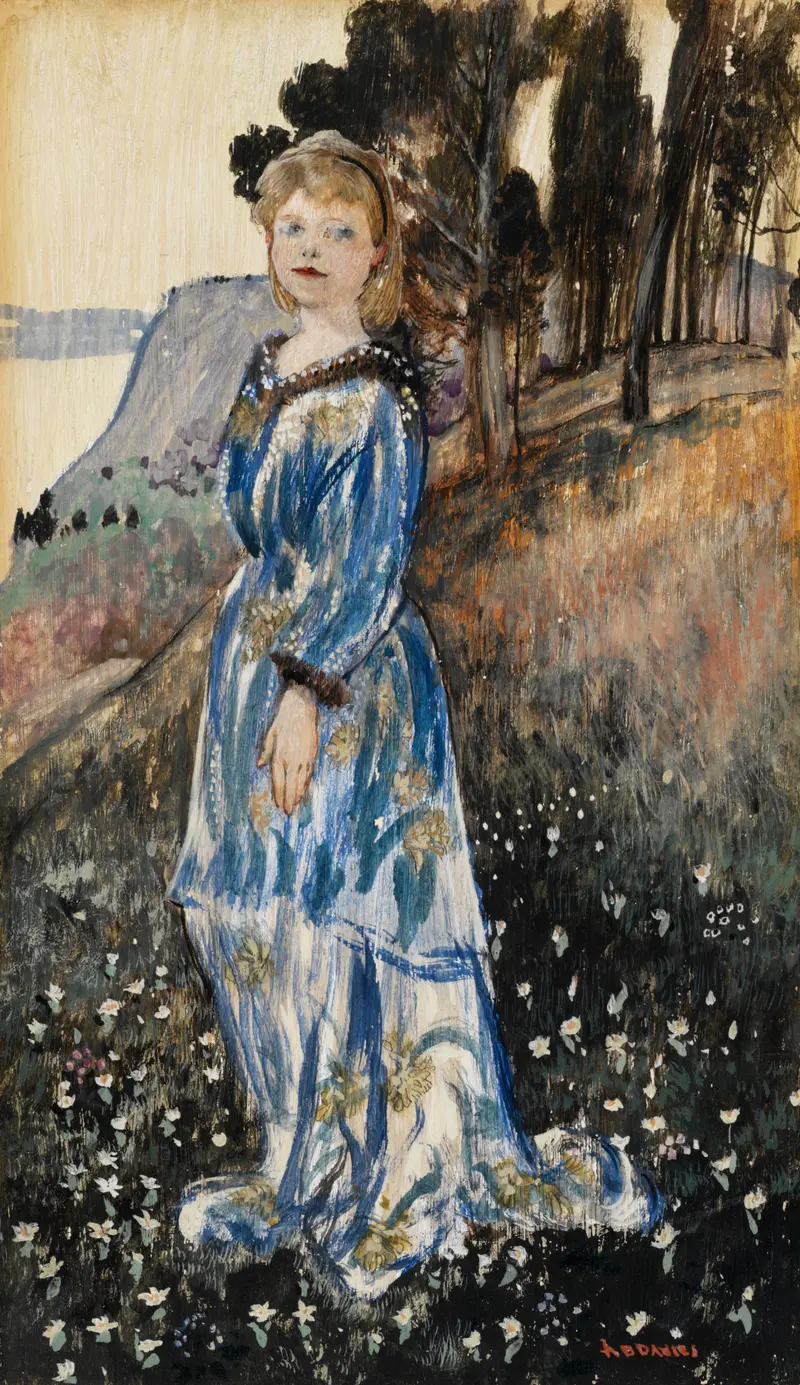
Flora
Arthur Bowen Davies
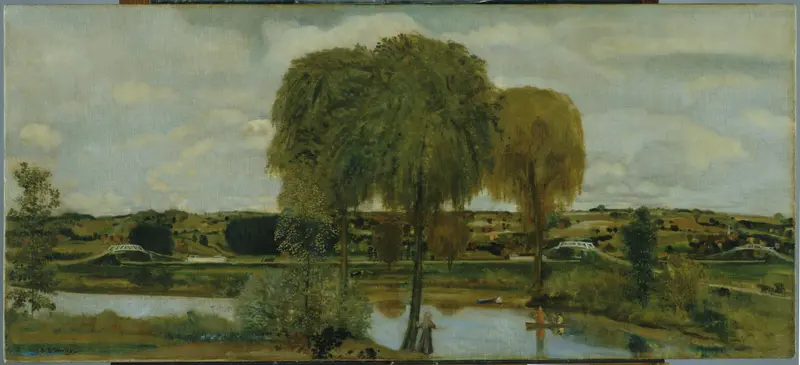
Along the Erie Canal
Arthur Bowen Davies
More Genre Scene Art

Banquet of the Officers of the St George Civic Guard
Frans Hals

Rembrandt and Saskia in the Scene of the Prodigal Son
Rembrandt van Rijn

Bal du moulin de la Galette
Pierre-Auguste Renoir

Quadrille at the Moulin Rouge
Henri de Toulouse-Lautrec

A Burial at Ornans
Gustave Courbet

When Will You Marry?
Paul Gauguin