
Near Leeds, New York — History & Facts
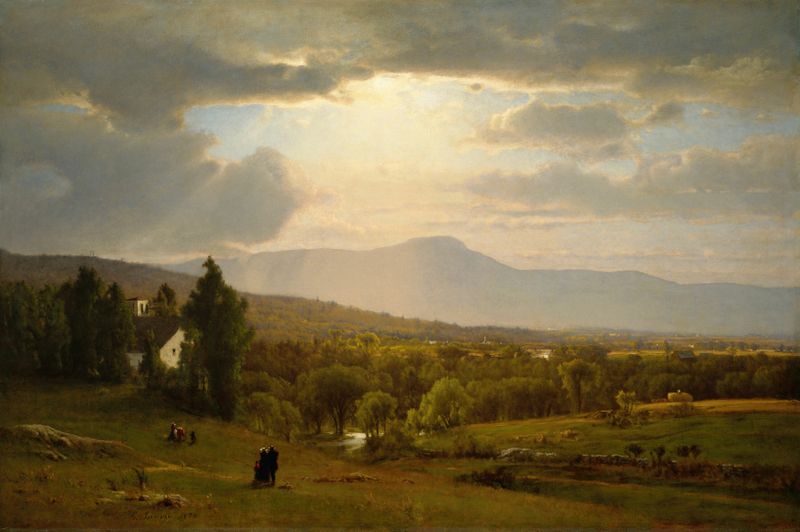
Can paint confess what words never could? In Near Leeds, New York, the canvas whispers of destiny, evoking the delicate interplay between nature and the human experience. Look to the lower left at the gentle flow of the river, where soft, muted blues and greens blend seamlessly. Notice how the light filters through the trees, casting dappled shadows that invite the viewer to wander along the water's edge. The composition draws your eye upward, revealing hills that cradle a tranquil sky, its pale hues suggesting both dawn and twilight, a space suspended between beginnings and endings. In this landscape, we find contrasts that resonate deeply: the stillness of the water against the dynamic movement of the clouds, the rich earth tones battling against the ethereal softness of the atmosphere.
It hints at moments of reflection and the inevitable passage of time, reminding us of the choices and paths we walk. Hidden details, such as the distant farmhouse, evoke a sense of quiet solitude, perhaps a metaphor for isolation or the search for belonging. Created in 1869, the artwork reflects Inness’s maturation as a prominent figure in American landscape painting. Living in a time when the nation was grappling with post-Civil War recovery, he sought to connect viewers with nature’s beauty and transformative power.
This piece embodies his evolving philosophy of art as a spiritual experience, aligning his vision with the transcendental ideals of his contemporaries.
More Artworks by George Inness
Browse all →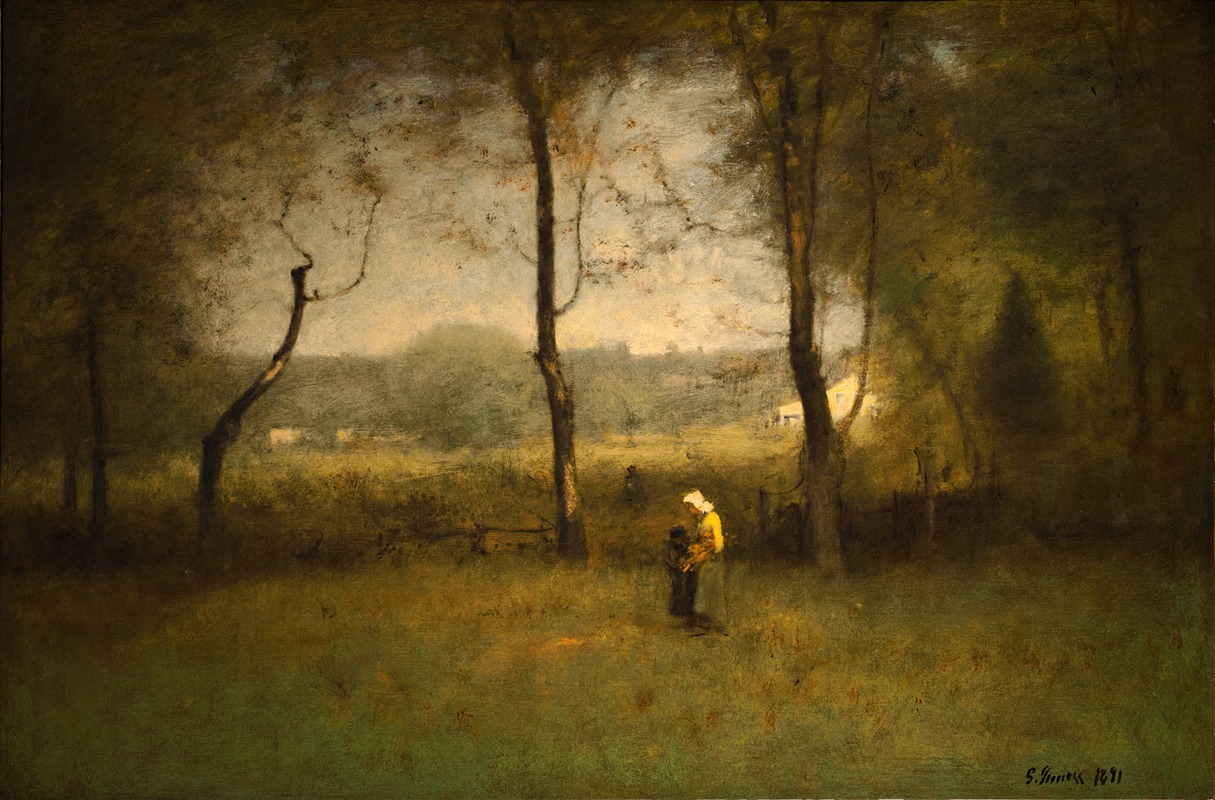
Autumn Woods
George Inness
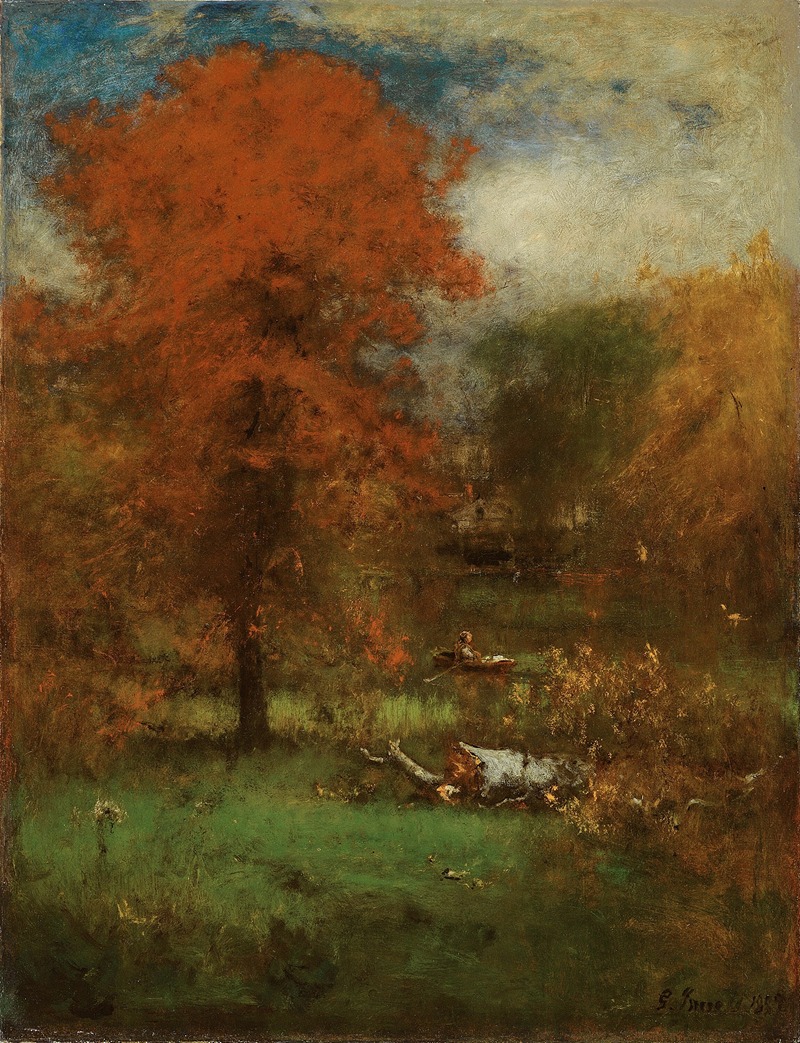
The Mill Pond
George Inness
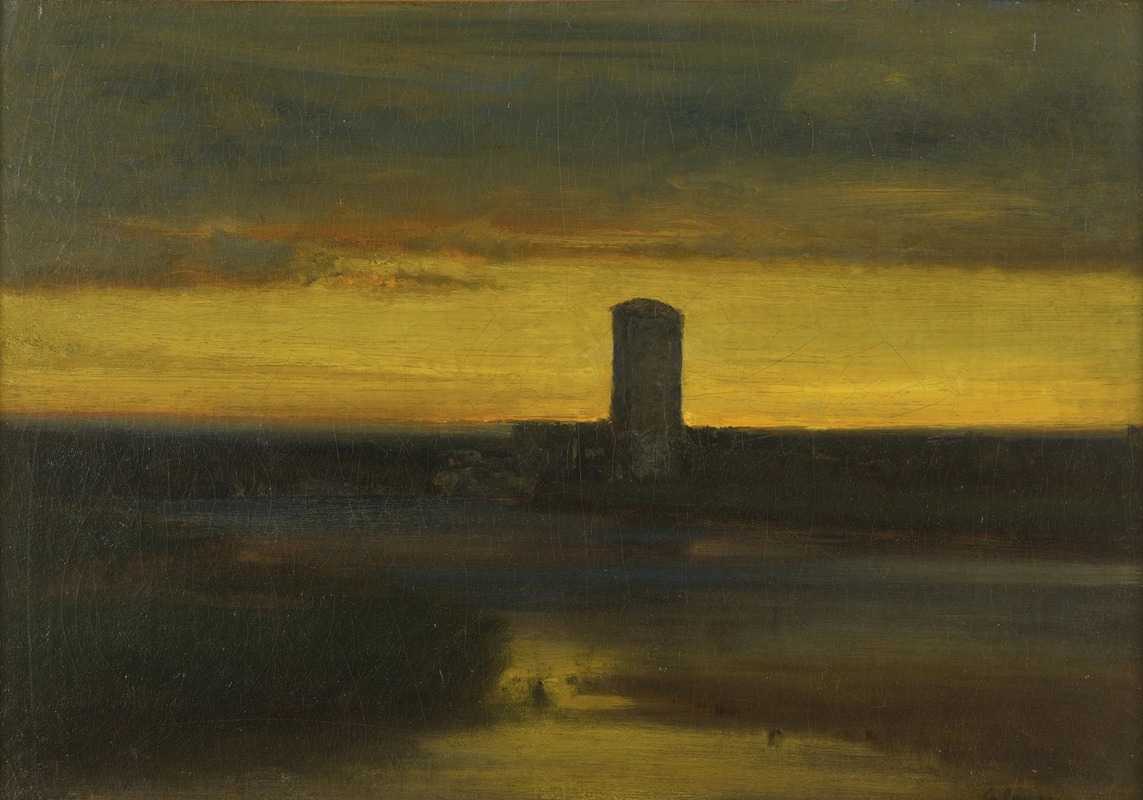
Afterglow
George Inness
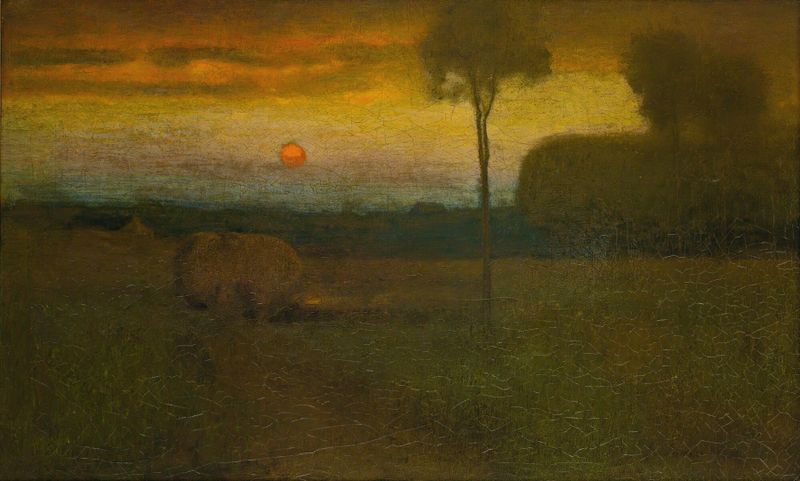
Landscape (Evening Landscape)
George Inness

Montclair
George Inness

View in Berkshire County, Massachusetts, Clearing Off after a September Storm
George Inness

October
George Inness
Landscape, Sunset
George Inness
Afterglow
George Inness
Catskill Mountains
George Inness





