
Nio the Guardian — History & Facts
When Katsushika Hokusai created Nio the Guardian in 1804, he was already renowned for his restless experimentation, but this work stands apart for its subject: the fierce temple guardians known as Nio, protectors placed at the gates of Buddhist sanctuaries. What makes this piece especially intriguing is that it comes from a period when Hokusai was delving into both religious and popular imagery, bridging the worlds of the sacred and the everyday. The Nio, rarely depicted with such raw intensity in Japanese art, are here rendered with a force that would influence later ukiyo-e artists.
The precise medium of this work remains uncertain, adding an air of mystery to its material history. The Nio are mythic figures, said to have protected the Buddha himself as he traveled and preached. Hokusai captures one at the moment of confrontation: muscles taut, mouth open in a silent roar, eyes wide with vigilance. The guardian’s raised fist and planted stance signal readiness to repel evil, while the swirling drapery and exaggerated anatomy amplify the sense of movement and power.
The figure’s necklace of prayer beads and the fierce expression are traditional symbols of spiritual strength. Compared to the more placid guardians painted by Tōshūsai Sharaku or sculpted in temple woodwork, Hokusai’s Nio seems almost to leap from the page, a testament to his interest in dynamic human form. Little is known about the early journey of Nio the Guardian. It likely circulated among collectors of ukiyo-e and religious art, as Hokusai’s works were highly sought after even during his lifetime.
The lack of documentation about its commission or original setting is typical for many prints and paintings of the Edo period, which were often produced for a broad audience rather than a single patron. Today, the work is recognized as an important example of Hokusai’s engagement with Buddhist iconography, standing alongside his more famous landscapes and illustrating the breadth of his artistic curiosity during the early 19th century. Its current location is not firmly established, but it remains a touchstone for those interested in the intersection of religion and popular art in Edo Japan.
More Artworks by Katsushika Hokusai

The Great Wave off Kanagawa
Katsushika Hokusai
Fine Wind, Clear Morning (Red Fuji)
Katsushika Hokusai
South Wind, Clear Dawn
Katsushika Hokusai
Rainstorm Beneath the Summit
Katsushika Hokusai
Clear Weather with a Southerly Wind
Katsushika Hokusai
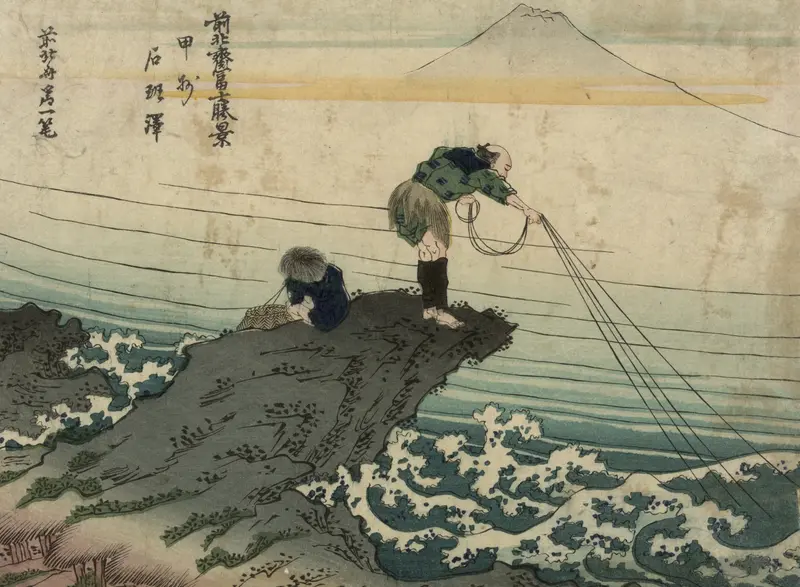
Kōshū kajikazawa
Katsushika Hokusai
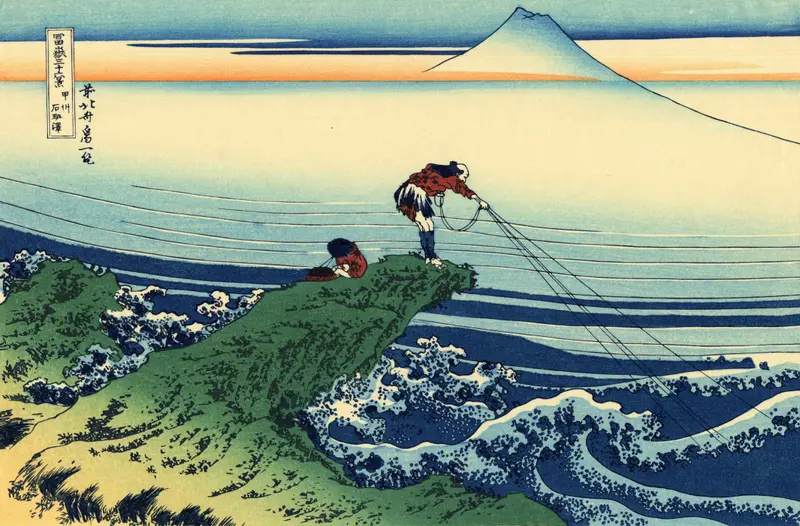
Kōshū kajikazawa 2
Katsushika Hokusai
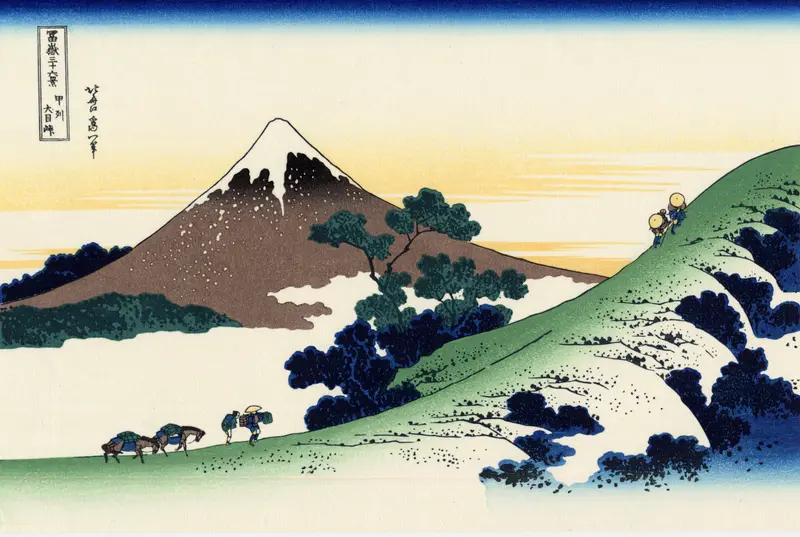
Inume Pass in Kai Province (Kôshû inume-tôge)
Katsushika Hokusai

Yoro Falls in Mino Province (Mino no Yoro no taki), from the series "A Tour of Waterfalls in Various Provinces (Shokoku taki meguri)"
Katsushika Hokusai
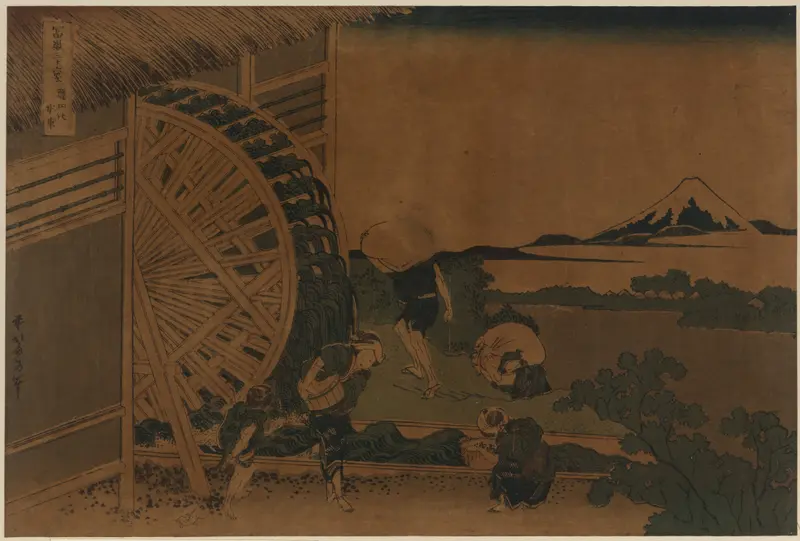
Onden no suisha
Katsushika Hokusai





