
Notre Dame de Paris, vue du Quai de la Tournelle, effet de neige — History & Facts
A haze of pale color settles over the city, and suddenly the familiar silhouette of Notre Dame seems to hover in memory rather than in stone. The first thing that holds the eye in Notre Dame de Paris, vue du Quai de la Tournelle, effet de neige is this sensation of seeing through weather, through time—a cathedral not as monument, but as presence. The brushwork is loose, almost dissolving the world into patches of icy blue, rose, and ochre, so that every form flickers at the edge of recognition.
The distant figures, mere dashes of paint, are swallowed by the expanse of the quai, their movement suggested rather than shown. Light pools and scatters across the surface, guiding the gaze from the low, warm buildings to the spectral heights of the cathedral, and the palette—cool but never cold—suggests a city muffled, waiting, caught in the hush of a winter day. Works like this belong to the late flowering of Impressionism, when painters such as Albert Charles Lebourg turned their attention to the city’s changing moods and atmospheres. These paintings were not made for grand salons or royal patrons, but for a new class of collectors who wanted to see their world reflected in paint—fleeting, modern, alive with weather and light.
Lebourg was known for his devotion to riverscapes and urban vistas, and this view, now in a private collection as documented by Christie's, is typical of his fascination with the shifting face of Paris. History has kept few traces of the individual stories behind such canvases, but the effect remains immediate: a city not as it is, but as it feels in a single, vanishing moment. Look again, and notice how the cathedral emerges and recedes, as if memory itself were painting the scene.
More Artworks by Albert Charles Lebourg

Le Jardin du Docteur Viau
Albert Charles Lebourg
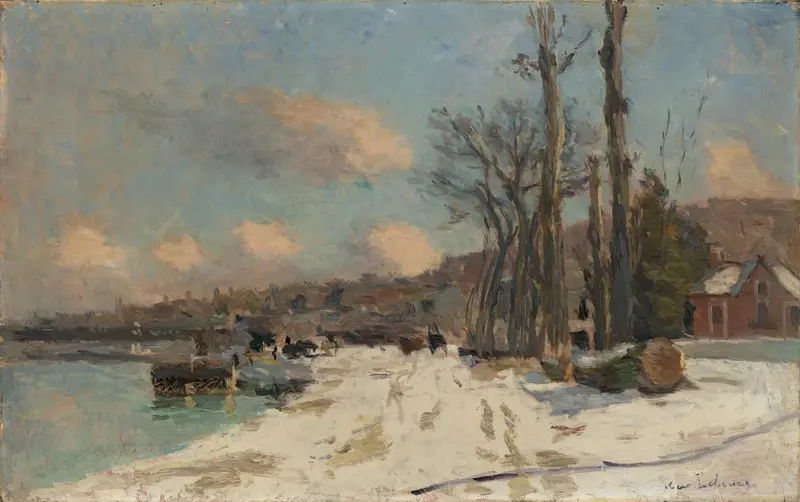
Snow Scene at Bougival
Albert Charles Lebourg
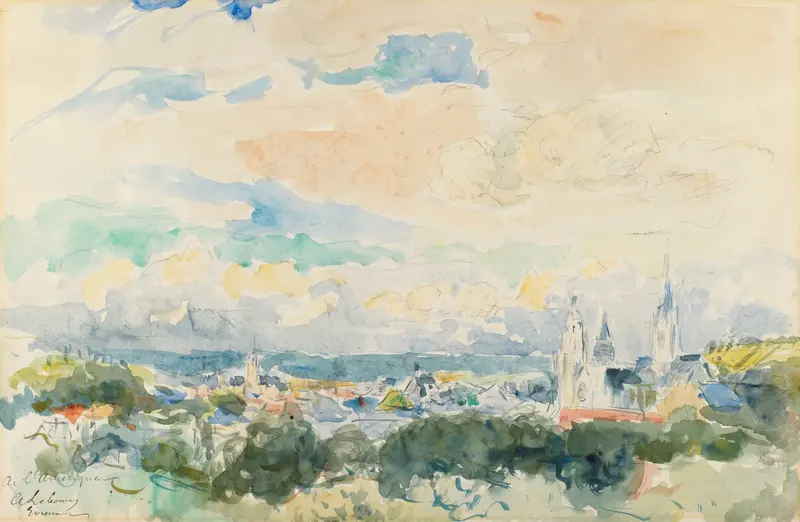
Sketch of a Village
Albert Charles Lebourg
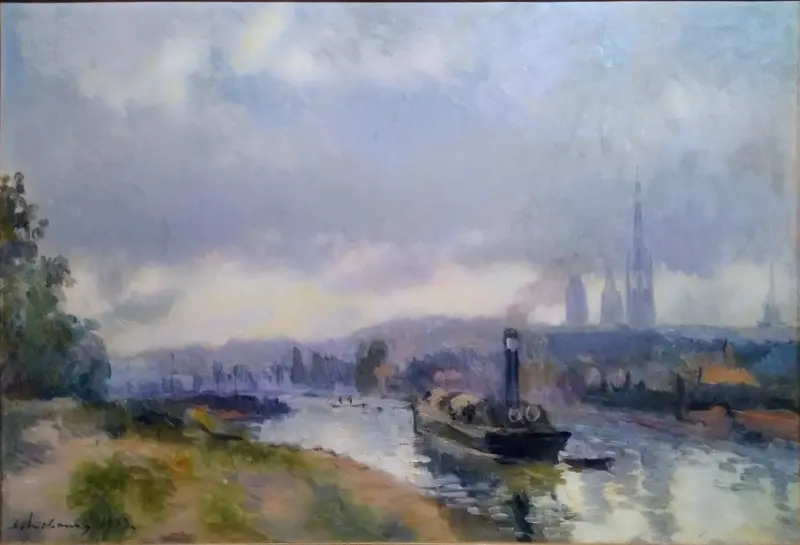
Remorqueurs à Rouen
Albert Charles Lebourg
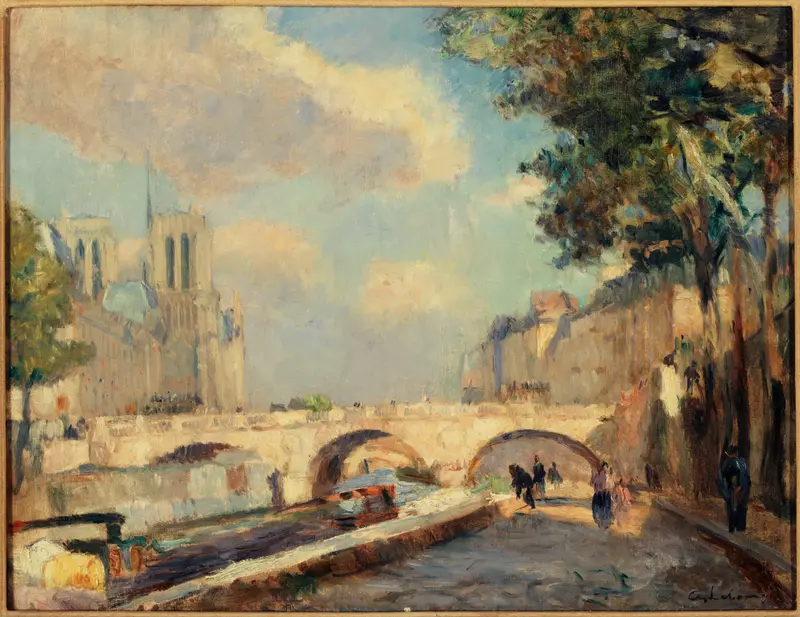
Le pont Saint Michel et Notre Dame, vus du quai des Grands Augustins P459 Musée Carnavalet
Albert Charles Lebourg
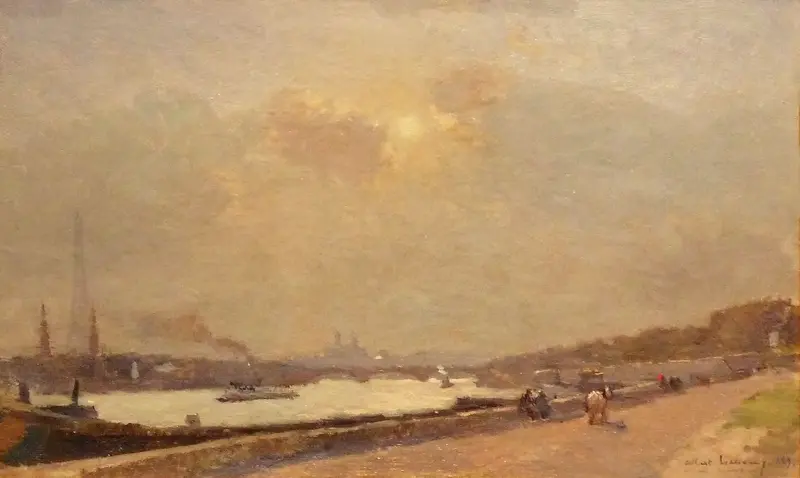
Banks of the Seine, Cours La Reine
Albert Charles Lebourg
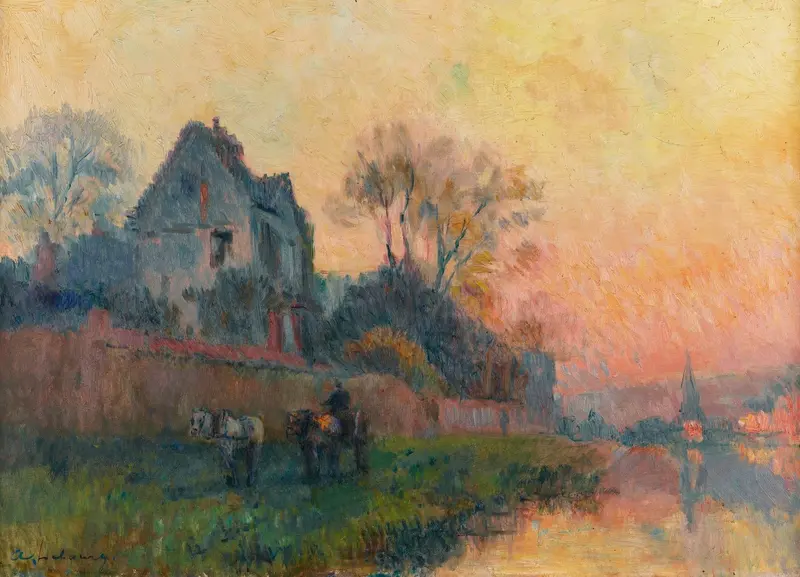
Bords de Seine à Chatou, oil on canvas, 46.4 by 65.1cm, 18.25 by 25.6 in
Albert Charles Lebourg
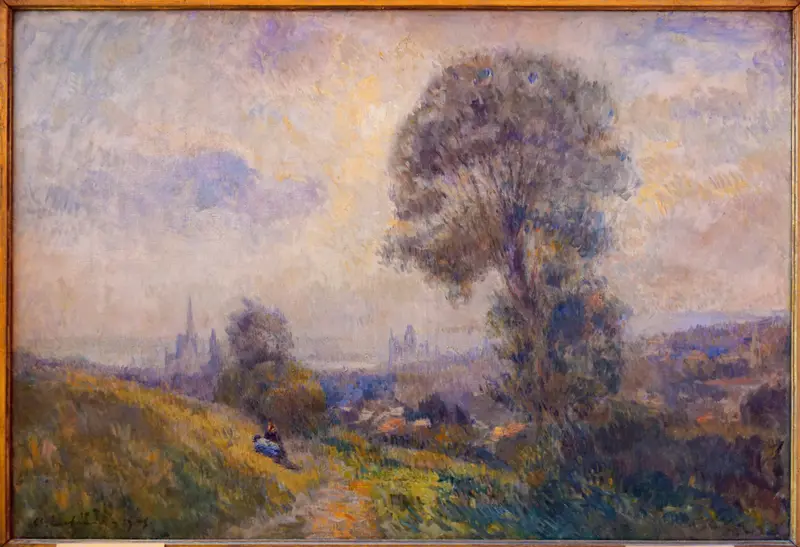
Camaret. The Harbor During a Thunderstorm
Albert Charles Lebourg
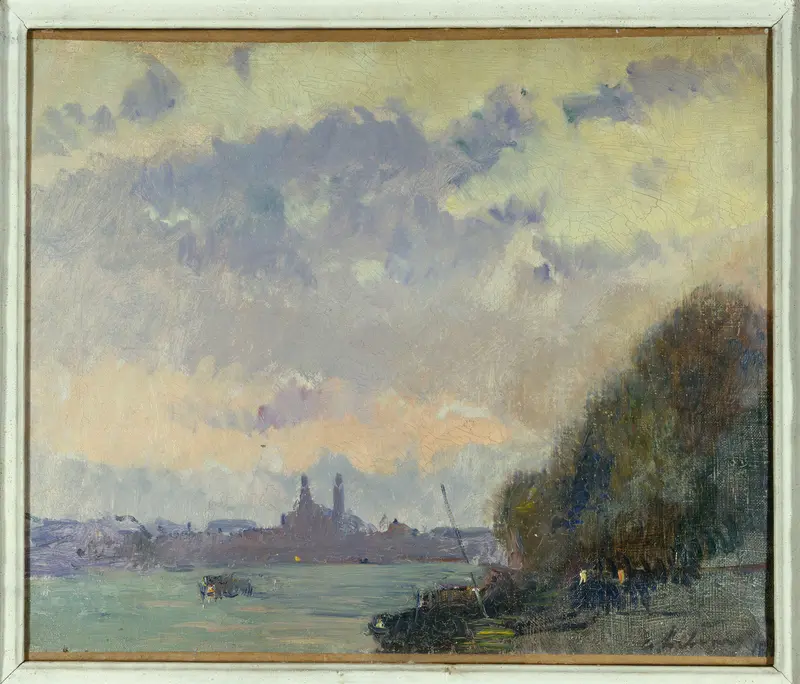
La Seine et l'ancien Trocadéro P2269 Musée Carnavalet
Albert Charles Lebourg
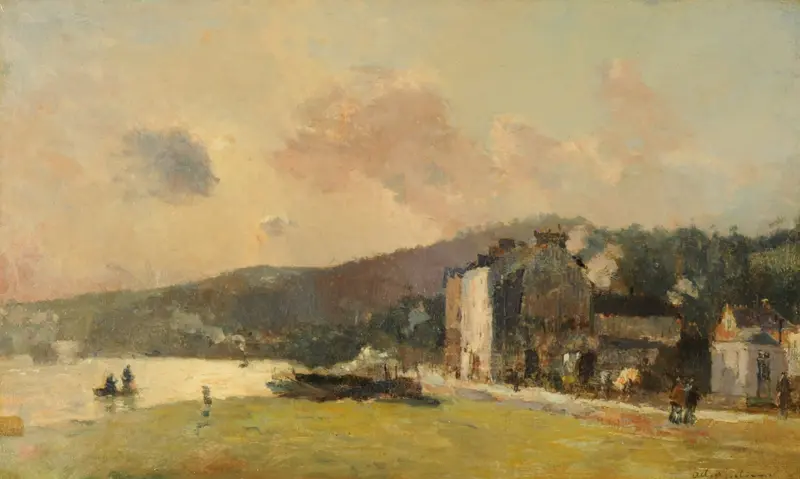
La Seine à Croisset, près de Rouen
Albert Charles Lebourg
More Landscape Art

The Starry Night
Vincent van Gogh

View of Delft
Johannes Vermeer

Water Lilies
Claude Monet

The Grand Canal, Venice, looking north-west from the Ca' Corner to the Ca' Contarini degli Scrigni, with the campanile of Santa Maria della Carità
Canaletto

Windsor Castle
Canaletto

The Grand Canal looking North-East from the Palazzo Dolfin-Manin to the Rialto Bridge
Canaletto