
Nude Warrior with a Spear — History & Facts
When Théodore Géricault first exhibited Nude Warrior with a Spear in 1816, it was not the subject that caused a stir, but the artist’s audacious approach to the male nude—a genre then dominated by academic restraint. Painted the same year he competed for the prestigious Prix de Rome, this work stands as a testament to Géricault’s restless ambition and his early rebellion against the conventions of the Neoclassical tradition. The painting’s origins are shrouded in some mystery: no records survive of its commission or early exhibition, and its medium is still debated by scholars.
Yet it is widely recognized as a bold experiment by a young artist on the cusp of transforming French painting. The scene captures a lone, muscular figure, poised at the edge of action, his body twisted in tension as he clutches a spear. There is no mythological or historical narrative overtly signaled here—unlike Ingres’s Oedipus and the Sphinx, Géricault’s warrior is stripped of context, his identity lost to time. The focus is on the anatomy: every muscle is rendered with studied precision, the skin alive with the play of light and shadow.
The spear, held diagonally, draws the eye along the length of the body, emphasizing both vulnerability and latent power. The figure’s direct gaze and the absence of background detail invite the viewer to confront not a story, but the raw force and isolation of the human form. As an object, Nude Warrior with a Spear has an uncertain early history, typical of many of Géricault’s studies and private works. It likely remained in the artist’s studio, serving as both a demonstration of skill and a personal exploration of the male nude—a subject he would return to in later, more dramatic compositions.
Today, the painting is valued as an important step in Géricault’s journey from academic student to the radical innovator of Romanticism, best known for The Raft of the Medusa. Its survival offers a rare glimpse into the formative years of an artist who would soon challenge the boundaries of French art.
More Artworks by Théodore Géricault
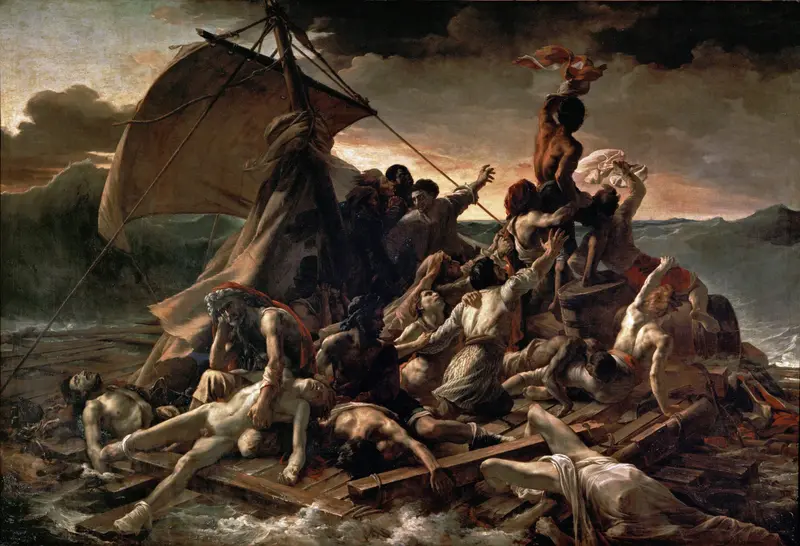
The Raft of the Medusa
Théodore Géricault

Géricault - Le naufrage du radeau de la Méduse, MBA 790
Théodore Géricault
Cattle Market
Théodore Géricault
Evening; Landscape with an Aqueduct
Théodore Géricault
Horse Race
Théodore Géricault

Horses Standing in a Mews
Théodore Géricault
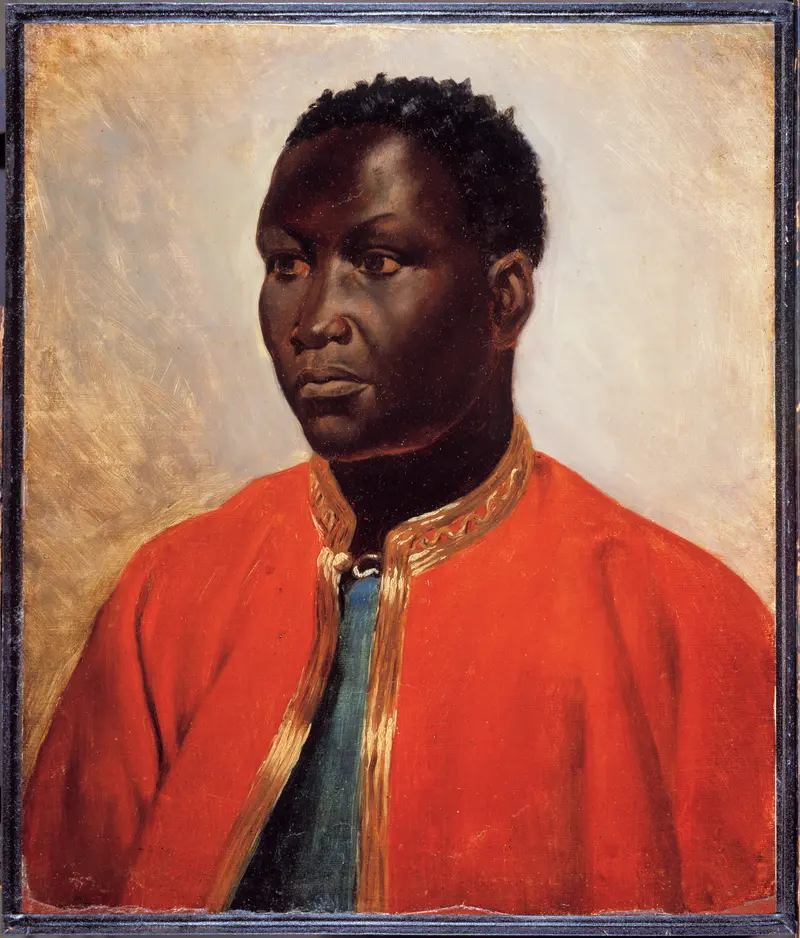
Portrait of a Negro
Théodore Géricault
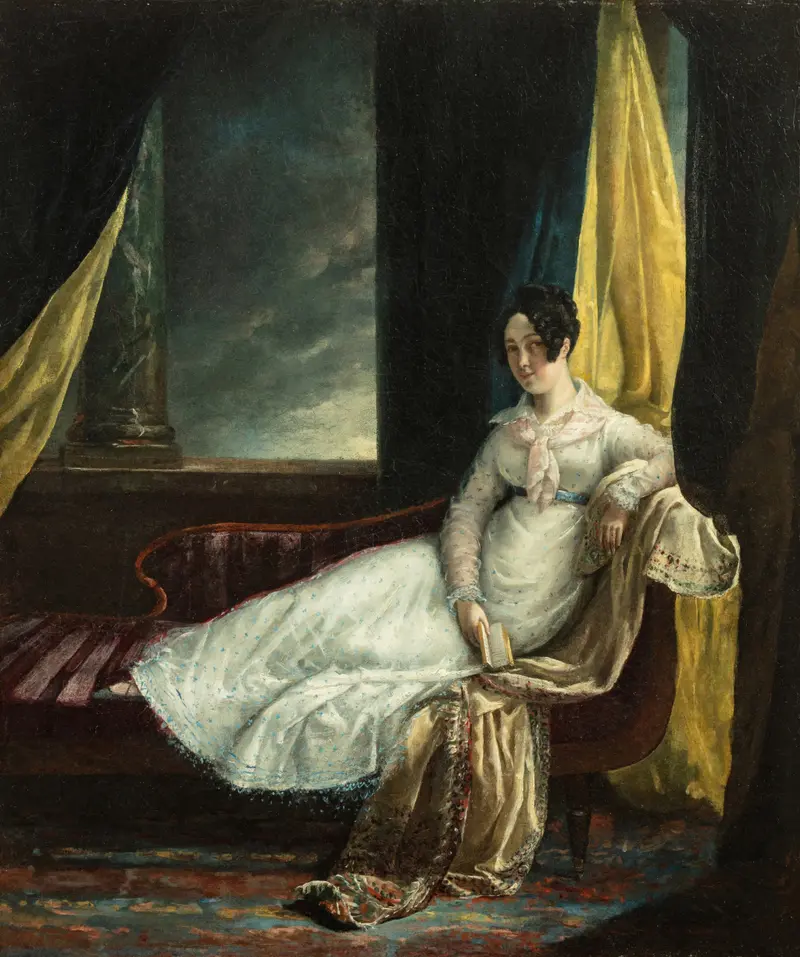
Portrait of Zoë Elmore
Théodore Géricault
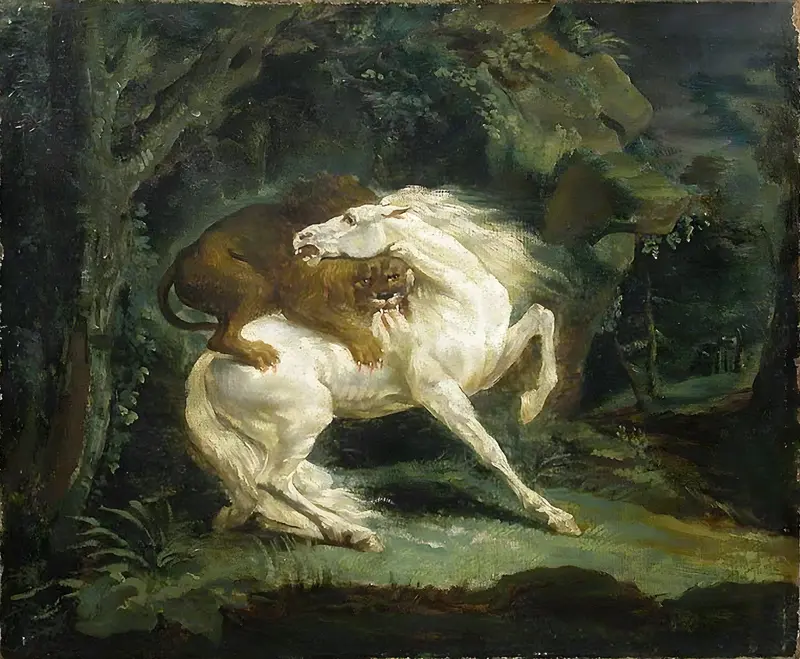
Cheval attaqué par un lion
Théodore Géricault
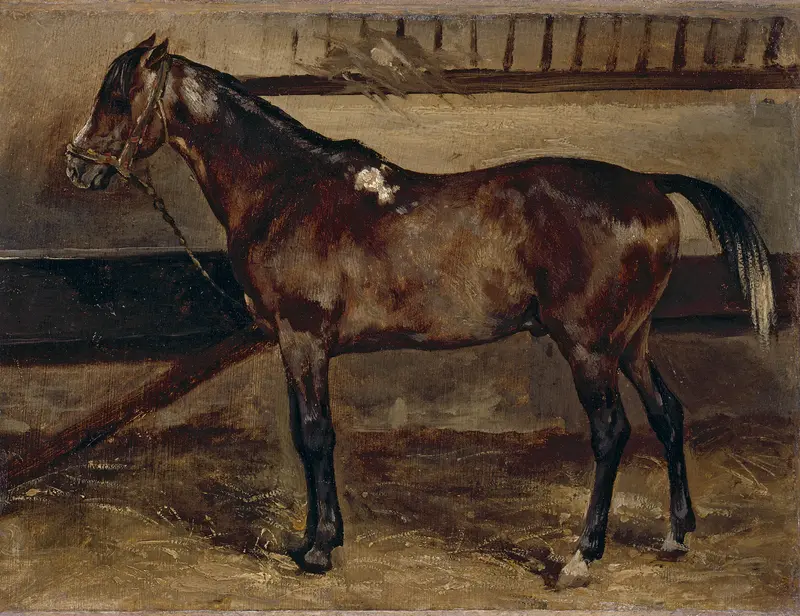
Cheval brun à l'écurie
Théodore Géricault



