
Nymphs Bathing — History & Facts
A hush falls over the wooded glade, where a cluster of figures emerges almost by surprise from the shadowed undergrowth. In Nymphs Bathing, Adolphe Joseph Thomas Monticelli draws the viewer’s eye not with a grand gesture, but with a quiet invitation to peer into the dusk of the forest. The nymphs, pale against the dark, tangled trees, appear half-hidden, their forms flickering in and out of focus as if glimpsed in a dream.
Water glints at their feet, catching what little light filters through the dense canopy, and the whole scene feels suspended between secrecy and revelation. The palette—earthy browns, mossy greens, and sudden touches of flesh—sets a mood of intimacy and enclosure, as if the forest itself is complicit in their privacy. This kind of mythological subject was a favorite of 19th-century painters, who found in ancient stories a way to explore both the wildness of nature and the human body outside the strictures of academic art. Monticelli, working in an era when the boundaries between Romanticism and Impressionism were blurring, often painted scenes infused with a sense of mystery and lush color.
While little is recorded about this specific painting’s origins or journey, it now resides in the Philadelphia Museum of Art, a quiet testament to the ongoing allure of arcadian fantasy. The longer you look, the more the shadows yield—inviting you to lose yourself in the painter’s imagined woodland, where myth and nature are inseparable.
More Artworks by Adolphe Monticelli

Portrait of a Lady
Adolphe Monticelli
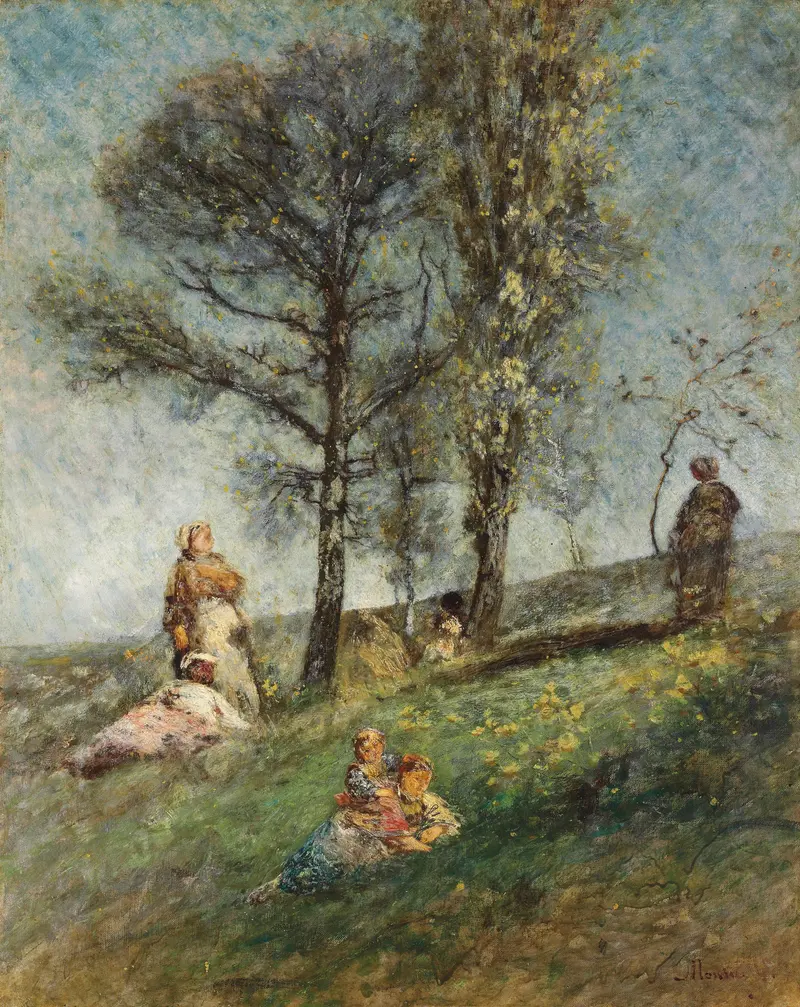
A Young Family Under Trees On A Hill
Adolphe Monticelli

Fête d'Après-Midi
Adolphe Monticelli
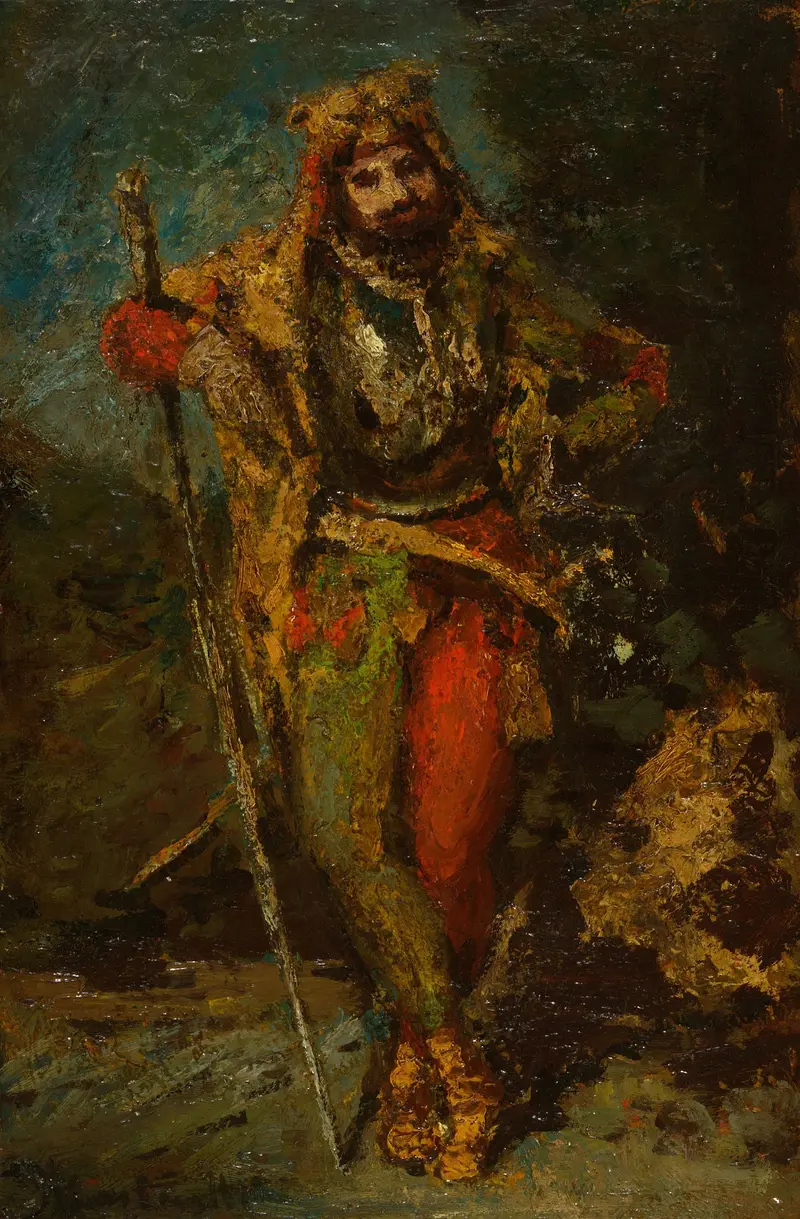
Mephisto from the Opera Faust
Adolphe Monticelli
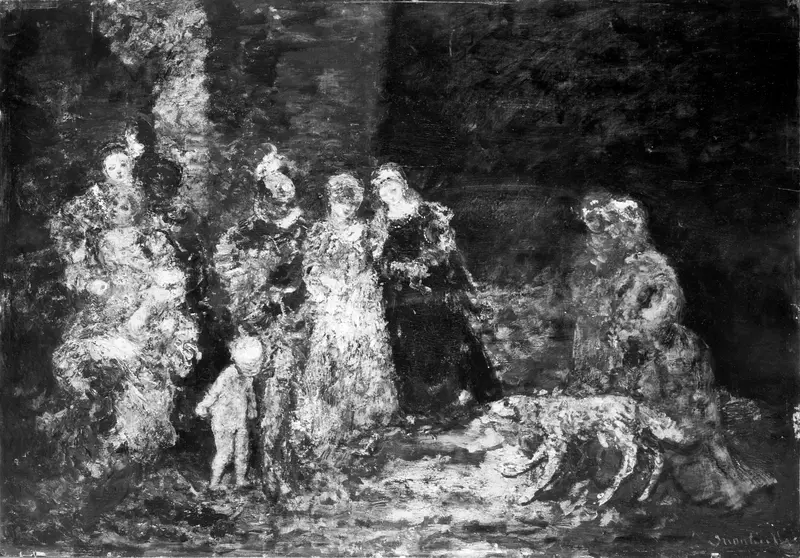
The Fairies
Adolphe Monticelli
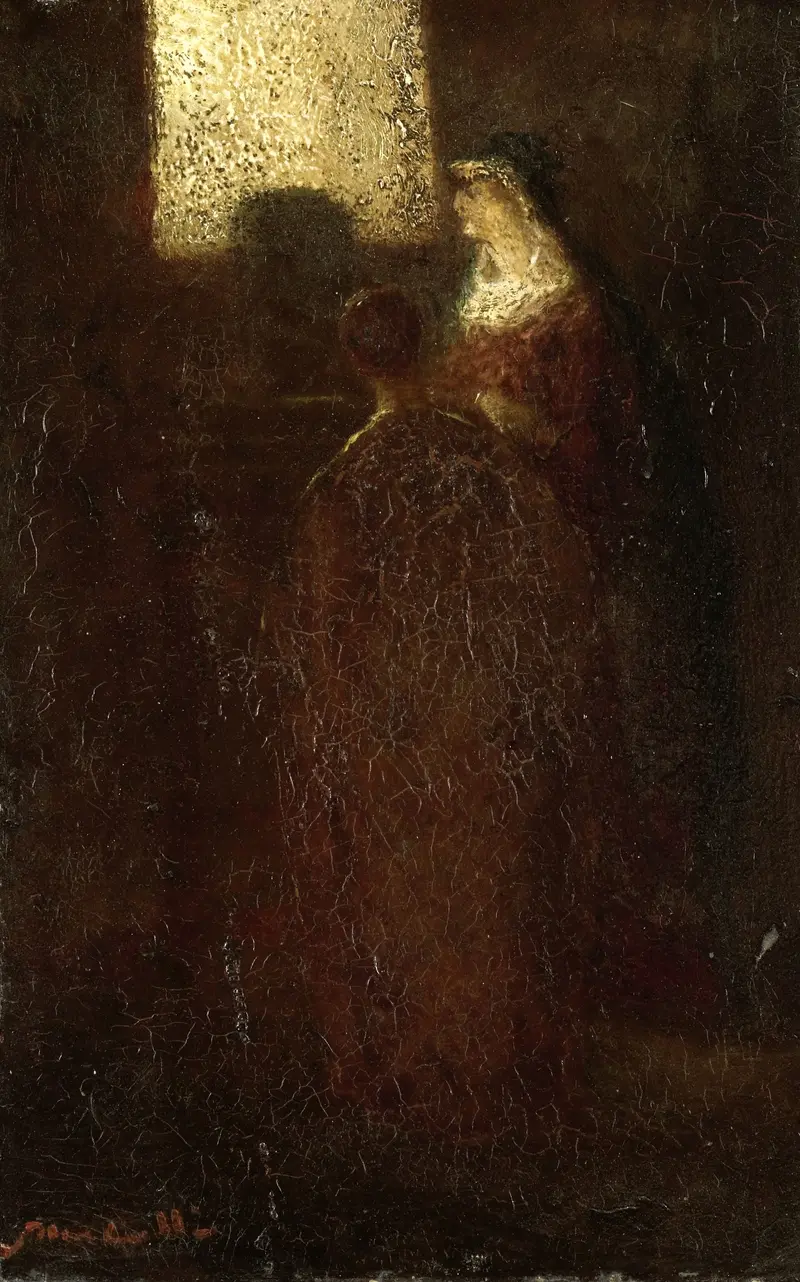
Aan het altaar
Adolphe Monticelli
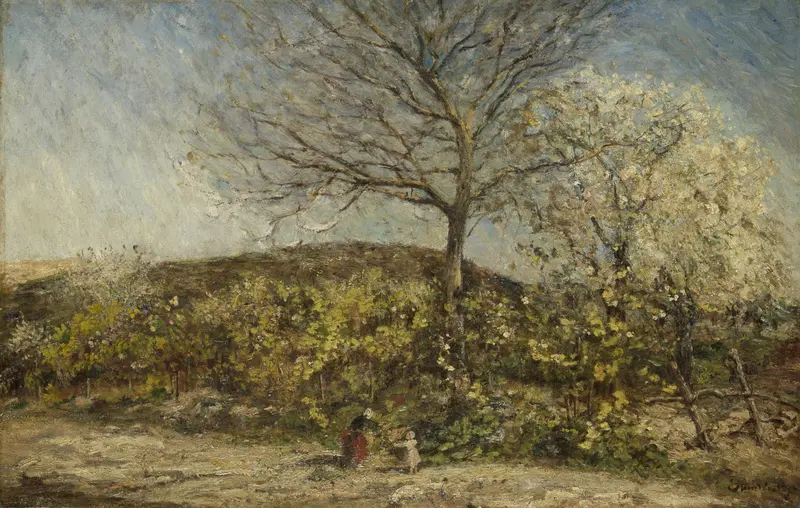
Landschap met bloeiende boomgaard
Adolphe Monticelli
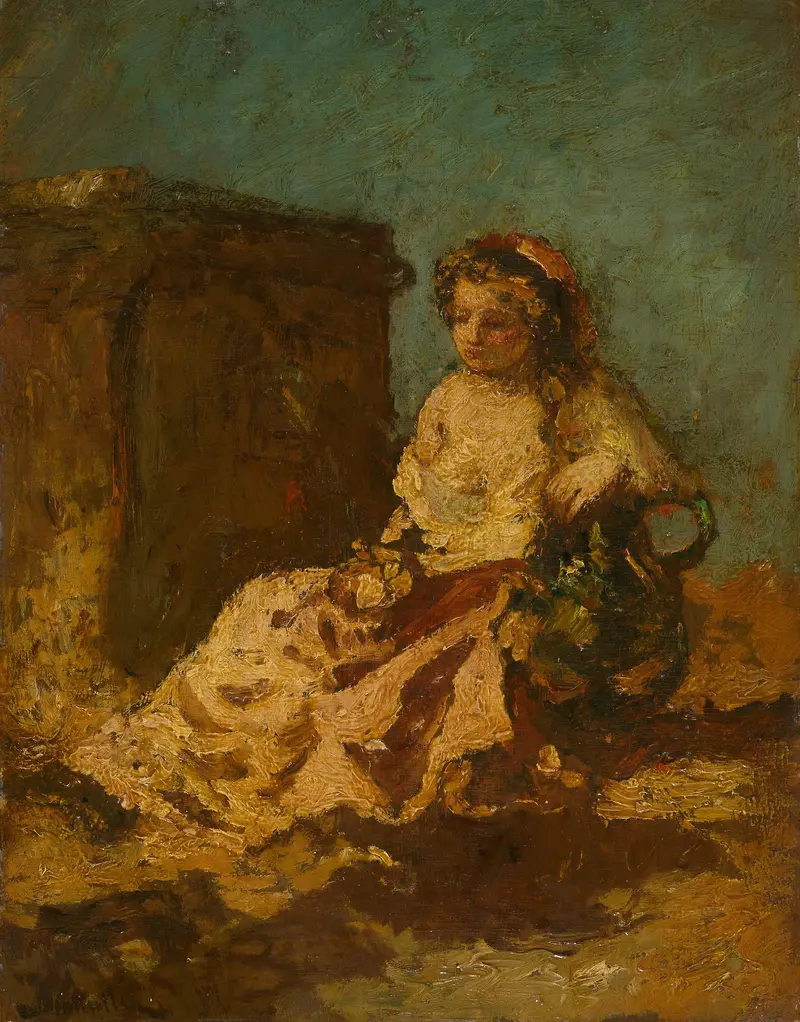
Meditation (Seated Woman)
Adolphe Monticelli
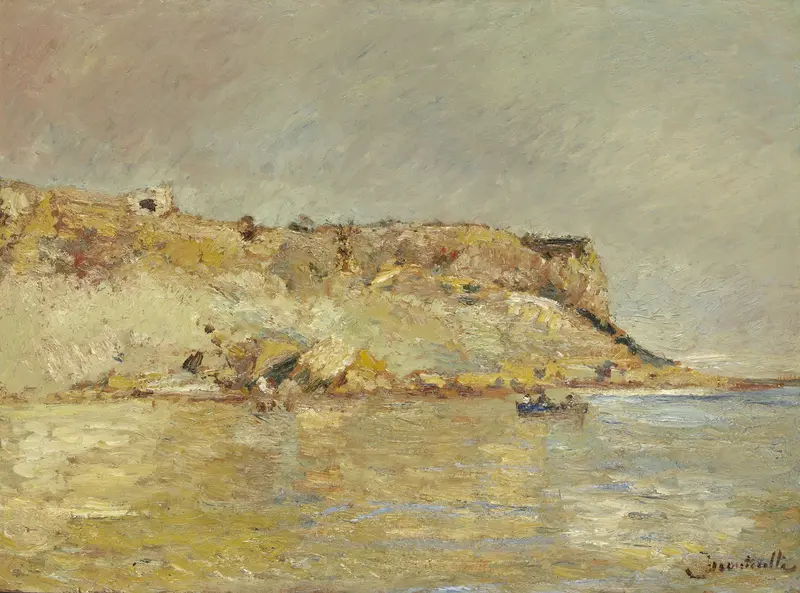
Coastal Mountains
Adolphe Monticelli
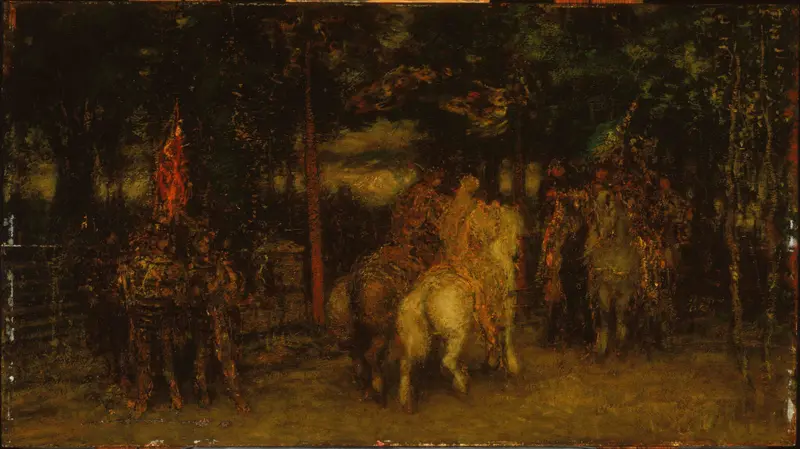
Landscape with Figures
Adolphe Monticelli





