
October Noon — History & Facts
What secret hides in the quiet of the canvas? In October Noon, the stillness of the landscape whispers of chaos beneath its serene surface. It invites the viewer to peer deeper into the intricate dance between tranquility and turmoil, revealing layers of emotion that pulse softly yet insistently. Look to the foreground, where the golden hues of autumn foliage intertwine with a gentle breeze, creating a tapestry of movement. Notice how the light filters through the trees, casting dappled shadows across the ground, inviting you into this peaceful retreat.
The soft palette of ochres and ambers evokes warmth, while subtle brush strokes impart a sense of immediacy, blurring the lines between reality and the artist’s impression. As your gaze wanders, the looming dark clouds in the background serve as a reminder of the inevitable change that follows even the most idyllic moments. Within the harmony of color and form lies a tension that speaks of life’s unpredictability. The vibrant foliage symbolizes fleeting beauty, while the turbulent sky hints at a storm brewing—an allegory for chaos lurking beneath the surface of calm.
This duality mirrors the human experience, where moments of grace coexist with underlying struggles, prompting a reflection on our own lives’ complexities. George Inness painted October Noon in 1891, during a period of profound introspection and artistic evolution. Living in New Jersey, he was inspired by the rural landscape surrounding him, exploring the connection between nature and spirituality. This work emerged at a time when he sought to capture the essence of nature's fleeting moments, blending impressionism with a deep emotional resonance that would influence future generations of artists.
More Artworks by George Inness
Browse all →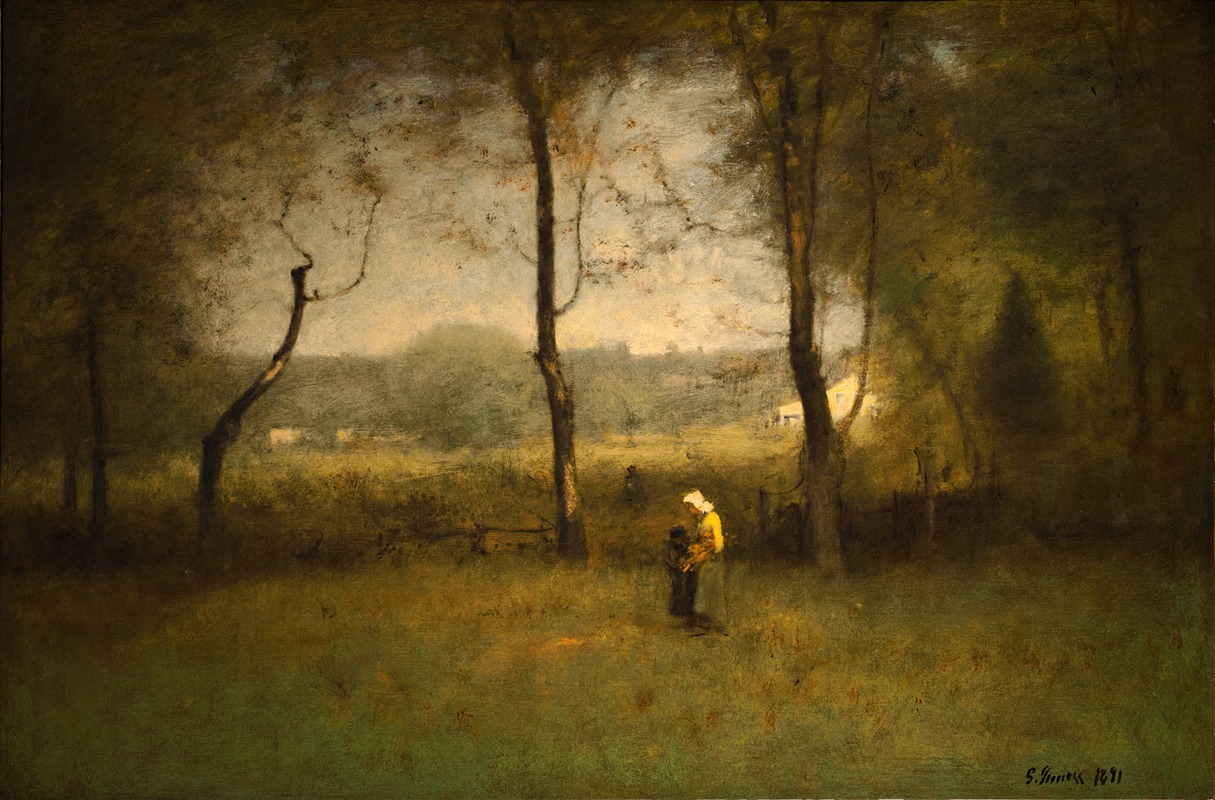
Autumn Woods
George Inness
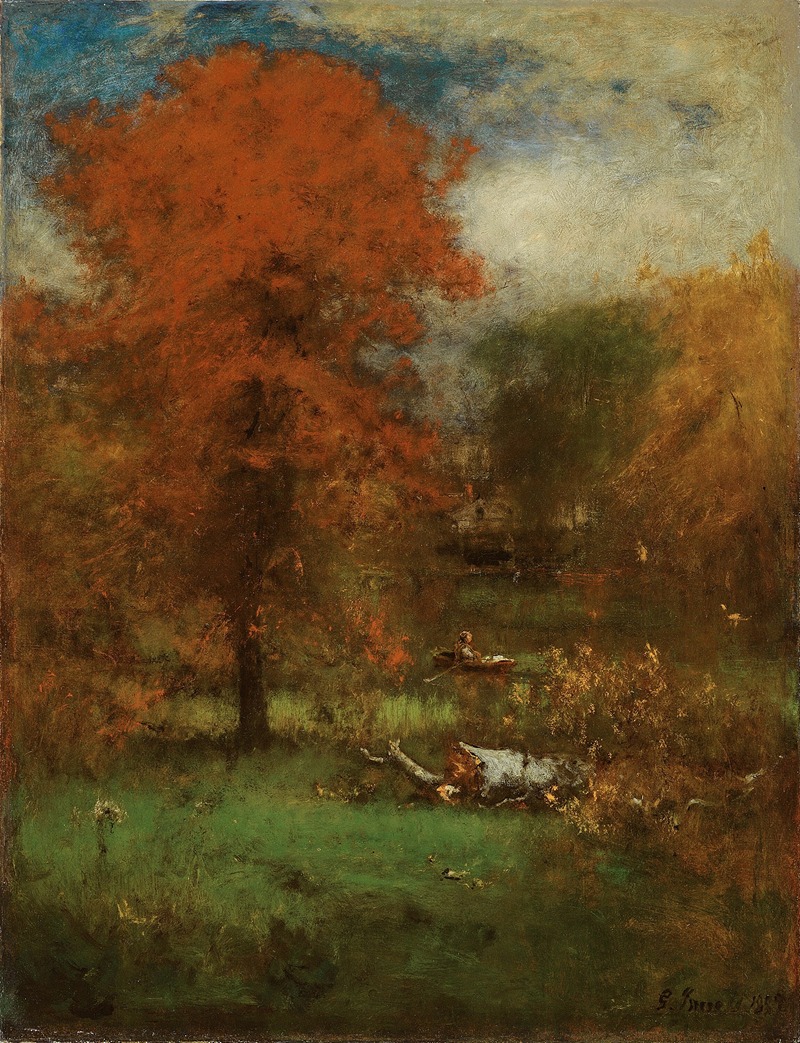
The Mill Pond
George Inness
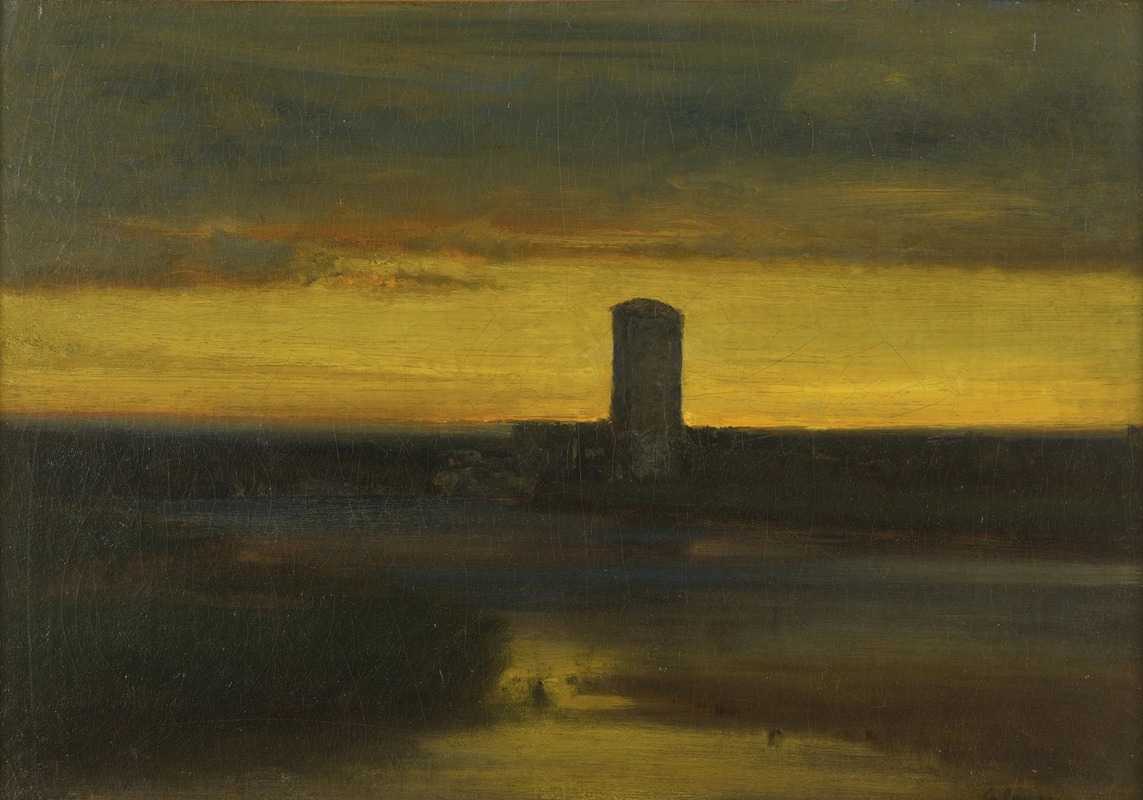
Afterglow
George Inness
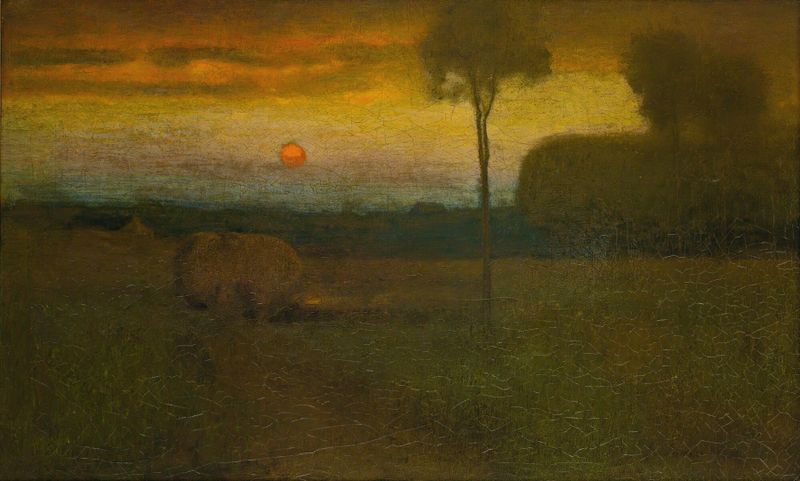
Landscape (Evening Landscape)
George Inness

Montclair
George Inness

View in Berkshire County, Massachusetts, Clearing Off after a September Storm
George Inness

October
George Inness
Landscape, Sunset
George Inness
Afterglow
George Inness
Catskill Mountains
George Inness





