
Old Rochoux prints — History & Facts
The first thing that catches the eye in Old Rochoux prints is its theatrical presentation—a flourish of drapery, a scroll, and a proud equestrian statue, all framing a name: Rochoux. This is not a simple label, but a stage set for a business, transforming the dry facts of address and trade into an emblem of tradition and prestige. The scroll, unfurled as if announcing a royal decree, draws the viewer’s gaze to the bold, blocky letters at its center, while the supporting imagery—arches, rooftops, and the monumental statue—anchors the whole in a sense of place and history.
The palette, limited to warm ochres and crisp blacks, lends the composition a feeling of both age and authority, as if the print itself is already an artifact. Created in 1855 by Auguste Delâtre, this work belongs to a world where the art of printmaking was both commerce and craft, and where the presentation of one’s trade was itself a mark of distinction. In mid-nineteenth-century Paris, such ornate trade cards or shop signs were a way for print dealers and publishers to declare their lineage and seriousness to a discerning clientele. The address—Quai de l’Horloge, No.
19—places Rochoux on the Île de la Cité, at the heart of the city’s print trade. While history has left few traces of this particular print beyond its date and its current home in the Musea Brugge, its elaborate design invites us to imagine the bustling world of collectors, dealers, and artists who once passed beneath that address, drawn in by just such a promise of “ancient prints.”
More Artworks by Auguste Delâtre

Place du Tertre
Auguste Delâtre
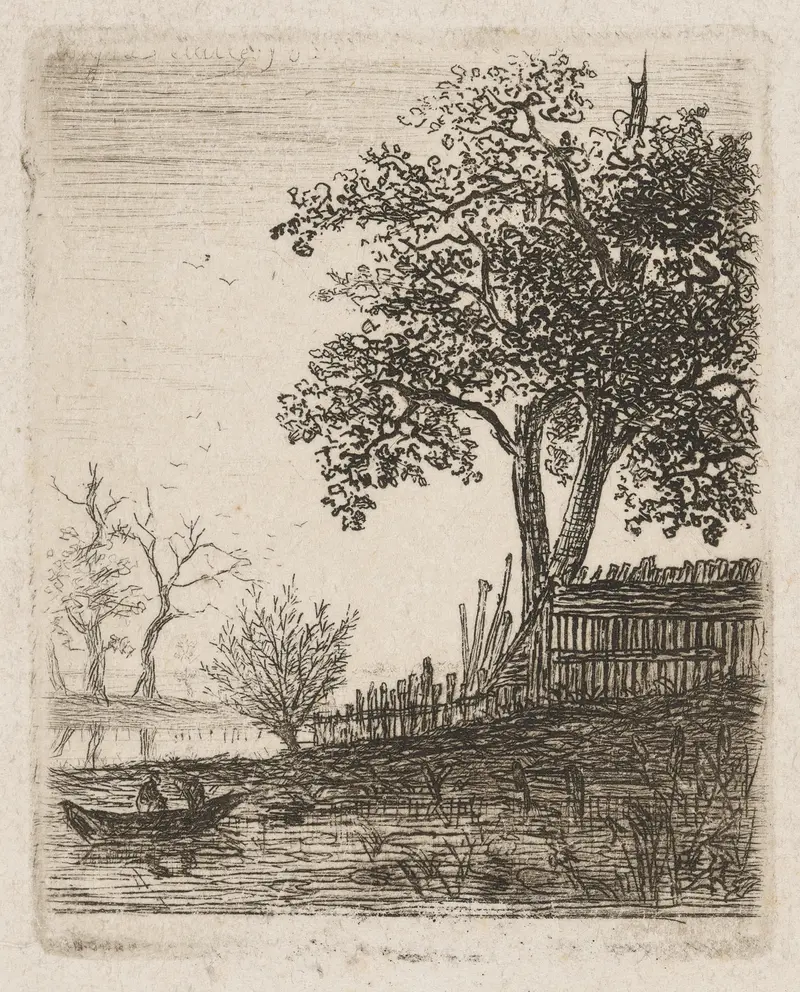
Rowboat
Auguste Delâtre
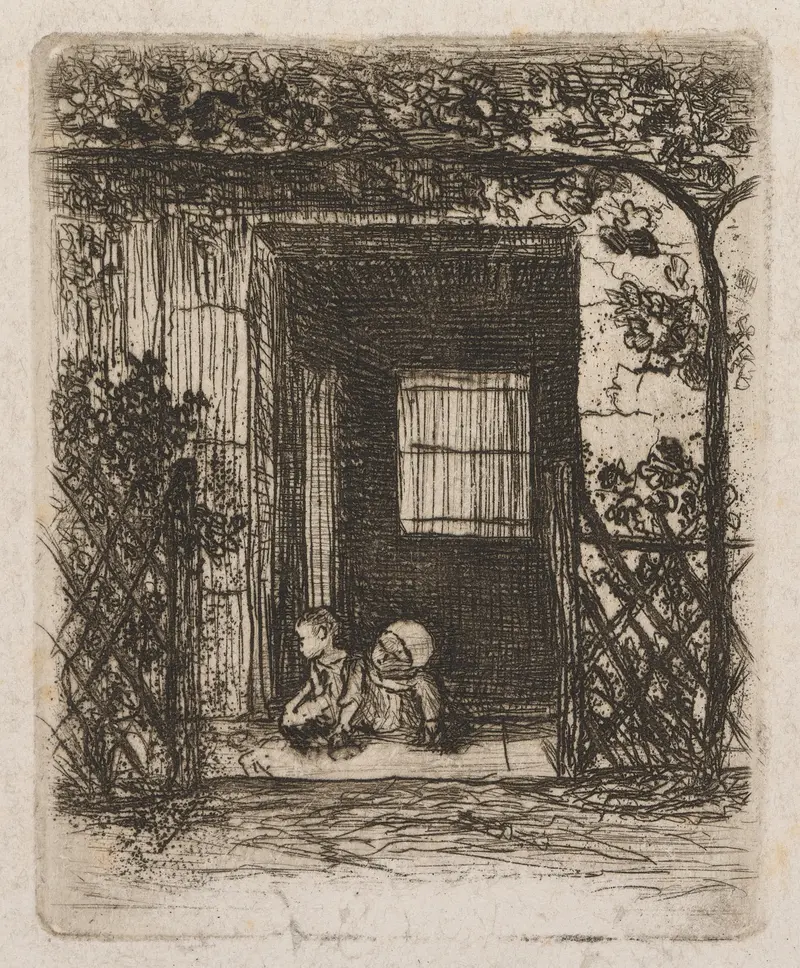
Children in doorway
Auguste Delâtre
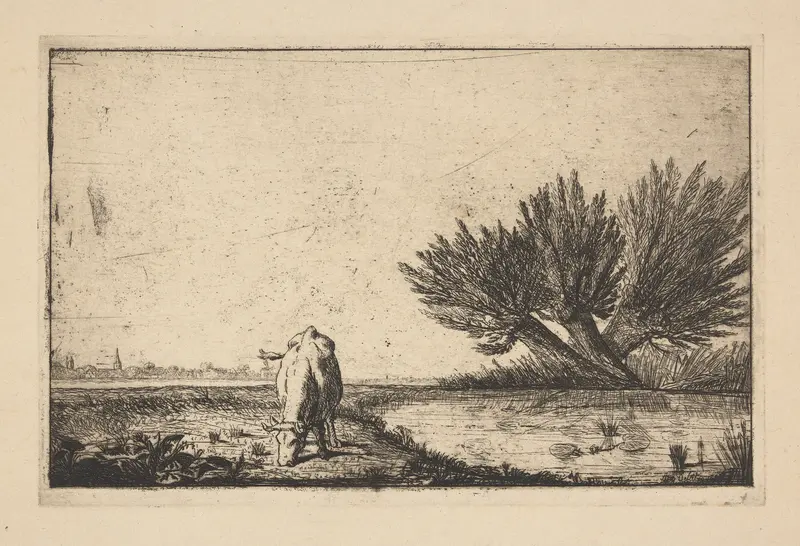
Cow grazing by pond
Auguste Delâtre
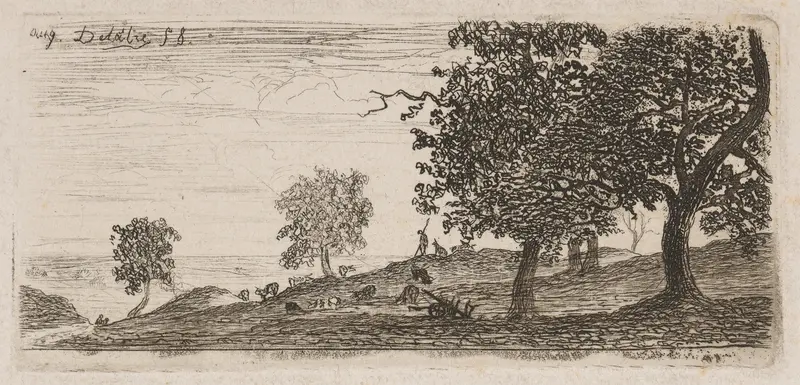
Cattle
Auguste Delâtre
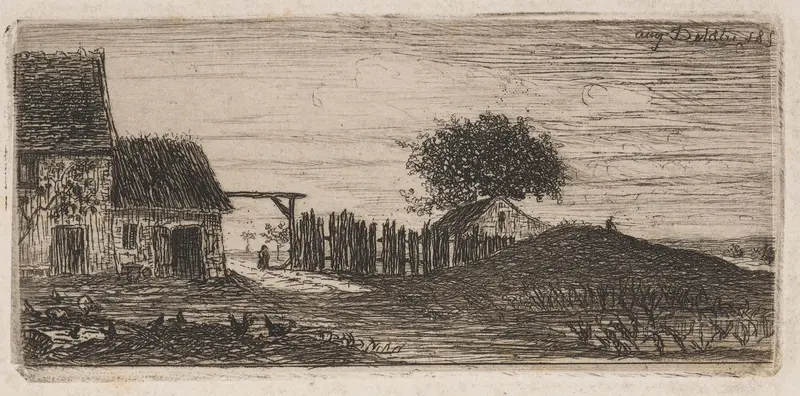
Farmyard
Auguste Delâtre
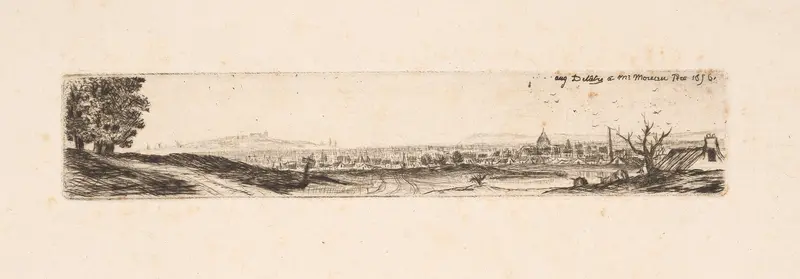
Distant view of city
Auguste Delâtre
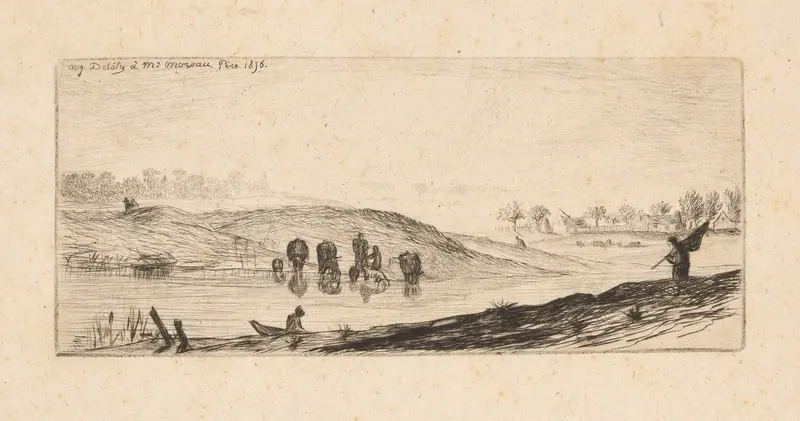
Landscape with cows near river
Auguste Delâtre
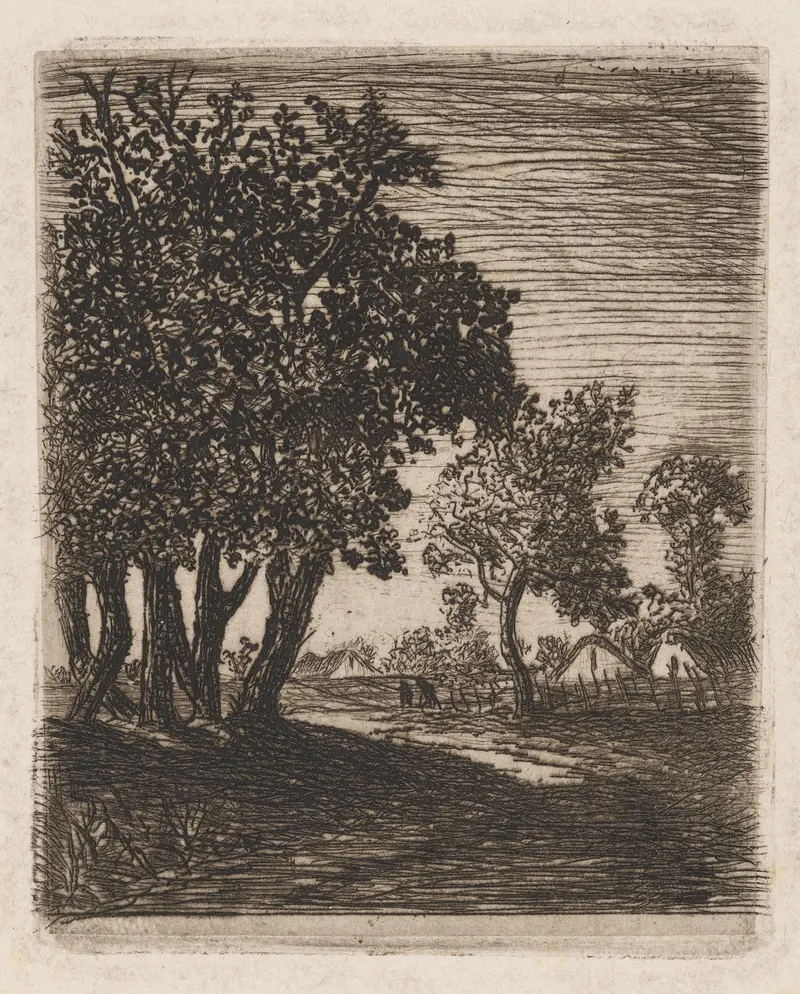
Country road
Auguste Delâtre
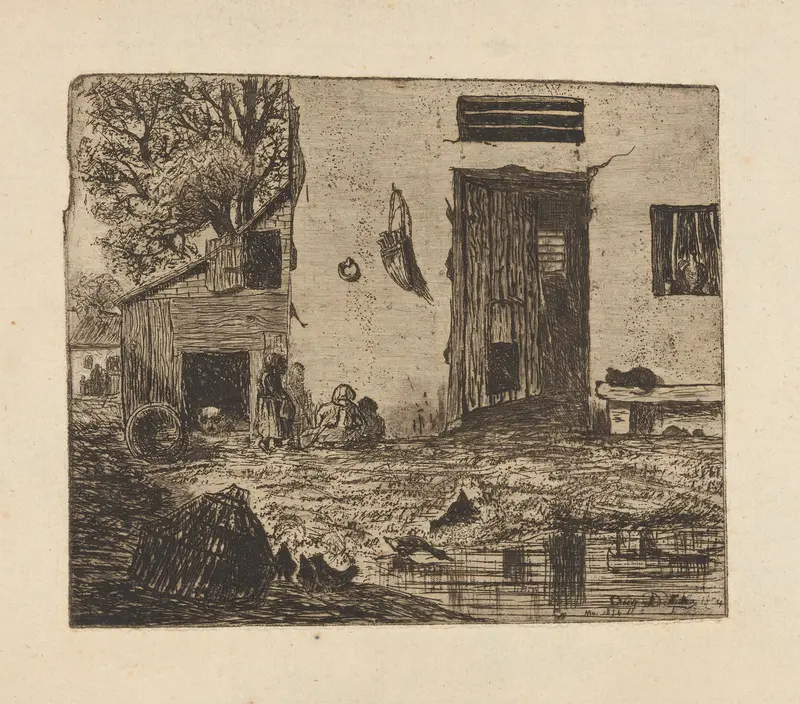
Children beside barn
Auguste Delâtre





