
On Carrington Moss — History & Facts
When did color learn to lie? In On Carrington Moss, a quiet yet powerful dialogue between truth and illusion unfolds. The soft hues whisper of a world both familiar and surreal, beckoning viewers to delve deeper into its layers. Look to the foreground, where gentle tufts of grass create a textured carpet, inviting you into the scene. Notice how the light dances across the mossy expanse, with shades of green and brown shifting harmoniously under the play of sunlight.
The soft, diffused palette elicits a sense of tranquility, while the clouds above, tinged with hints of lavender, hint at approaching change. This delicate balance of color not only represents the landscape but also evokes an emotional landscape, echoing the artist's intent to capture nature's fleeting beauty. Yet, beneath this serene surface lies a tension between the real and the imagined. The composition invites contemplation on the ephemeral nature of the moment, while the contrasting dark shadows lurking in the background suggest a world that is both inviting and foreboding.
The atmospheric quality of the painting raises questions about perception itself, challenging viewers to reconcile the seen with the felt. What lies beyond the tranquility? The interplay of light and shadow teases out these hidden narratives, urging us to explore the unspoken. David Cox painted On Carrington Moss in 1851, a period when he was deeply engaged with the beauty of English landscapes. Living in a rapidly industrializing world, he sought refuge in the natural forms around him, capturing their essence with a brush that celebrated both the ordinary and the profound.
This work encapsulates a moment where the artist, influenced by Romantic ideals, sought to transcend mere representation, offering instead an invitation to experience the soul of the landscape.
More Artworks by David Cox
Browse all →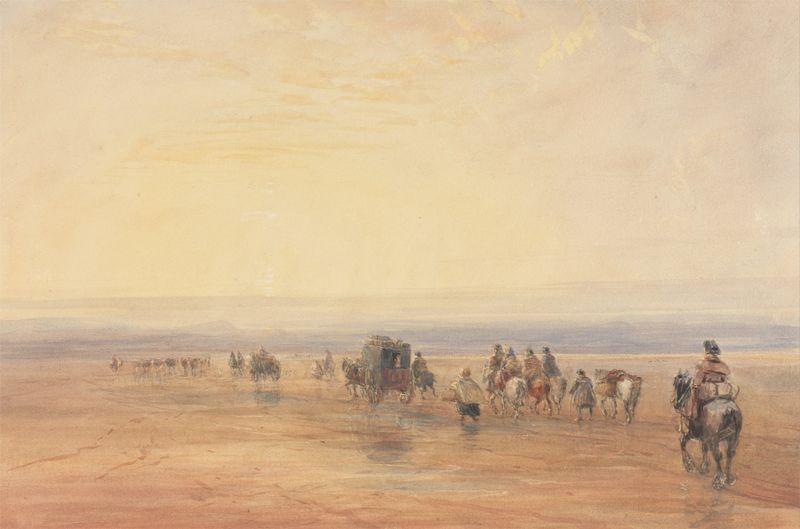
Crossing Lancaster Sands
David Cox
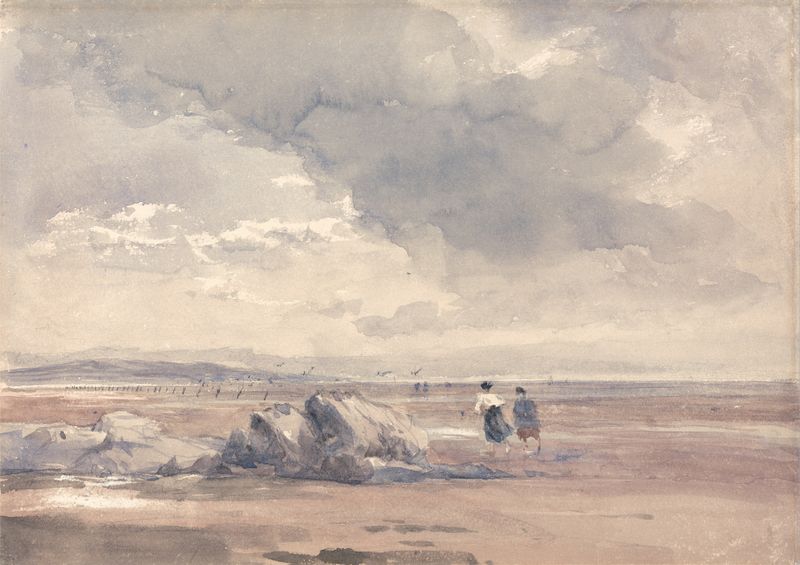
On Lancaster Sands, Low Tide
David Cox

Lincoln Cathedral from Brayford Pool
David Cox

View in Wales
David Cox
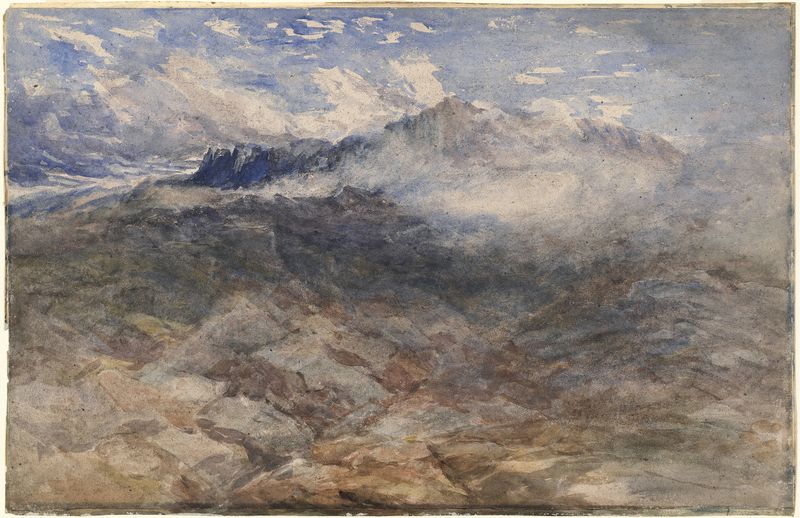
Mountain Heights, Cader Idris
David Cox

Bergen op Zoom
David Cox

Boating Before Lambeth Palace, London
David Cox
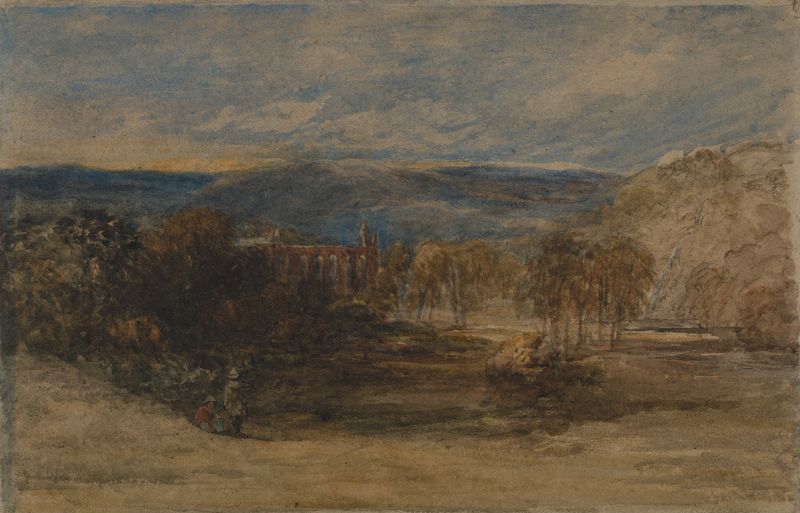
Bolton Abbey
David Cox

London Bridge
David Cox
Westminster from Lambeth
David Cox





